Run
Running rewards whoever keeps moving once it starts to hurt, not the first burst of speed. For a child it is that exact feeling, burning legs and heavy breath, that decides whether they finish. The visual support below breaks the run apart.
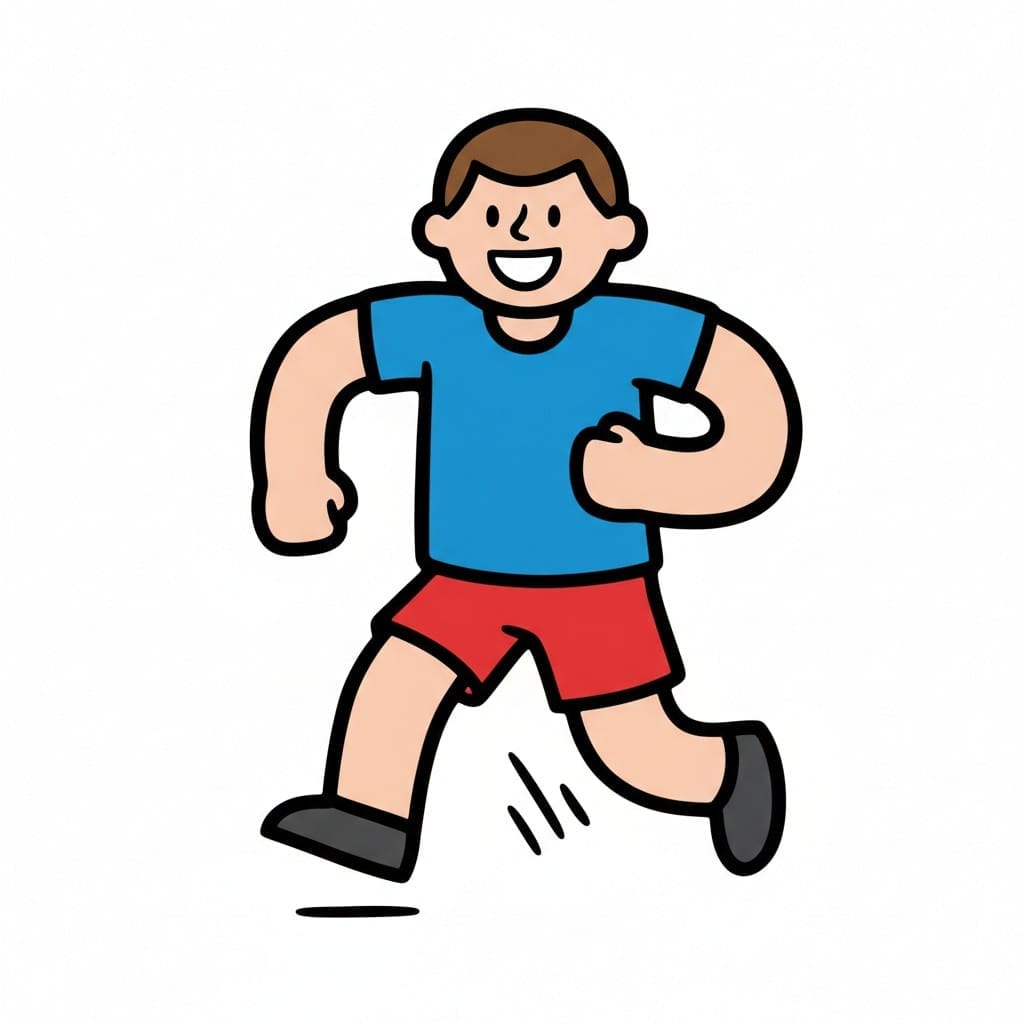 ♂
♂Boy running
A smiling boy in a blue shirt and red shorts runs forward.
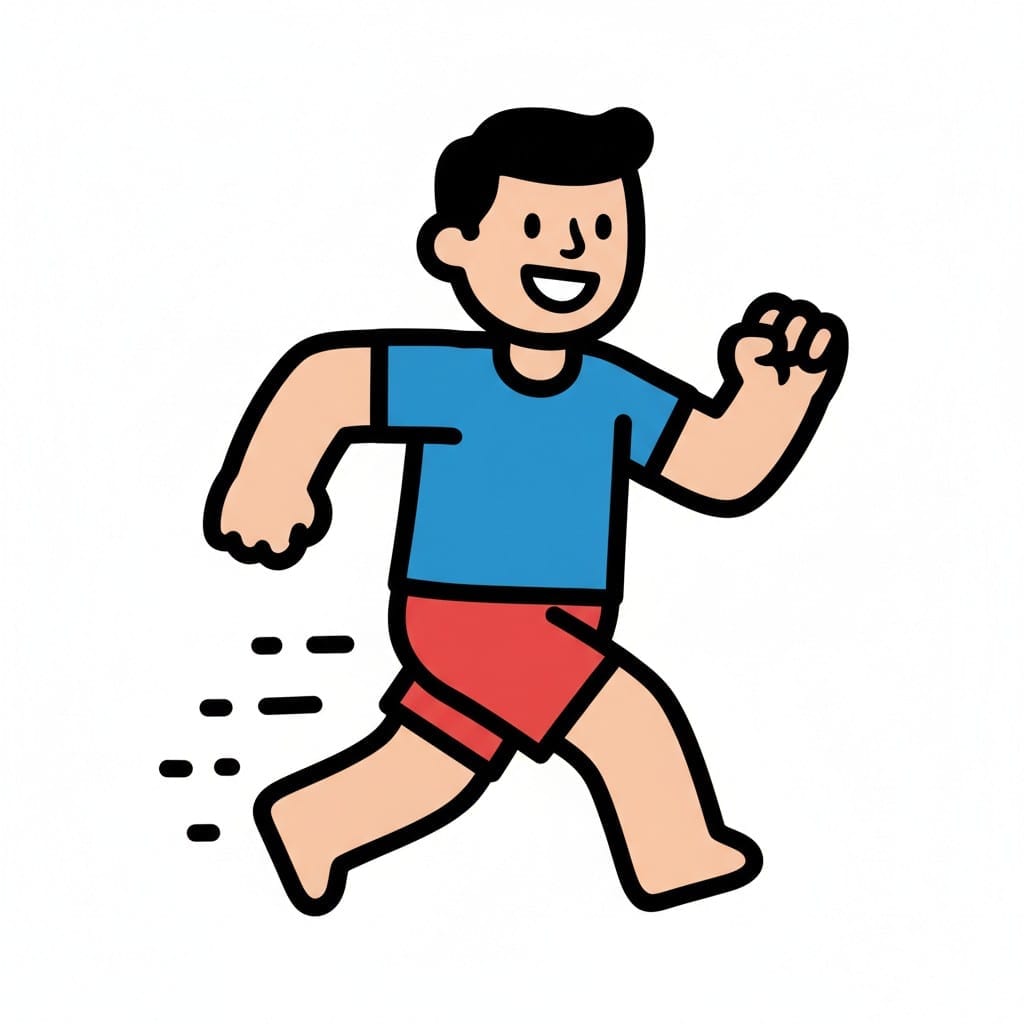 ♂
♂Boy running barefoot
A happy boy runs barefoot with speed lines behind him.
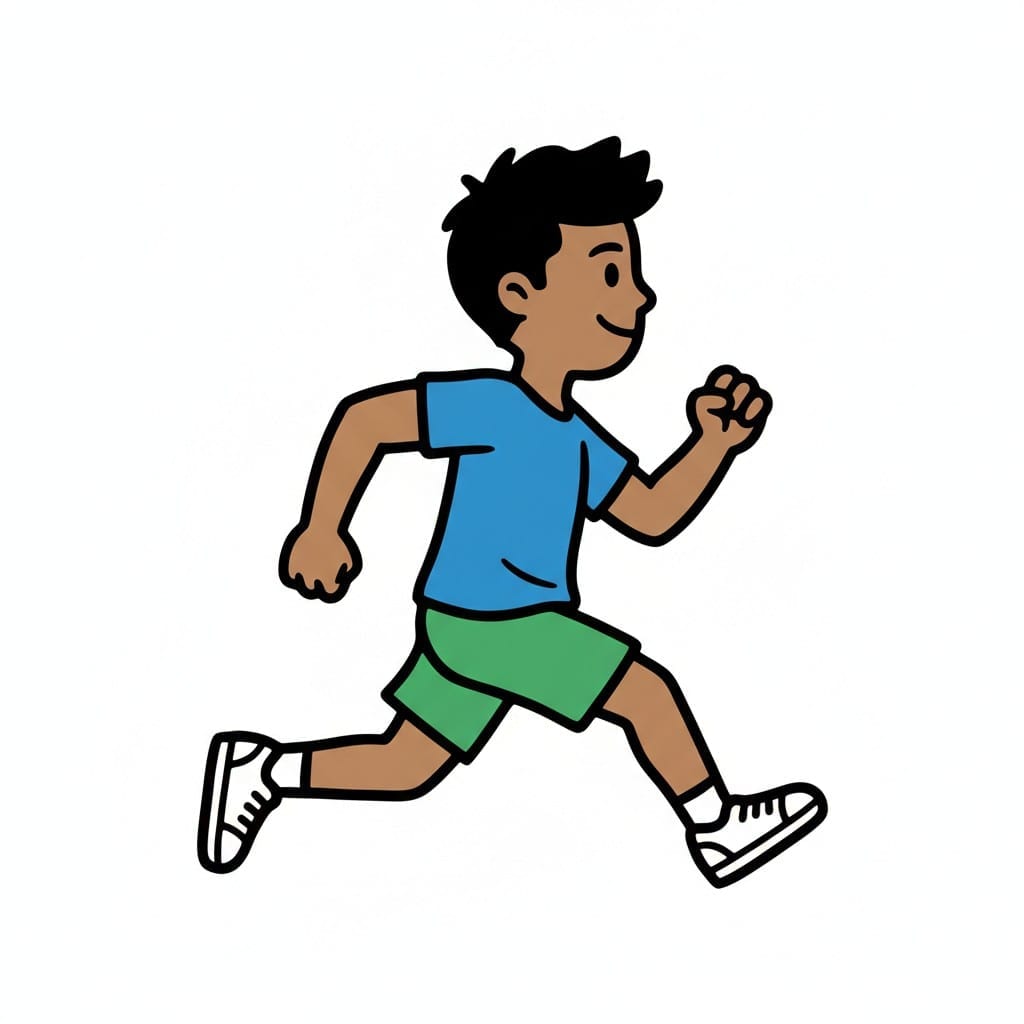 ♂
♂Boy running in profile
A boy in a blue shirt and green shorts runs seen from the side.
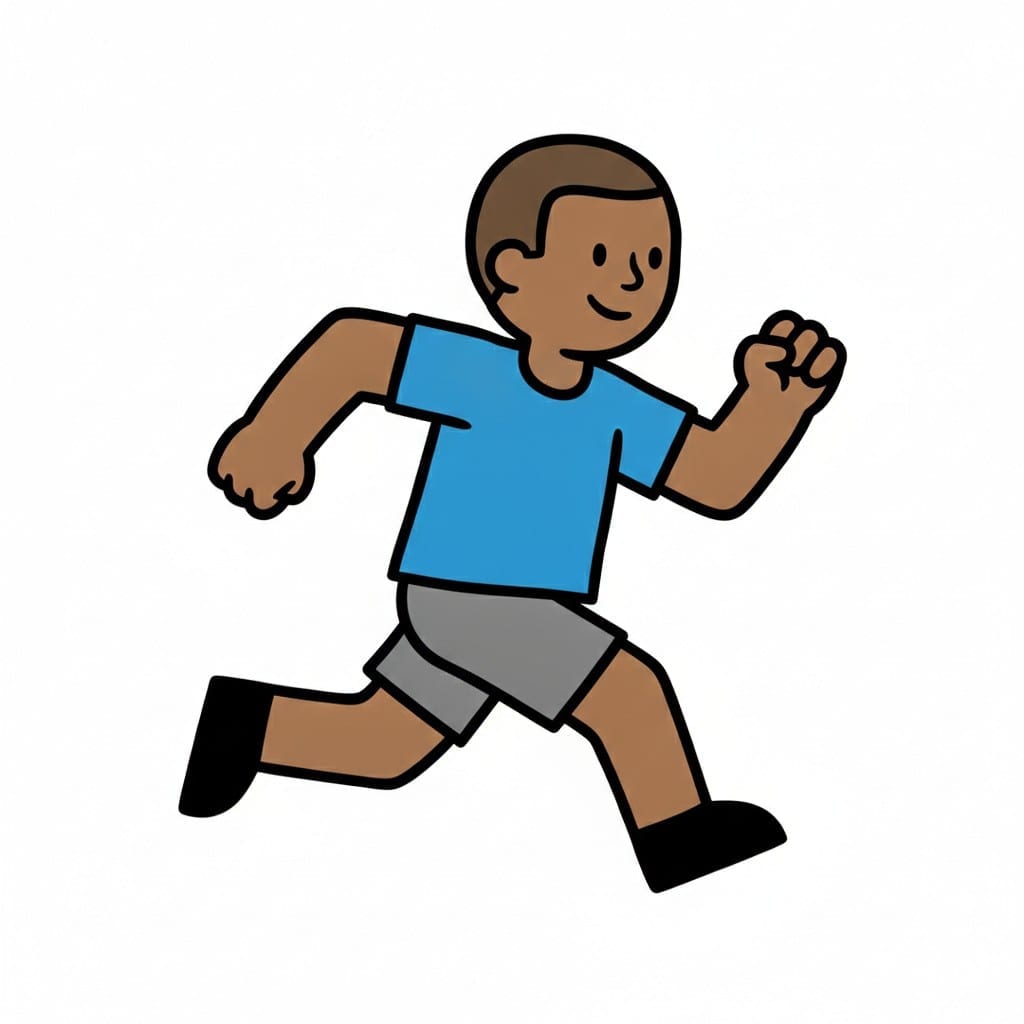 ♂
♂Boy running
A boy in a blue t-shirt and shorts runs forward with his arms swinging.
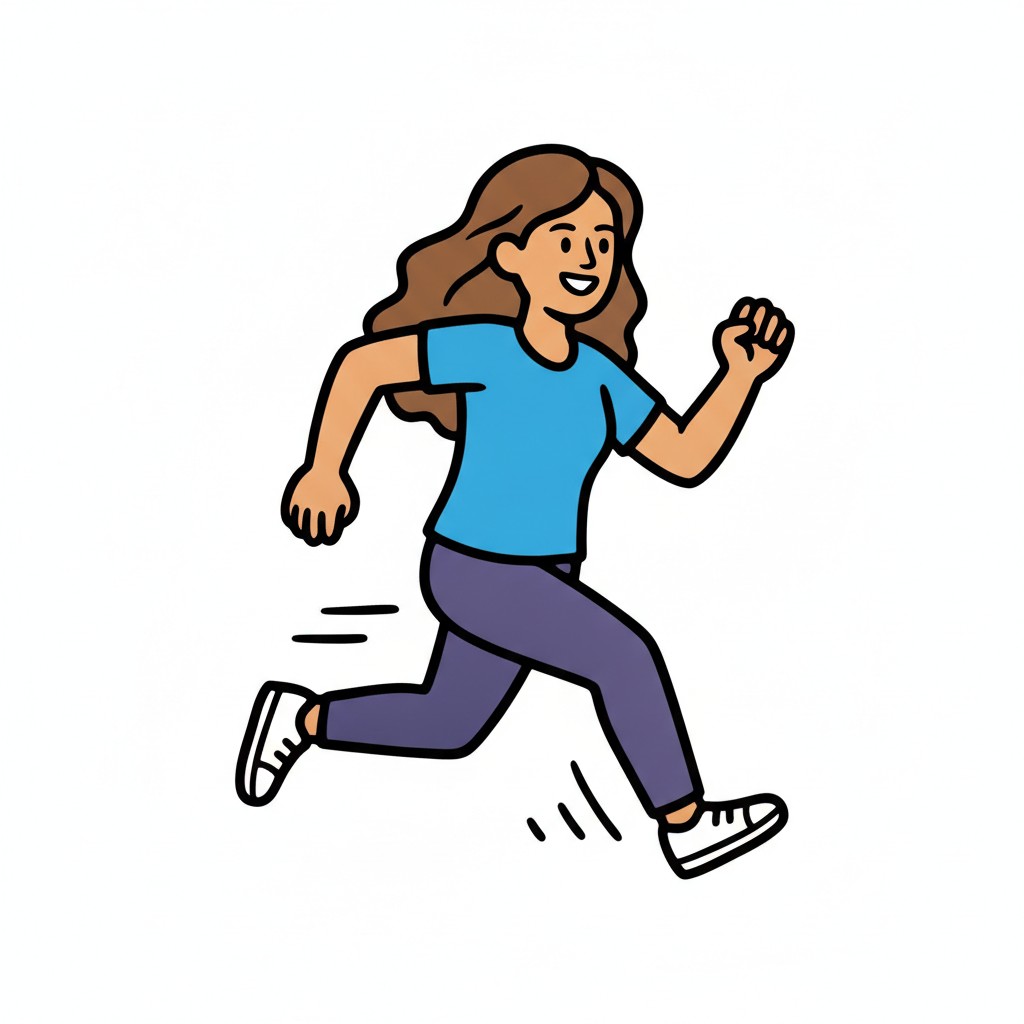 ♀
♀Woman running
A woman with long hair runs in a blue top and purple trousers, with speed lines behind her.
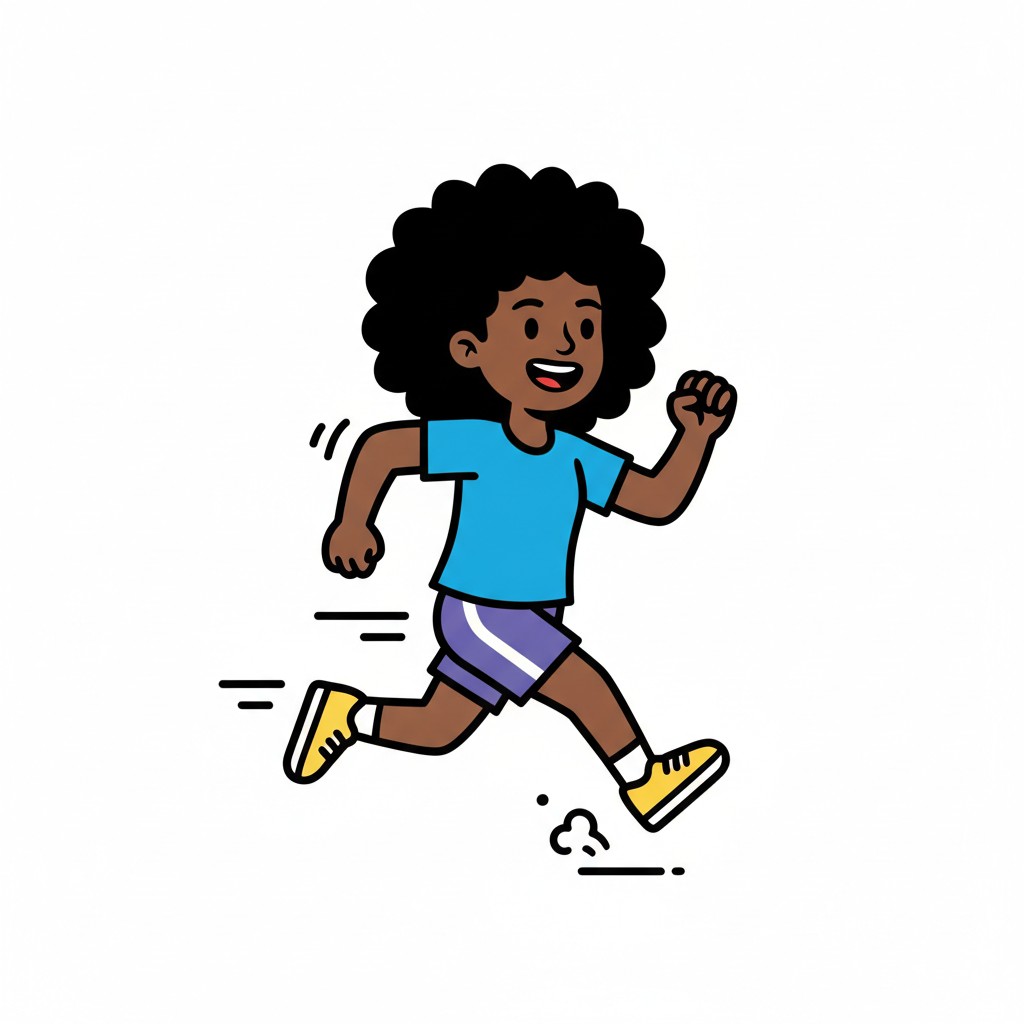 ♀
♀Girl running
A girl runs in a blue top and purple shorts with yellow shoes, with speed lines around her.
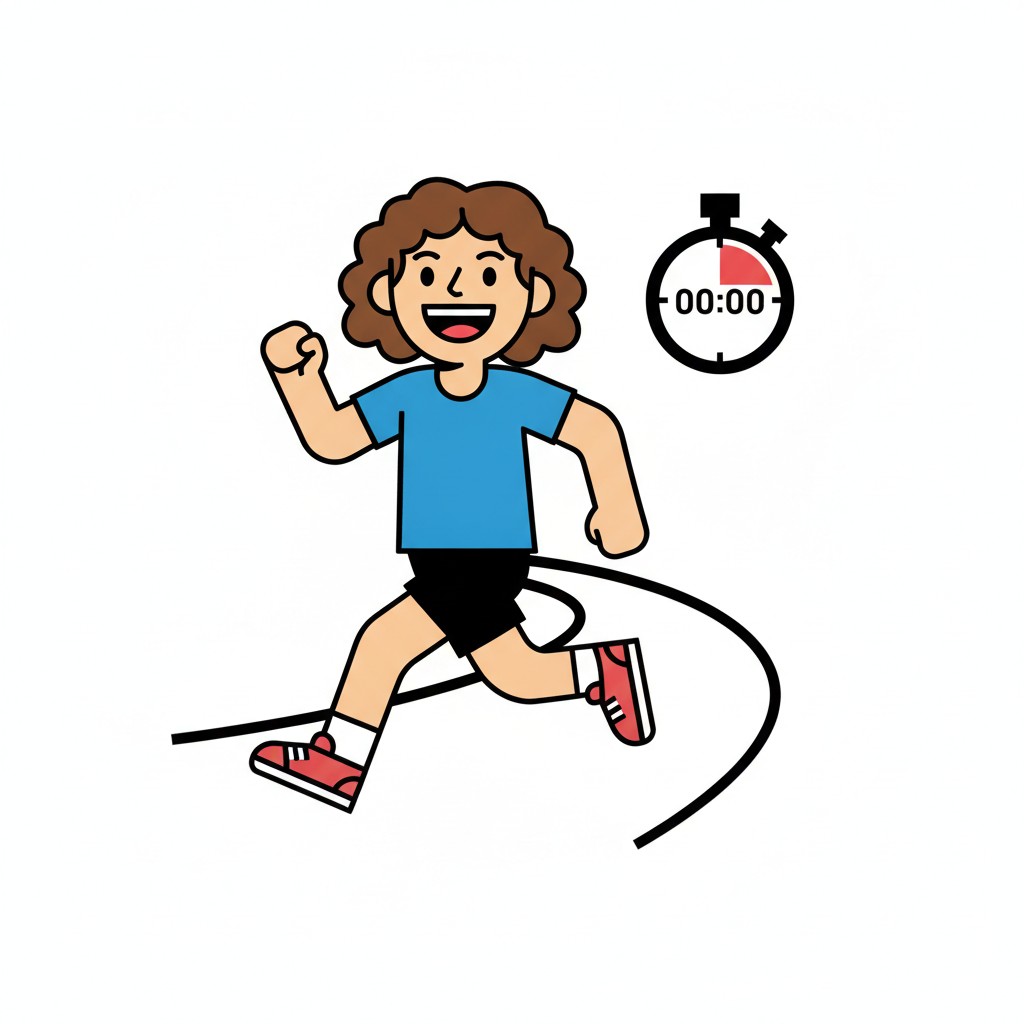 ♀
♀Timed run
A person runs along a curved track with a stopwatch showing zero.
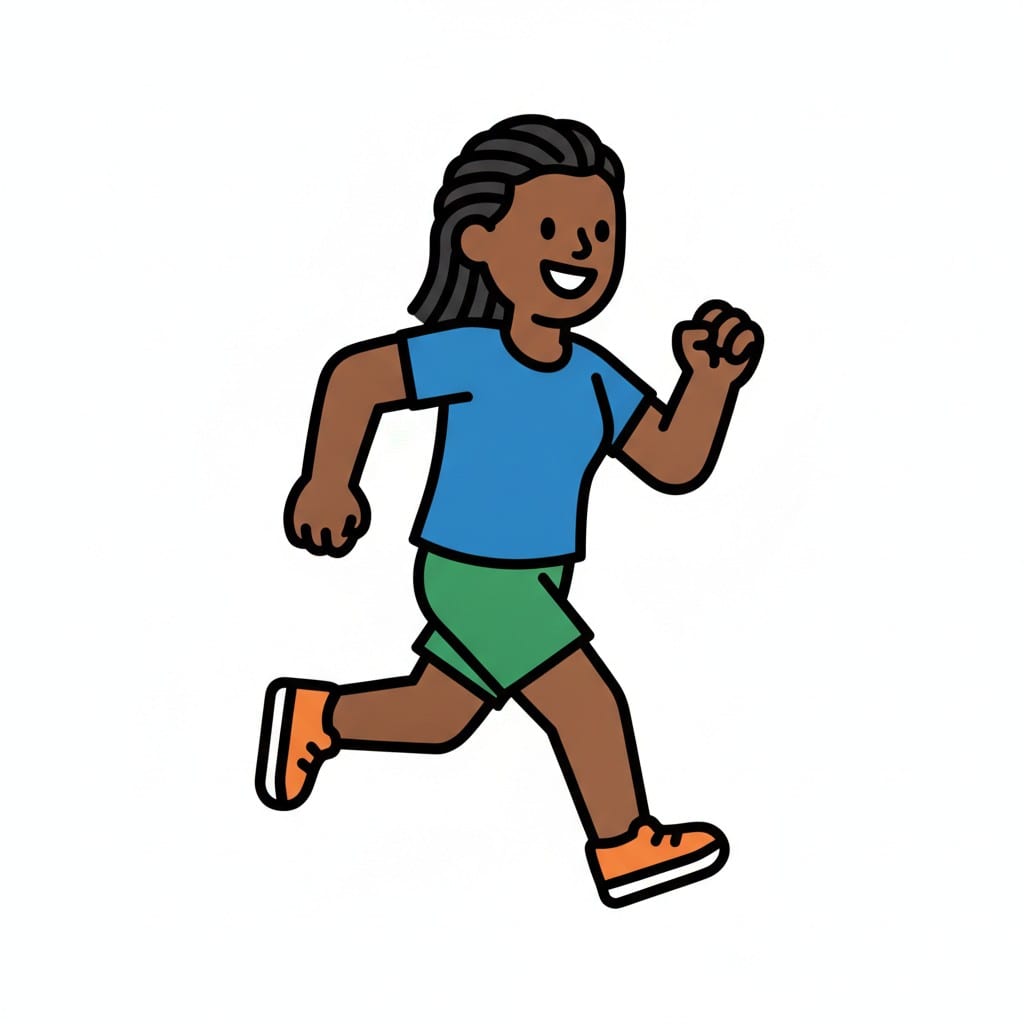 ♀
♀Running
A woman runs in sportswear.
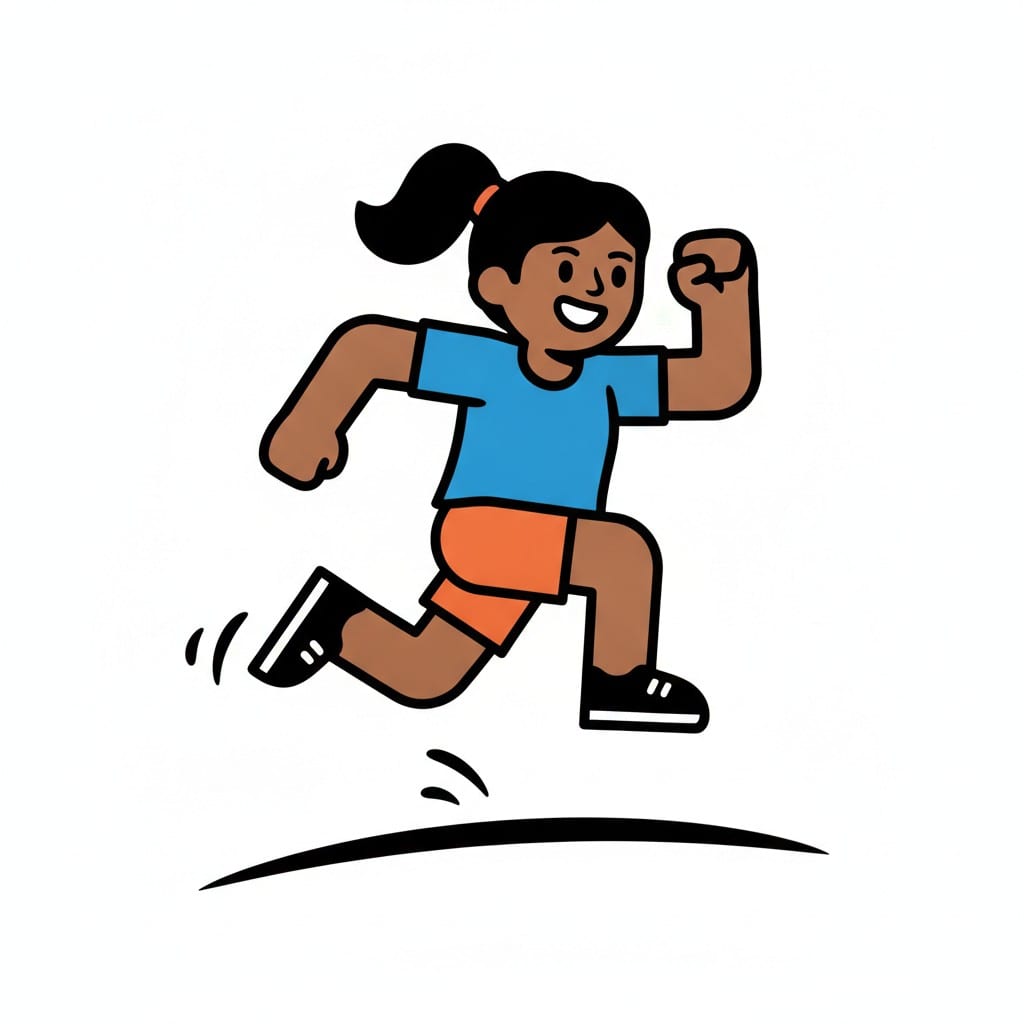 ♀
♀Sprinting
A girl runs fast.
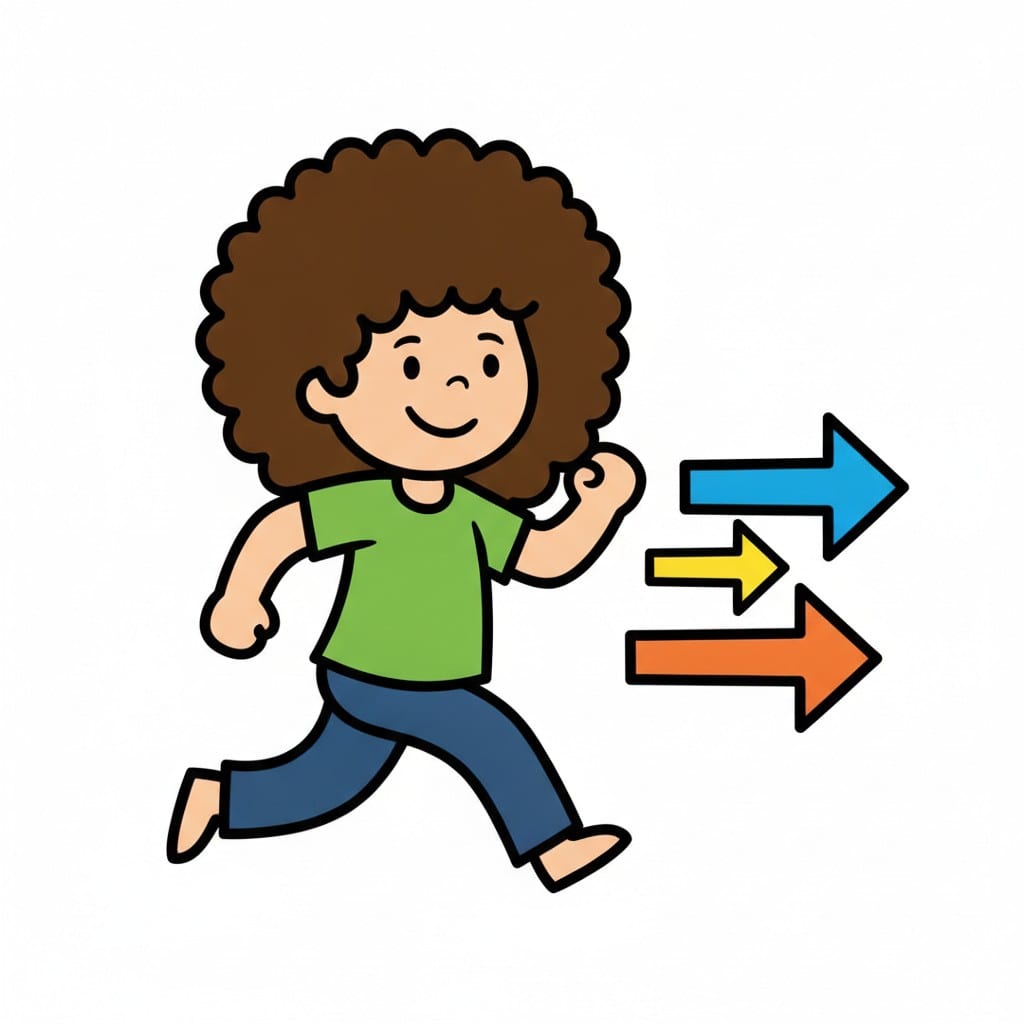 ♀
♀Running off
A girl with big curly hair runs forward towards three colourful arrows.
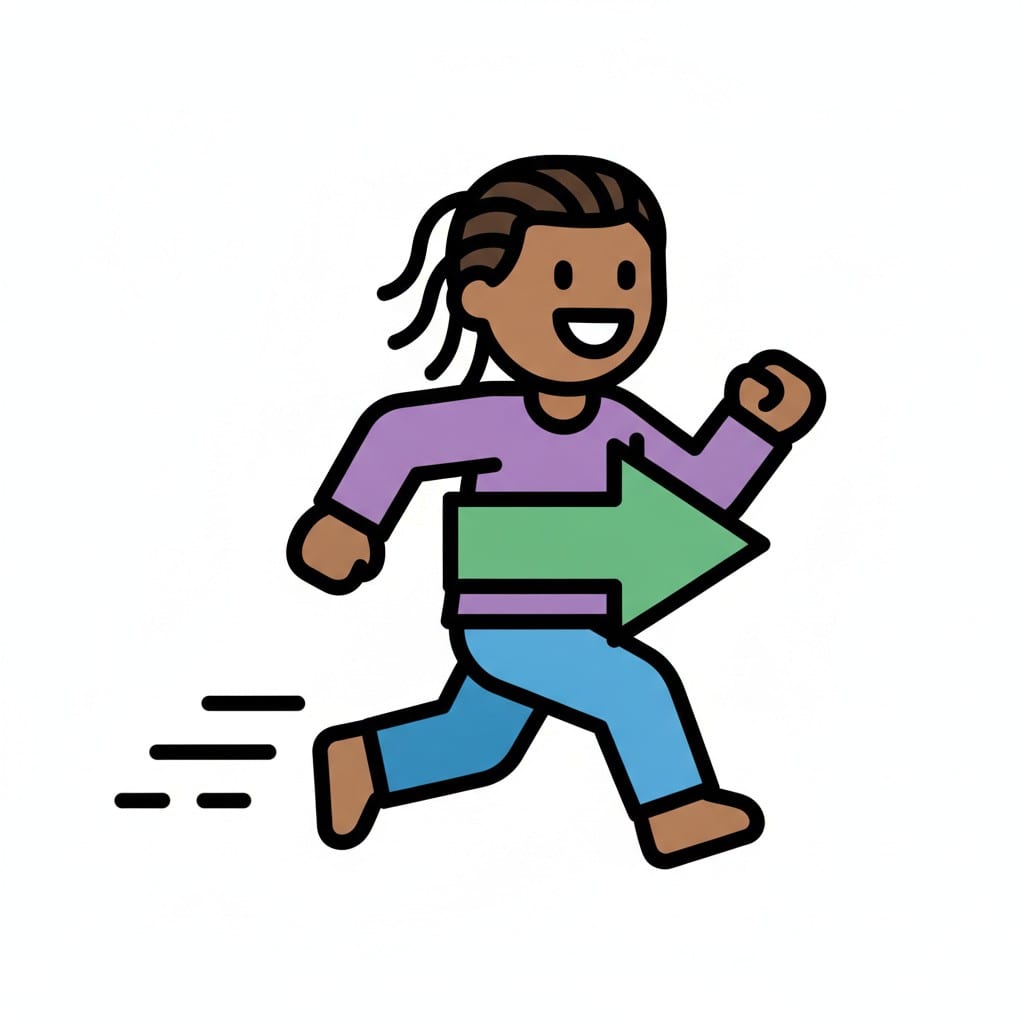 ♀
♀Run forward
A happy girl with braids runs with a big green arrow pointing forward and speed lines behind her.
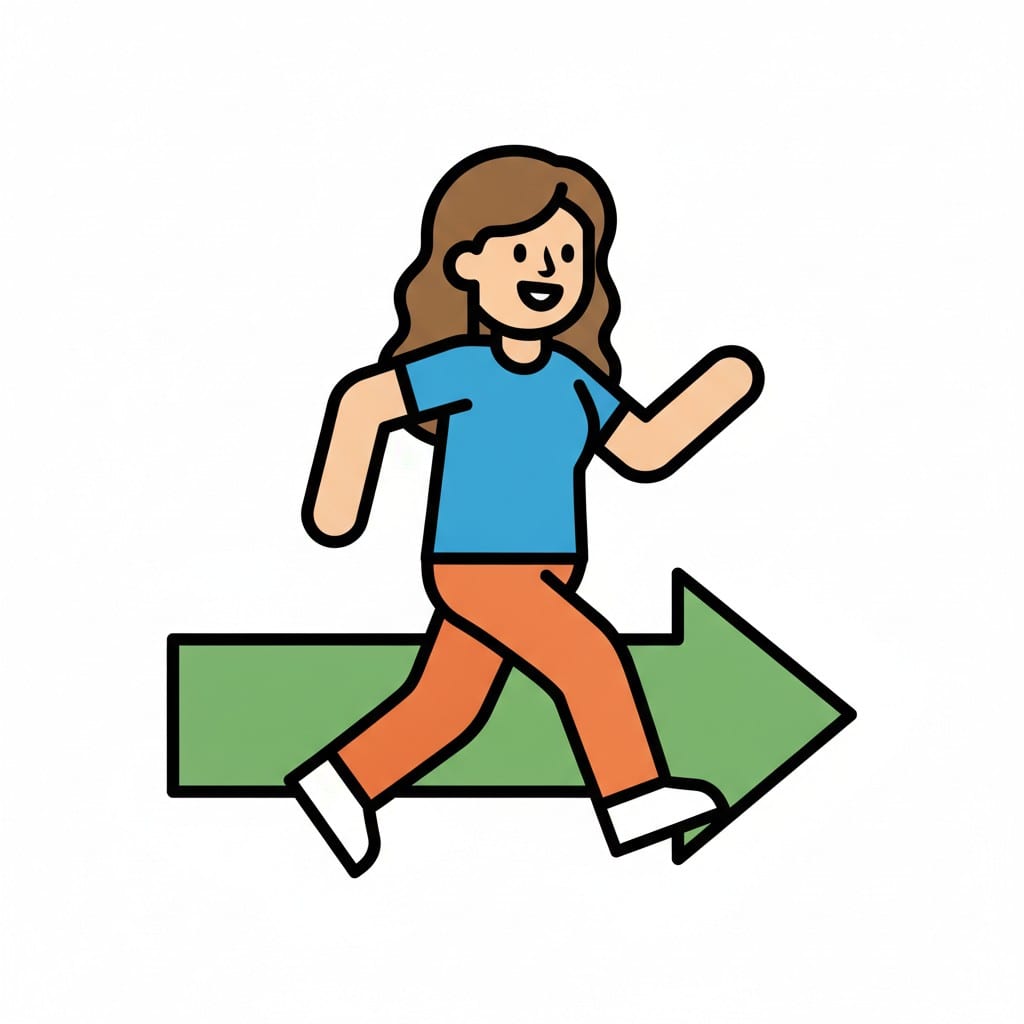 ♀
♀Time to go
A smiling girl runs forward above a big green arrow.
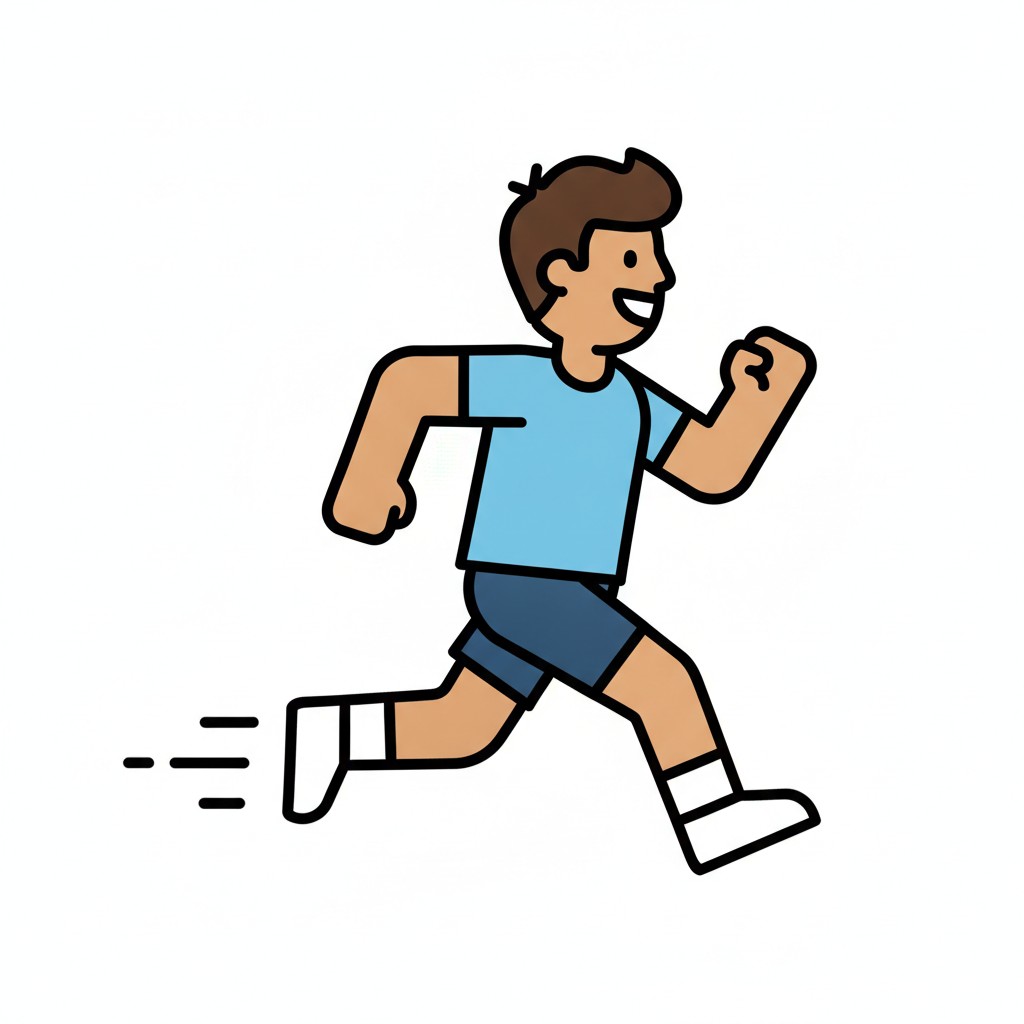 ⚲
⚲Running forward
A person runs forward in a blue top and dark shorts, with speed lines behind them.
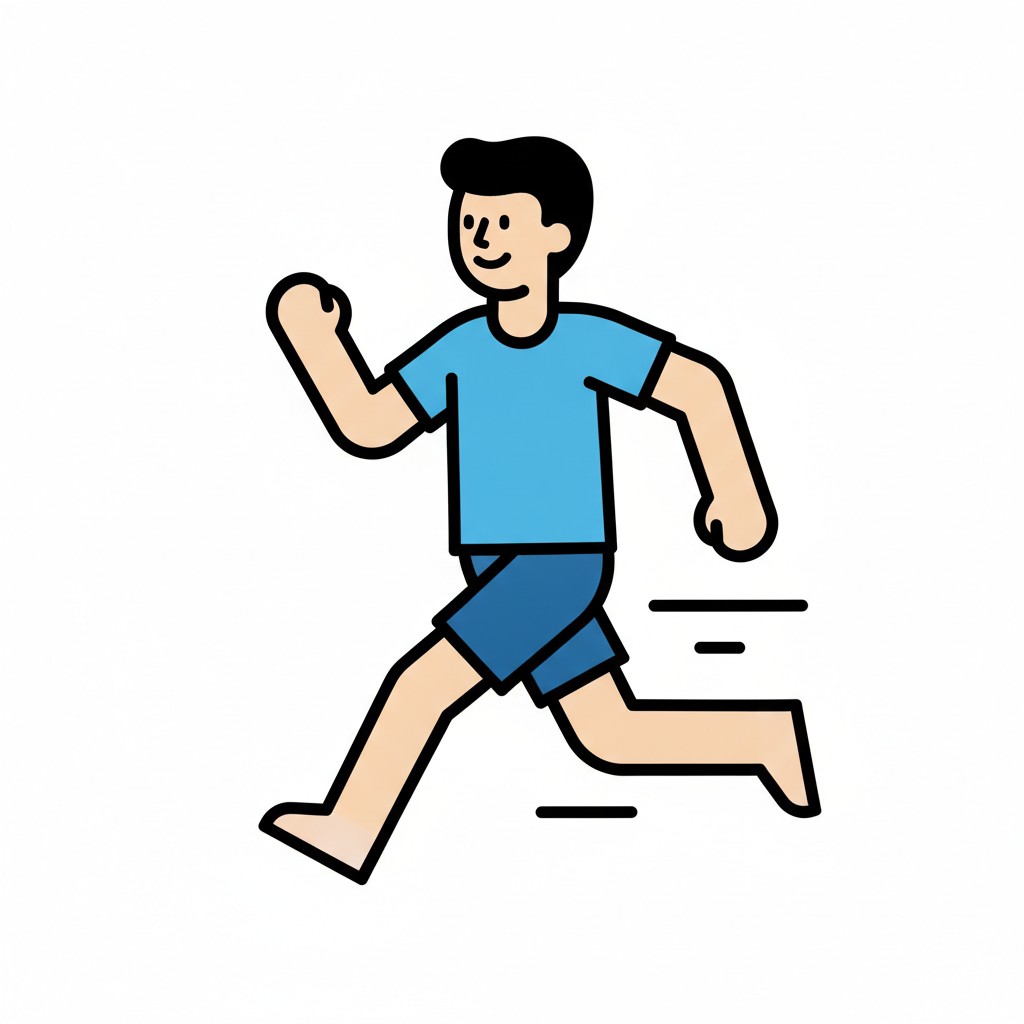 ⚲
⚲Run fast
A person runs with long strides and dashes behind them showing speed.
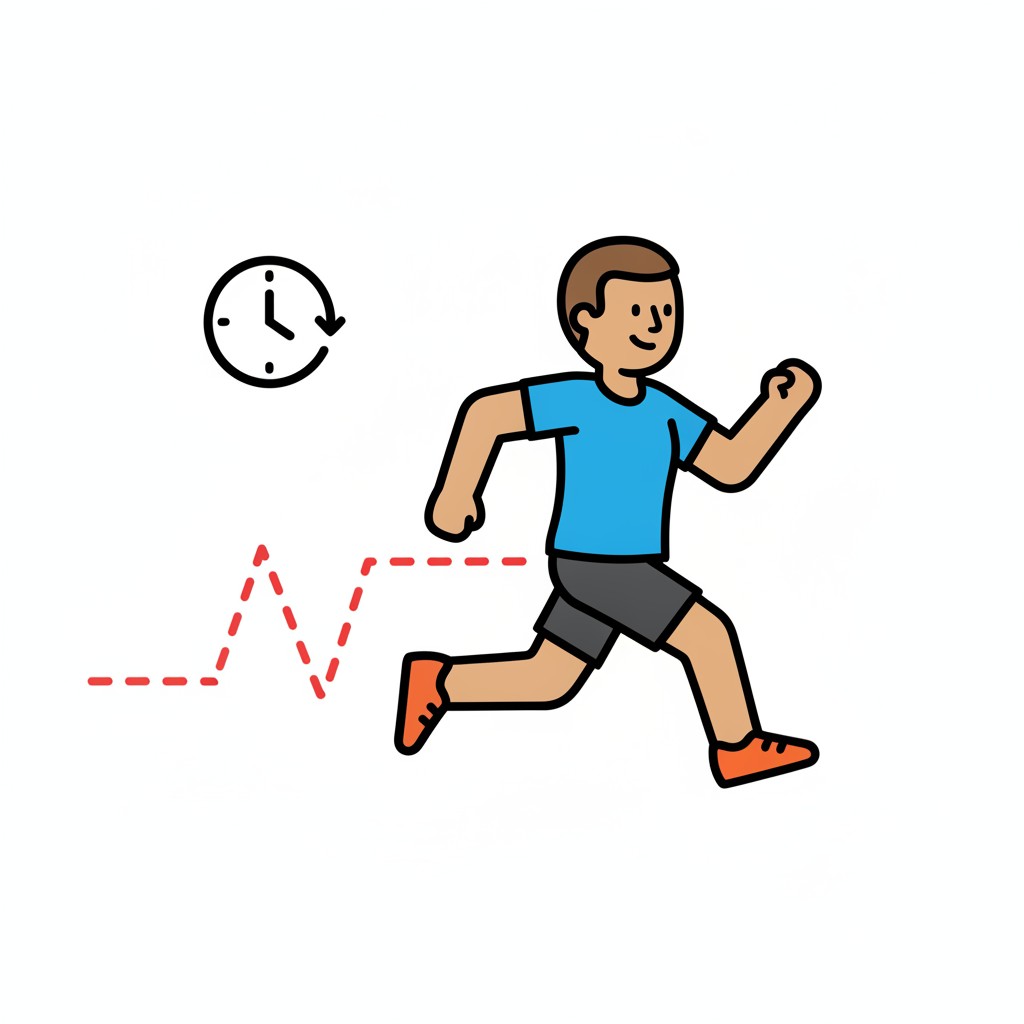 ⚲
⚲Long run
A person runs beside a clock and a red pulse line.
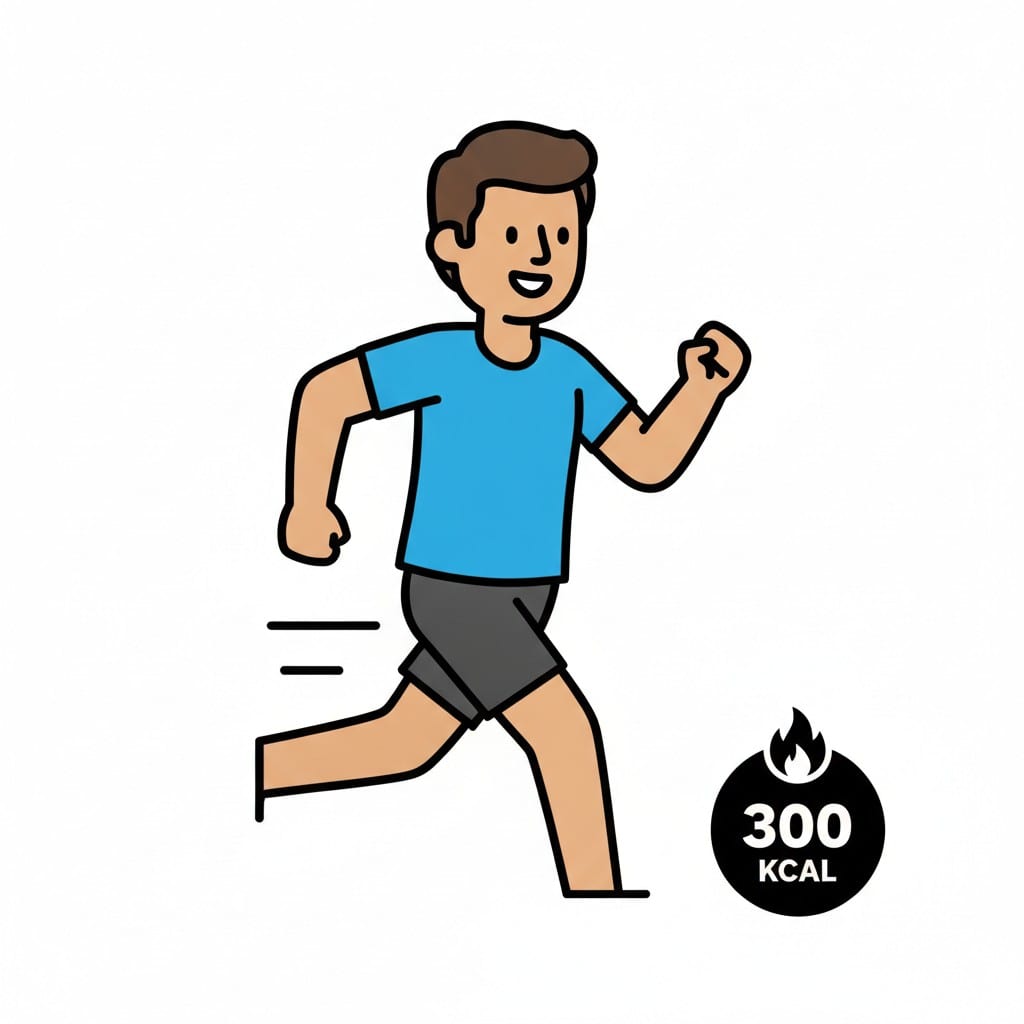 ⚲
⚲Running to burn energy
A man runs next to a symbol showing 300 kcal.
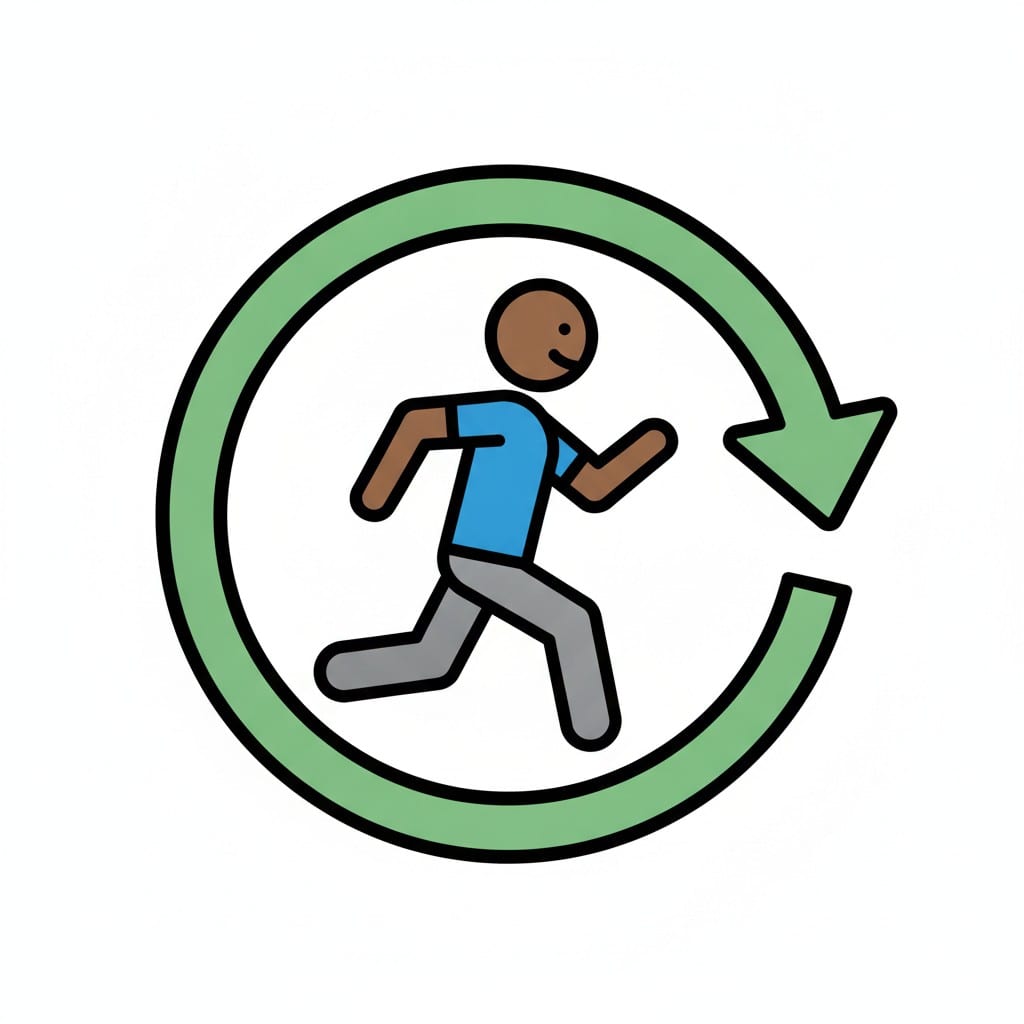 ⚲
⚲Running a loop
A person runs inside a circular arrow.
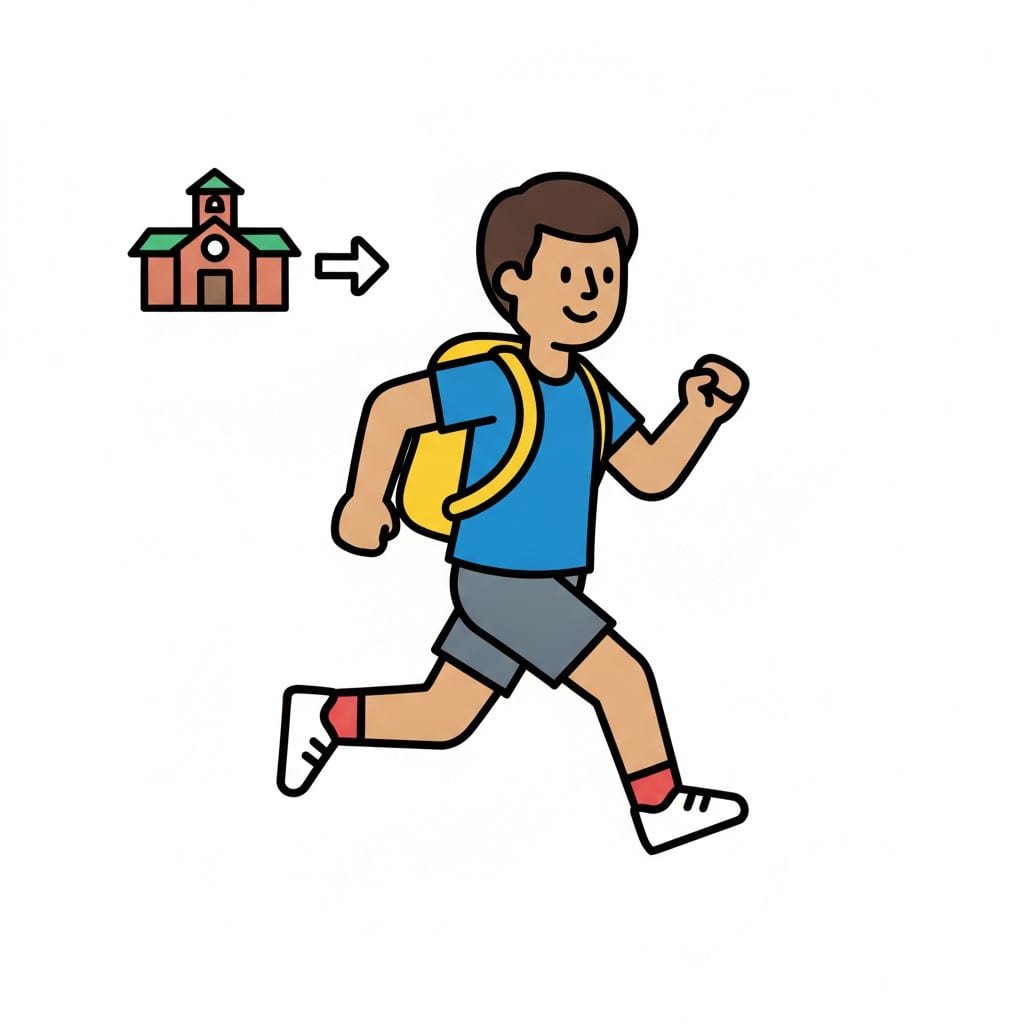 ⚲
⚲Jogging to school
A boy with a backpack jogs towards school.
About this visual support
The hard part of running rarely shows up at the start. It arrives partway through, when breathing turns heavy and the legs want to quit, and then everything depends on knowing there is a set distance left and that it ends. That feeling is hard to explain in words mid-stride. A picture that shows where the finish sits gives a child something to aim their effort at, instead of a stretch that seems to go on forever.
Visual support works well here because running is a chain: warm up, start slow, hold a pace, push through the slow middle, round the finish. When each part is its own picture, that heavy middle becomes one step among several rather than an endless ocean. The child can see they already cleared the first cards and the last ones are close.
One concrete trick is to let a single picture stand for the breathing: show that slowing down and panting is allowed, that it belongs to the run and does not mean stopping. The hard breath becomes an expected part of the trip rather than a stop sign. In the Routined app you can put the pictures in order and start a timer, so the child sees how long the tough middle actually lasts.
Use this image in a schedule
Build your own visual schedule with this image and download it as a print-ready PDF. Completely free.
More similar visual supports
Move around
A person jogs forward in a green top and blue trousers.
Dance
A girl dances with her arms raised and one leg lifted, with movement lines aroun...
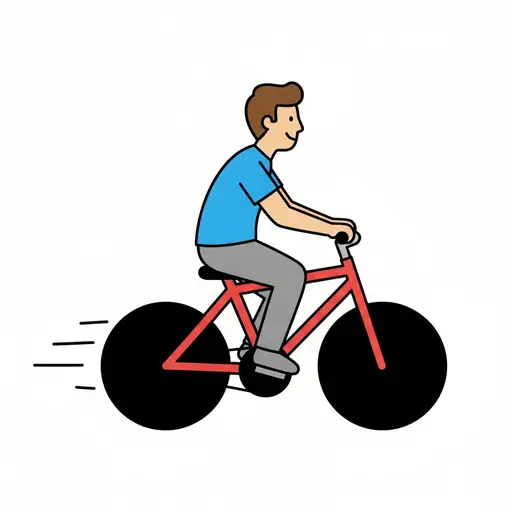
Ride a bike
A man in a blue t-shirt rides a red bike with speed lines behind him.
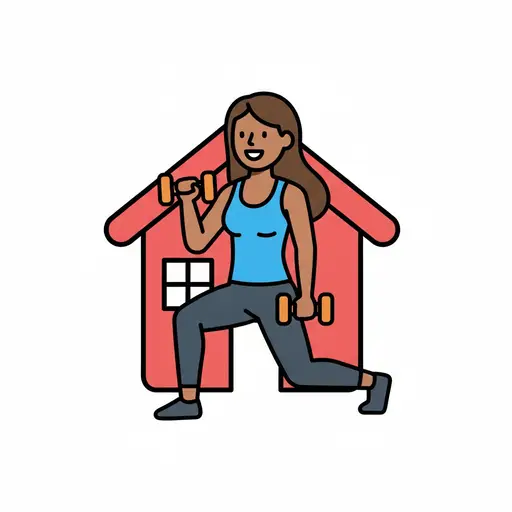
Home workout
A woman in workout clothes does a lunge holding dumbbells at home.
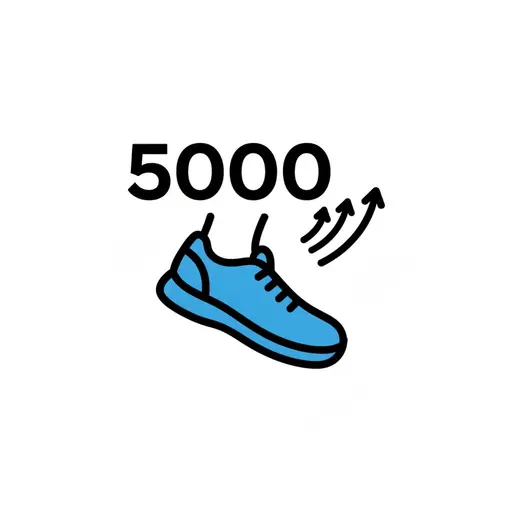
5000 Steps
A blue sneaker with the number 5000 and arrows showing movement.
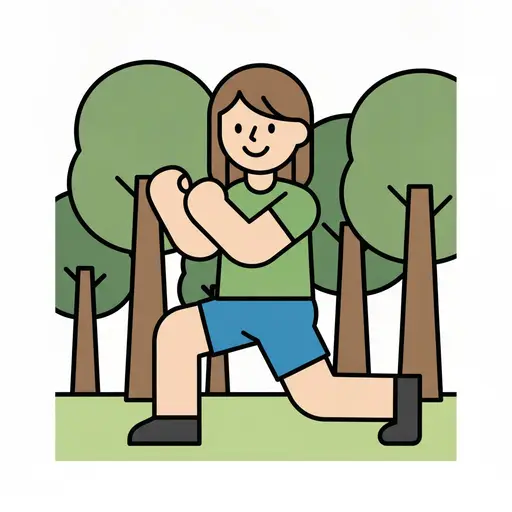
Exercise in the forest
A child does a lunge exercise among the trees in the forest.
Wrestling
Two boys in blue and red singlets hold each other in a wrestling grip.

Pool Swim
A boy swims forward through blue water.
This visual support in other languages
Take the visual supports with you
In Routined you build schedules from these pictures, add timers and voice instructions, and your child follows the day on their own.


* 14-day free trial, then $2.39 a month or $20.99 a year (US pricing). Cancel anytime.