Screen time
A screen pulls in time without sending any inner signal that it has run out. Twenty minutes and two hours feel the same from the inside. The visual support below puts the time on the outside, so the ending does not arrive as an ambush.
 ♂
♂Screen time
Illustration of a boy inside a tablet, holding a phone with a computer monitor next to it. A dashed circle surrounds the tablet.
 ♂
♂Playing on tablet with time limit
Illustration of hands holding a tablet showing a gamepad icon, a clock icon, and a happy face icon on the screen.
 ♂
♂Boy watching tablet
Illustration of a happy boy sitting and looking at a tablet showing a play button on the screen.
 ♂
♂Boy with tablet
Illustration of a happy boy holding a tablet showing a video feed with a play button, a heart icon, and a profile icon.
 ♂
♂Boy watching a tablet
A boy sits cross-legged and watches a video on his tablet.
 ♀
♀Woman holding a tablet
A woman is holding a tablet.
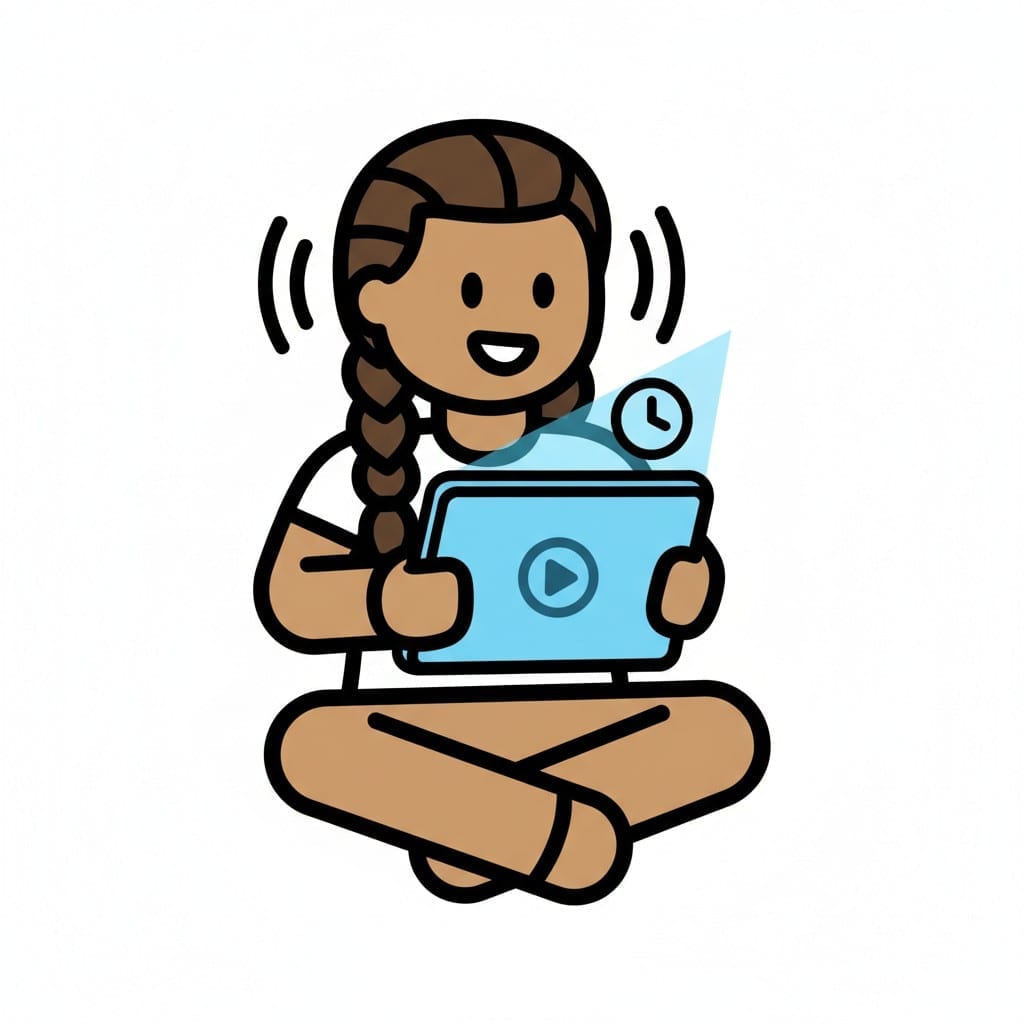 ♀
♀Girl using tablet with timer
A girl is sitting down and using a tablet with a timer and play symbol.
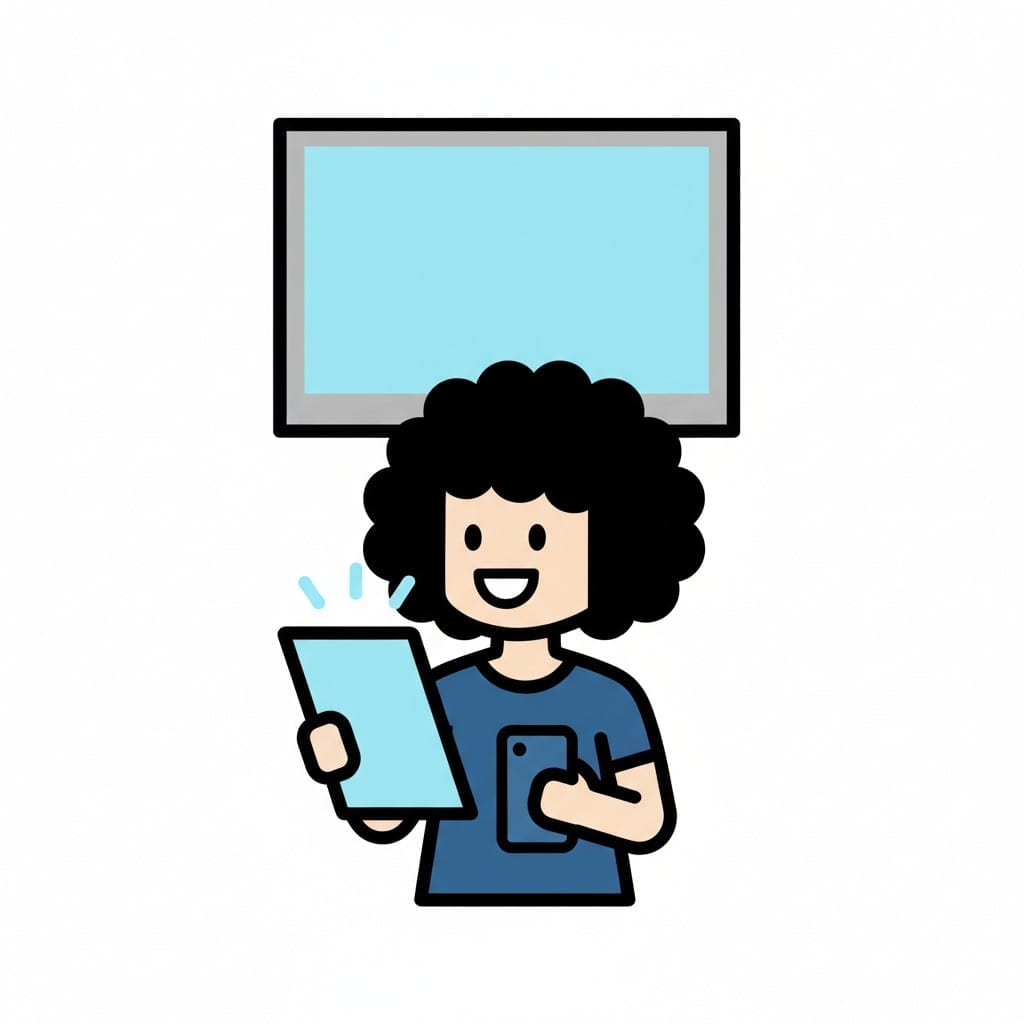 ♀
♀Person with multiple screens
A person is standing in front of a large screen, holding a tablet and a mobile phone.
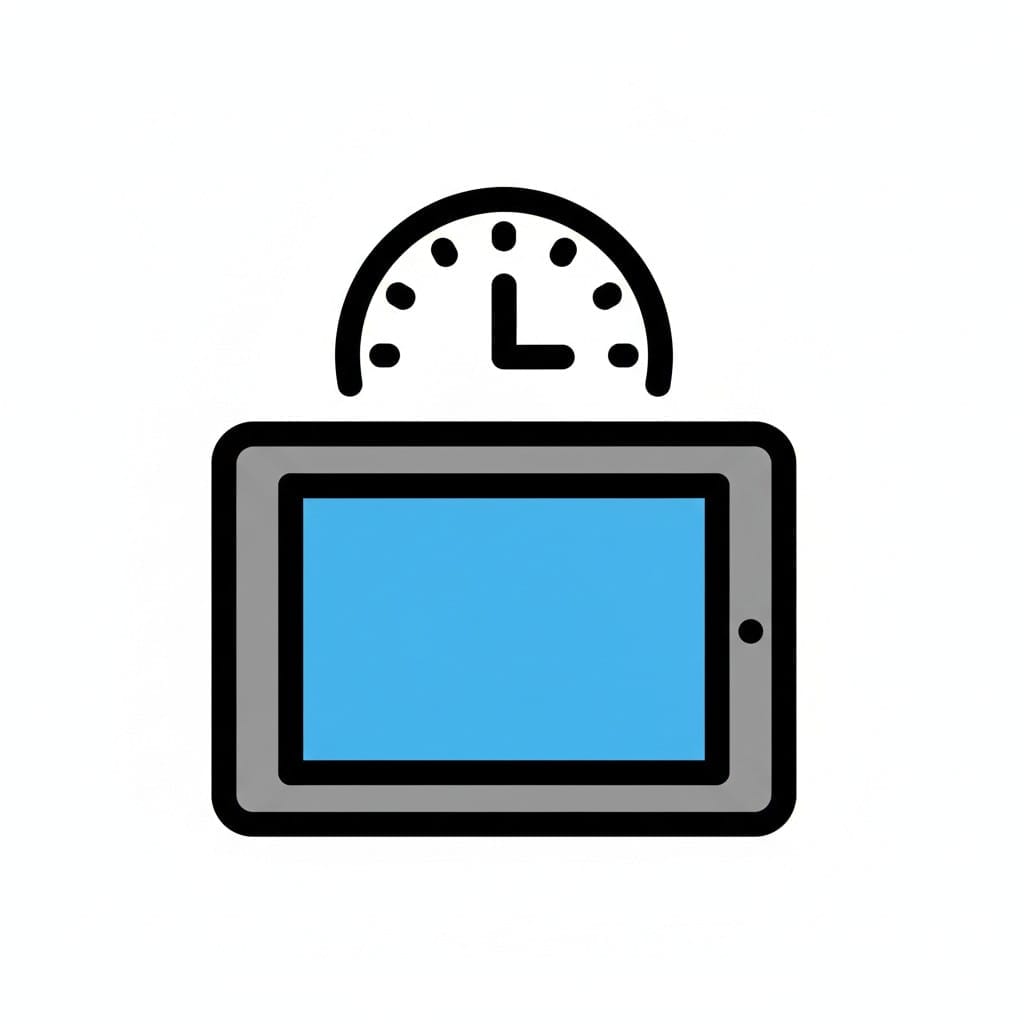
Tablet with timer
A tablet with a timer above it, indicating limited screen time.
 ♀
♀Screen
A girl holds a tablet with icons on the screen.

Screen time
A tablet with icons for camera, chat and video.

Tablet
A tablet showing a folder and an upload icon.
 ♀
♀Using the screen
A girl holds a tablet showing video and search above her head.
About this visual support
Time perception is what makes screen time hard, not the content itself. Once a child is inside an app or a game, there is no built-in sense of time passing. The adult words ten minutes left land as ten minutes from nowhere, because nothing in the experience has been counting down with them.
Visual support builds an outer timeline the child can check. The cards show that screen time is happening now, that a break is approaching, and what comes after. When the transition is visible from the start, the ending is not a break in the rhythm but a part of it.
A concrete tip: lay the cards in a row next to where the child is sitting, not above the screen where they get forgotten. Point to them once halfway through, so the child links time and image. In the Routined app you can add a visual timer that shrinks as the minutes pass, giving the child two signals instead of one.
This image is part of these ready-made schedules
Use this image in a schedule
Build your own visual schedule with this image and download it as a print-ready PDF. Completely free.

More similar visual supports

iPad time
A person smiles while holding and pointing at a grey iPad with media icons.
Phone time
A woman sits on a beanbag looking at her phone.

Tablet
Two hands hold a tablet with a blue screen showing a speech bubble and a music n...
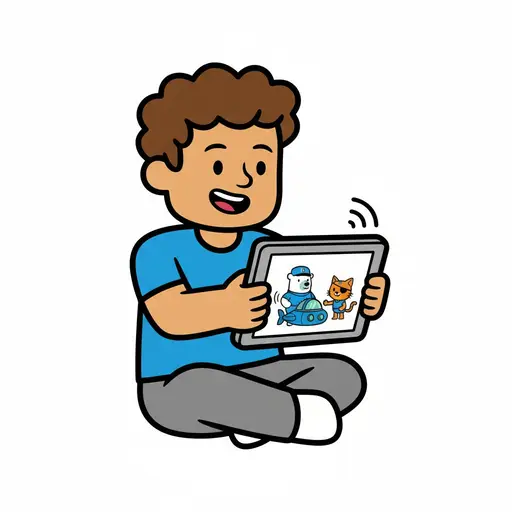
Watch Octonauts
A boy is sitting happily watching an Octonauts series on a tablet.

Watch tablet
A boy sits holding a tablet that is playing a video.
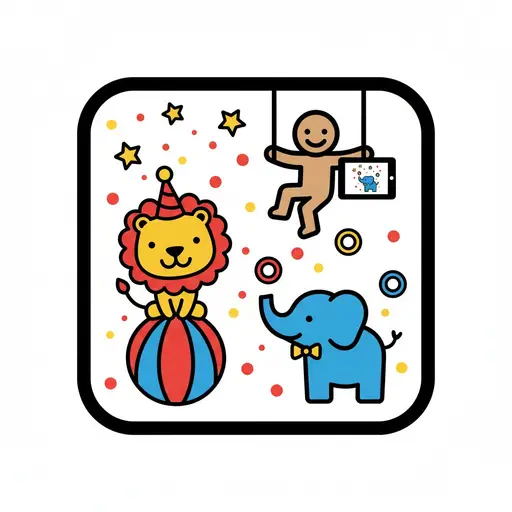
Circus animals app
A cartoon figure on a trapeze holds a tablet displaying an elephant, while a lio...
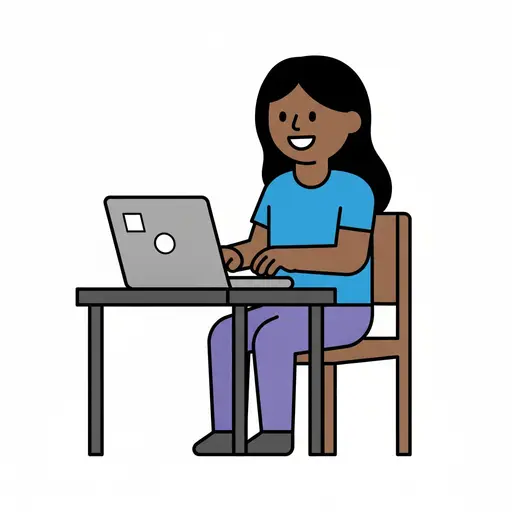
Computer
A smiling person sits on a wooden chair at a desk and types on a grey laptop.
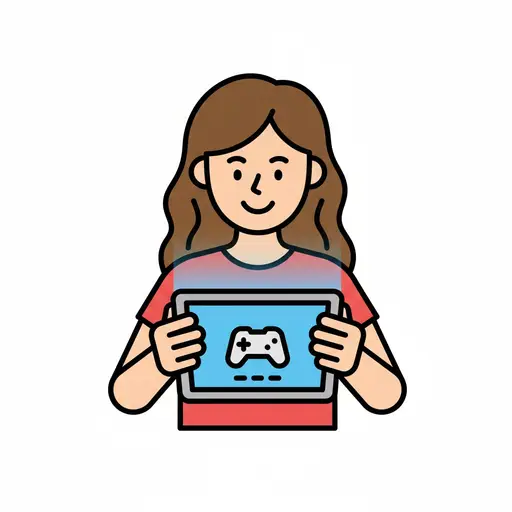
Games (screen time)
A smiling girl playing games on a tablet.
Take the visual supports with you
In Routined you build schedules from these pictures, add timers and voice instructions, and your child follows the day on their own.


* 14-day free trial, then $2.39 a month or $20.99 a year (US pricing). Cancel anytime.