Song
Familiar songs carry a tempo a child already trusts. A new melody can land the opposite way if it shows up without warning. The visual support below lets song time keep the shape that already works.
 ♀
♀Song
Illustration of musical notes, sound waves, and lips, representing a song.
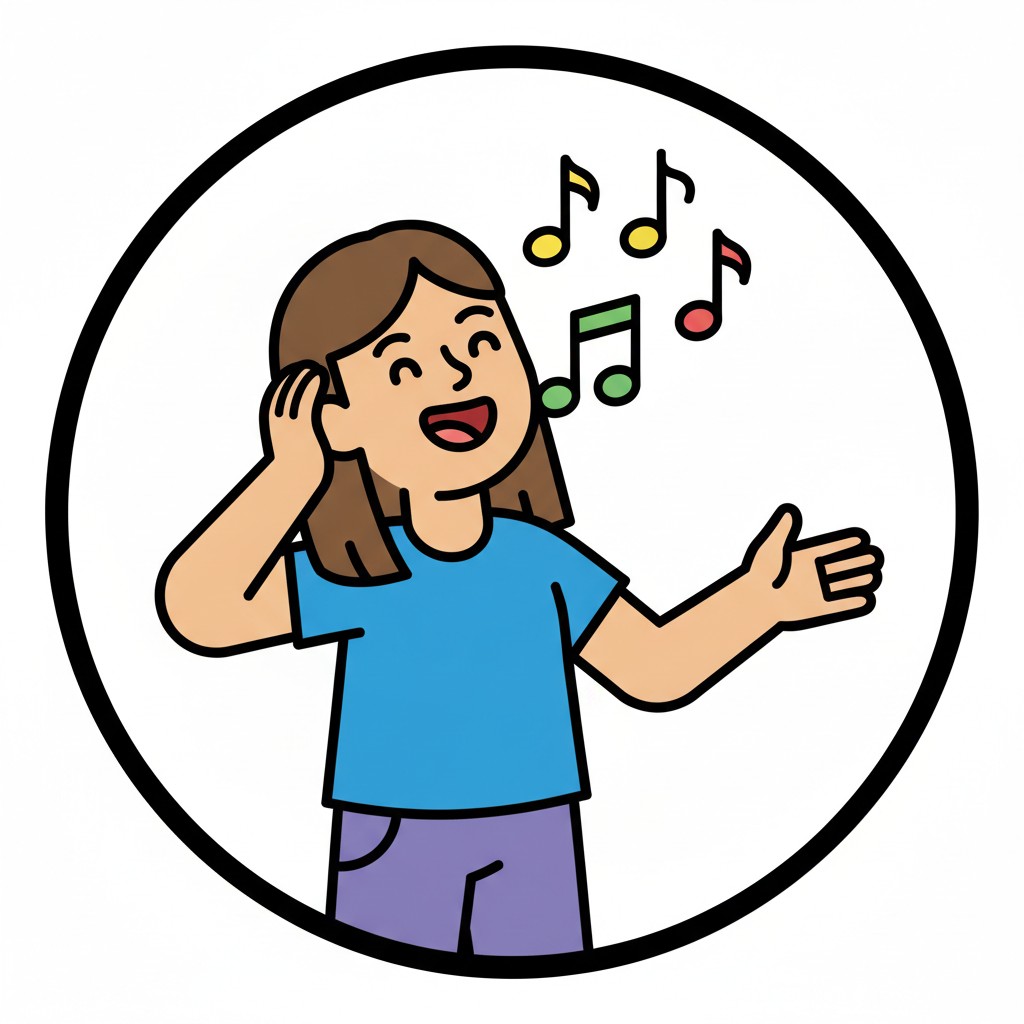 ♀
♀Girl singing
A girl sings happily with music notes around her.
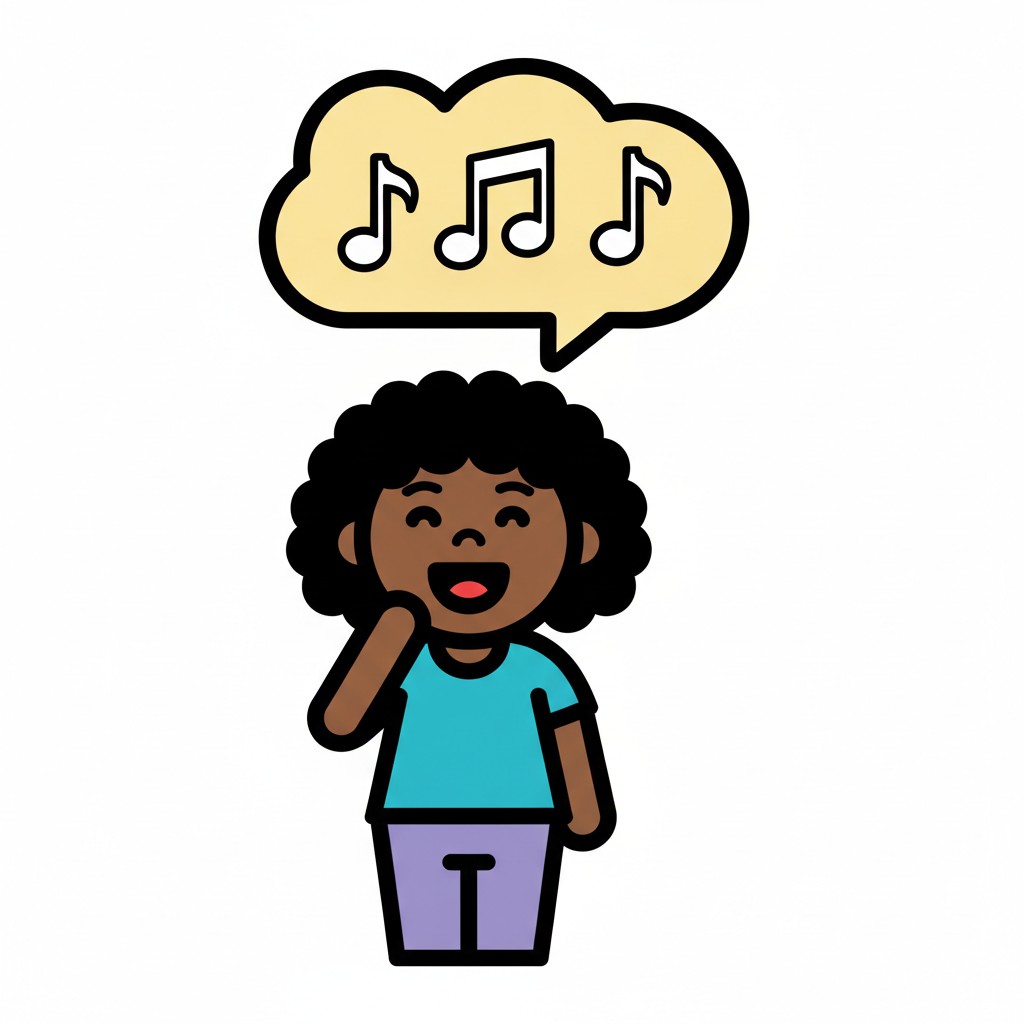 ♀
♀Singing a song
A girl sings with a speech bubble full of music notes.
About this visual support
Repetition is not boredom in song time, it is the whole point. A children's song sung a hundred times has become a place where the child knows what comes next, can breathe with the phrasing and predict the pitch of the chorus. When an entirely new tune is dropped into that place, it can feel intrusive, even if the grown-up world considers variation a virtue.
A row of song cards makes the order negotiable. Lay out the cards for the songs you usually sing and let your child pick the sequence. If a new melody is coming, it can sit at the end, or simply as an option, introduced without pushing anything familiar aside. The image gives your child a chance to see the song approaching, which lowers the threshold far more than just hearing the title spoken.
A concrete tip for song time: pair each card with a small hand gesture – a waving hand for the hello song, a sleeping cat for the lullaby. The little gesture becomes a bridge between picture and melody. In Routined you can save your own repertoire as a recurring routine so the same safe order is there every time.
Use this image in a schedule
Build your own visual schedule with this image and download it as a print-ready PDF. Completely free.

More similar visual supports
Activities
A child surrounded by icons for a book, paint palette, ball and building block.
Activity
Hands holding a book and a paintbrush, surrounded by a puzzle, a ball and buildi...
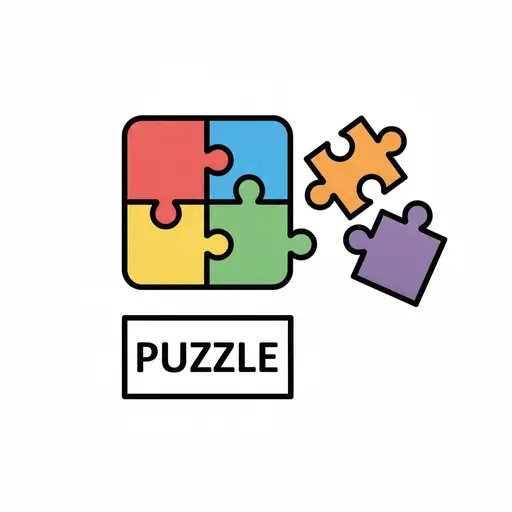
Do a puzzle
Four colourful jigsaw pieces joined, two loose pieces and the word PUZZLE.
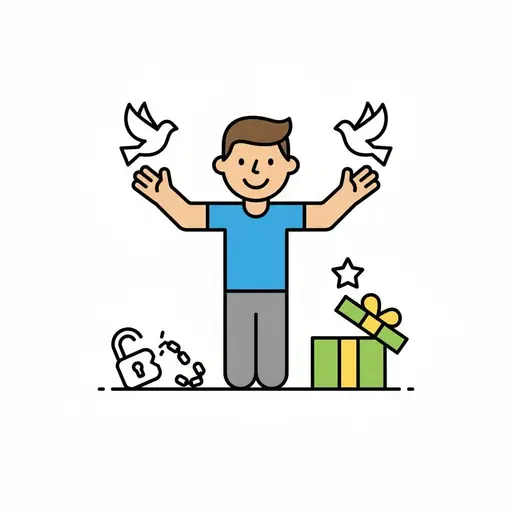
Free
A person stands with arms raised, with two doves, an open padlock and an opened ...

Holiday
An open suitcase filled with sunglasses, a beach ball, a towel and a book under ...
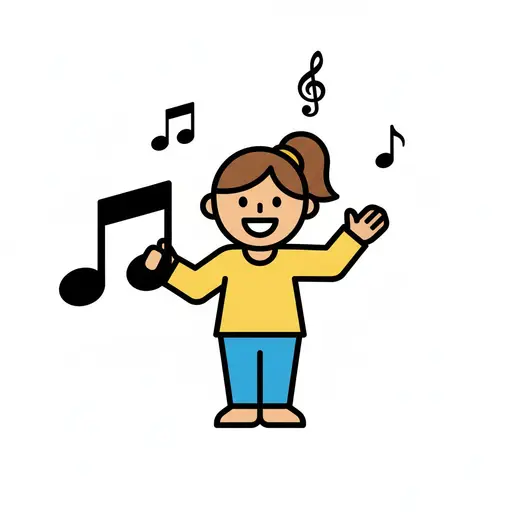
Music
A smiling girl with a ponytail holds up a large black music note and stretches o...
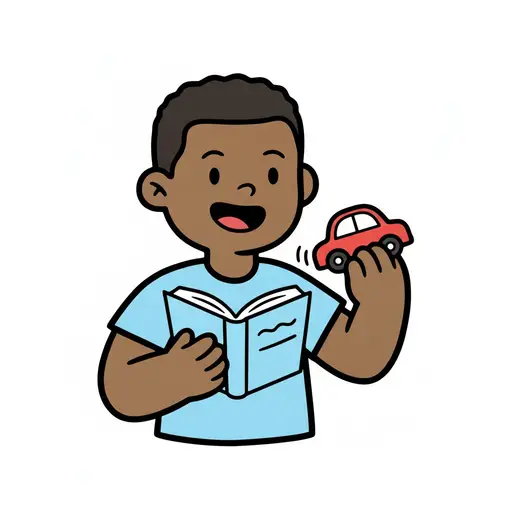
Play and read
A child reads a book while holding up a toy car.
Play stories
A person reads a book and plays with a yellow dinosaur and a red robot.
Take the visual supports with you
In Routined you build schedules from these pictures, add timers and voice instructions, and your child follows the day on their own.


* 14-day free trial, then $2.39 a month or $20.99 a year (US pricing). Cancel anytime.