Swimming
Swimming asks the body to trust itself exactly when the sensory noise is at its loudest: water in the ears, chlorine in the nose, a hall that echoes. The visual support below breaks the pool trip into pieces you can prepare calmly at home.
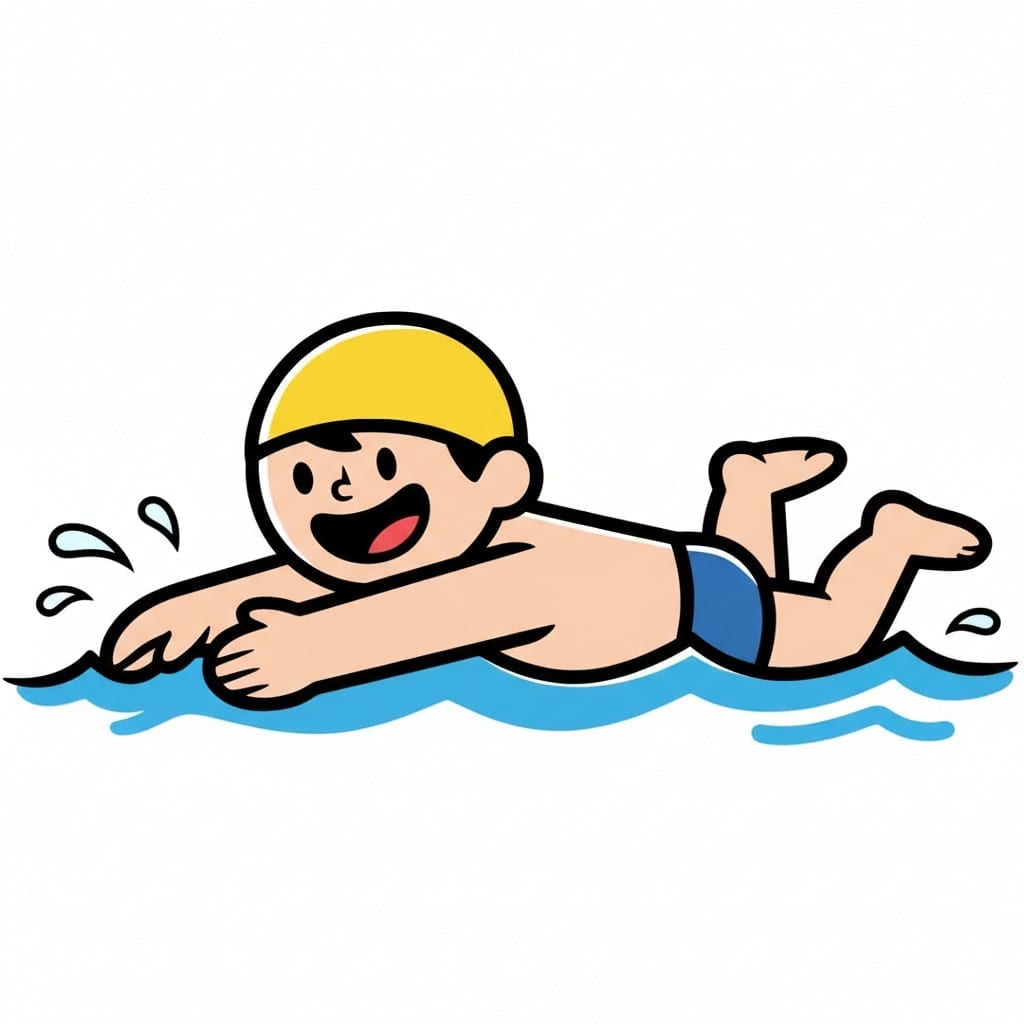 ♂
♂Swim
A cartoon boy with a yellow swim cap and blue swim shorts is swimming in the water.
♂Swim
A boy wearing a red swim cap and blue swim trunks is swimming, creating splashes in the water.
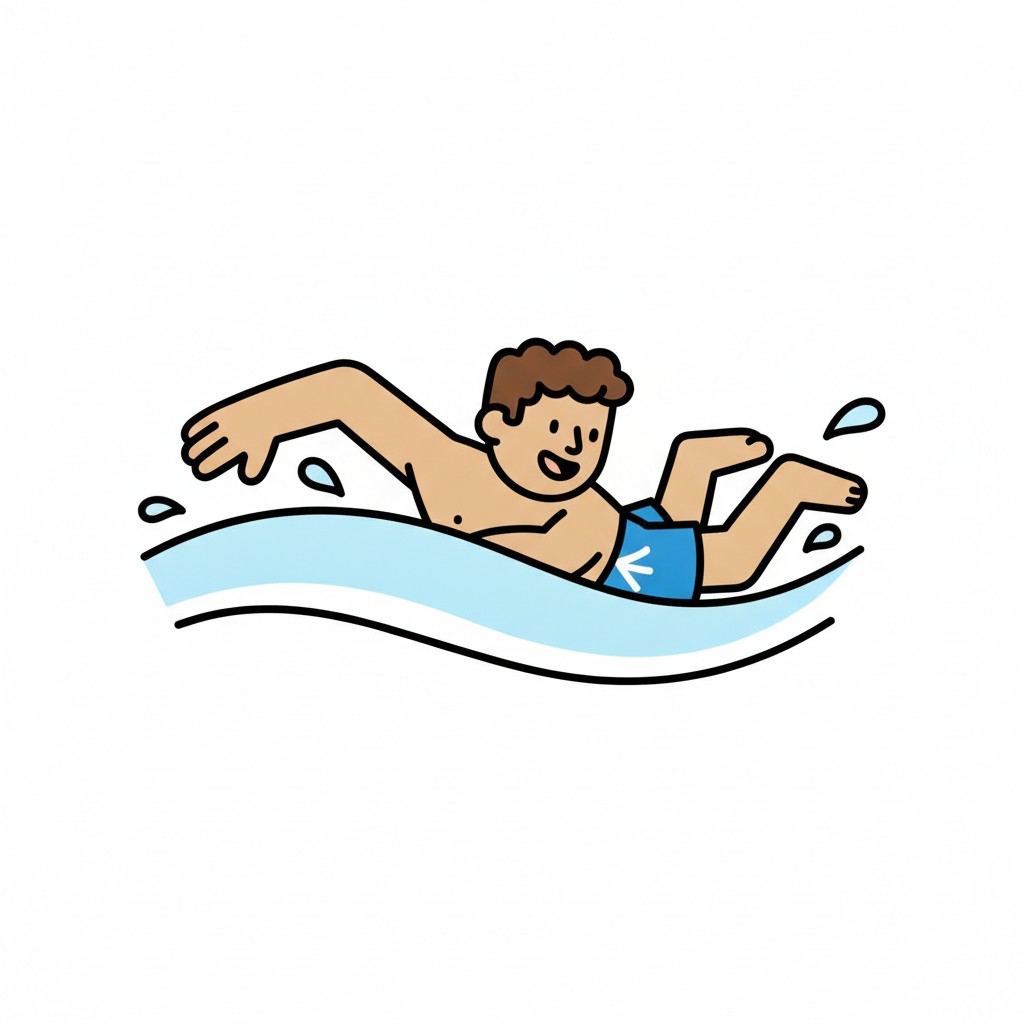 ♂
♂Boy swimming
A boy swims front crawl in the water.
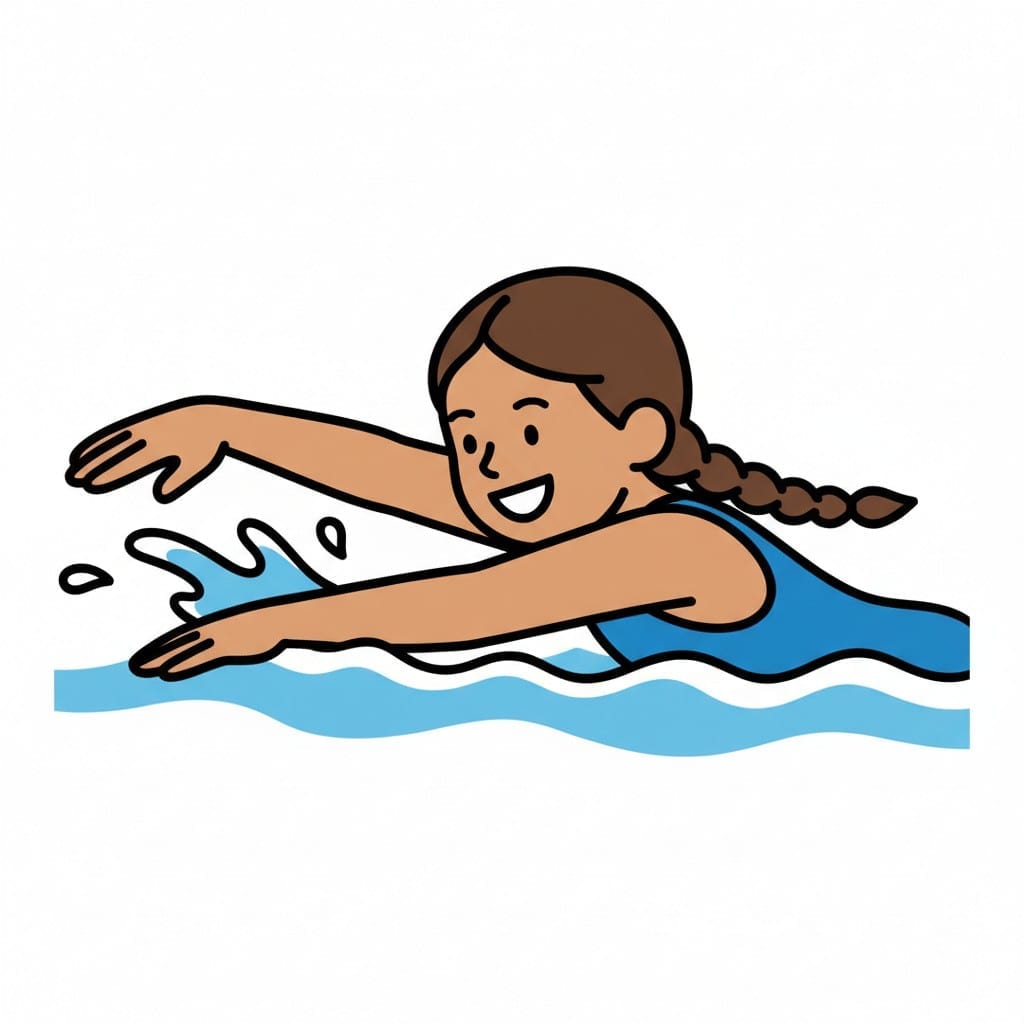 ♀
♀Girl swimming front crawl
A girl with a braid in a blue swimsuit swims front crawl through blue water with her arms reaching forward.
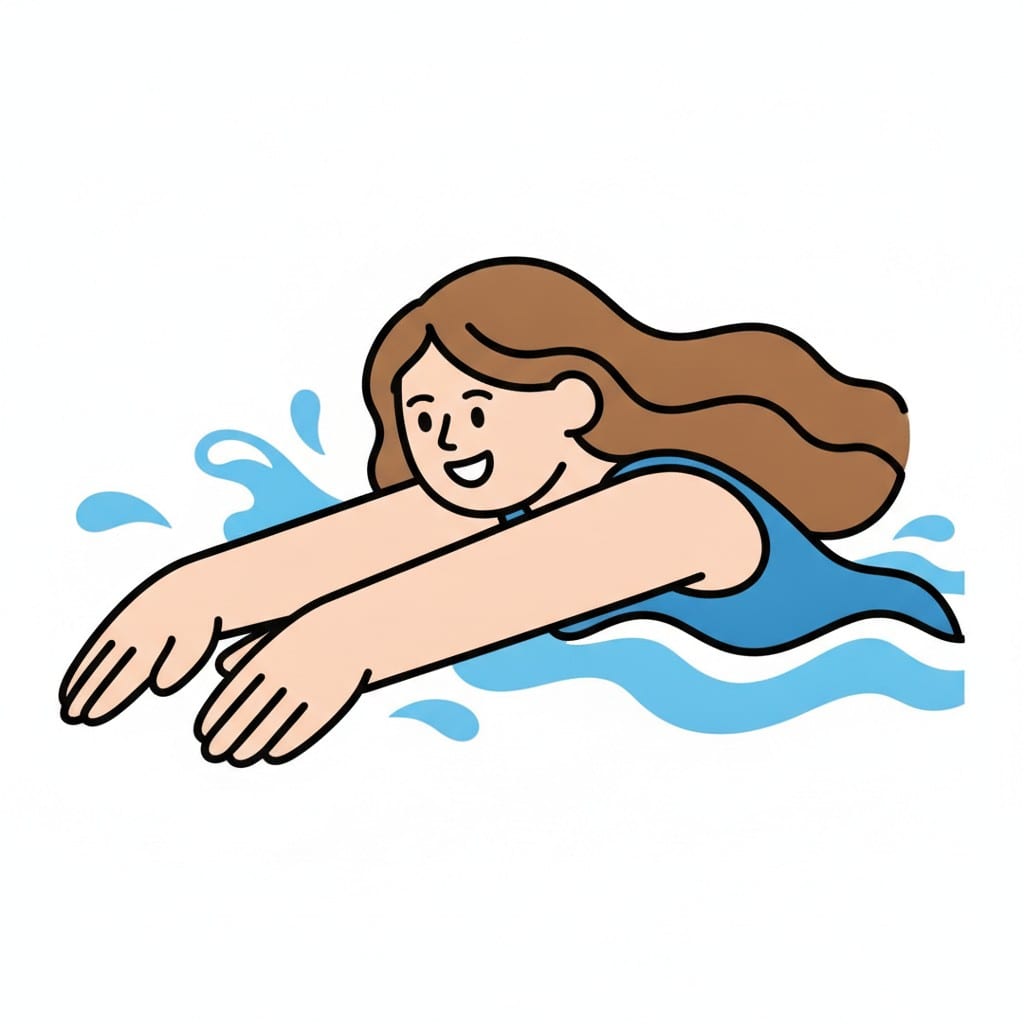 ♀
♀Girl gliding through the water
A girl with long wavy hair in a blue swimsuit glides forward with both arms stretched out and splashes around her.
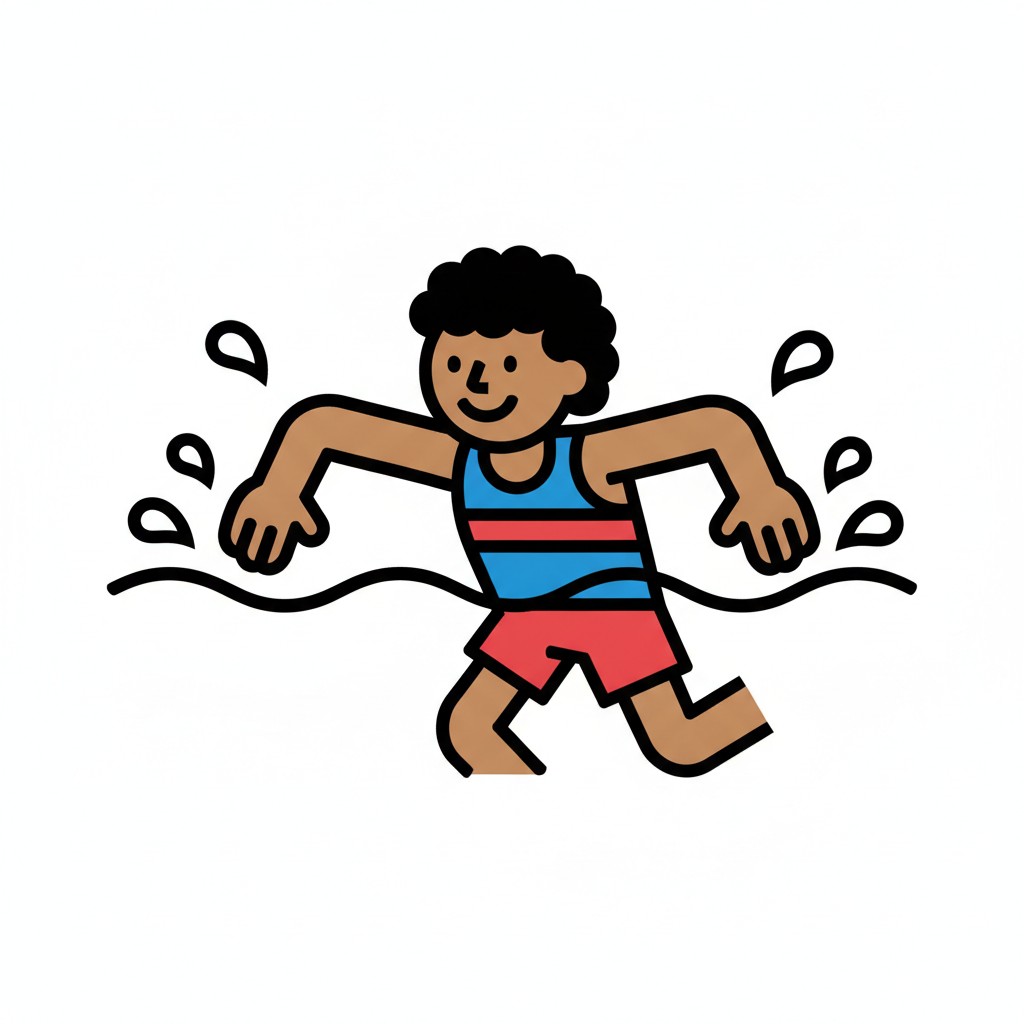 ⚲
⚲Swim
A person swims in the water with arms out and droplets around them.
About this visual support
Swimming is not one activity but several at once. The body has to stay afloat, the ears keep filling in waves, the nose meets chlorine unlike anything else in daily life, and the feet have no clear floor to trust. Add a hall full of echo where other children's voices bounce off tiled walls, and it becomes obvious why this can feel much bigger than it looks from poolside.
With visual support you can walk through the body's parts beforehand: what gliding off feels like, what happens when water covers the ears, what to do if it goes up the nose. When the details are seen and named in advance, the body can register them as expected rather than as surprises. That is often the difference between a child who dares to let go of the edge and one who cannot quite get there.
One practical tip: look at the picture for floating on your back at home in bed the night before, and let your child feel how the head rests back into the pillow. There is then a physical memory to lean on in the pool. To plan the whole visit, including changing and a break, you can build the sequence in Routined so the swimming hall becomes a series of steps instead of one enormous event.
Use this image in a schedule
Build your own visual schedule with this image and download it as a print-ready PDF. Completely free.

More similar visual supports
Go swimming
A girl with a ponytail in a blue swimsuit swims through the water as it splashes...
Floorball practice
A boy stands with a stick and a yellow ball at practice.
Go to practice
A child with a football and a bag walks across a pitch towards a goal.
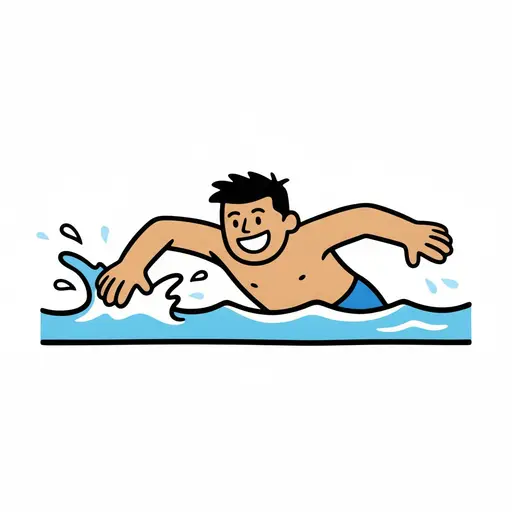
Pool Swim
A boy swims forward through blue water.
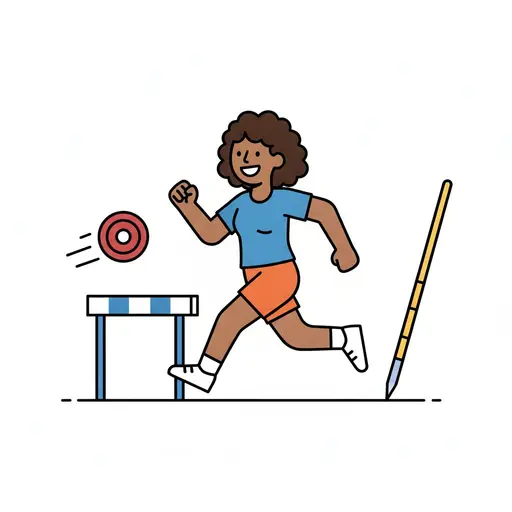
Athletics
A girl runs past a hurdle, with a javelin and a target around her.
Bike shorts
A pair of black cycling shorts with grey details.
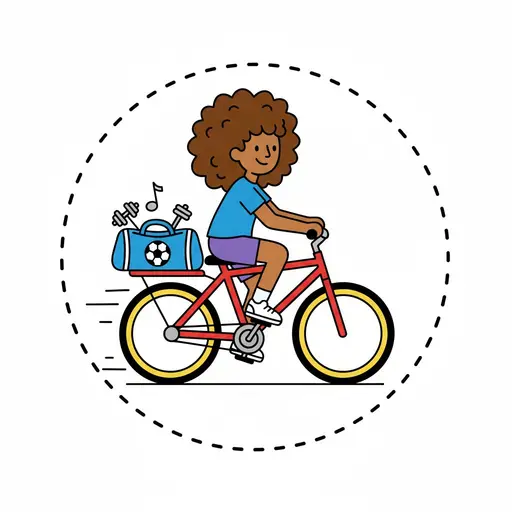
Bike to practice
A girl riding a bike with a sports bag on the back.
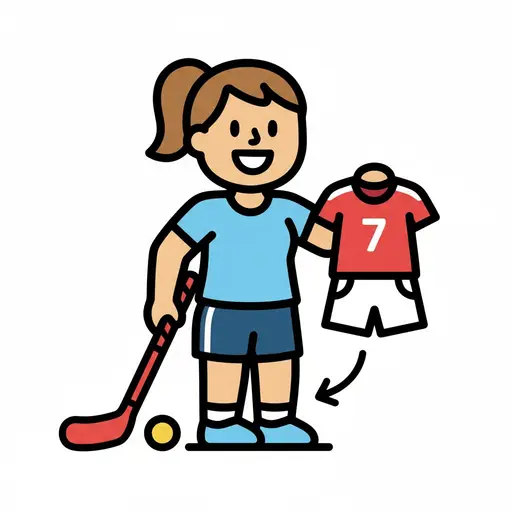
Change for floorball
A person holds a floorball stick and shows their floorball outfit, consisting of...
Take the visual supports with you
In Routined you build schedules from these pictures, add timers and voice instructions, and your child follows the day on their own.


* 14-day free trial, then $2.39 a month or $20.99 a year (US pricing). Cancel anytime.