Take a turn
Standing still while someone else rolls the dice, waiting three more goes, and knowing the box of toys is right there. The pictures below turn waiting into something the child can see, not only feel.
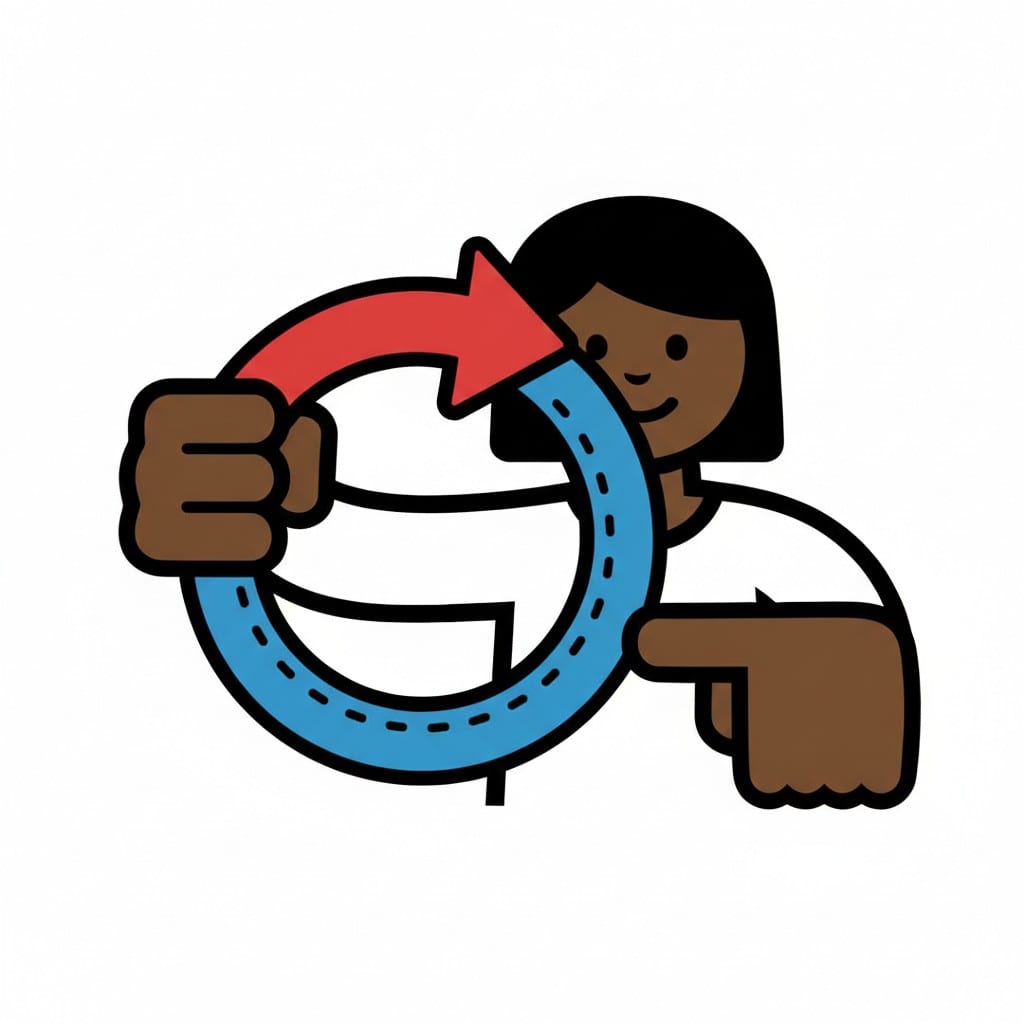 ♀
♀Take a turn
A person pointing to a circular arrow with a dashed blue path and a red arrow, illustrating taking turns.
About this visual support
Waiting your turn is one of the harder things a child gets asked to do, even though it looks passive. Impulse control has to hold the body back from reaching for the piece, while the sense of time often is not yet steady enough to gauge how soon the next round comes. A few seconds easily feel like minutes.
A picture sequence moves the wait from an unsteady inner experience to something visible. With a card called wait followed by a card called my turn, the head has something to hold on to. Younger siblings, children in parallel play and grown-ups joining a board game all benefit from the same scaffolding.
A specific tip: give the child a small physical job during the wait, like holding the dice cup for the next player or sliding a counter along a number strip once per round. Hands get something to do, which is easier than holding still. In Routined the turn order can be shown in the same way for the whole game, so the wait has a clear start and end.
Use this image in a schedule
Build your own visual schedule with this image and download it as a print-ready PDF. Completely free.

More similar visual supports
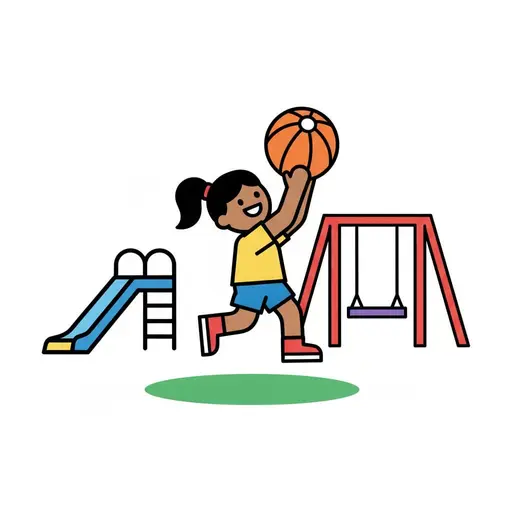
Active play
A girl jumps with a basketball in a playground with a slide and swings.
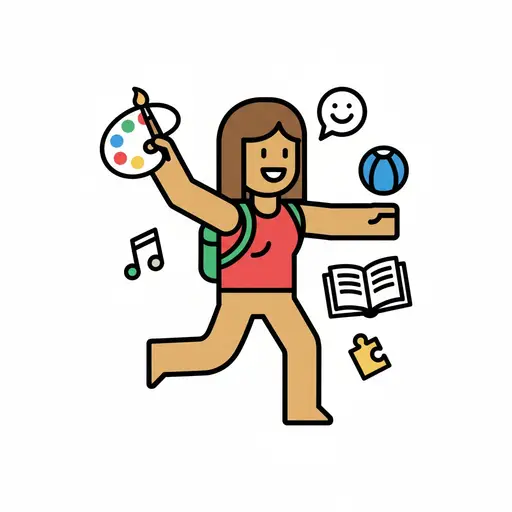
Activities
A child surrounded by icons for a book, paint palette, ball and building block.
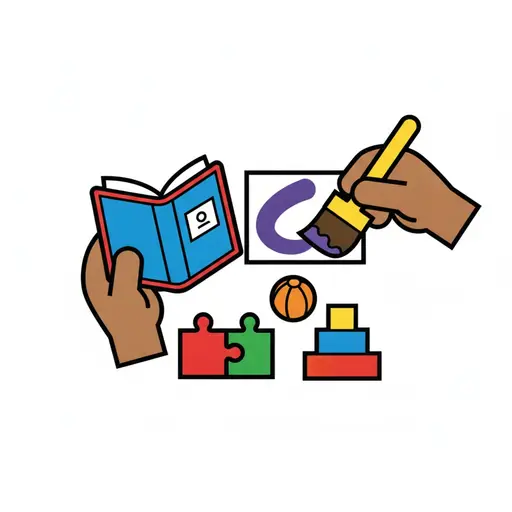
Activity
Hands holding a book and a paintbrush, surrounded by a puzzle, a ball and buildi...
After school club
A boy stands in a club house with a circular arrow around it.

After school friends
Two boys and a girl, all smiling, one boy holding a soccer ball, in front of a s...
Afternoon playtime
A happy girl runs and plays with a ball outdoors in front of a playground.

Beach
A beach with an umbrella, beach ball and flip-flops by blue sea and sun.
Board game
A round board game with colored squares, game pieces and a die beside it.
Take the visual supports with you
In Routined you build schedules from these pictures, add timers and voice instructions, and your child follows the day on their own.


* 14-day free trial, then $2.39 a month or $20.99 a year (US pricing). Cancel anytime.