Travel
Travel swaps out almost everything at once: the bed, the smell, the sounds, the times. The child's own schedule becomes the steadiest thing in the suitcase. The visual support below holds the structure even when the place keeps shifting.
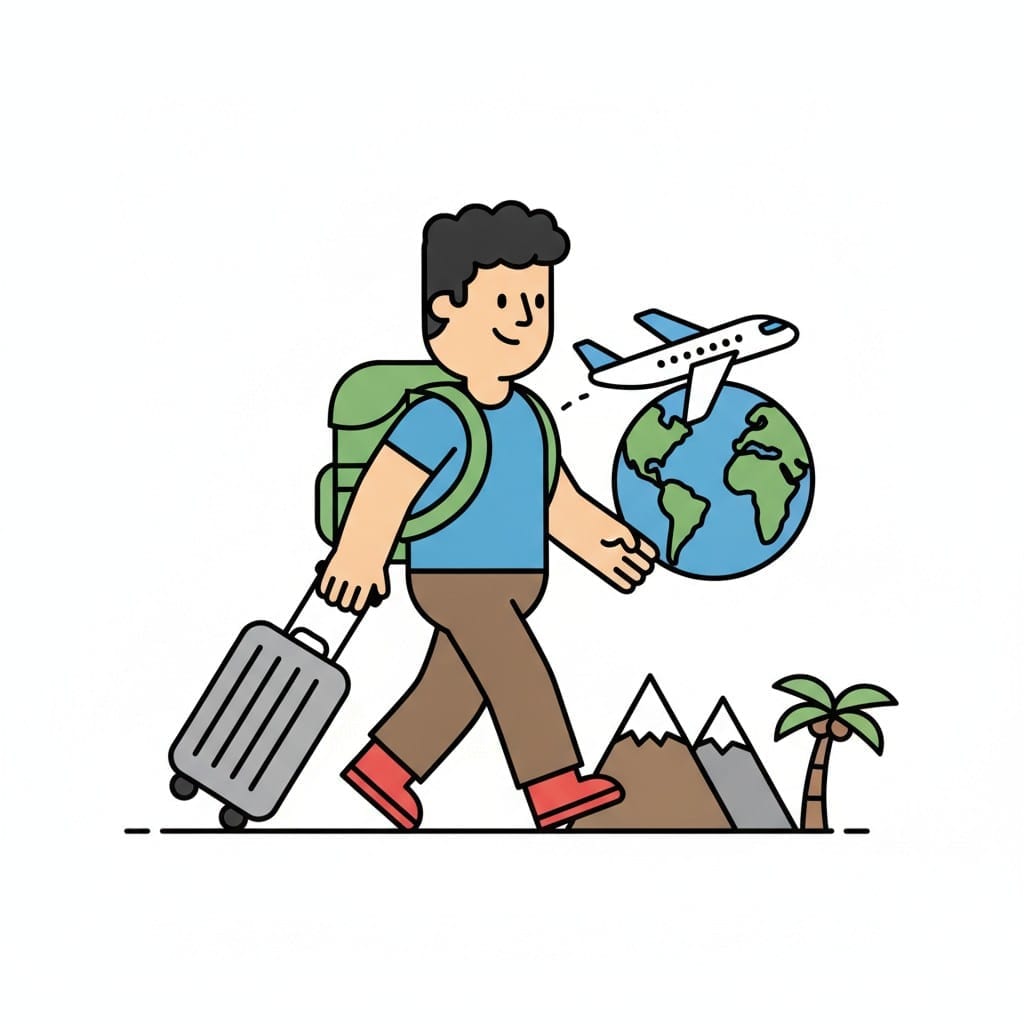 ♂
♂Setting off on a trip
A boy with a backpack pulls a suitcase while a plane circles a globe, and mountains and a palm tree stand behind him.
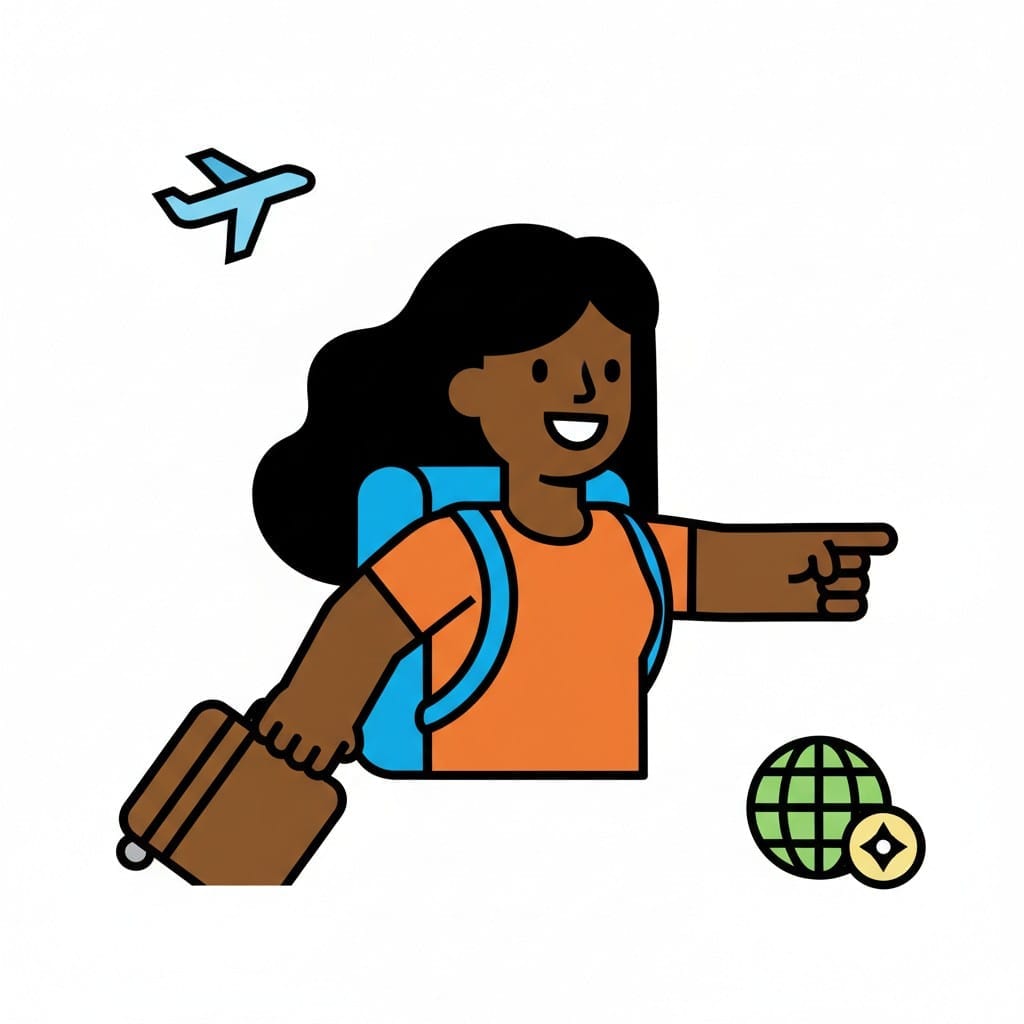 ♀
♀Woman traveling and pointing
A woman with a backpack and a suitcase, pointing forward. An airplane and a globe are visible in the background.
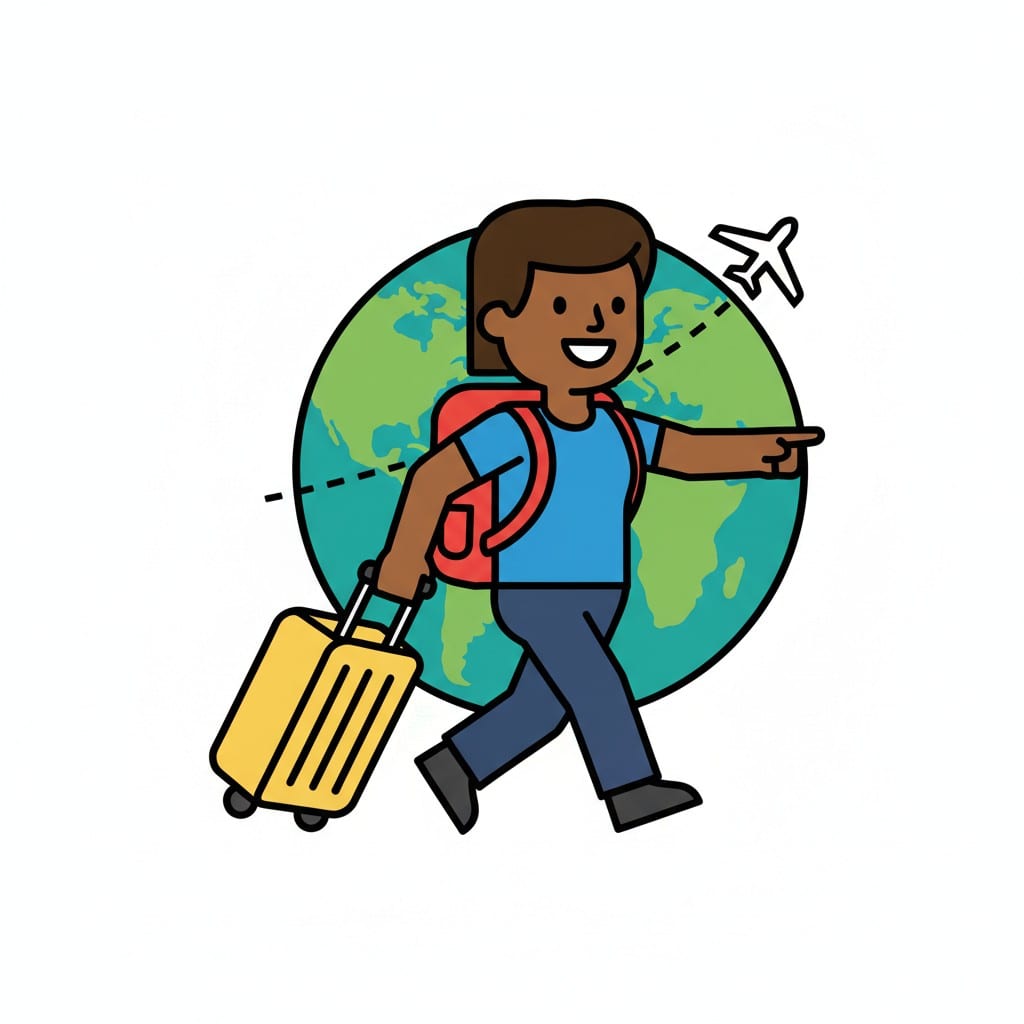 ♀
♀Person walking with luggage
A person walks with a rolling suitcase and a backpack. A large globe and an airplane are in the background.
About this visual support
Travel is a stack of unfamiliar layers piled on top of each other. The smell of a hotel corridor is not the smell of home. Breakfast hours do not match the weekday rhythm. The toilet is not the familiar one, and the night-time window sounds are new. A child does not need to list these differences for them to land – the body logs them anyway, and the result often shows up hours later as fatigue or pushback.
Visual support during travel is less about the means of transport and more about holding a recognisable day shape when the surroundings flip. A sequence showing the morning pack, which transport comes next, arrival, where the bed is, and the evening routine in the new place gives the child something to hang the day on. Travel then stops being one long question mark and becomes a string of visitable stops.
A concrete tip: bring photo cards of the child's normal home spots – their own bed, the bathroom, the breakfast table – so they can hold them up against the new place. It lets the brain file the unfamiliar without erasing home. Inside Routined you can build a travel-day sequence in advance, so it sits in your pocket the moment the child asks what is next.
Use this image in a schedule
Build your own visual schedule with this image and download it as a print-ready PDF. Completely free.
More similar visual supports
RV trip
A camper van parked at a campsite with a small campfire, a tree, and the sun in ...
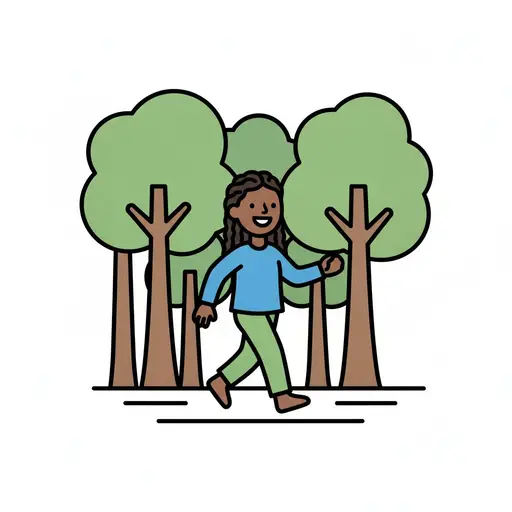
Forest trip
A girl walks among the trees in the forest.
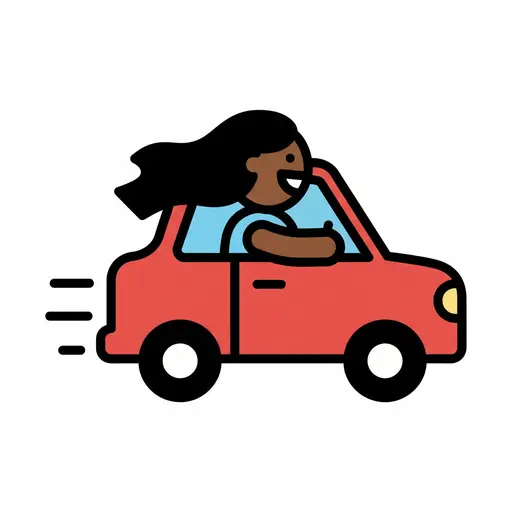
Car ride
A girl is sitting behind the wheel of a red car, driving.
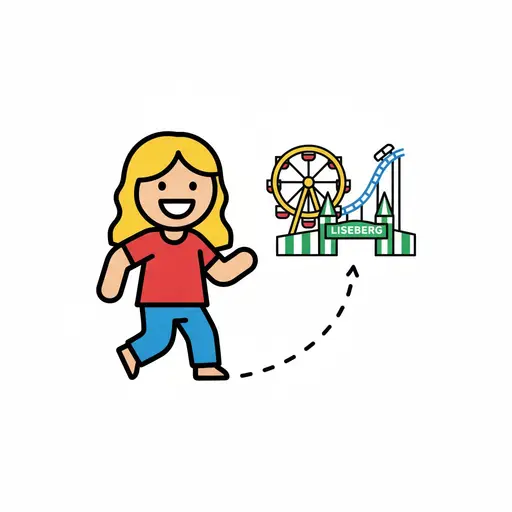
Go to Liseberg
A child runs happily toward an amusement park with a ferris wheel and roller coa...
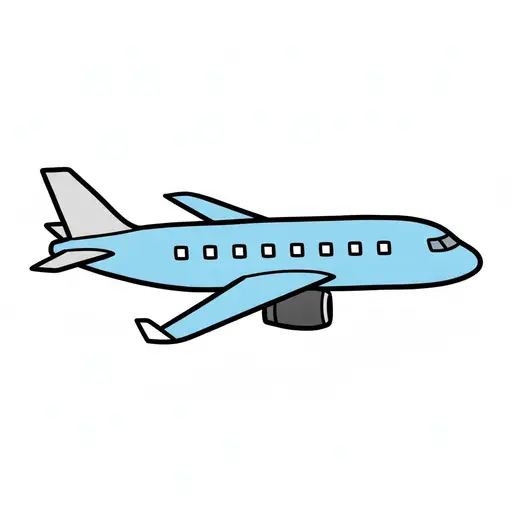
Airplane
A blue cartoon airplane flying to the right.
Summer Break
A beach scene with a palm tree, ball and flip-flops, and a crossed-out school bo...

Get ready for Örebro
A child with a backpack pulls a suitcase and holds a sign with a building.

Uppsala
Drawing of a twin-spired cathedral beside water, standing for the city of Uppsal...
This visual support in other languages
Take the visual supports with you
In Routined you build schedules from these pictures, add timers and voice instructions, and your child follows the day on their own.


* 14-day free trial, then $2.39 a month or $20.99 a year (US pricing). Cancel anytime.