Turn off TV and phone
Two screens at once means a double handover: the phone has to be set down and the TV has to be switched off, while the brain shifts from passive watching to the next task. The visual support below breaks that switch into manageable steps.
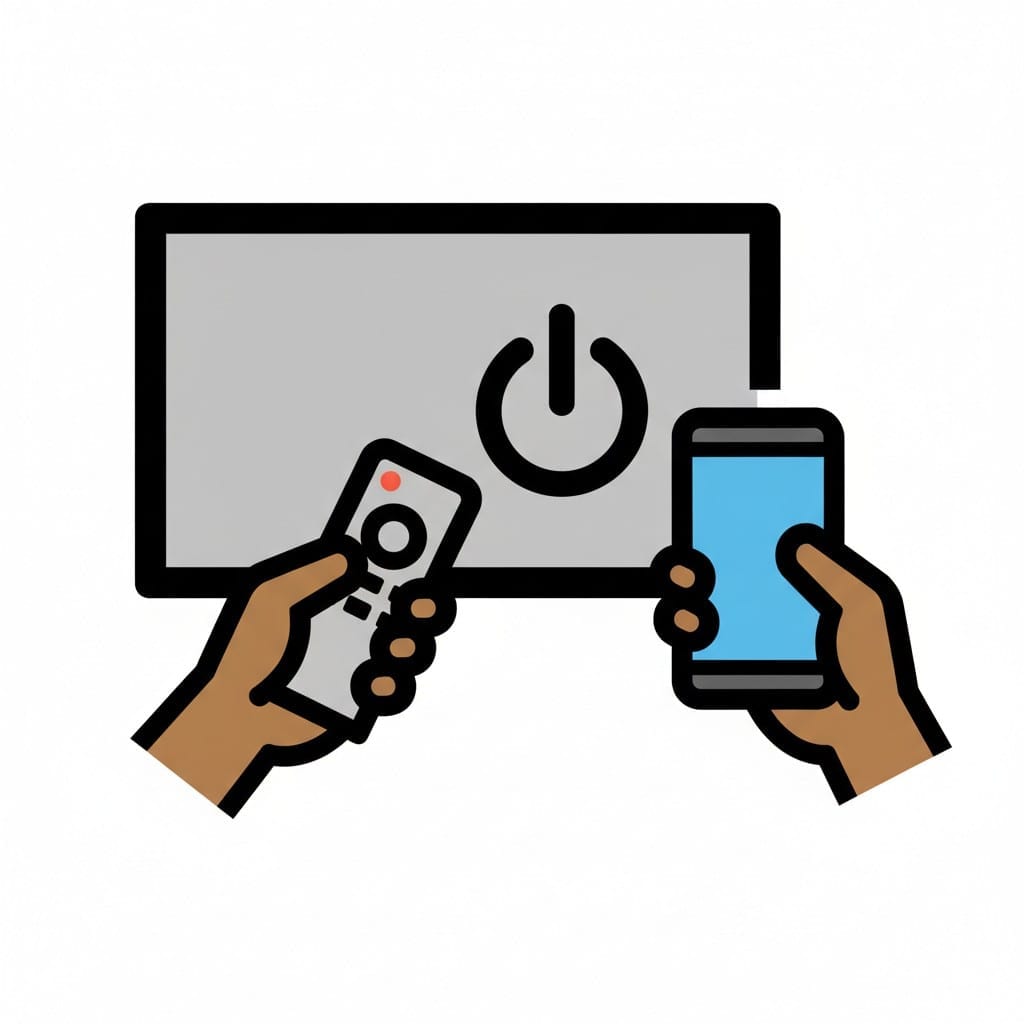 ♂
♂Turn off TV and phone
A hand holds a remote control pointed at a TV screen with a power off symbol. Another hand holds a mobile phone.
About this visual support
When the phone is in one hand and the TV runs in the background, two things happen in the brain at the same time: both streams compete for attention, and neither has an obvious stopping point. Letting go of both at once is not one switch, it is three switches stacked together, two endings plus stepping into something new.
That is why the double-screen ending deserves its own sequence. When the visual support shows the phone being set down first, then the TV being switched off, then what the next step is, the child does not have to hold the entire transition in their head at once. The order is visible, and each screen gets its own marked stopping point.
One specific thing that helps: pick a fixed spot where the phone always goes when it leaves the hand, ideally outside the room with the TV. That short walk gives the brain an extra signal that the passive phase is over. If you want to tie the whole sequence together with a short countdown beforehand, you can lay out the order in Routined and let the timer carry the warning.
Use this image in a schedule
Build your own visual schedule with this image and download it as a print-ready PDF. Completely free.
More similar visual supports
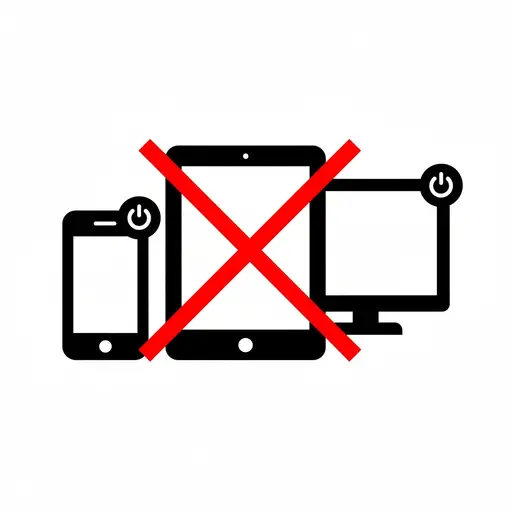
Turn off screens
A phone, a tablet and a monitor with a red cross over them, showing that the scr...
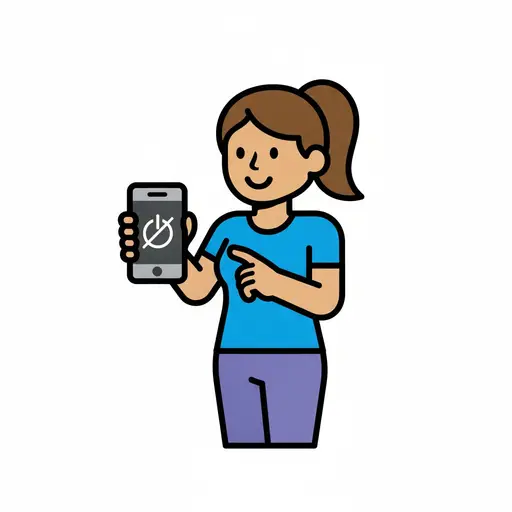
Turn off the phone
A girl holds up a phone with a power-off symbol and points at it.

Phone in bed
A boy sits up in bed against his pillow, holding a phone with both hands.
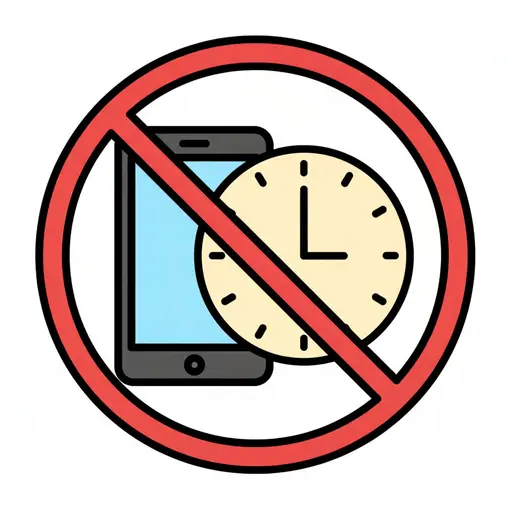
No Screens Until 10
A mobile phone and a clock with a red prohibition sign over them.
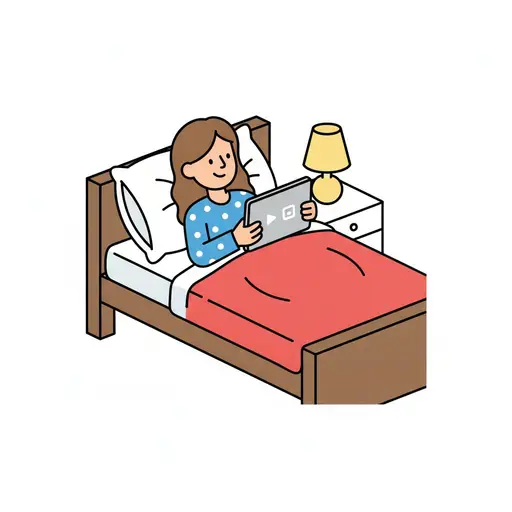
Screen time in bed
A smiling girl in polka dot pyjamas lies in a bed with a red duvet watching a ta...
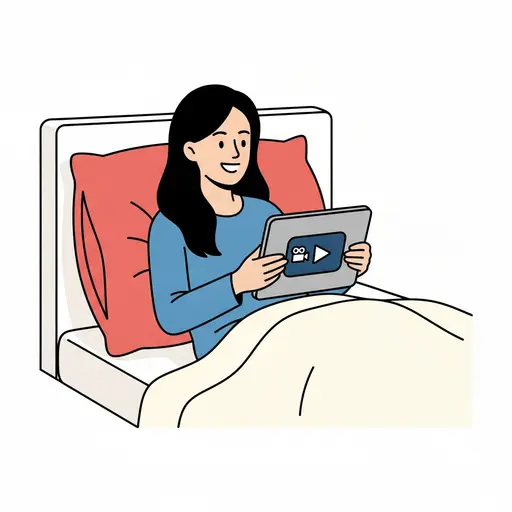
Watch TV in bed
A woman lies in bed watching a film on a tablet.

Supper and TV
A person sitting and eating from a bowl with a spoon, next to a TV.
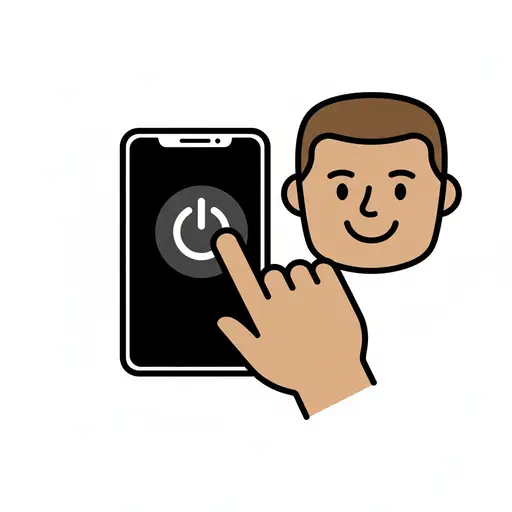
Shut down phone
A boy presses the power button to shut down a phone.
This visual support in other languages
Take the visual supports with you
In Routined you build schedules from these pictures, add timers and voice instructions, and your child follows the day on their own.


* 14-day free trial, then $2.39 a month or $20.99 a year (US pricing). Cancel anytime.