Circle time
Sitting still in a ring, waiting for a turn and listening while someone else speaks are three separate demands stacked on top of each other. The pictures below break circle time into the parts that actually happen, so the waiting feels mapped rather than endless.
 ♀
♀Circle time
A group of people standing in a circle holding hands, with one person in the center. A blue arrow circles above them, indicating a repetitive activity.
About this visual support
Circle time looks simple to an adult: everyone sits down, someone talks, then you sing. For a child who finds waiting hard, it is instead a long unclear stretch with no visible marker for when their turn arrives. The friction sits in that invisible order, not in the activities themselves.
With a visual support, the ring gets a visible arc. The cards show that first comes greeting, then the calendar, then someone sharing about the weekend, then a song, then the end. Your child can follow the row with their eyes and see how many parts remain before it is their turn. That knowledge takes away some of the worry that otherwise blocks the listening.
A practical tip for the teacher: place the cards on the floor at the centre of the ring and shift a small marker along as each part is done. Progress becomes visible for the whole group, not only the adult leading. To reuse the same structure at home for homework or a meal, Routined keeps the sequence logic together with a gentle timer.
Use this image in a schedule
Build your own visual schedule with this image and download it as a print-ready PDF. Completely free.
More similar visual supports
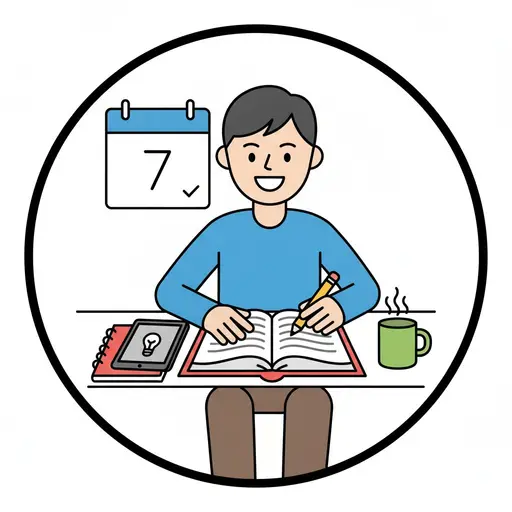
Study
A person sits at a desk writing in a book, with a calendar, a tablet and a mug b...
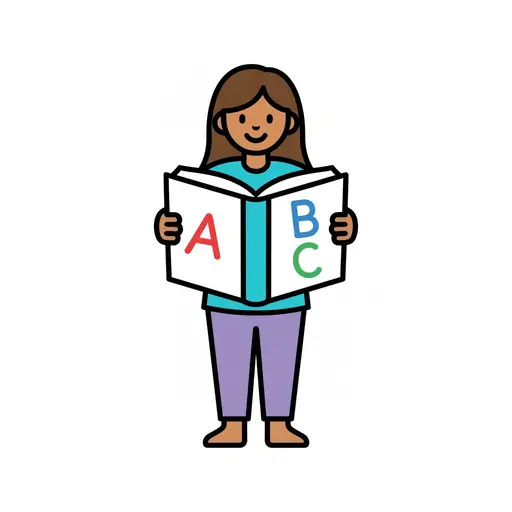
Letters
A smiling child with long hair holds up an open book showing the letters A, B an...
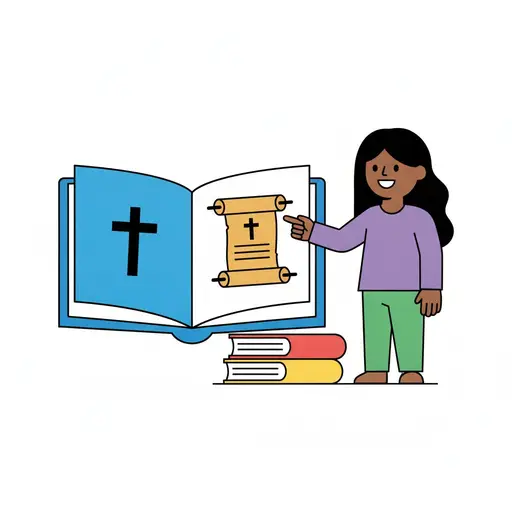
Christian studies
A smiling pupil points at a large open blue book showing a cross and a scroll, b...

Danish
A round pastry icon with golden petals, white sprinkles and a red round filling ...
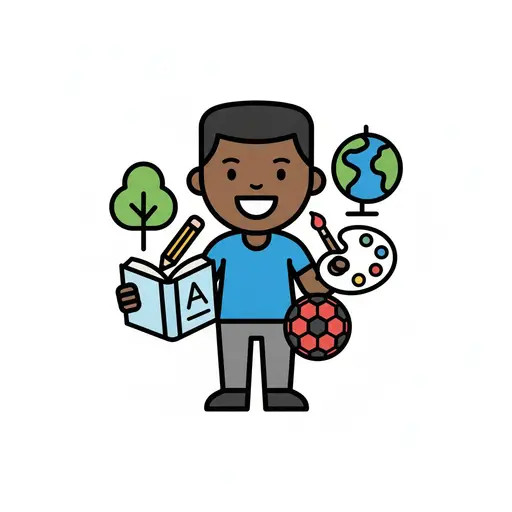
School activities
A boy stands holding an open book surrounded by symbols of a pencil, a globe, a ...

Fetch pen and paper
A boy reaches toward a sheet of paper while holding a pen.

Take note
A boy holding a pen and writing in a notebook. A glowing lightbulb floats above ...
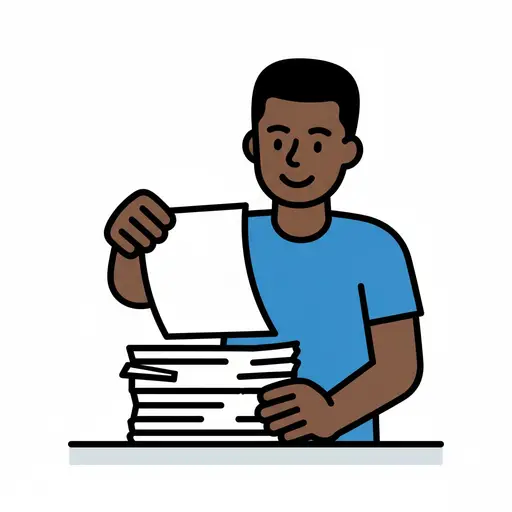
Take paper
An illustration of a boy taking a sheet of paper from a stack on a table.
This visual support in other languages
Take the visual supports with you
In Routined you build schedules from these pictures, add timers and voice instructions, and your child follows the day on their own.


* 14-day free trial, then $2.39 a month or $20.99 a year (US pricing). Cancel anytime.