Count to 10
Counting to ten sounds simple, but numbers swap places easily when the child looks down at their fingers. The cards below tie each number to an image so the order becomes graspable.
 ♂
♂Count to 10
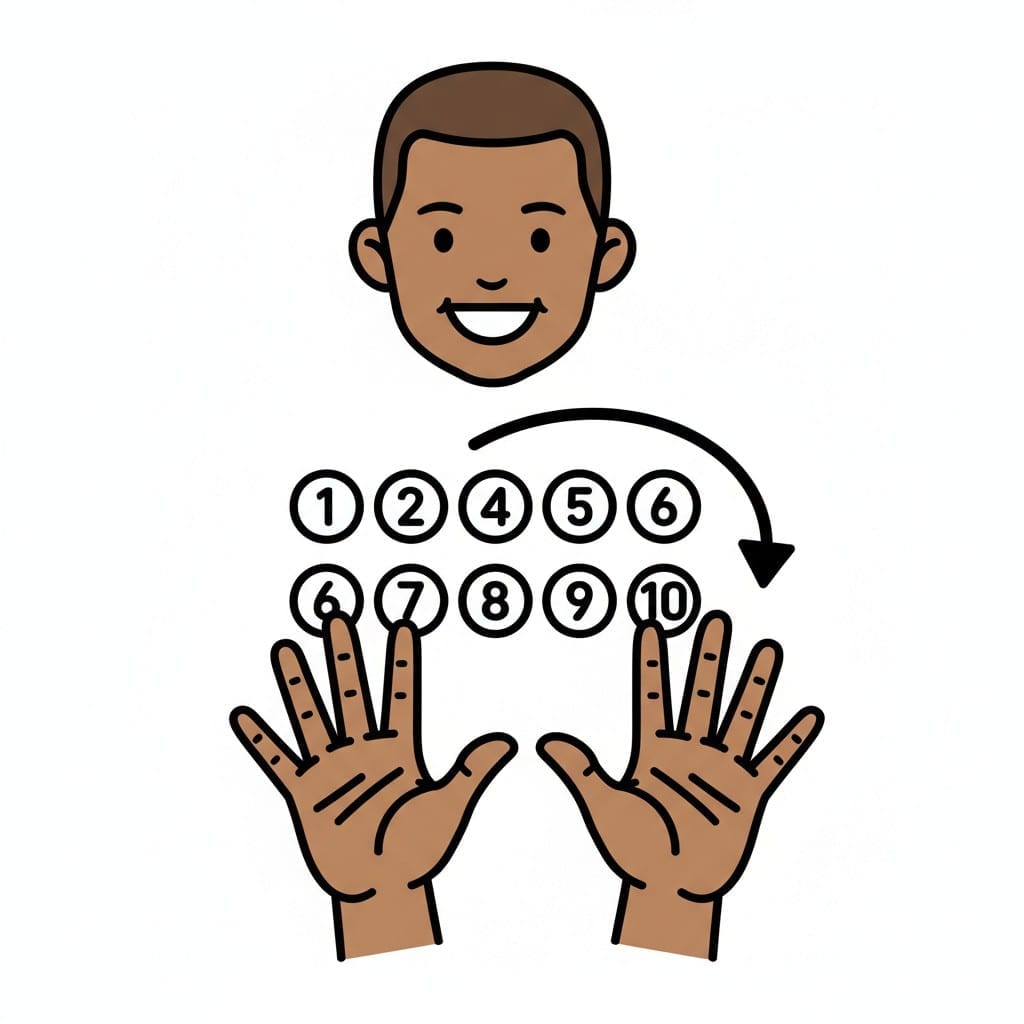
A happy person shows numbers 1 to 10 in circles with an arrow indicating the counting direction. Two open hands with five fingers each are below, ready to count.
 ♂
♂Count to 10
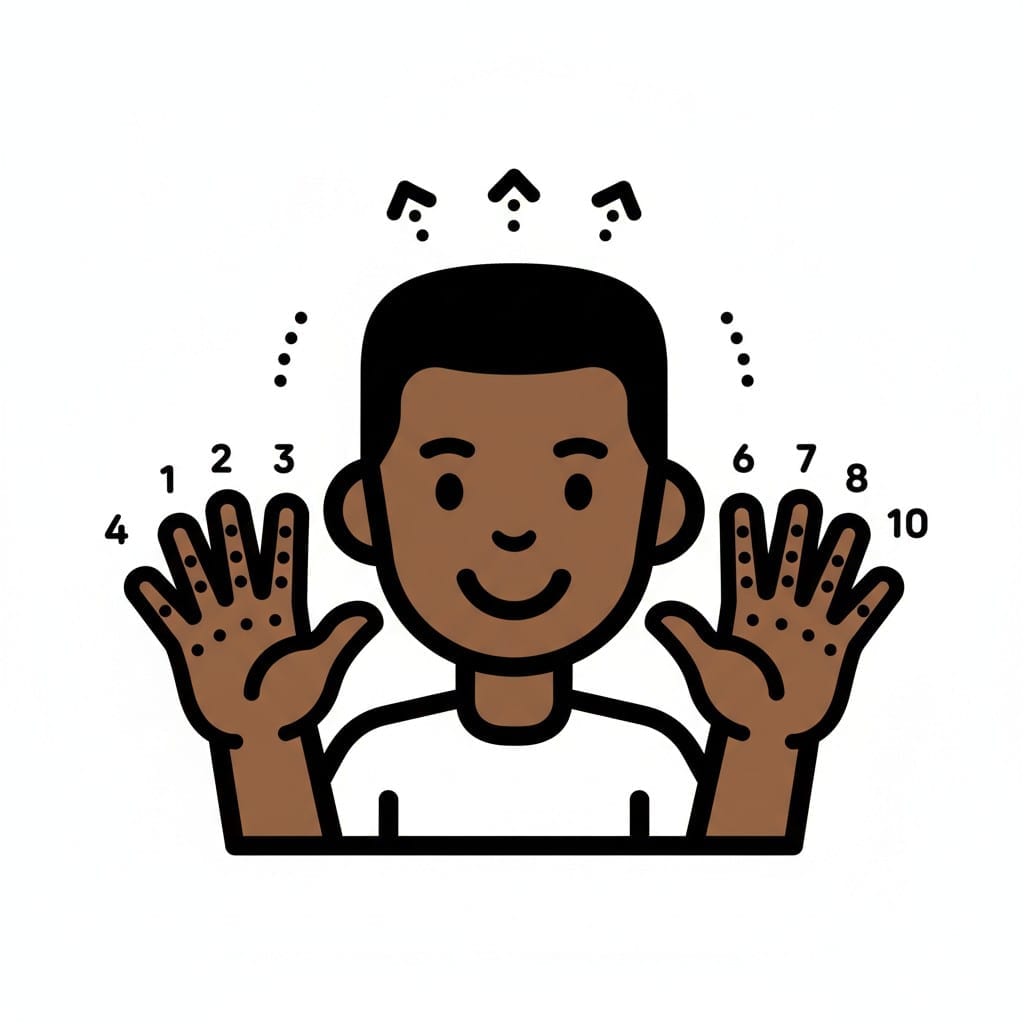
A happy person counts to 10 using their fingers. Numbers 1-10 are displayed next to the fingers. Small dots above the head indicate thought or concentration.
 ♂
♂Count to 10
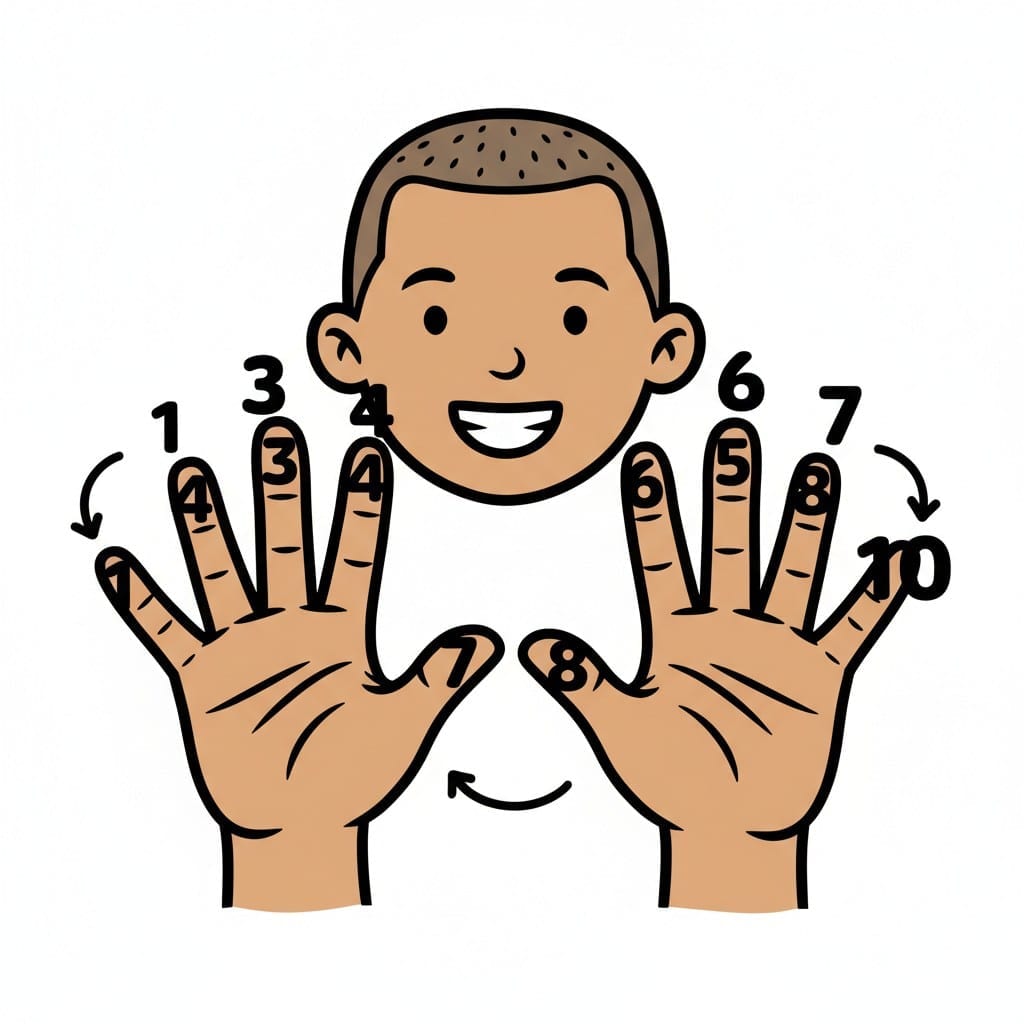
Illustration of a person counting to 10 using their fingers. Numbers 1 through 10 are shown on the fingers.
 ♀
♀Count to 10
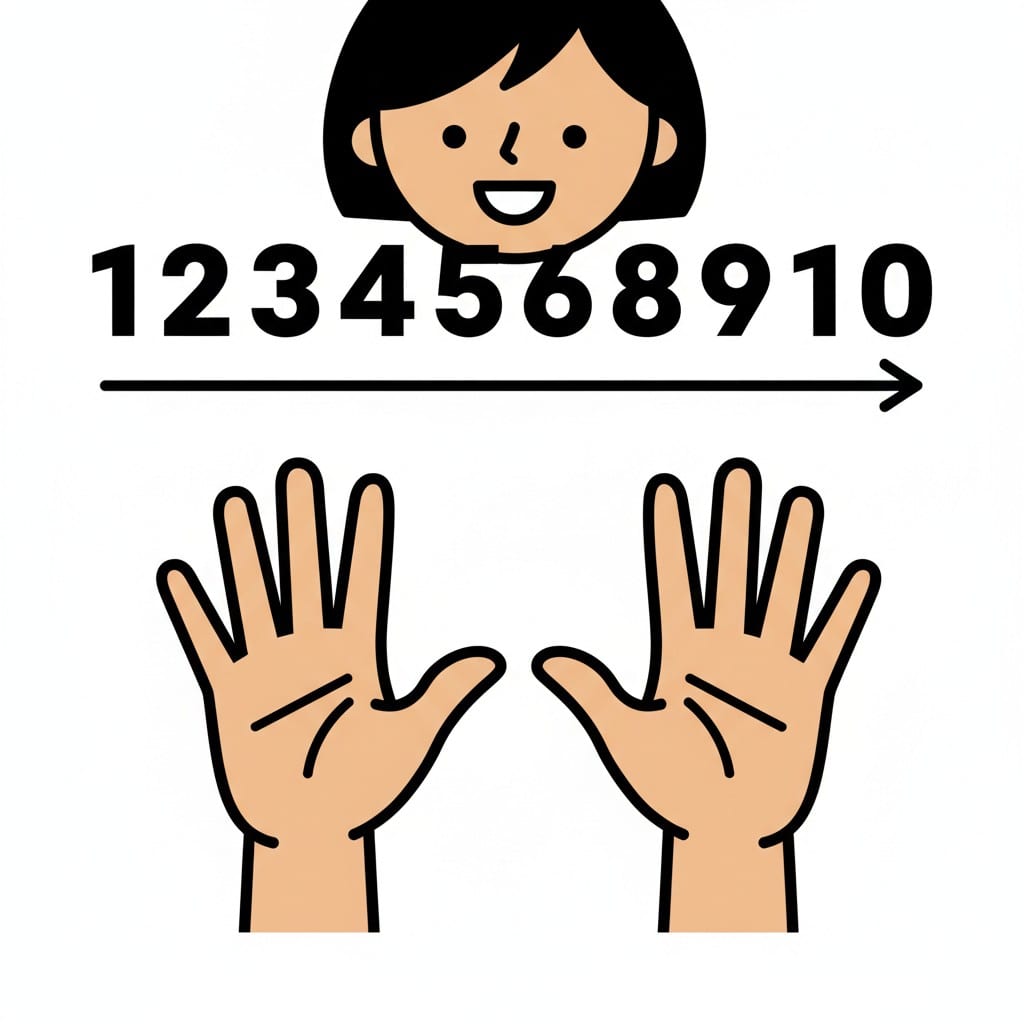
A happy person shows numbers 1 to 10 in a straight line with an arrow indicating the counting direction. Two open hands with five fingers each are below, ready to count.
About this visual support
The counting chant from one to ten is one of the first long sequences a child learns, and that is exactly why it is sensitive. As soon as attention shifts to fingers, to a toy being counted, or to a friend nearby, one number can fall out or two can swap places. It is not carelessness; the brain is working on two tracks at once.
Visual support gives the sequence a body outside the head. The child can point to the picture for one, then two, then three, and see where they are in the row. If something jumps away, it becomes visible straight away, without an adult having to correct the word.
One concrete variation: place the cards in an arc on the floor, so the child can take one step between each number. The body then follows the rhythm and the pace becomes steadier. For practice at home, you can build the number sequence in the Routined app with a check-off function, so the child sees how far it is to ten and gets a clear ending to the exercise.
This image is part of these ready-made schedules
Use this image in a schedule
Build your own visual schedule with this image and download it as a print-ready PDF. Completely free.

More similar visual supports

Count
A white card with rounded corners showing the numbers 1, 2 and 3 in blue, green ...
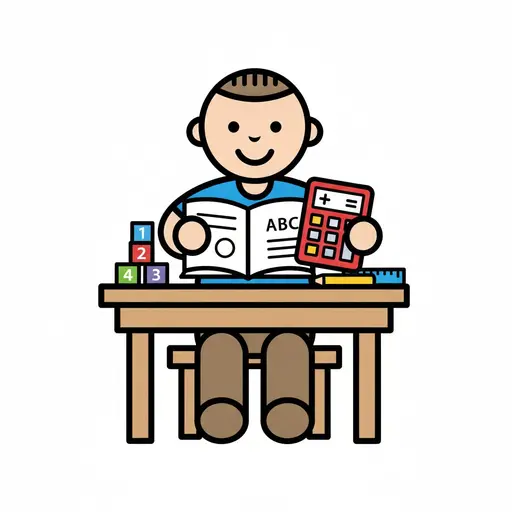
Math and reading
A child sits at a desk with an open letter book, a calculator and number blocks.
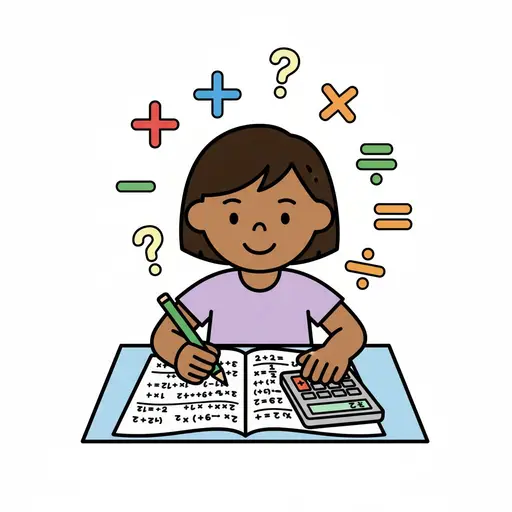
Practice math
A girl sits at a table writing in a math book. A calculator is next to the book....
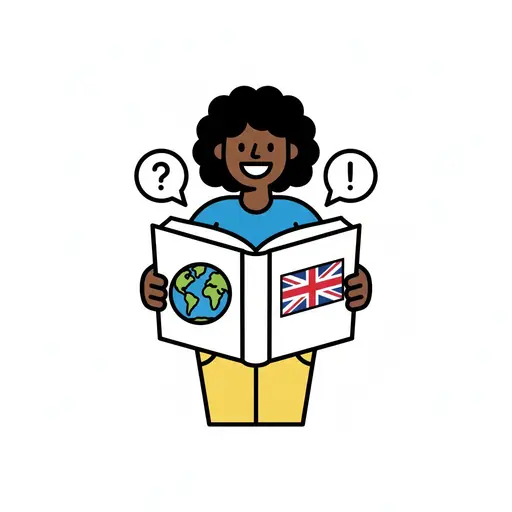
English
A girl holds a book with a globe and a British flag, with speech bubbles above.

History
An open book surrounded by a castle, a bone, gold coins with a quill, a column a...
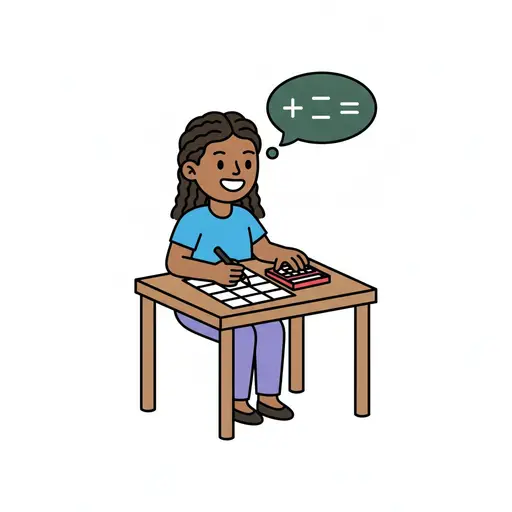
Math
A smiling person sits at a table with squared paper and a red calculator, with a...
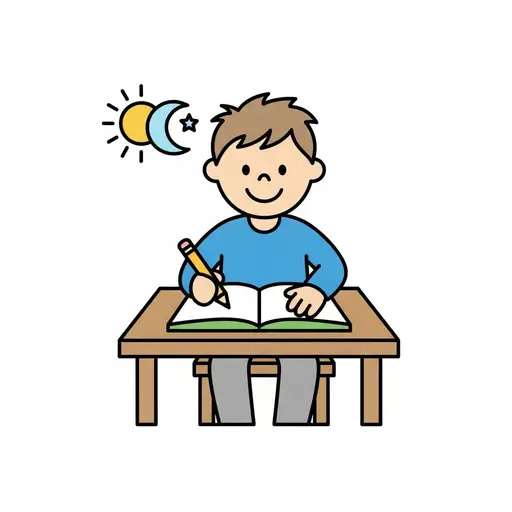
Morning lessons
A boy sits at a desk writing in an open book, with a sun and a moon above.
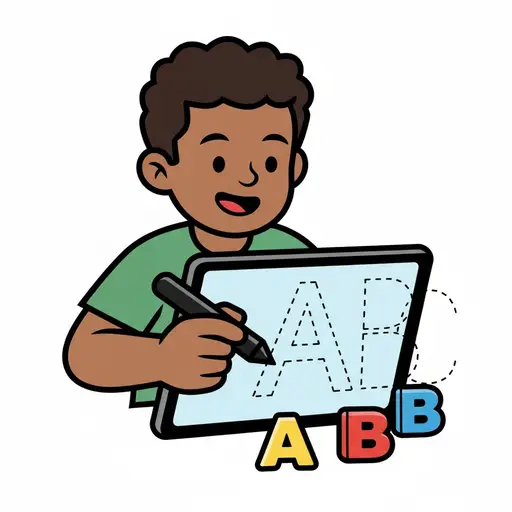
Practice letters
A boy with a pen traces the letters A, B and C on a white board.
Take the visual supports with you
In Routined you build schedules from these pictures, add timers and voice instructions, and your child follows the day on their own.


* 14-day free trial, then $2.39 a month or $20.99 a year (US pricing). Cancel anytime.