Divine figure
A divine figure cannot be seen or touched, which makes the idea hard to hold on to. The symbol below gives the child somewhere to rest their eyes while the conversation unfolds.

Male divine figure
An illustration of a man with a golden halo and an all-seeing eye in a blue pyramid above his head, holding up two fingers.
About this visual support
Religion and faith confront a child with one of the trickier things in language: thinking about something that is not in the room. When you cannot point, smell or touch, the words quickly turn airy and attention drifts. A picture of a symbol, a cross, a star, a raised hand, gives the thought somewhere to hold without locking down what the figure actually is.
For many children this is the first time they meet a concept that lives only in stories and traditions. Separating the picture from the content helps: the symbol is not the figure itself, it is a reminder of what you are discussing. That way the child can ask questions without feeling they have to believe, or not believe, anything from the start. Say it plainly: the picture is here to keep the conversation together.
When you move on to other concepts in the same theme, you can collect the images in Routined and bring them back the next time a question pops up.
Use this image in a schedule
Build your own visual schedule with this image and download it as a print-ready PDF. Completely free.

More similar visual supports
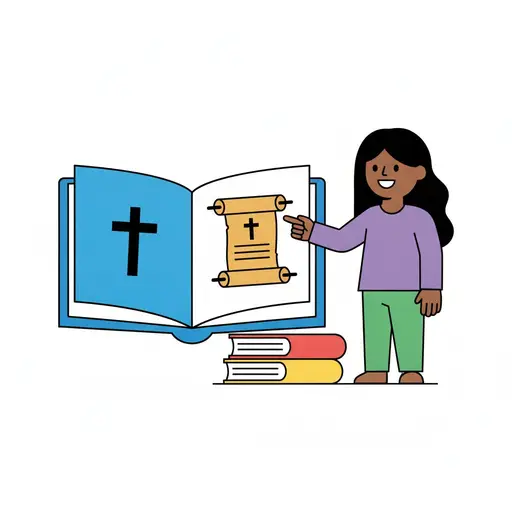
Christian studies
A smiling pupil points at a large open blue book showing a cross and a scroll, b...

Afternoon lessons
A boy sits at a desk writing in an open book, with a clock and books beside him.

Bass lesson
A person plays a bass guitar with an amplifier while an older person points to a...

Be quiet
An illustration of a person holding a finger to their lips to signal to be quiet...

Bible
A closed book with a brown cover and a gold cross on the front.
Cello
A girl sits on a stool playing the cello.

Circle time
A group of people standing in a circle holding hands, with one person in the cen...
Clock
A square clock showing all the hour numbers.
Take the visual supports with you
In Routined you build schedules from these pictures, add timers and voice instructions, and your child follows the day on their own.


* 14-day free trial, then $2.39 a month or $20.99 a year (US pricing). Cancel anytime.