Do reading homework
When letters jump and lines slip away, the real question is not how the page looks but how long the road is. The visual support below makes the remaining distance visible page by page.
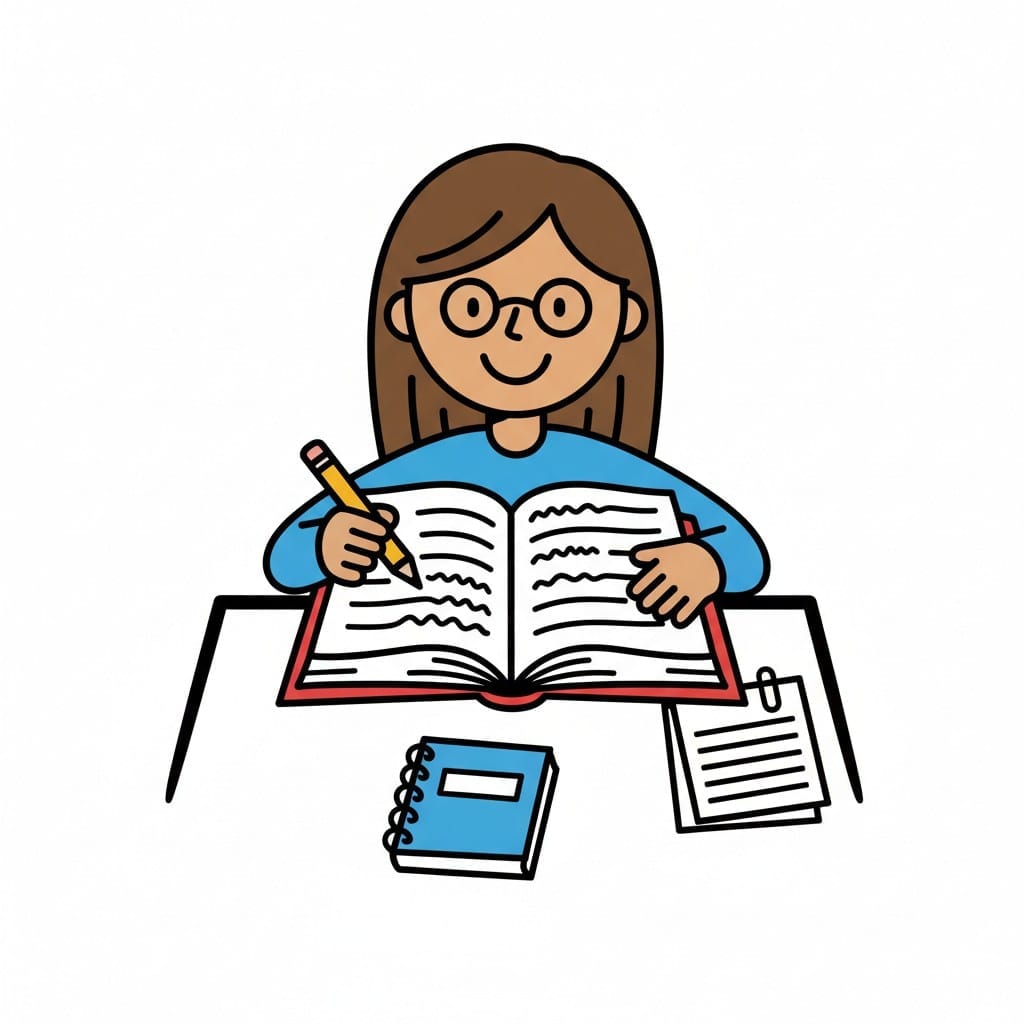 ♀
♀Doing reading homework
A person with glasses sits at a desk, writing in an open book with a pencil. A notebook and papers are also on the desk.
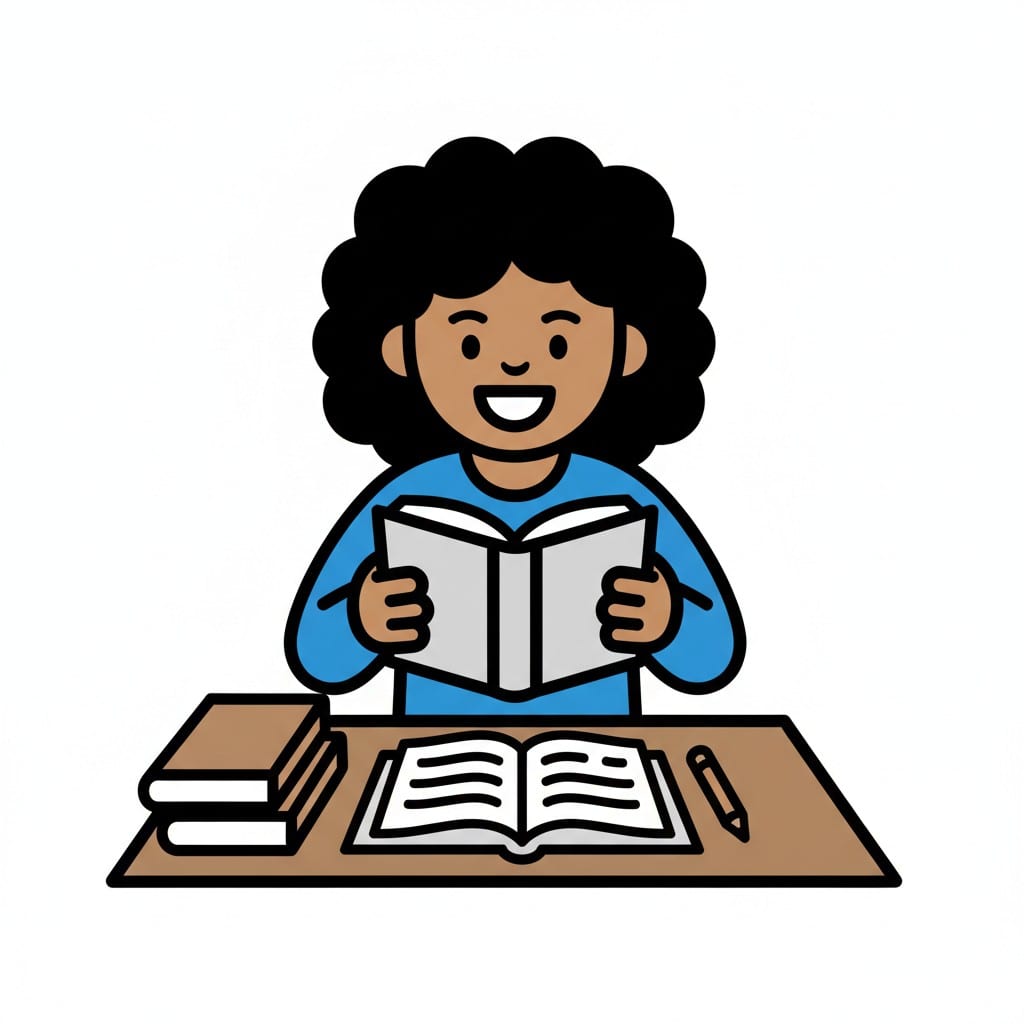 ♀
♀Do reading homework
A girl is sitting at a desk with an open book in her hands and an open notebook and pencil on the table.
About this visual support
Reading homework has two enemies. The first is the text itself, where letters can tilt, swap places or blur. The second is the invisibility of how much is left – when every line feels like a page and every page like a whole evening, there is no direction to hold on to.
Visual support attacks the second enemy directly. When each page or paragraph is its own card, the child can point to where they are right now and watch the remaining cards shrink to a number they can actually count. What is left becomes concrete instead of endless, and that is often where the resistance lets go.
A concrete tip: include a ruler or pointing-finger picture as a reminder to cover the line below the one being read. The eyes stop falling downward, and one line at a time becomes the only thing visible. To add a gentle reading timer of five or ten minutes between cards, you can build the sequence in Routined and try the app free for 14 days.
Use this image in a schedule
Build your own visual schedule with this image and download it as a print-ready PDF. Completely free.
More similar visual supports
Homework activities
A girl sitting at a desk, writing in a book with a pencil. There's a backpack, b...
Bring homework
A girl walks holding a red book with ABC and a globe.
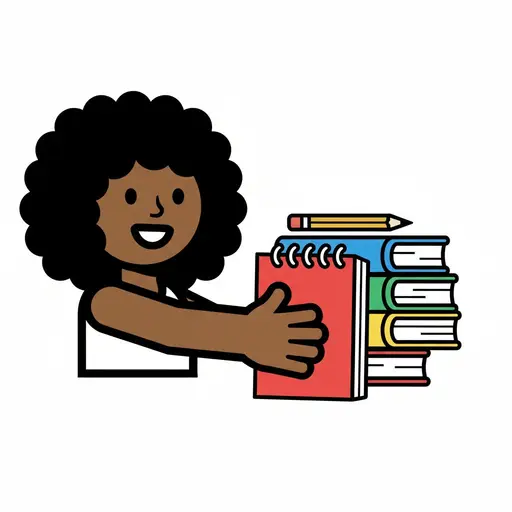
Get homework
A smiling girl hugs a notebook beside a stack of books and a pencil.
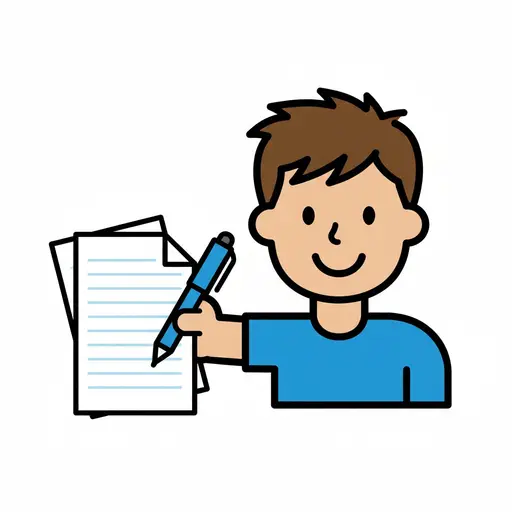
Grab pen and paper
A smiling boy holds a blue pen and some sheets of paper, ready to write.
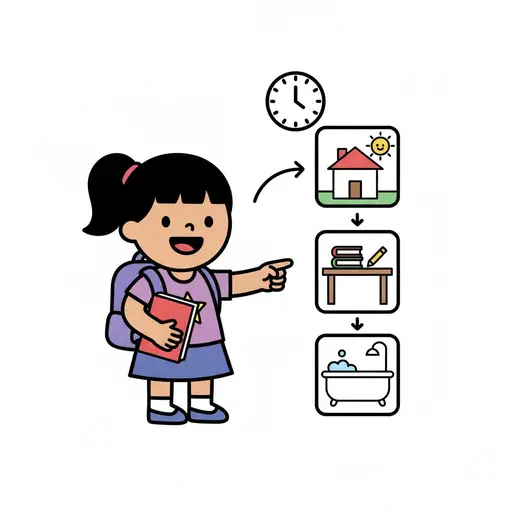
After School Routine
A girl with a backpack points at a schedule showing home, homework and bath afte...
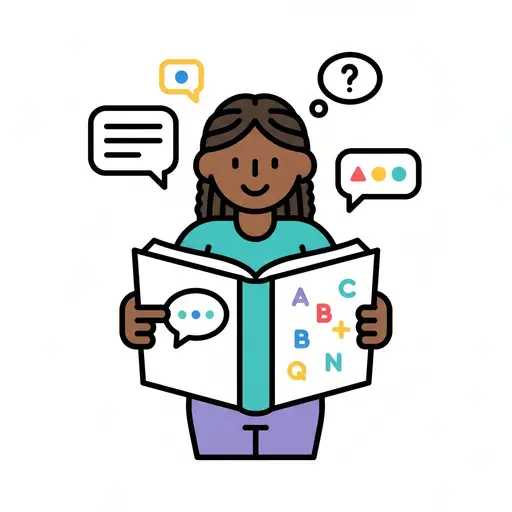
Learn words
A girl reads a book of letters with speech bubbles around her.
Do homework
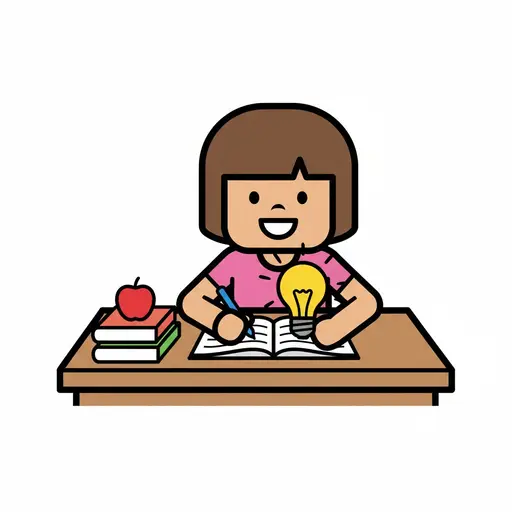
An illustration of a girl sitting at a desk, writing in a notebook. A lightbulb ...
Read homework
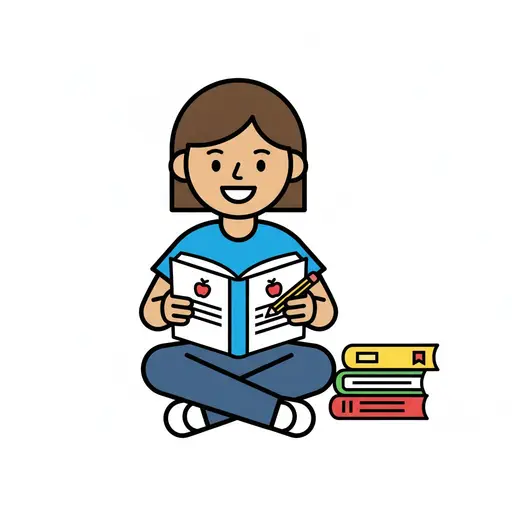
A girl sits reading a schoolbook with a stack of books beside her.
This visual support in other languages
Take the visual supports with you
In Routined you build schedules from these pictures, add timers and voice instructions, and your child follows the day on their own.


* 14-day free trial, then $2.39 a month or $20.99 a year (US pricing). Cancel anytime.