English
Saying a new English word out loud is not just a language exercise, it is a social step. Classmates are listening, and mispronouncing can feel bigger than it really is. The visuals below show words and phrases the child can rehearse calmly first.
English lesson
An open book. The left page shows the flag of the United Kingdom, and the right page displays the letters 'A, BC'.
 ♀
♀Person with an English book
A smiling person holds a book with a British flag and points up at a speech bubble reading ENG, beside an open book with a magnifying glass.
 ♀
♀Person pointing at an English textbook
A smiling person with a ponytail holds an open book showing a globe and the letters A and B and points at it, beside a speech bubble with a British flag and the word ENGLISH.
 ♀
♀Girl studying English
A girl holds a book with a globe and a British flag, with speech bubbles above.
About this visual support
English is unlike most other school subjects because the production step is immediately audible to everyone in the room. When a child puts their hand up and says a number in maths, it is either right or wrong, but no one listens to the actual sounds being made. In English the class listens both to what is said and how it is said, and for many children that second layer is what blocks the first attempt.
Visual support helps by placing the most common words, phrases and questions in front of the child before they have to be spoken aloud. When eye and voice meet the word silently several times, the threshold for trying it audibly drops. The image also acts as an anchor when the teacher asks something and the mind goes blank: the word is right there, ready to be pulled.
One concrete tip: let the child whisper the words to themselves three times before reading them aloud, ideally with the same picture present that will be used in class. That ties the pronunciation to a visual reference that doesn't disappear when nerves arrive. In the Routined app, vocabulary can be set up as small daily routines with a time estimate, so practice stays short and recurring.
Use this image in a schedule
Build your own visual schedule with this image and download it as a print-ready PDF. Completely free.
More similar visual supports

English Class
An illustration symbolizing an English class with an open book displaying letter...
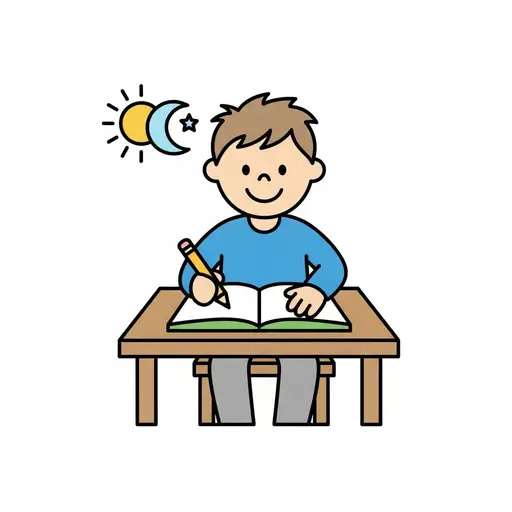
Morning lessons
A boy sits at a desk writing in an open book, with a sun and a moon above.

Danish
A round pastry icon with golden petals, white sprinkles and a red round filling ...
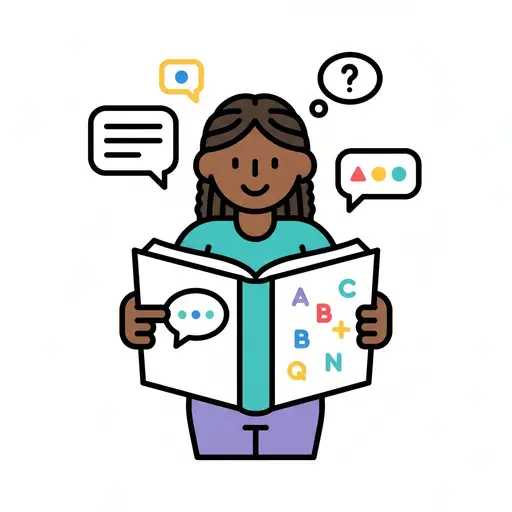
Learn words
A girl reads a book of letters with speech bubbles around her.
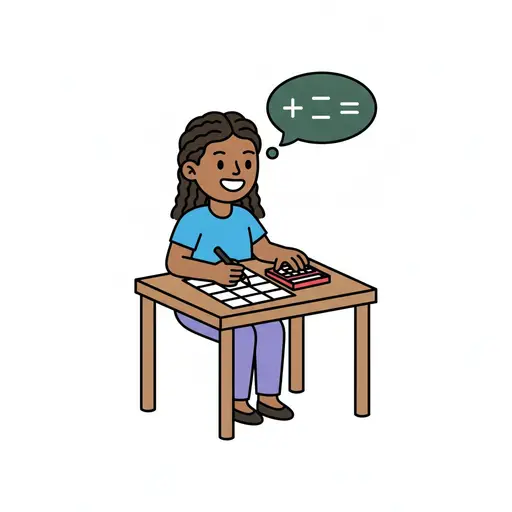
Math
A smiling person sits at a table with squared paper and a red calculator, with a...
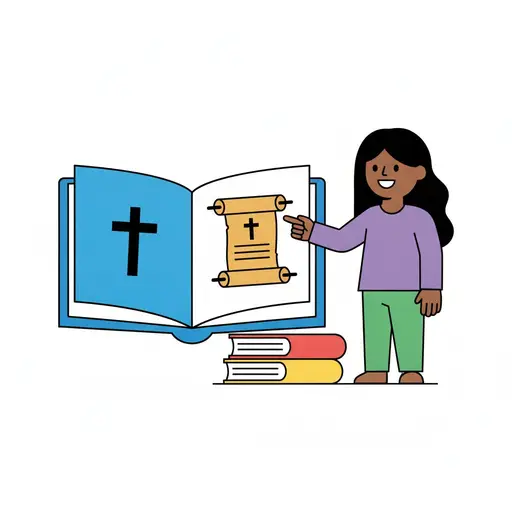
Christian studies
A smiling pupil points at a large open blue book showing a cross and a scroll, b...
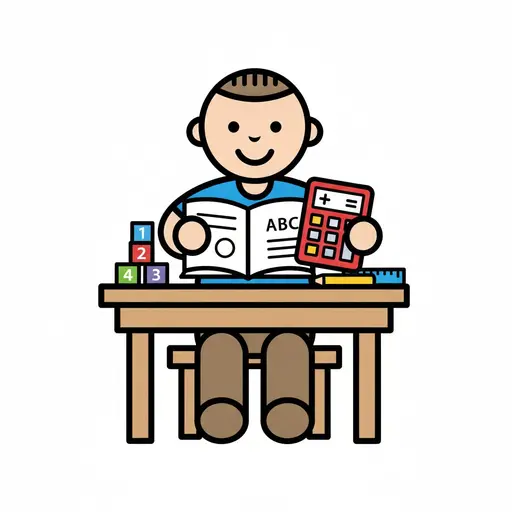
Math and reading
A child sits at a desk with an open letter book, a calculator and number blocks.
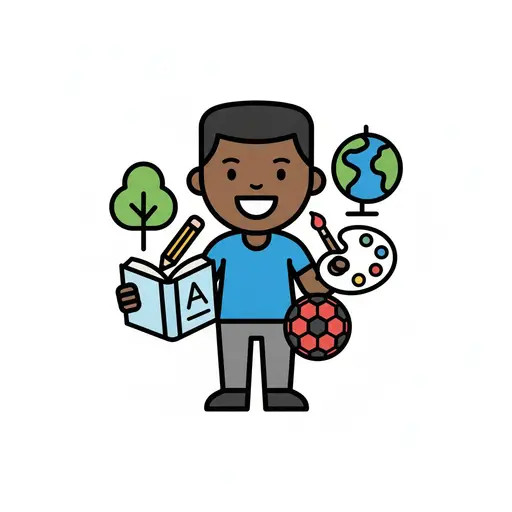
School activities
A boy stands holding an open book surrounded by symbols of a pencil, a globe, a ...
This visual support in other languages
Take the visual supports with you
In Routined you build schedules from these pictures, add timers and voice instructions, and your child follows the day on their own.


* 14-day free trial, then $2.39 a month or $20.99 a year (US pricing). Cancel anytime.