Go after school
The school day does not end in the body the second the bell goes. The picture steps below give the move from classroom to walk home or after-school care a clear shape, so the brain has time to switch mode.
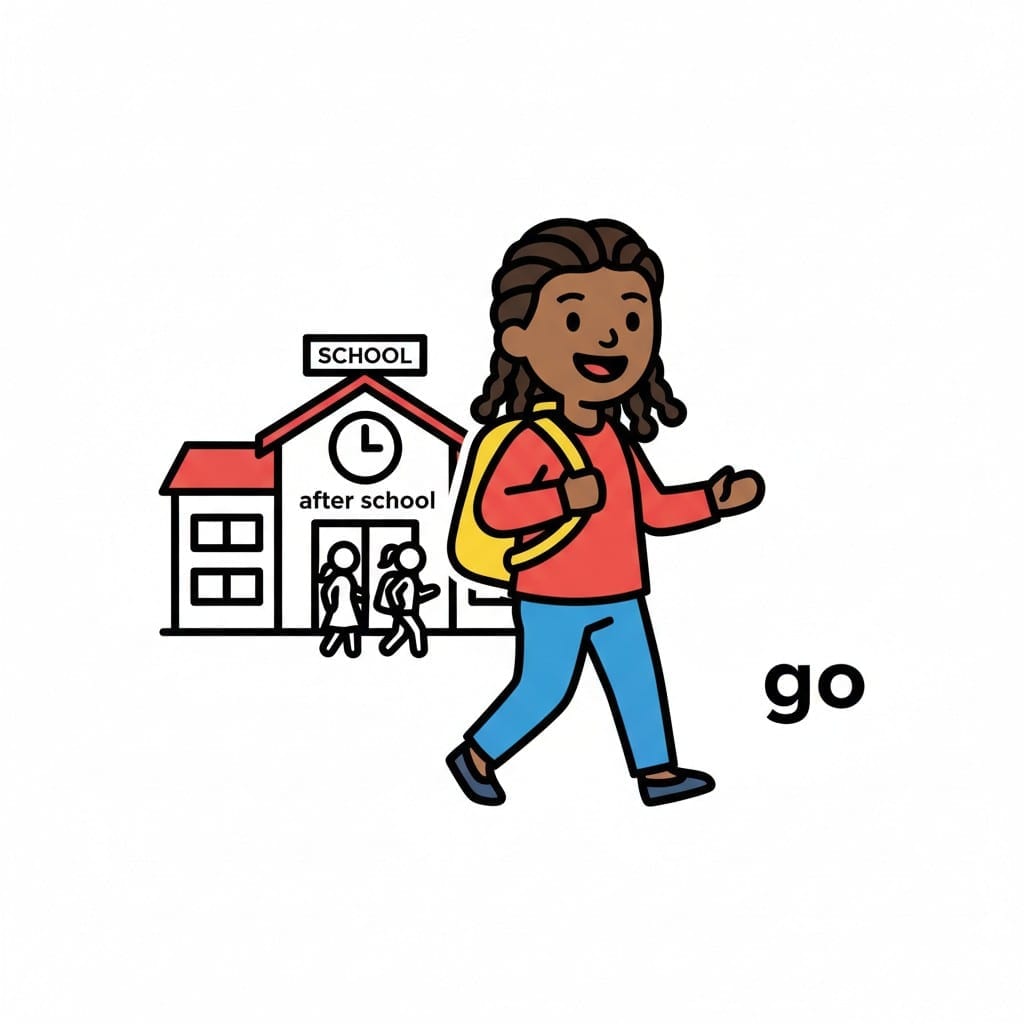 ♀
♀Girl goes after school
A girl with a backpack walks away from a school building after school.
About this visual support
The end of school is an abrupt shift the body rarely keeps up with. A lesson has just stopped, the back is still tense from sitting, the room sounds still ring in the ears — and suddenly the same child has to step out, find a coat, find a person or path, and switch behaviour to what counts outside the school gate. That handover is often where the first afternoon crash sits.
Visual support makes the change visible in advance. When the steps from packing up, putting on the coat, saying goodbye, leaving the building and walking towards the meeting point sit in picture form, the brain doesn't have to construct the order on its own inside an already tired moment. The picture of the next place also acts as a mental landing spot, which softens the feeling of being thrown out into empty air.
A concrete tip: build a short pause-or-touch routine right outside the school gate — same spot, same words, same picture every day. It becomes the body's marker that school is now behind. A fixed bridge like this can be the difference between quiet and meltdown at 2:10 pm for kids with ADHD. To string together more transitions visually, you can try Routined free for fourteen days.
Use this image in a schedule
Build your own visual schedule with this image and download it as a print-ready PDF. Completely free.
More similar visual supports
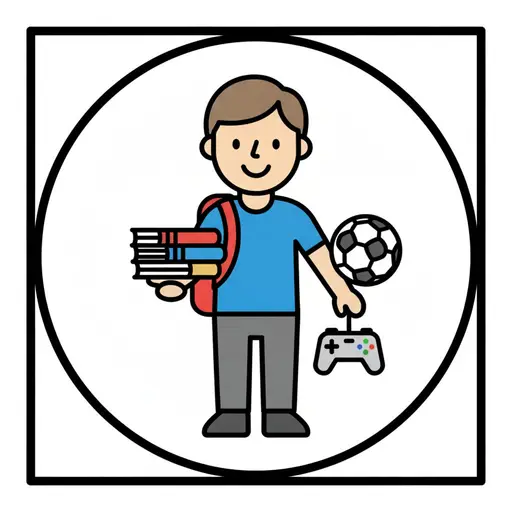
School and after-school
A person holds books under one arm and a football and a game controller in their...
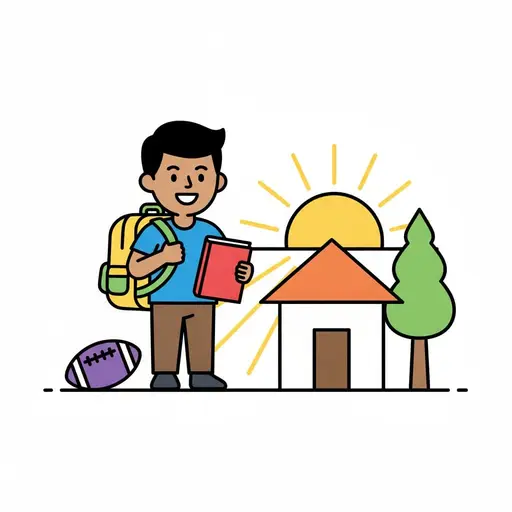
After the school day
A boy with a backpack holds a red book beside a house, a tree, the sun and a rug...
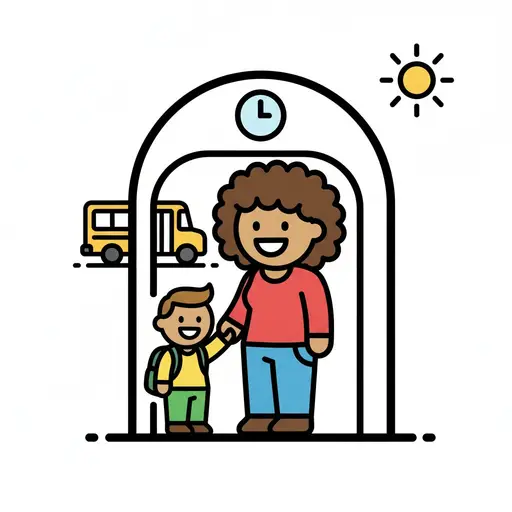
Afterschool pickup
A woman holds a child by the hand at the school gate, with a school bus behind t...
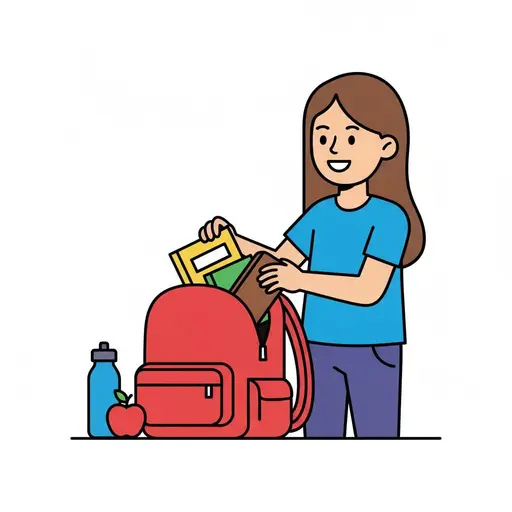
Unpack the backpack
A girl with long brown hair takes books out of a red backpack, with a water bott...
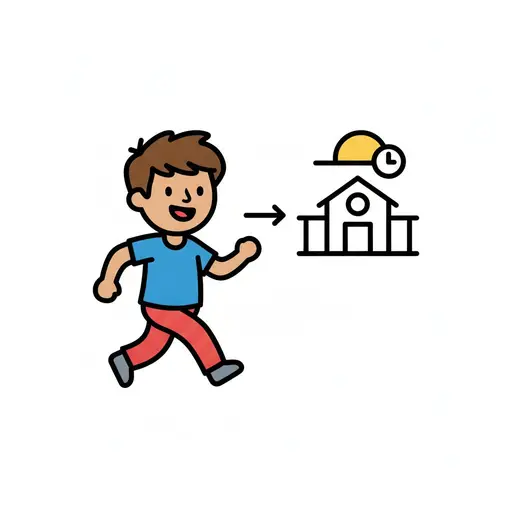
Go to After School
A happy child walks toward a building with an arrow and a sun, on the way to aft...
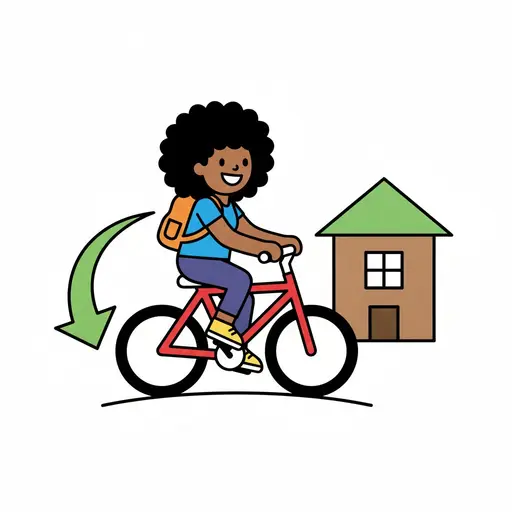
Cycle home
A smiling child with an orange backpack rides a red bicycle towards a house with...
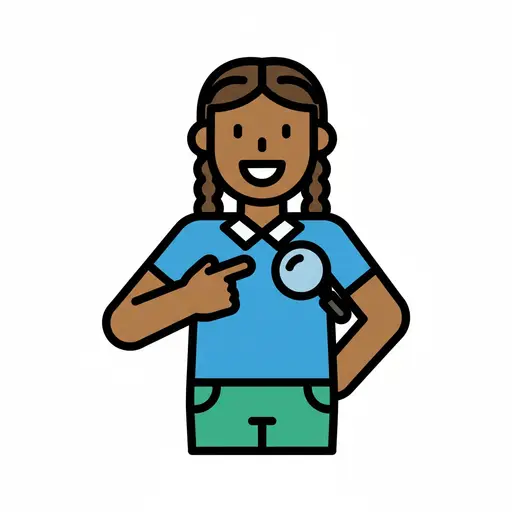
Check uniform
A person with braids smiles and holds a magnifying glass to their blue shirt, po...
School prep
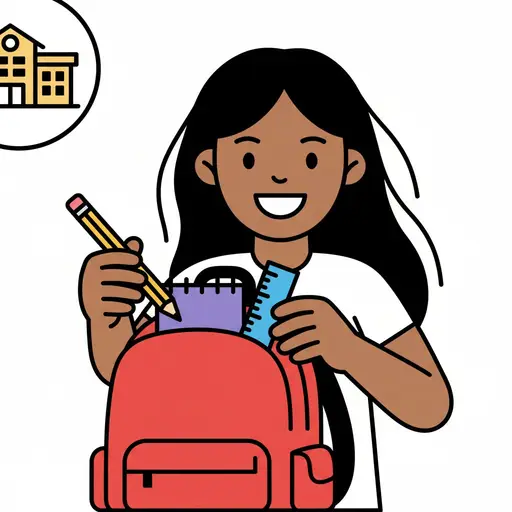
A girl is packing a red backpack with school supplies like a pencil and a ruler,...
This visual support in other languages
Take the visual supports with you
In Routined you build schedules from these pictures, add timers and voice instructions, and your child follows the day on their own.


* 14-day free trial, then $2.39 a month or $20.99 a year (US pricing). Cancel anytime.