Learn words
Words have to sit in memory for a while before they become useful, and that gap is where patience runs out. The cards below give each word something concrete to hang on.
 ♂
♂Boy learns words
A boy points to a book and reads words.
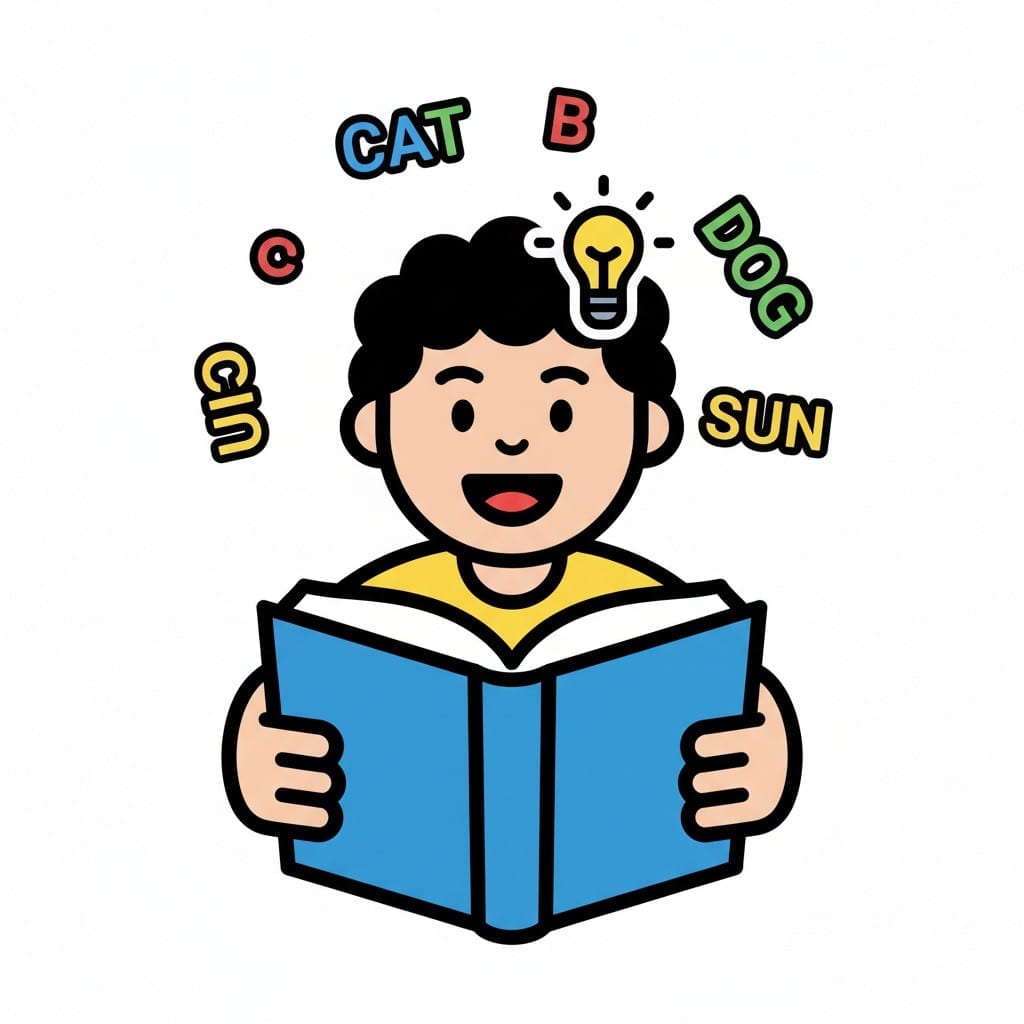 ♂
♂Boy reads and learns new words
A boy reads an open book with words and a lightbulb symbolizing new ideas around his head.
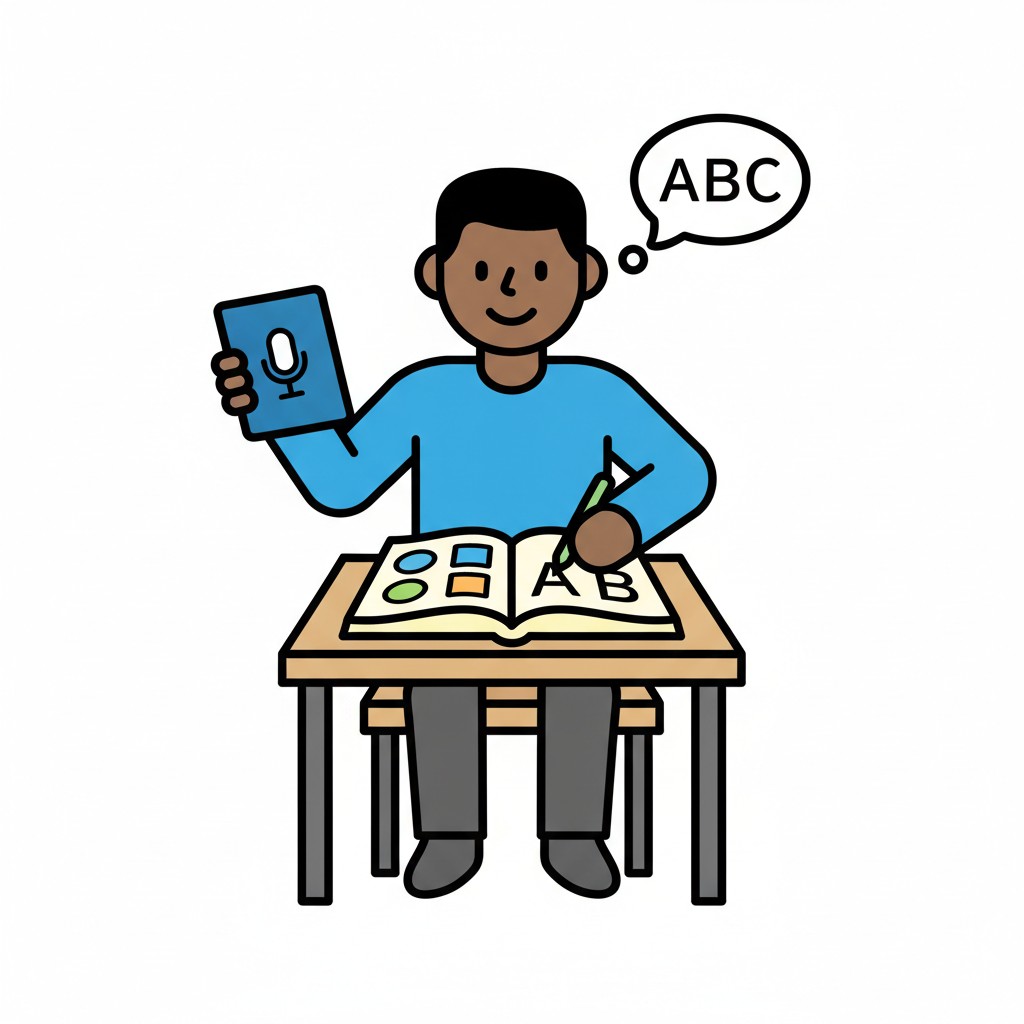 ♂
♂Language practice
A man writes in a book and listens to a recording with ABC in a speech bubble.
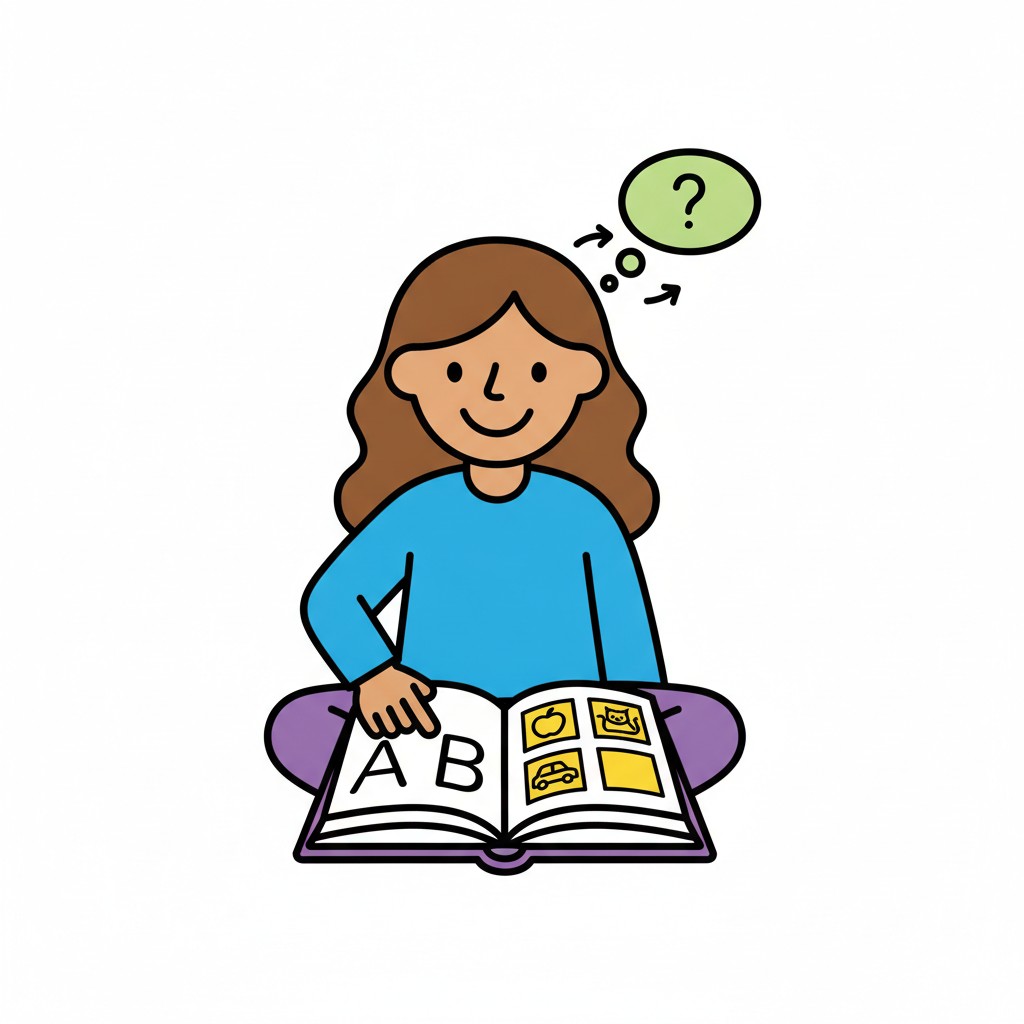 ♀
♀Girl learning words
A girl sits with a book of letters and pictures, thinking.
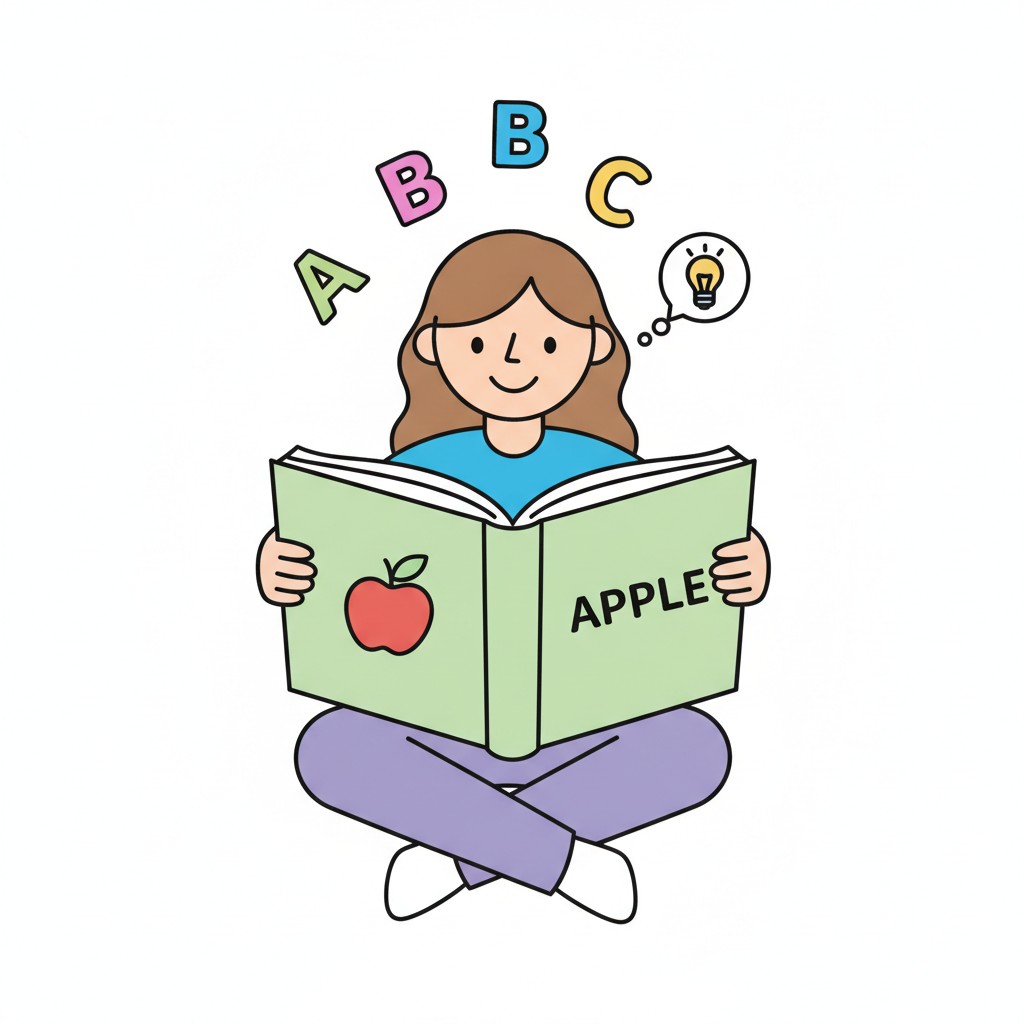 ♀
♀Reading a word book
A girl reads a book with an apple and the word APPLE, letters floating around her.
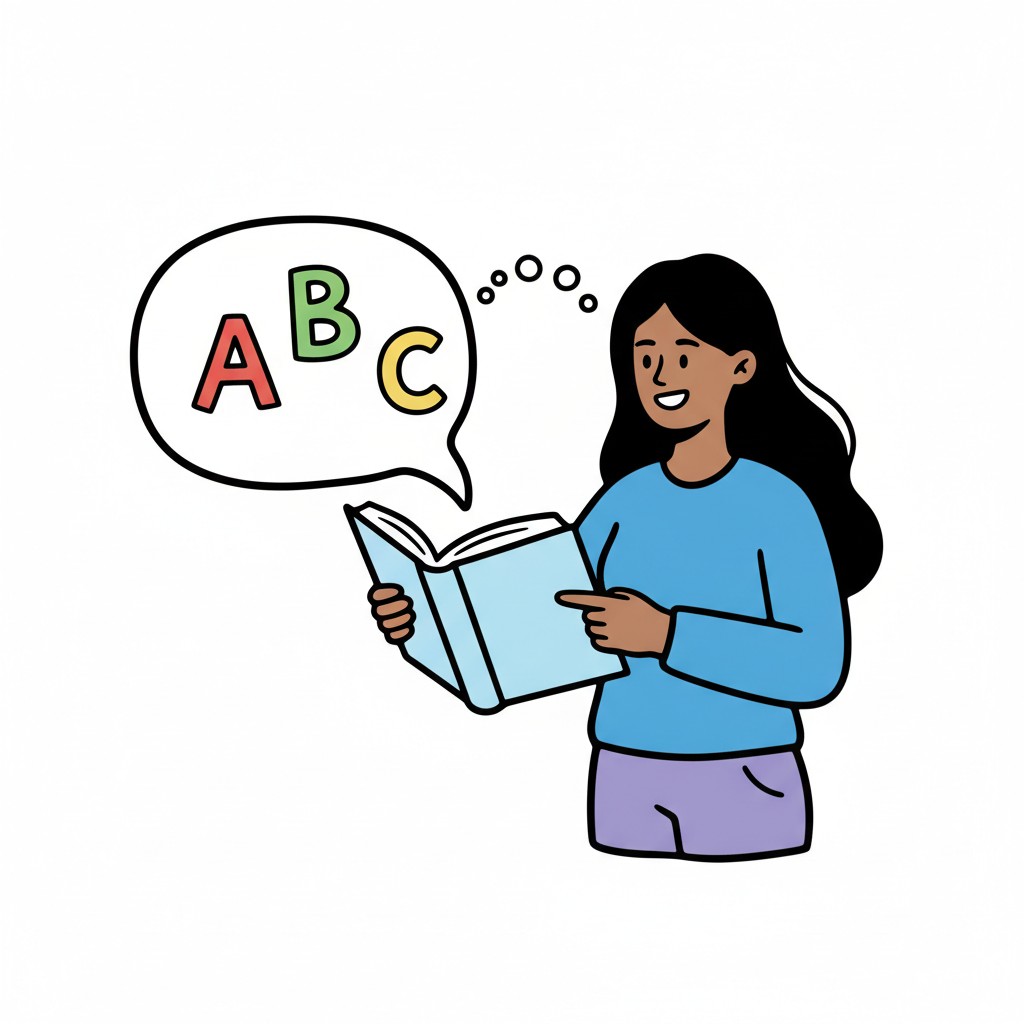 ♀
♀Practising words
A woman reads from a book with a speech bubble showing ABC.
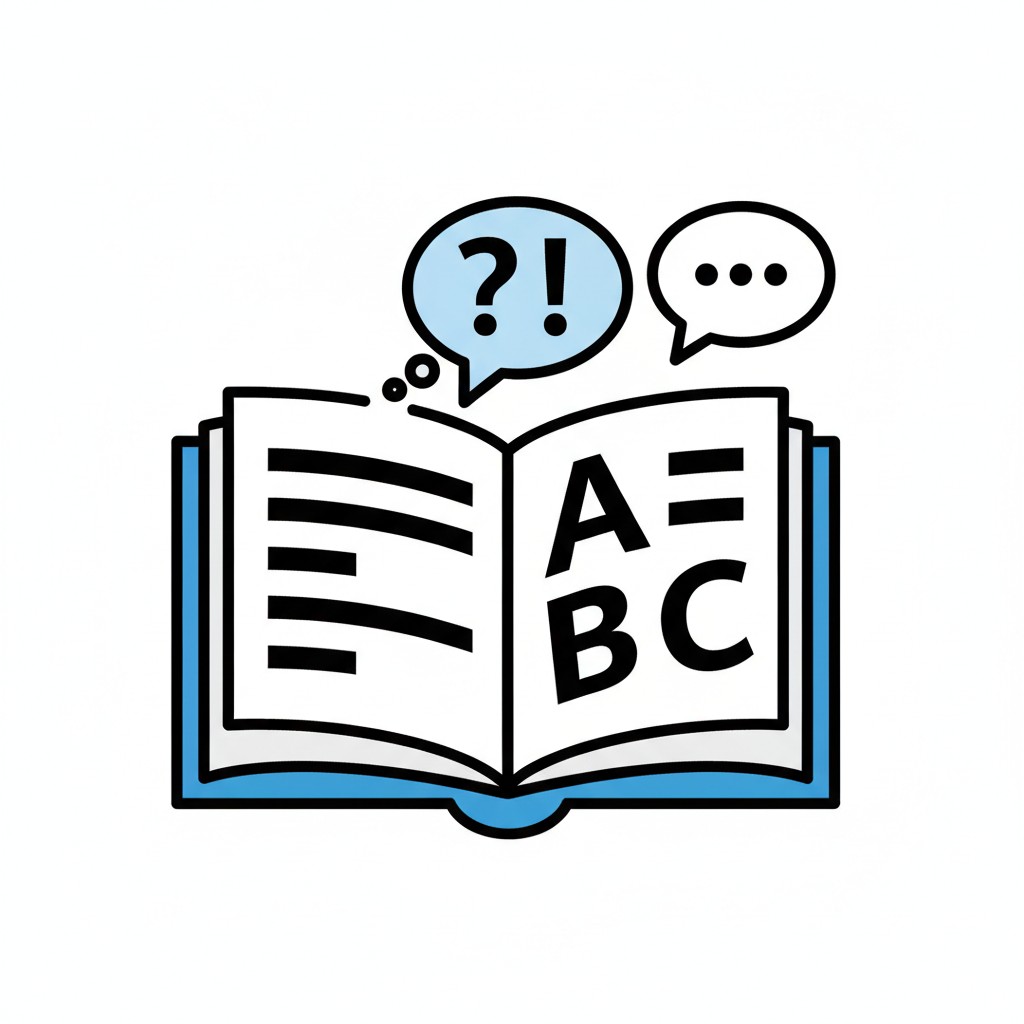
English words
An open book with ABC and speech bubbles.
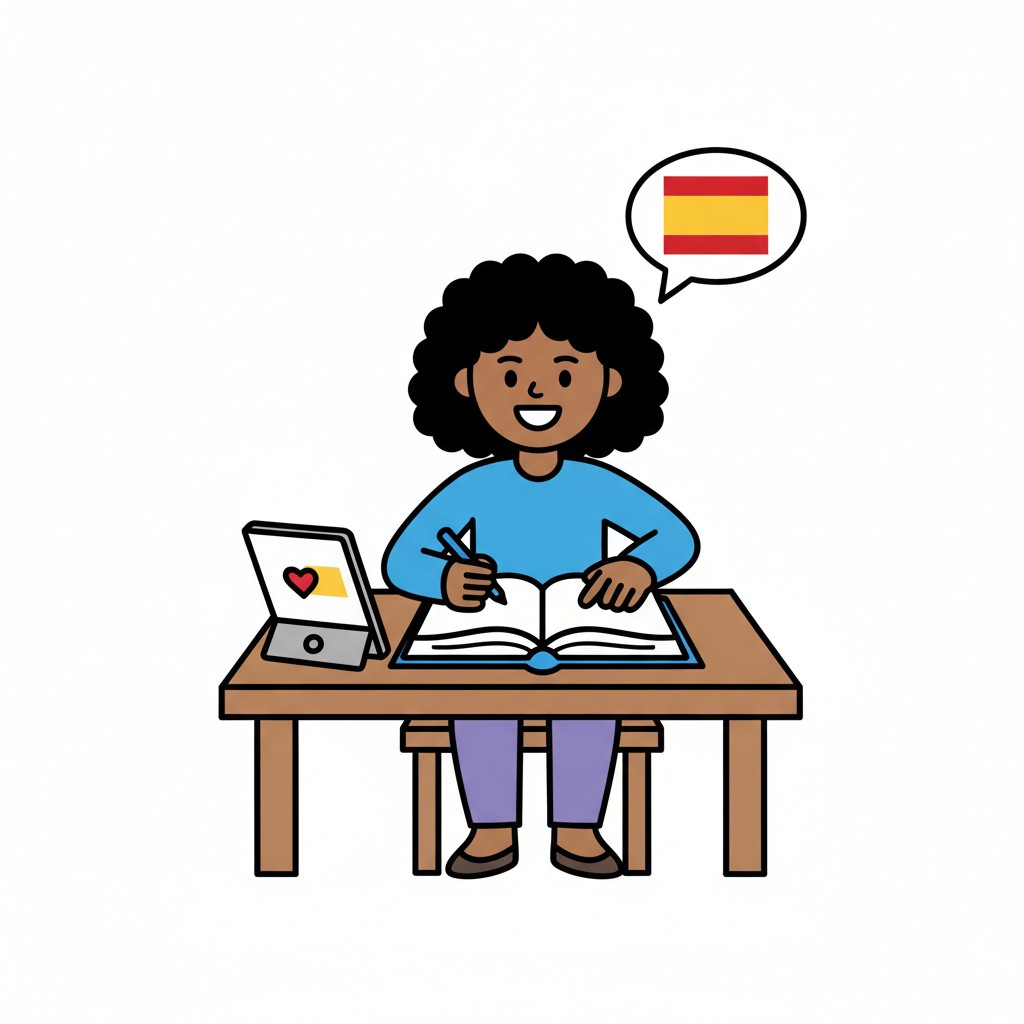 ♀
♀Spanish lesson
A girl writes in a book with a Spanish flag in a speech bubble.
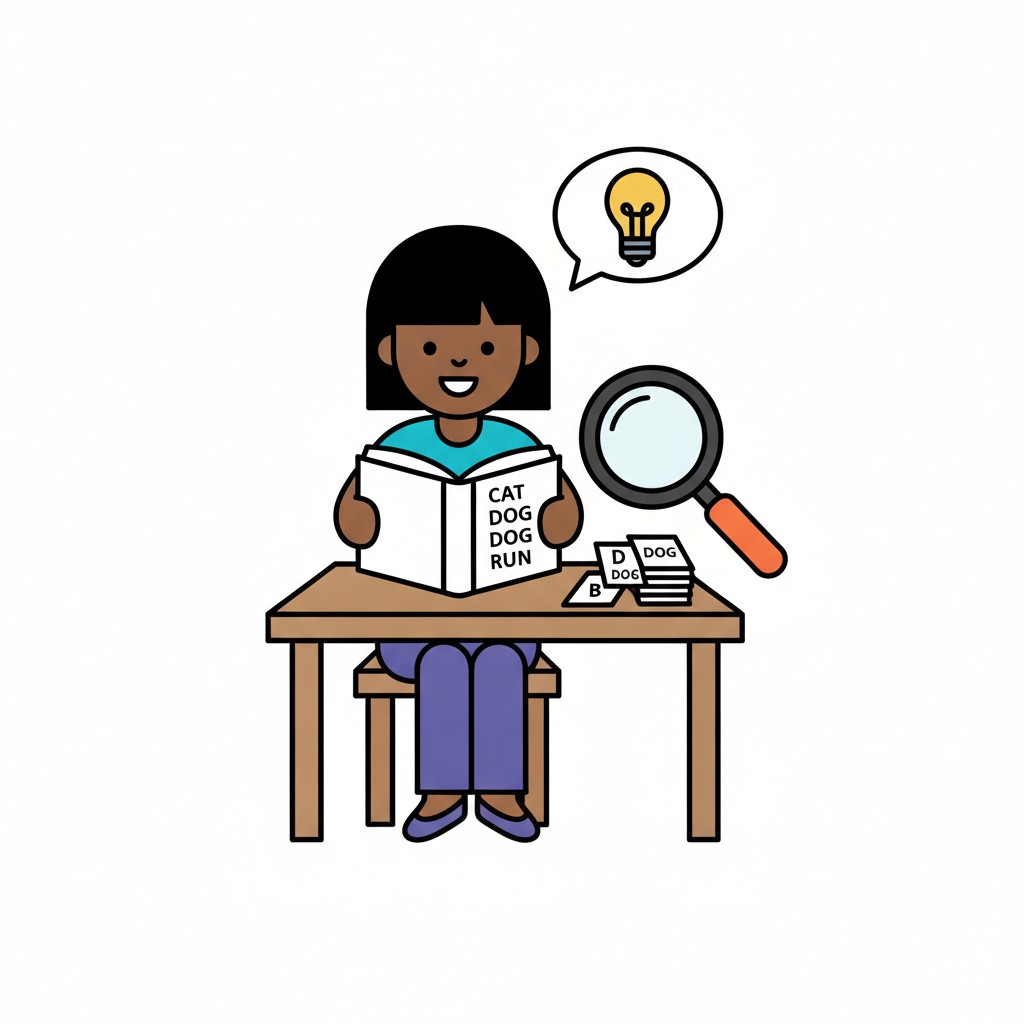 ♀
♀Studying words
A girl reads a word list with a magnifying glass and an idea bulb.
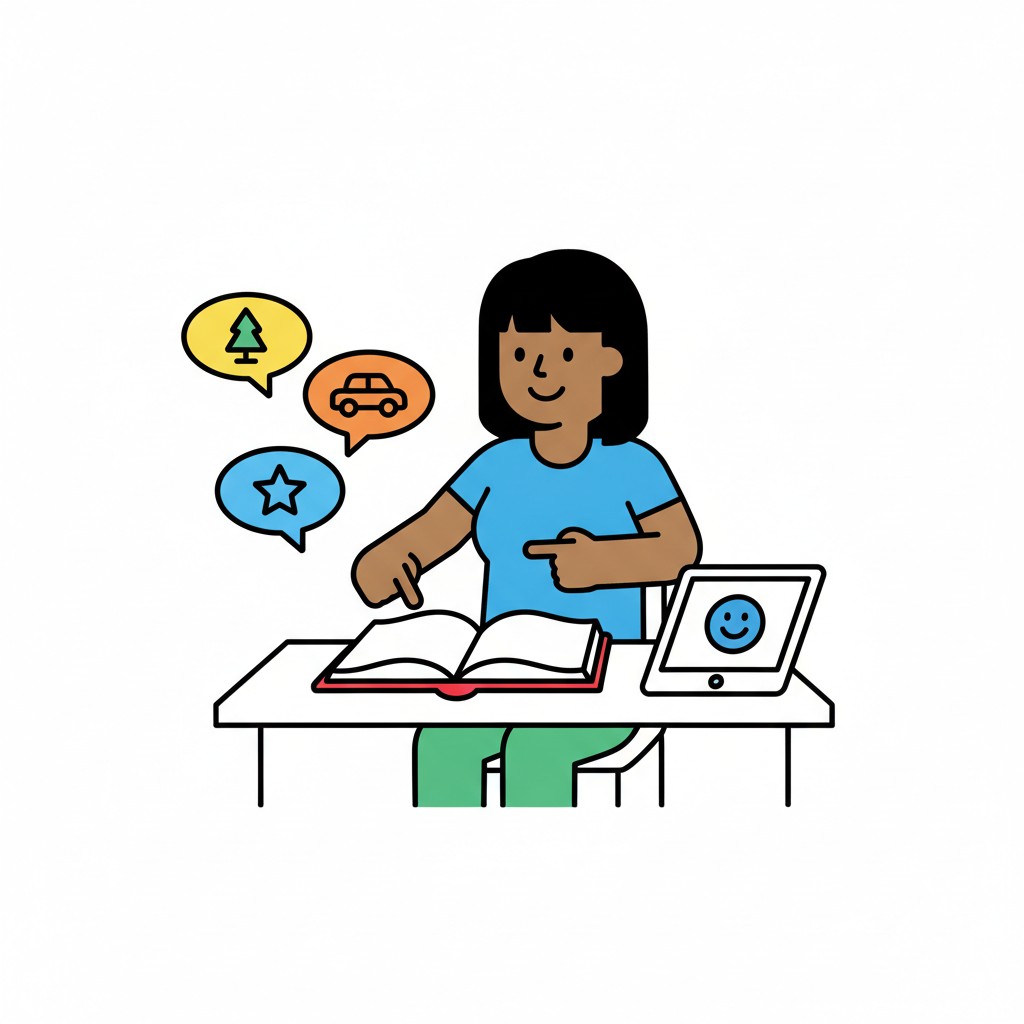 ♀
♀Vocabulary
A girl points in a book with picture bubbles and a tablet nearby.
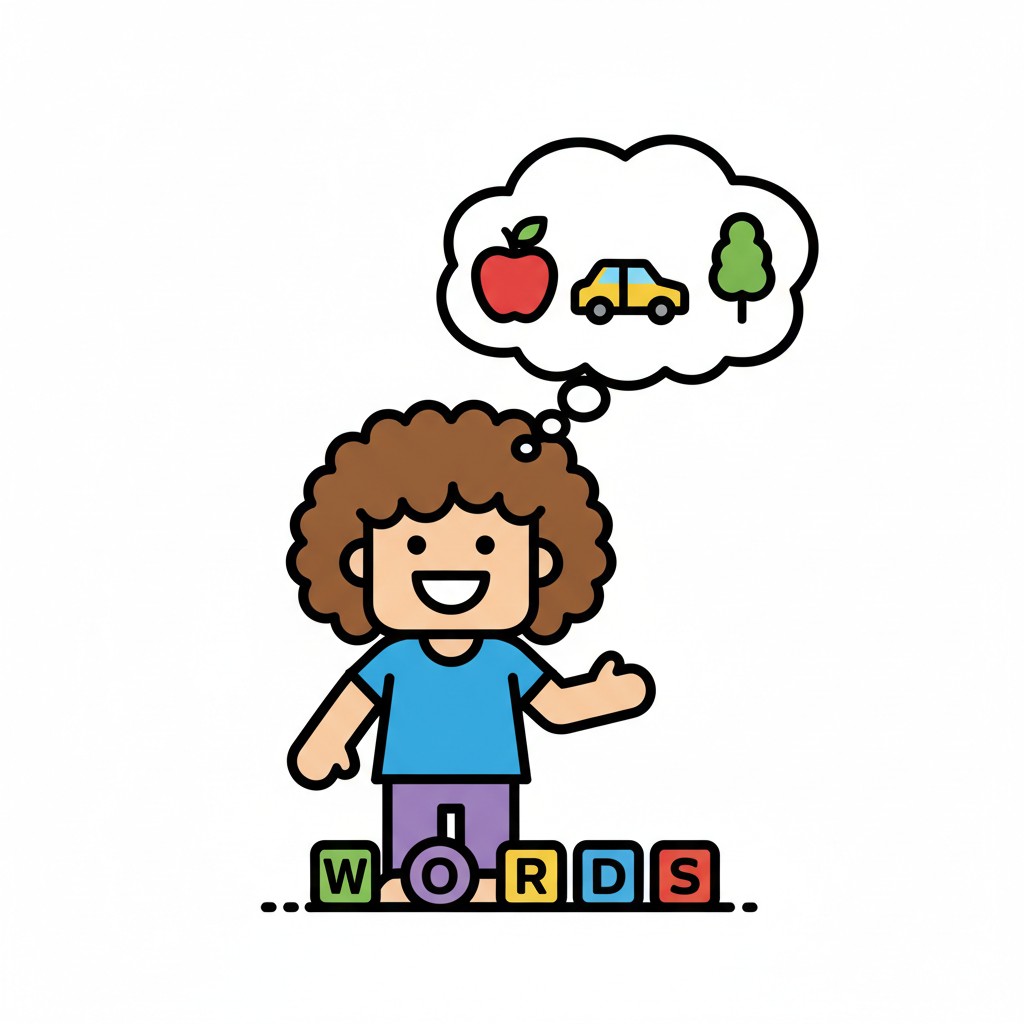 ♀
♀Learning words
A child thinks of an apple, a car and a tree with letter blocks spelling WORDS.
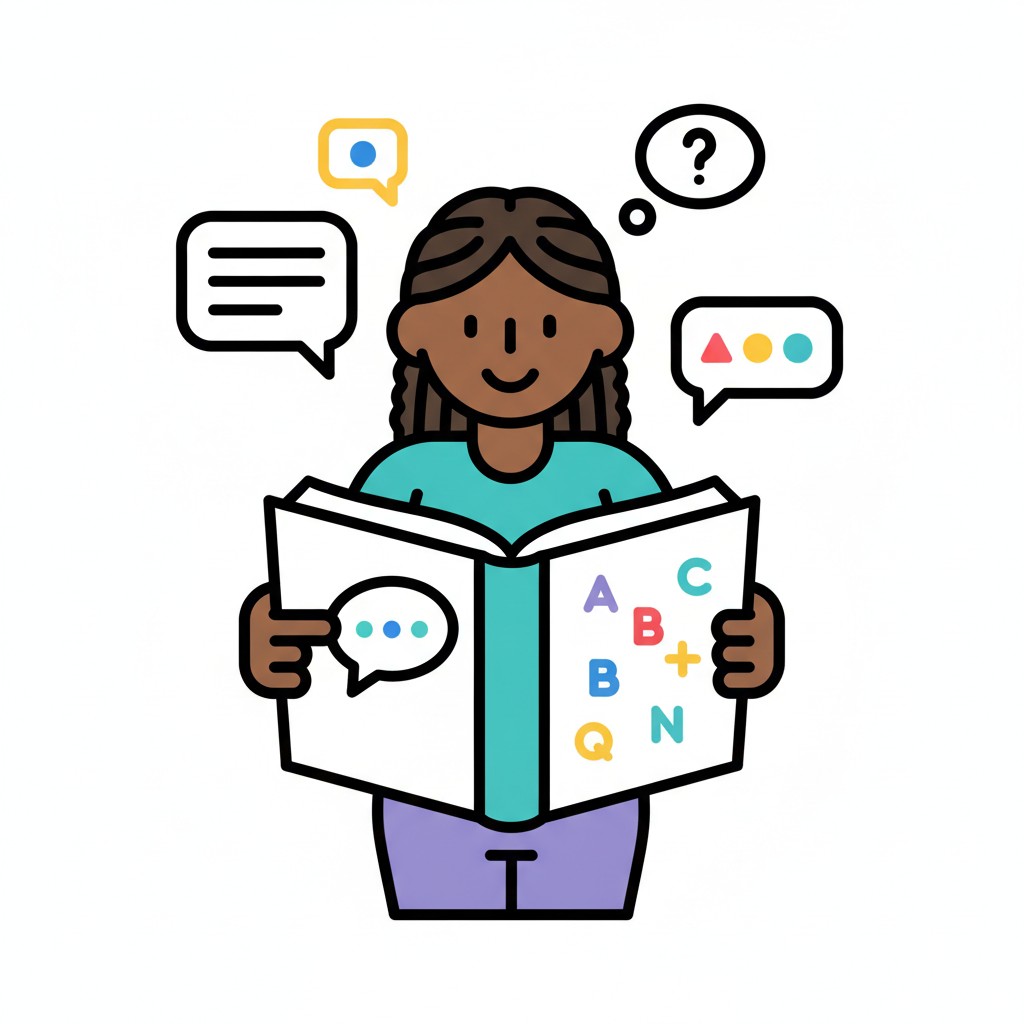 ♀
♀Reading words and letters
A girl reads a book of letters with speech bubbles around her.
About this visual support
Learning to read is one of the few childhood projects where the reward arrives weeks after the effort. Letter patterns have to become automatic before they start to mean anything inside a sentence, and meanwhile the drill feels like repetition without a point.
Visual cards shorten the wait by giving every word a partner image from the very first encounter. When a picture of a cat sits next to the letters c-a-t, memory no longer depends on sound alone. The brain gets two routes at once, so the word can be retrieved even when patience is short. Repetition keeps its shape but loses its drag.
A tip that fits this activity: work with three new words at a time, not ten. Lay the cards out, say the word, flip them over, guess. Once all three stick, swap one. That small cycle lets the child feel something landing before tiredness takes over. Inside Routined you can build a short learning sequence with word cards and a timer, with a fourteen-day trial.
Use this image in a schedule
Build your own visual schedule with this image and download it as a print-ready PDF. Completely free.

More similar visual supports
Study
A person sits at a desk writing in a book, with a calendar, a tablet and a mug b...
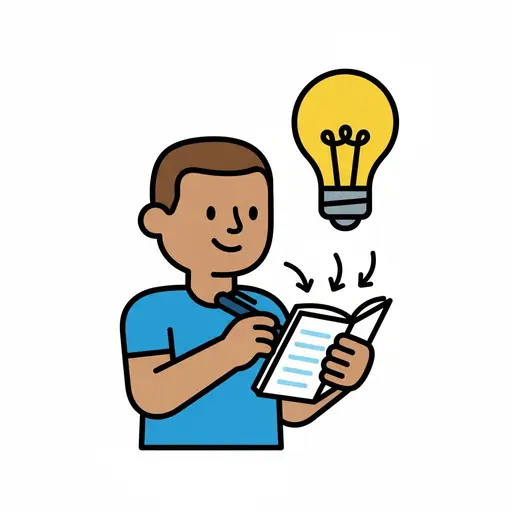
Take note
A boy holding a pen and writing in a notebook. A glowing lightbulb floats above ...
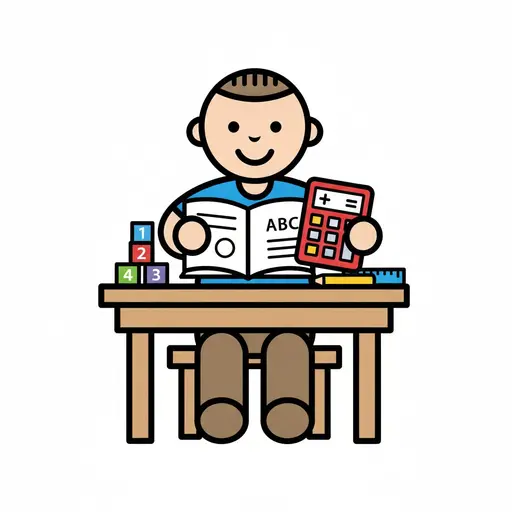
Math and reading
A child sits at a desk with an open letter book, a calculator and number blocks.
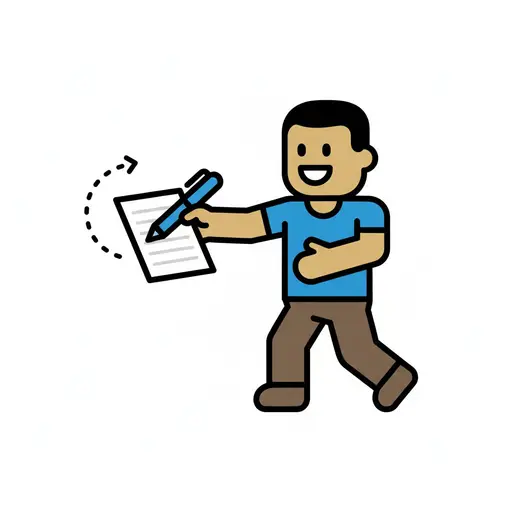
Fetch pen and paper
A boy reaches toward a sheet of paper while holding a pen.
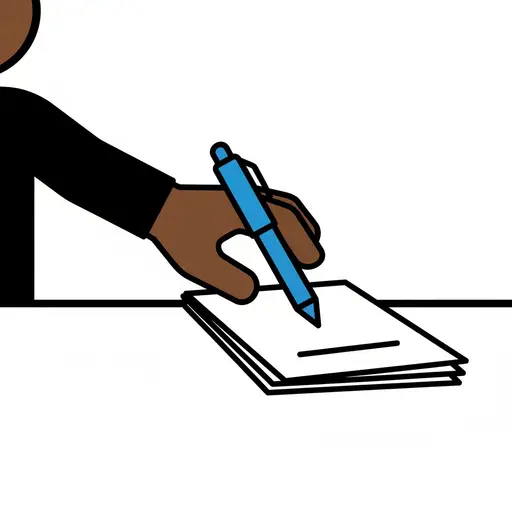
Get pen and paper
A person leans forward and writes with a blue pen on a stack of paper.
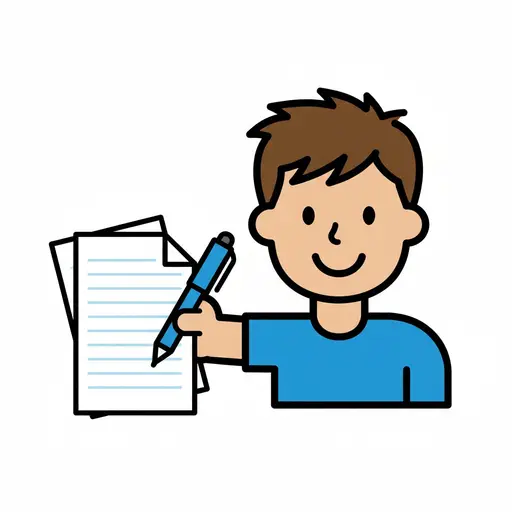
Grab pen and paper
A smiling boy holds a blue pen and some sheets of paper, ready to write.
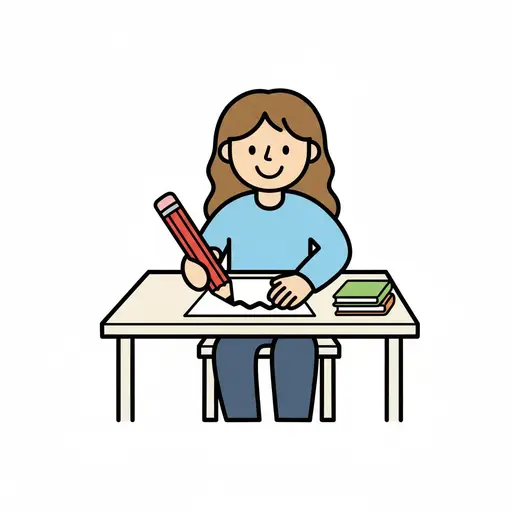
Write
A girl writes with a large pencil at a desk.
Count
A white card with rounded corners showing the numbers 1, 2 and 3 in blue, green ...
Take the visual supports with you
In Routined you build schedules from these pictures, add timers and voice instructions, and your child follows the day on their own.


* 14-day free trial, then $2.39 a month or $20.99 a year (US pricing). Cancel anytime.