Listen to instructions
The teacher's voice gives four things in a row, and three of them are gone before the pencil hits the paper. Putting up a hand to ask for another run-through quickly feels awkward. Pictures that stay on the desk let the ear miss without the whole task going with it. The steps below show how.
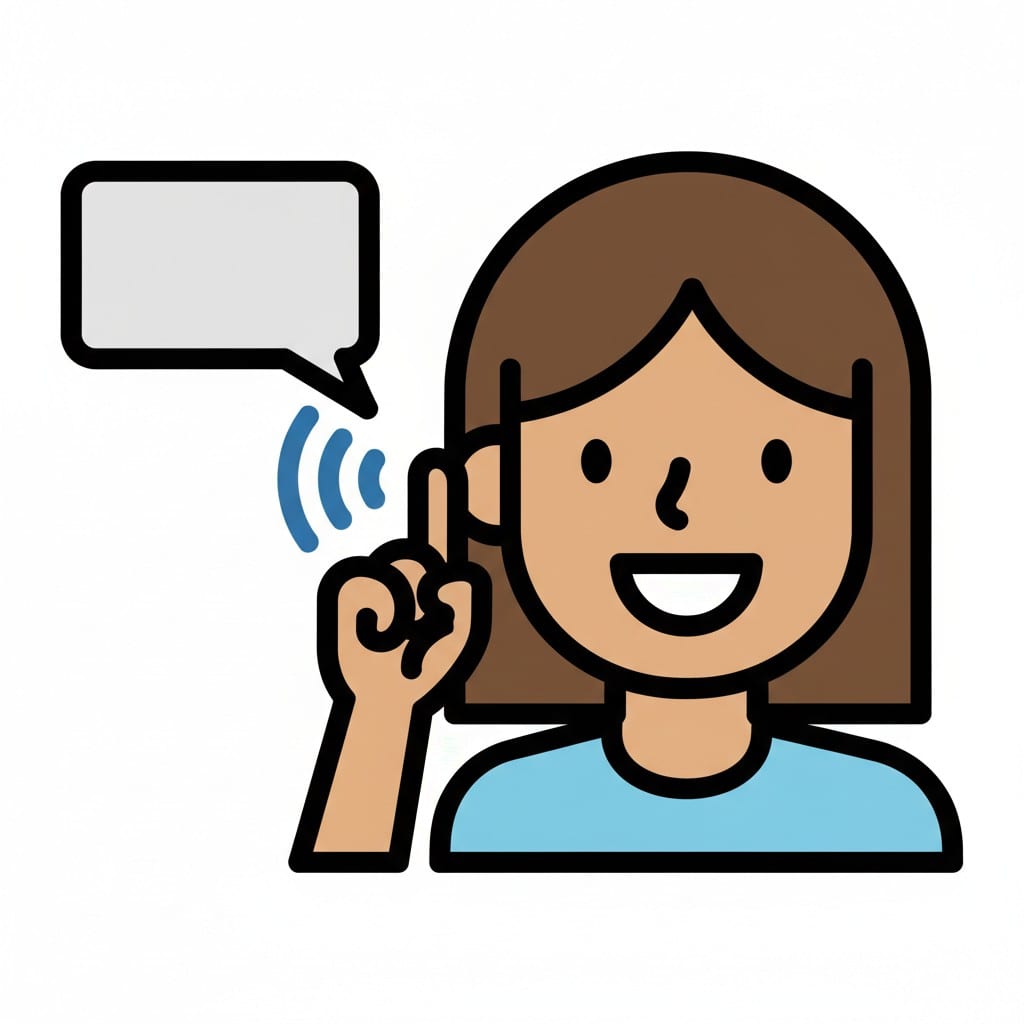 ♀
♀Listen to instructions
An illustration of a person holding a hand to their ear, with sound waves moving towards the ear and a speech bubble above. Symbolizes listening to instructions.
About this visual support
Auditory working memory is like a small jug, and multi-step spoken instructions fill it over the rim fast. Step one and two usually settle, step three hangs by a thread, step four is gone before the first point is finished. From the outside it rarely shows, because the child is hearing, the listening memory just can't hold on long enough.
When the same instruction is available as a short row of pictures on the desk or the board, the ear gets help from the eye. The steps can be revealed one by one or ticked off as they go, and the child can look back without interrupting the teacher or themselves. No raised hand, no visible gap, just a quiet recheck.
One practical tip: ask for the picture version of the instruction in advance, not during the lesson. A small deck of four to six pictures per task type goes a long way, because the same kind of brief keeps repeating: read, answer, switch page, hand in. That way the child doesn't have to wait for the problem to appear. If you'd like to build and share your own picture sequences with school, you can try Routined free for fourteen days.
Use this image in a schedule
Build your own visual schedule with this image and download it as a print-ready PDF. Completely free.

More similar visual supports
Follow instructions
A happy boy runs with his arms outstretched.
Be quiet
An illustration of a person holding a finger to their lips to signal to be quiet...
Christian studies
A smiling pupil points at a large open blue book showing a cross and a scroll, b...

Circle time
A group of people standing in a circle holding hands, with one person in the cen...

Danish
A round pastry icon with golden petals, white sprinkles and a red round filling ...
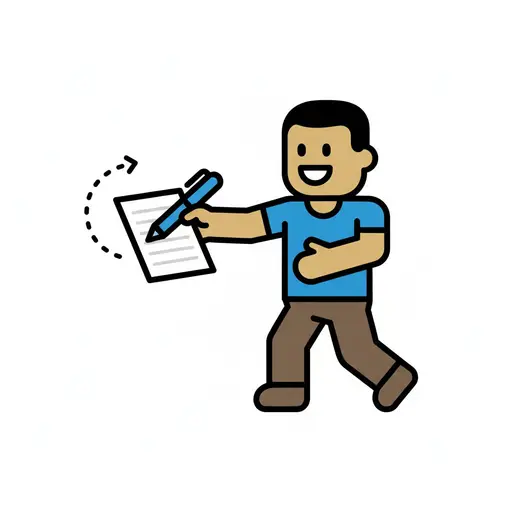
Fetch pen and paper
A boy reaches toward a sheet of paper while holding a pen.
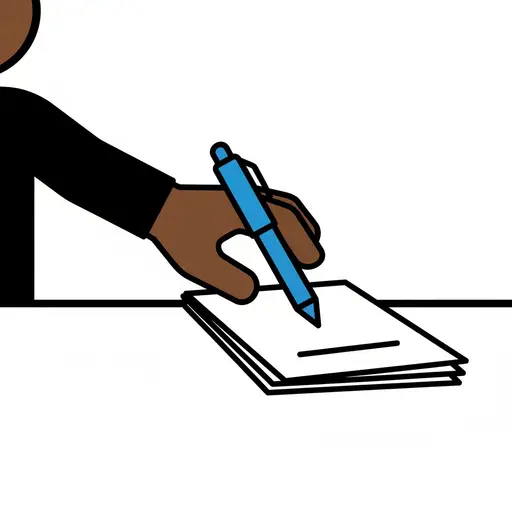
Get pen and paper
A person leans forward and writes with a blue pen on a stack of paper.

Grab pen and paper
A smiling boy holds a blue pen and some sheets of paper, ready to write.
Take the visual supports with you
In Routined you build schedules from these pictures, add timers and voice instructions, and your child follows the day on their own.


* 14-day free trial, then $2.39 a month or $20.99 a year (US pricing). Cancel anytime.