Make a plan
Laying out a day in advance means thinking about things that have not happened yet and weighing them against each other. For a child that is abstract and hard to hold in mind. With the visual support below, the future becomes something you can lay out in front of you and see.
 ♀
♀Write in the planner
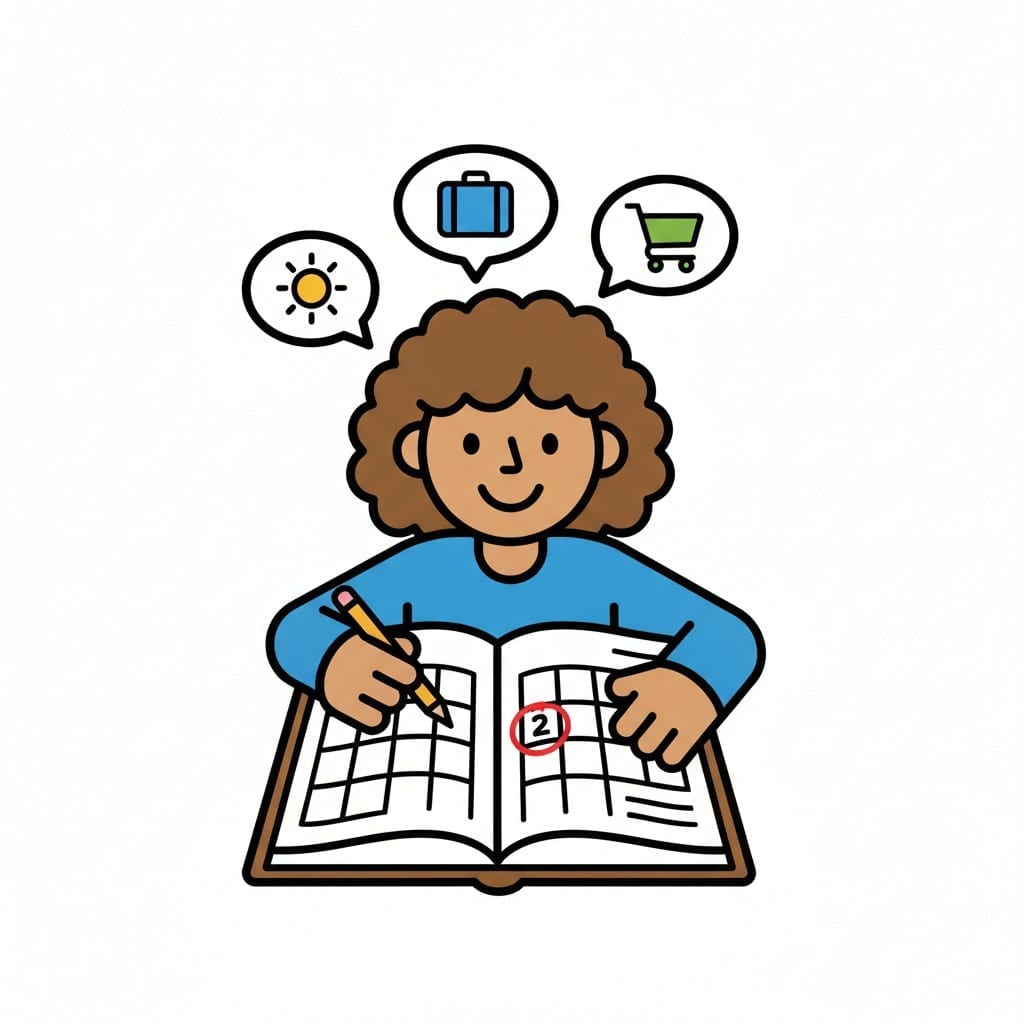
A child writes in a calendar with thought bubbles showing a sun, a bag and a shopping cart above.
 ♀
♀Planning at the table
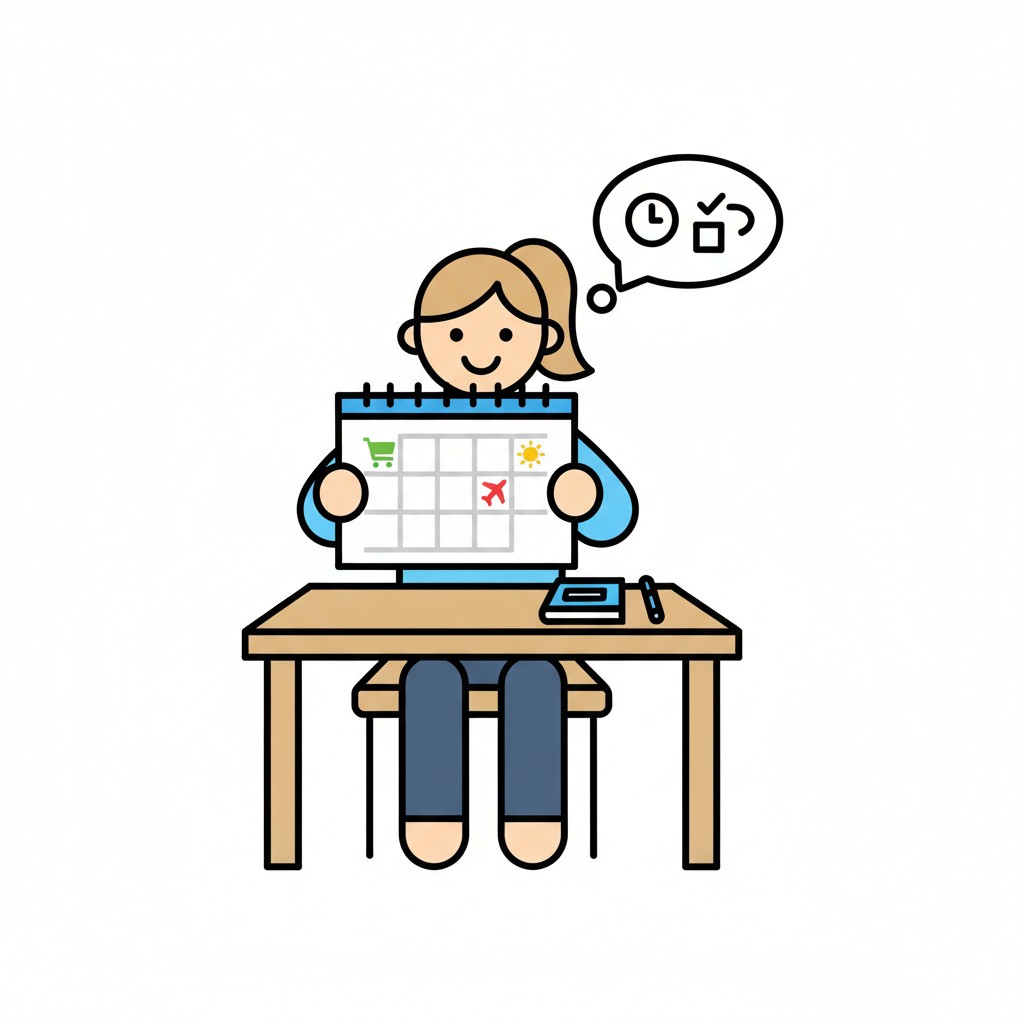
A person sits at a table behind a large calendar with a thought bubble showing a clock and tasks.
 ♀
♀What is happening this week
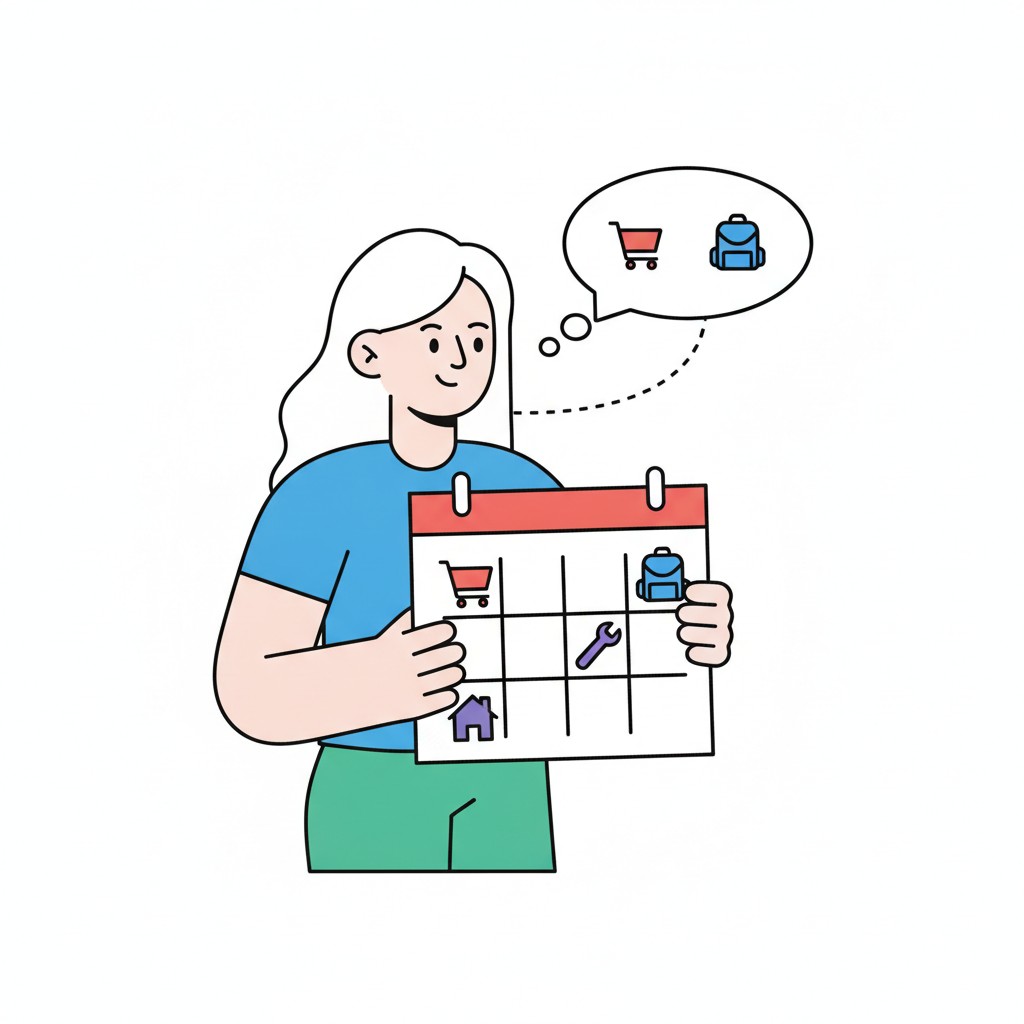
A person holds a calendar and thinks about shopping and chores shown in thought bubbles.
Filling in the calendar
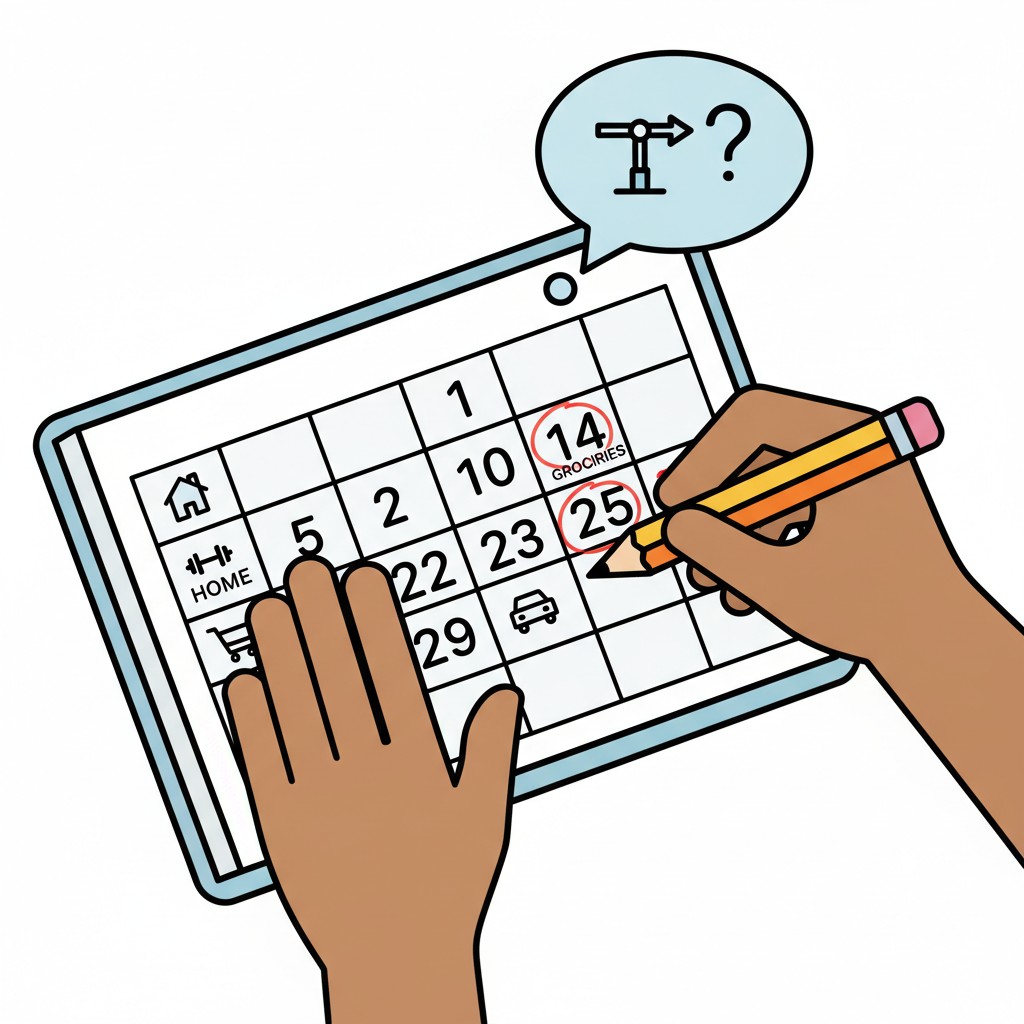
A hand writes with a pencil in a calendar on a tablet, with a thought bubble showing a signpost with a question mark.
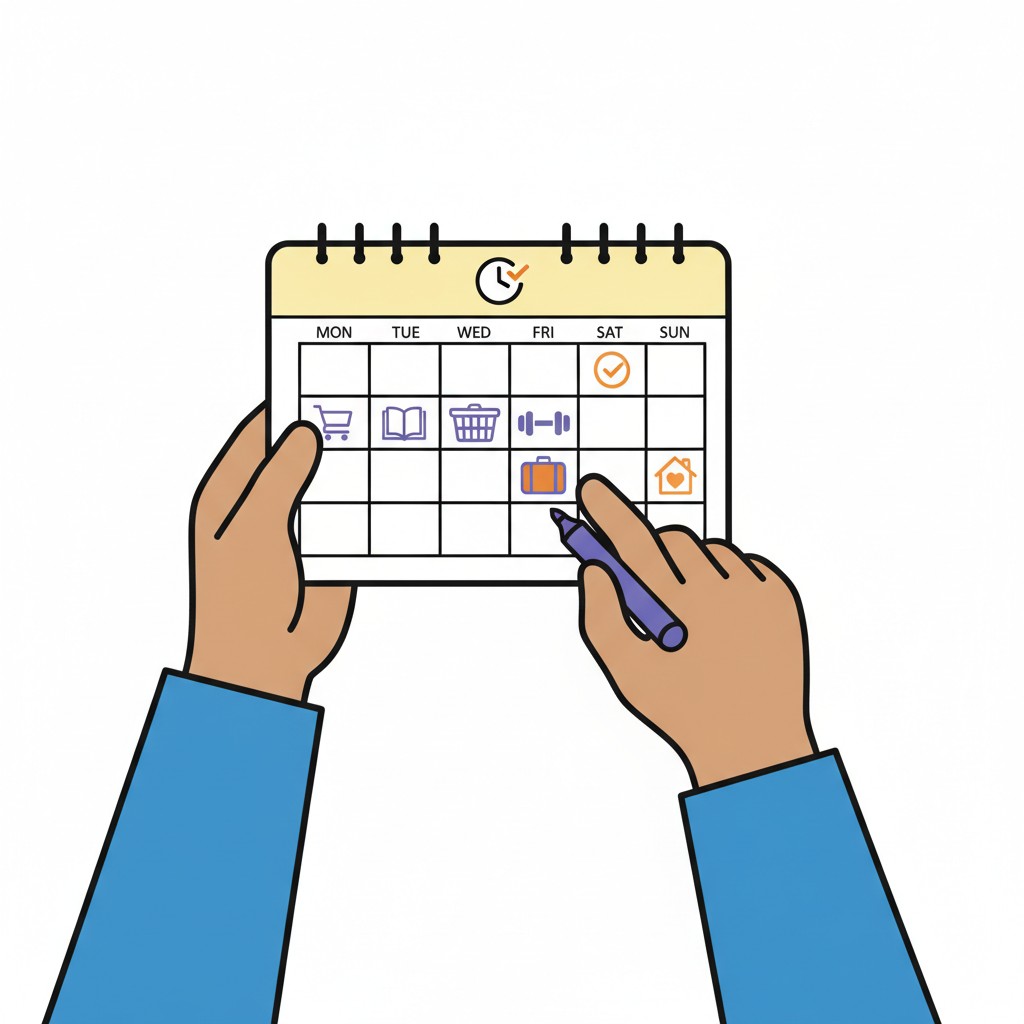
Plan the week
Two hands hold a weekly calendar with small symbols in the boxes and a pen.
About this visual support
Time is invisible, and the future even more so. Planning means picturing things that do not exist yet, holding several of them in mind at once, and deciding what comes first. It is one of the hardest mental exercises we ask children to do, and many get stuck precisely because it all has to stay inside the head.
A visual support moves the planning out of the head and onto the table. When each activity is a card, the child can touch the future: lay the cards in a row, swap their places, see how the day fills up and where there is still room. The abstract becomes manageable, and the child can practise prioritising without also having to remember everything. Physically moving a card is an easier decision than rethinking the whole day in your head.
One tip just for planning: start with only three cards, a morning, a middle and an evening, before building out to a full week. Too few choices is easier than too many, and the feeling of success breeds the urge to plan more. In Routined the child can plan the day digitally and move the steps around with a finger, with fourteen days free to try. The images below also print well to use as loose cards.
Use this image in a schedule
Build your own visual schedule with this image and download it as a print-ready PDF. Completely free.

More similar visual supports
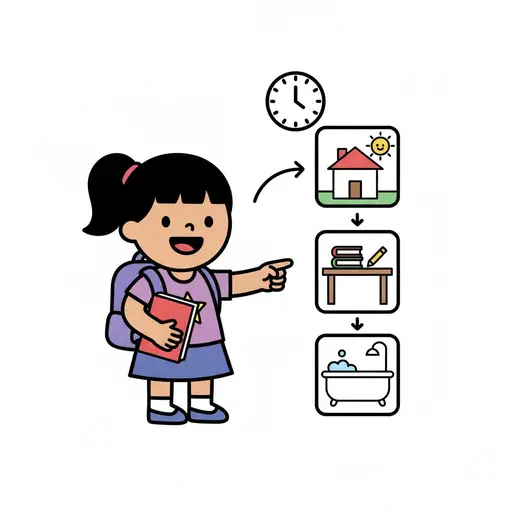
After School Routine
A girl with a backpack points at a schedule showing home, homework and bath afte...
Fetch pen and paper
A boy reaches toward a sheet of paper while holding a pen.
Get homework
A smiling girl hugs a notebook beside a stack of books and a pencil.
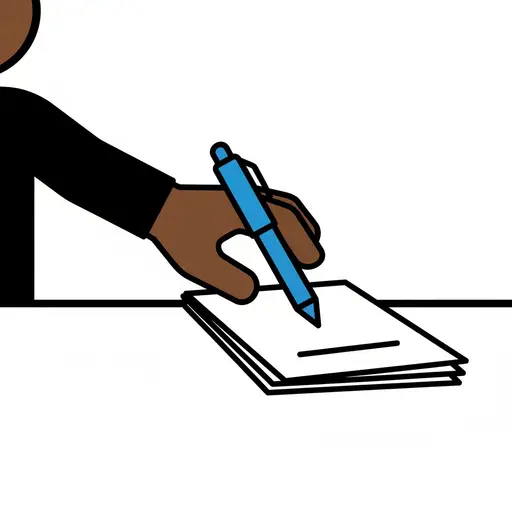
Get pen and paper
A person leans forward and writes with a blue pen on a stack of paper.

Grab pen and paper
A smiling boy holds a blue pen and some sheets of paper, ready to write.
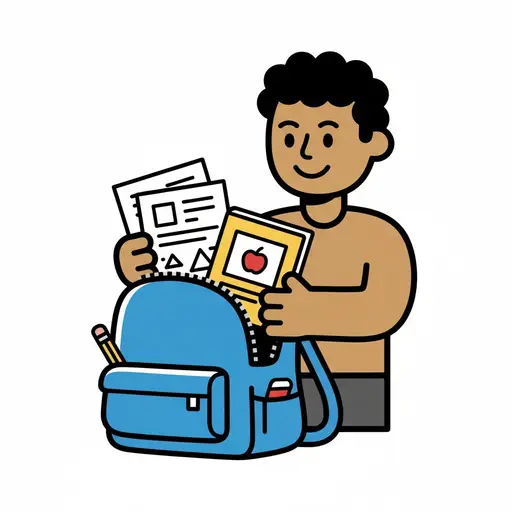
Pack homework
A smiling person is packing books and papers into an open blue backpack.
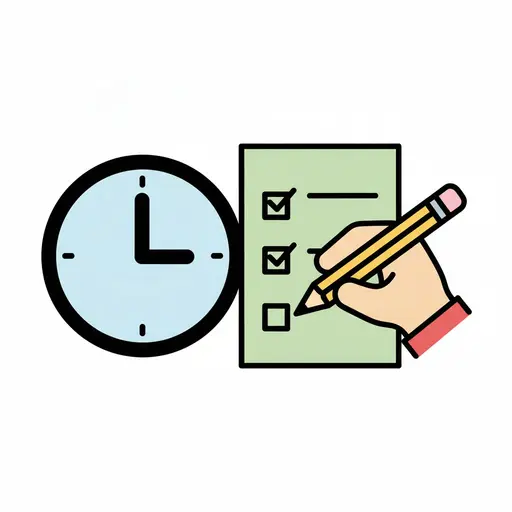
Afternoon checklist
A hand with a pencil ticks boxes on a green checklist beside a light blue wall c...
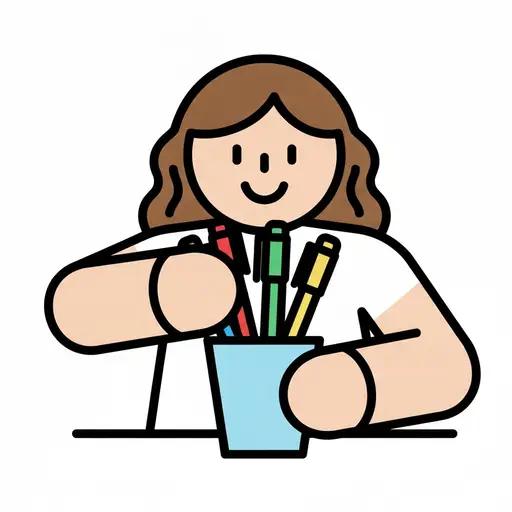
Put away pens
A child placing pens into a pen holder on the table
Take the visual supports with you
In Routined you build schedules from these pictures, add timers and voice instructions, and your child follows the day on their own.


* 14-day free trial included for new users.