Math
A math task asks the child to hold several things at once: the digit, the rule, the order and the ticking clock. The visual support below pulls the task apart so one step at a time has space.
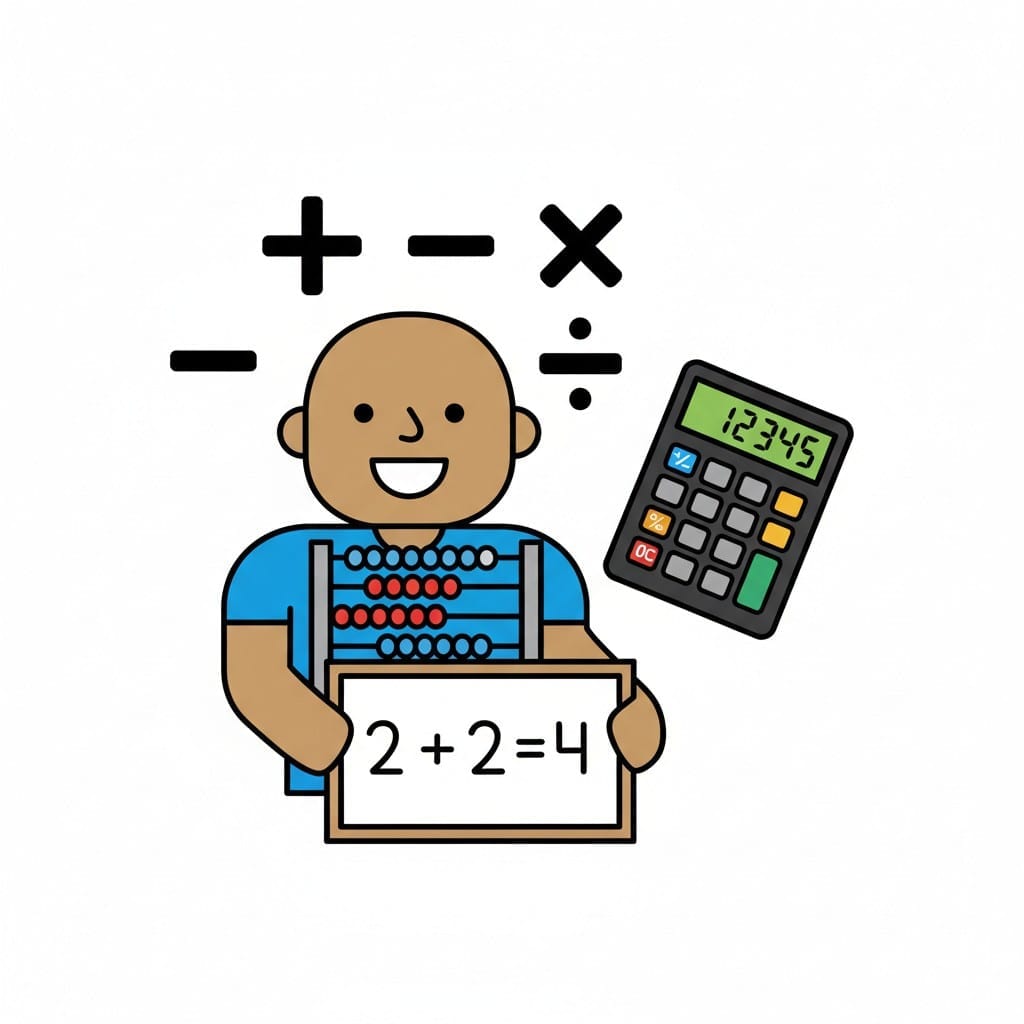 ♂
♂Math
A boy is learning math, holding a whiteboard with '2+2=4' and an abacus. A calculator and math symbols are shown around him.
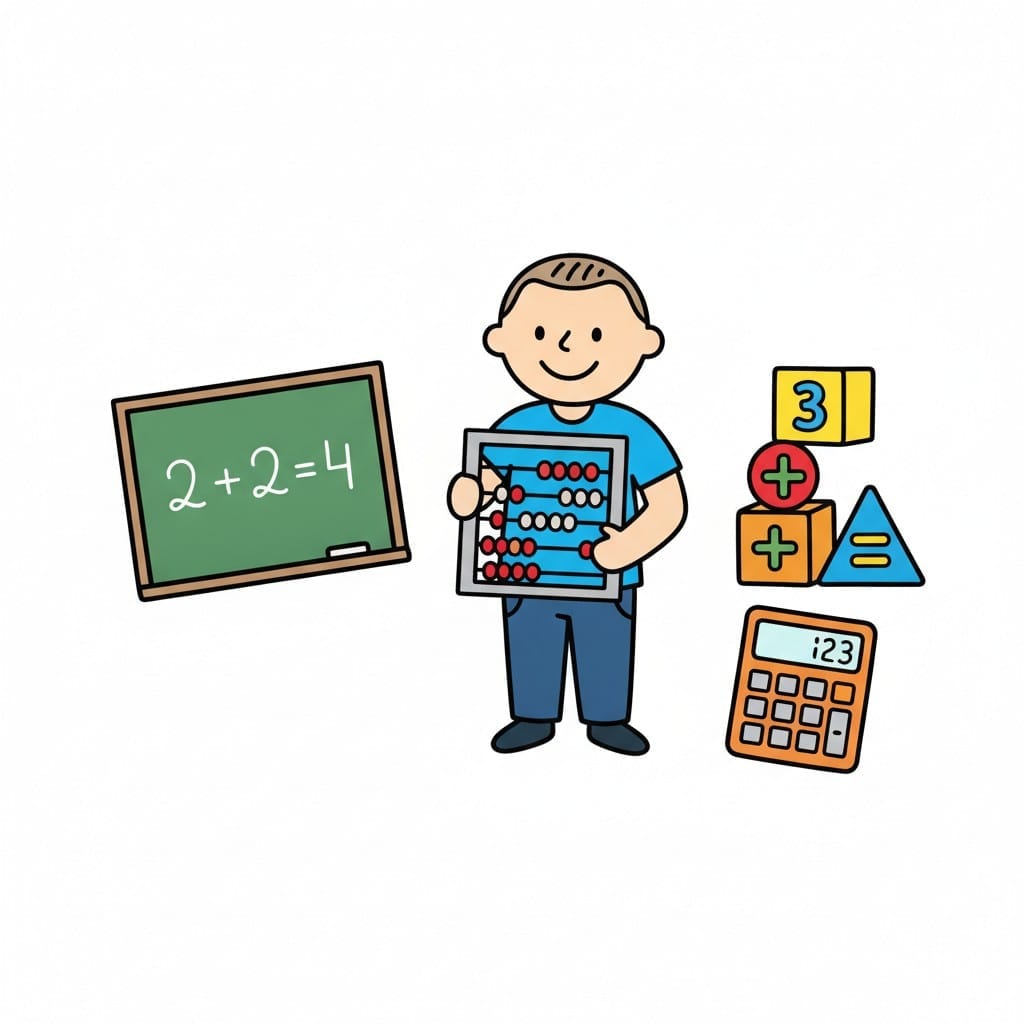 ♂
♂Boy with an abacus by the blackboard
A smiling boy holds an abacus beside a blackboard with a sum, a calculator and blocks with numbers and maths symbols.
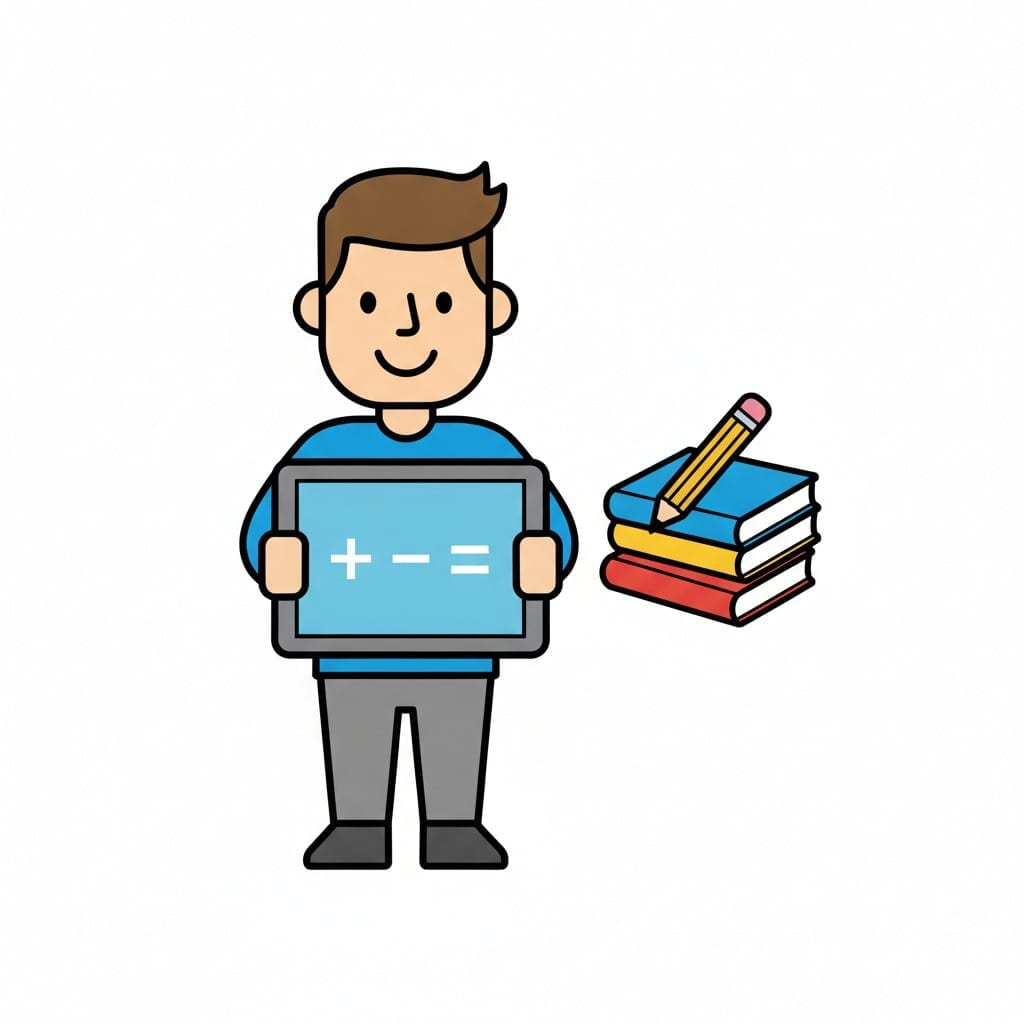 ♂
♂Boy holding a tablet with maths symbols
A smiling boy holds up a tablet showing plus, minus and equals signs, beside a stack of books with a pencil.
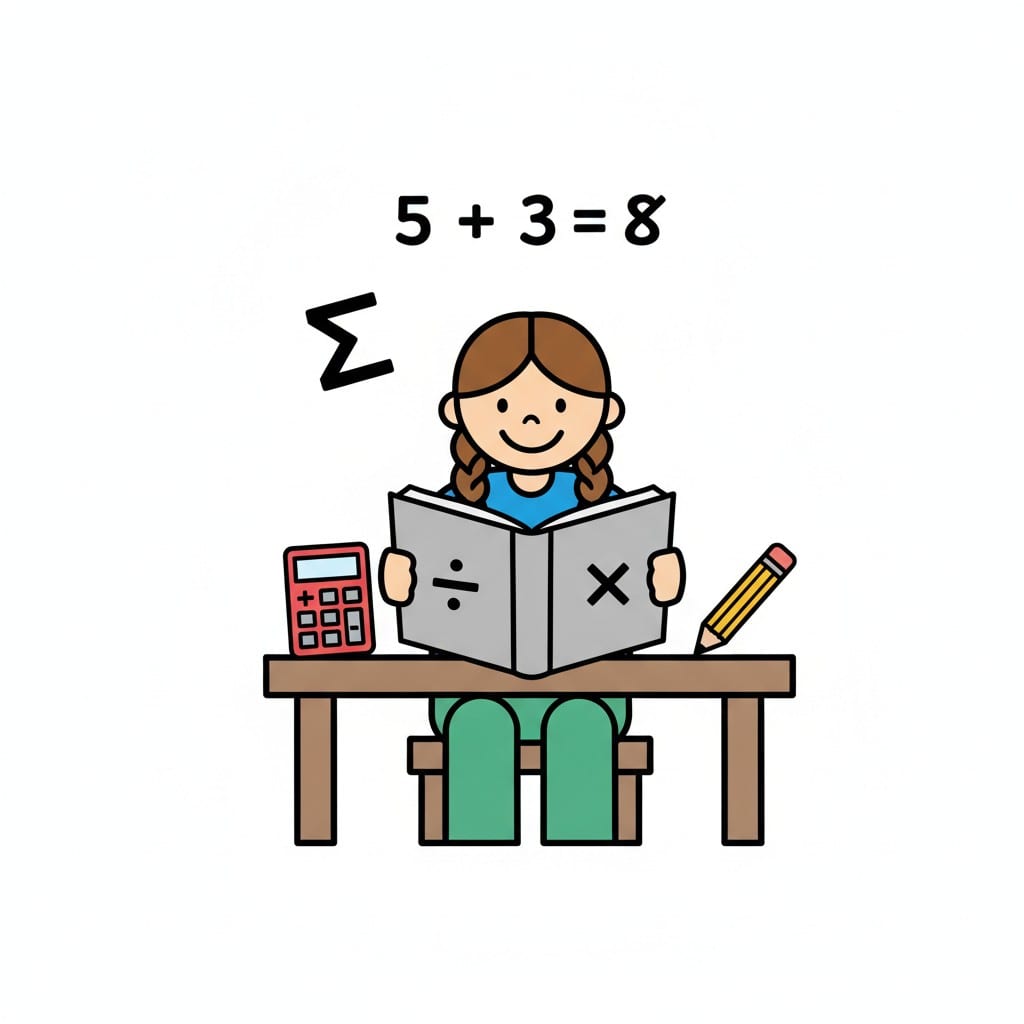 ♀
♀Girl reading a maths book
A smiling girl with braids sits at a table holding an open book with division and multiplication signs, beside a calculator and a pencil, beneath a written sum.
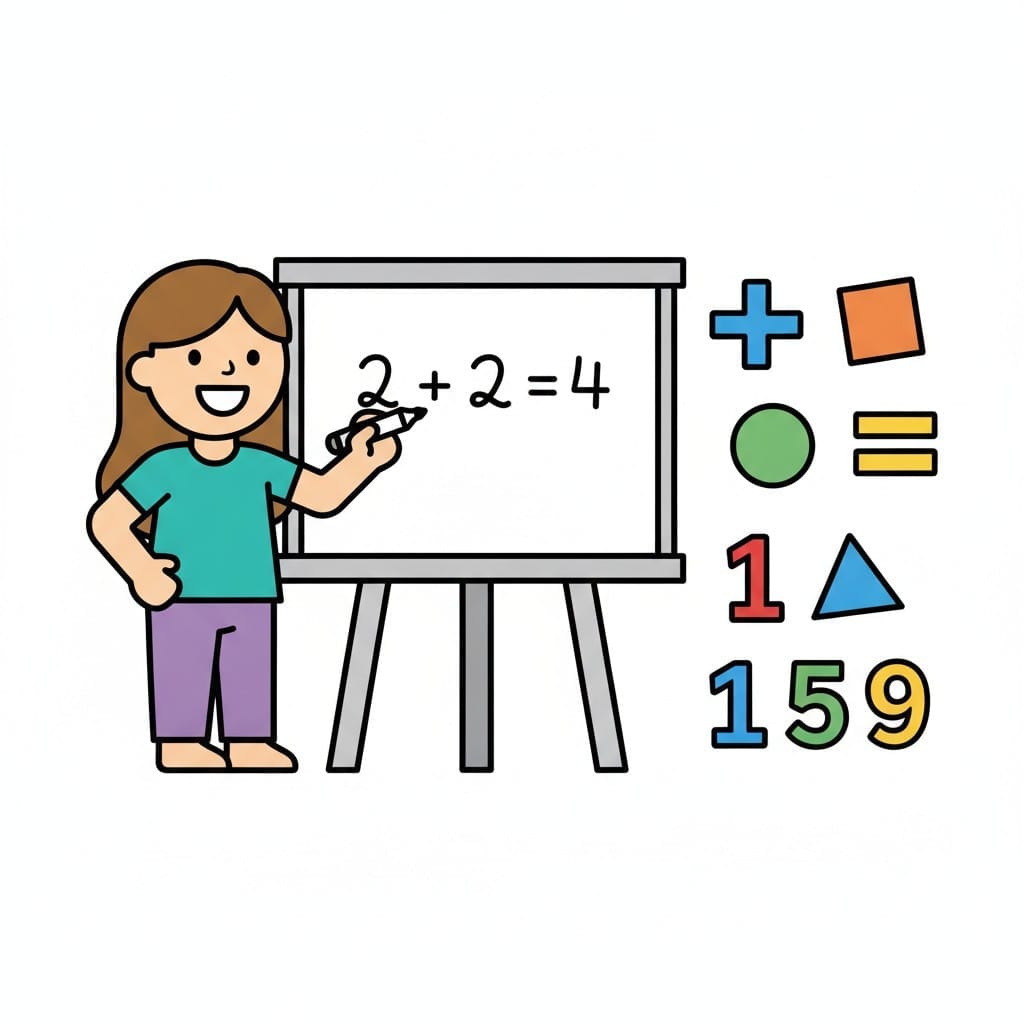 ♀
♀Girl writing a sum on the whiteboard
A smiling girl writes an addition sum on a whiteboard on a stand, beside colourful numbers, shapes and maths symbols.
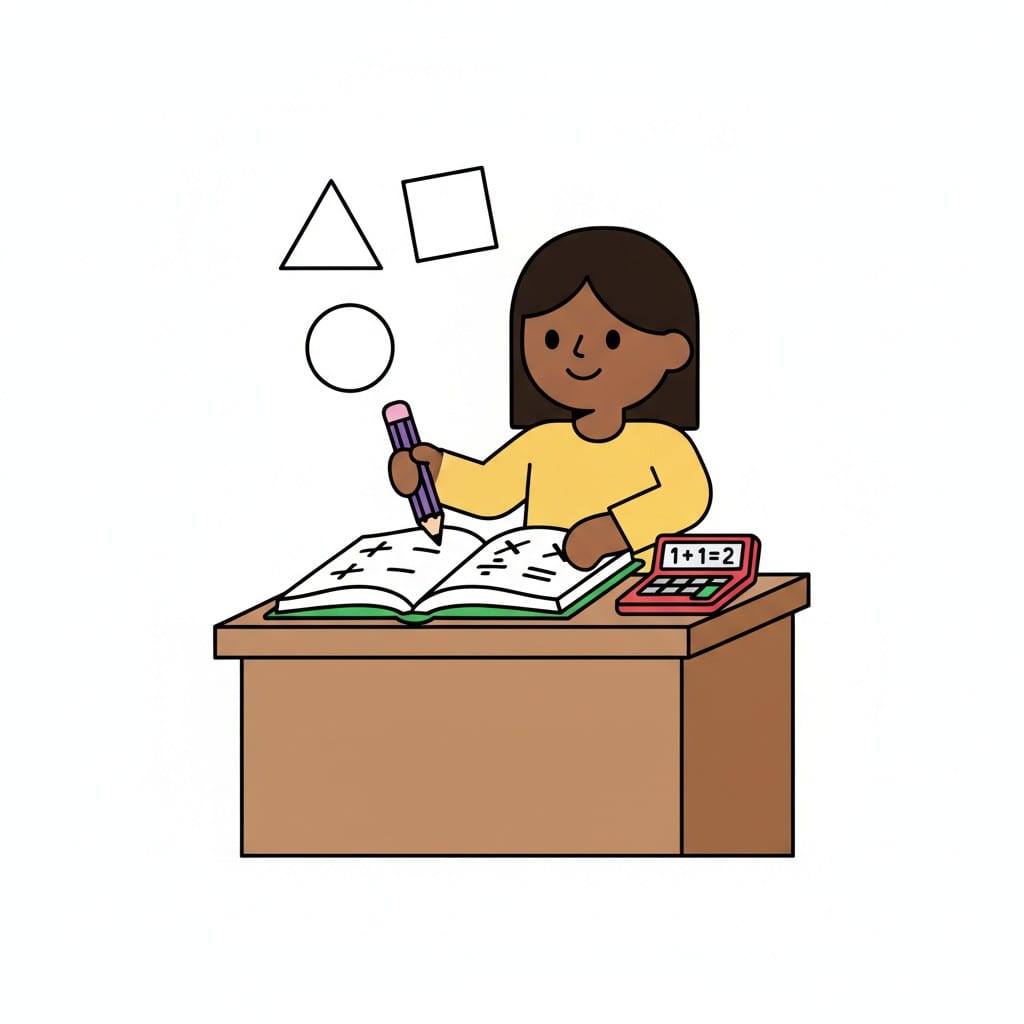 ♀
♀Girl writing in her maths book
A smiling girl sits at a desk writing in an open book with maths symbols, beside a red calculator and beneath a triangle, a square and a circle.
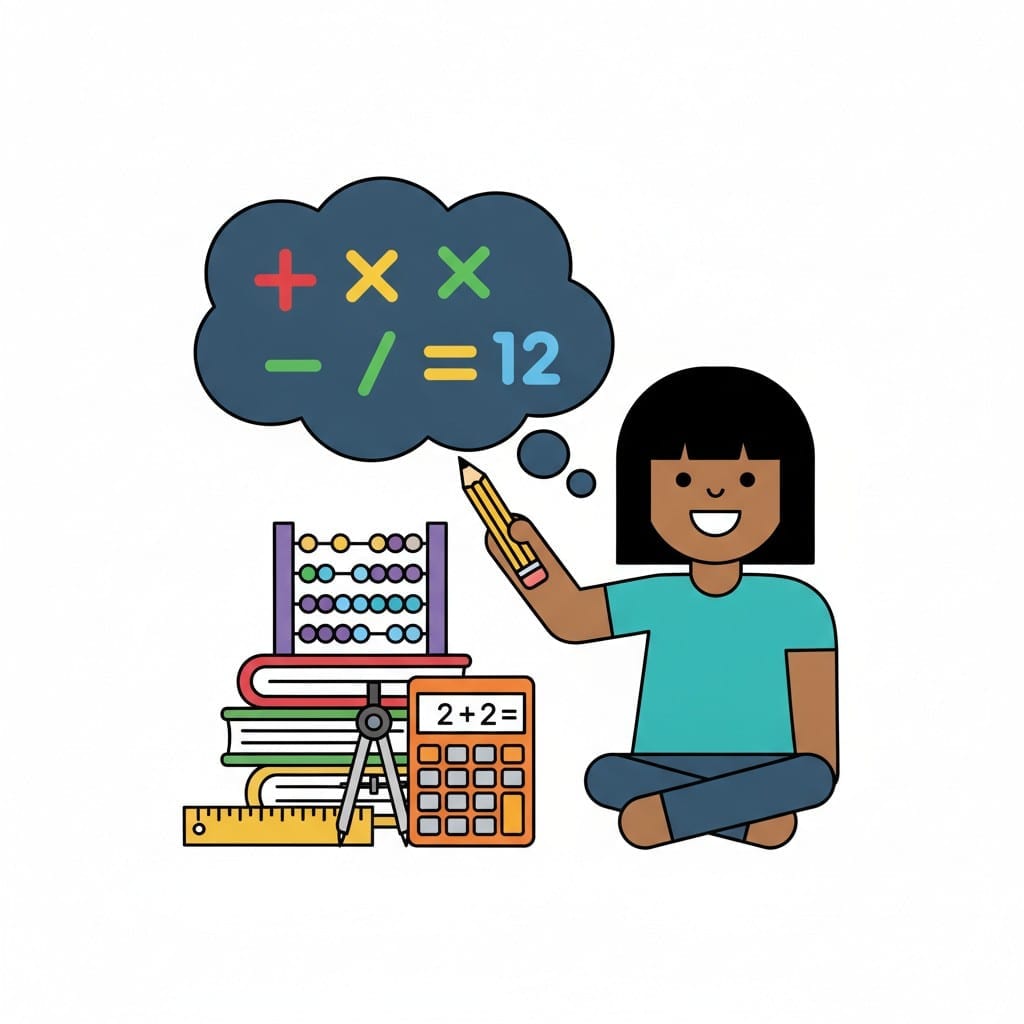 ♀
♀Girl thinking about maths symbols
A smiling girl sits cross-legged with a pencil and a thought bubble full of maths symbols, beside an abacus, books, a ruler, a compass and a calculator.
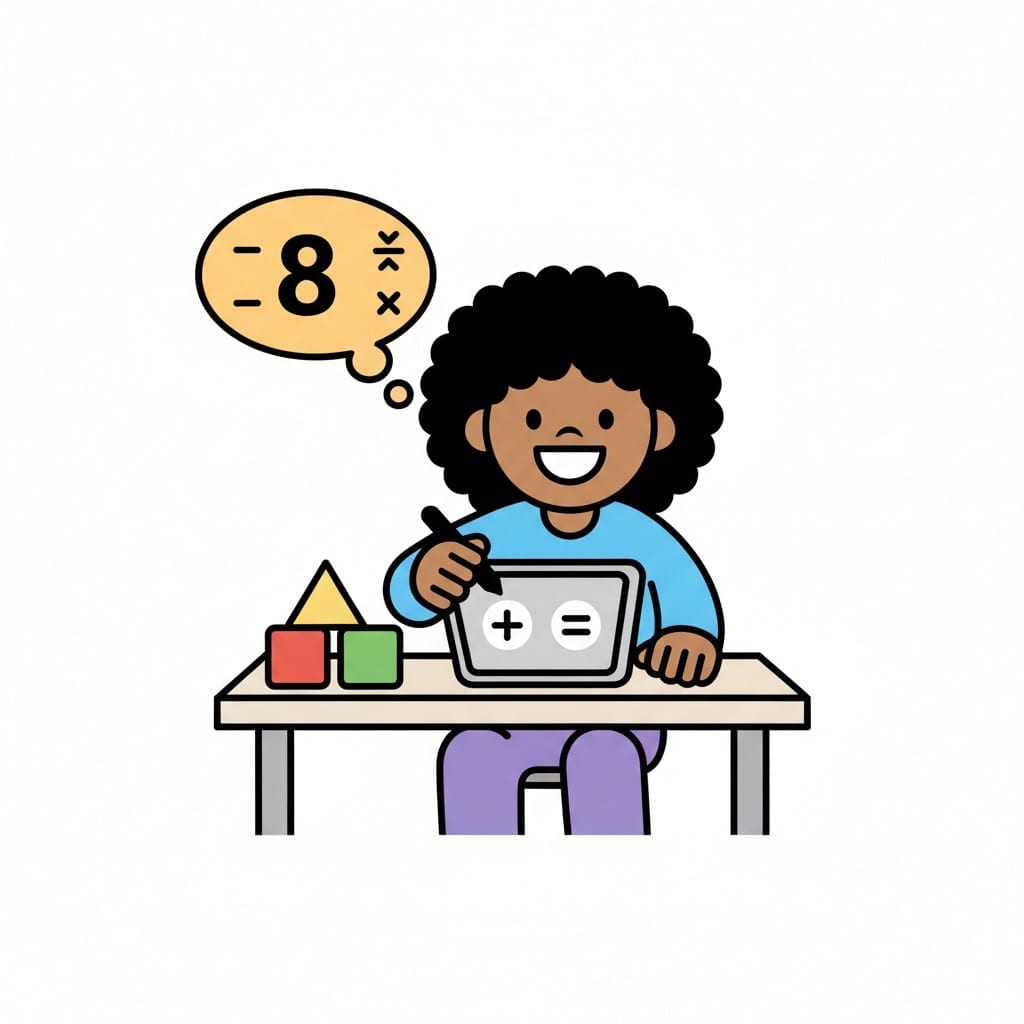 ♀
♀Child doing maths on a tablet
A laughing child sits at a table with a tablet showing plus and equals signs and a pen in hand, with a thought bubble of maths symbols and blocks beside them.
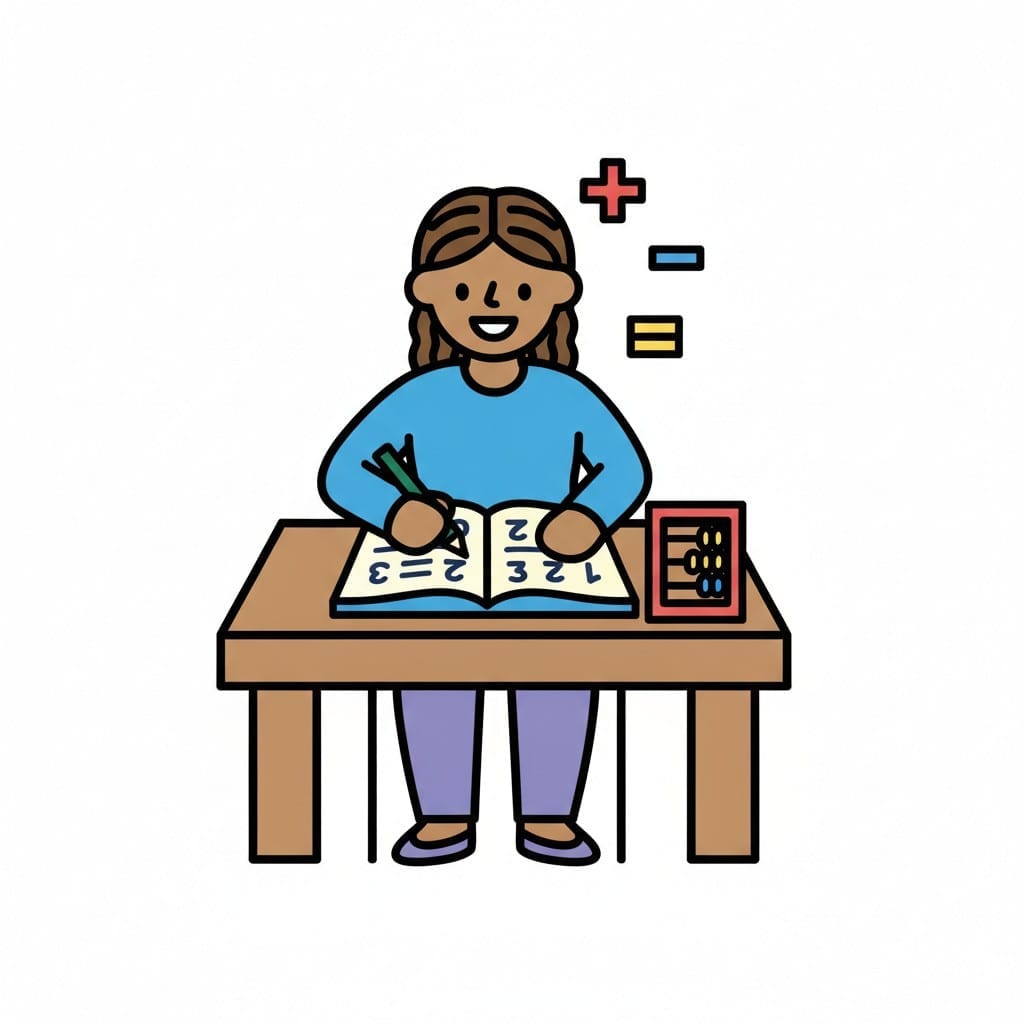 ♀
♀Person writing numbers in a book
A smiling person sits at a table writing numbers in an open book beside a small abacus, with plus, minus and equals signs above.
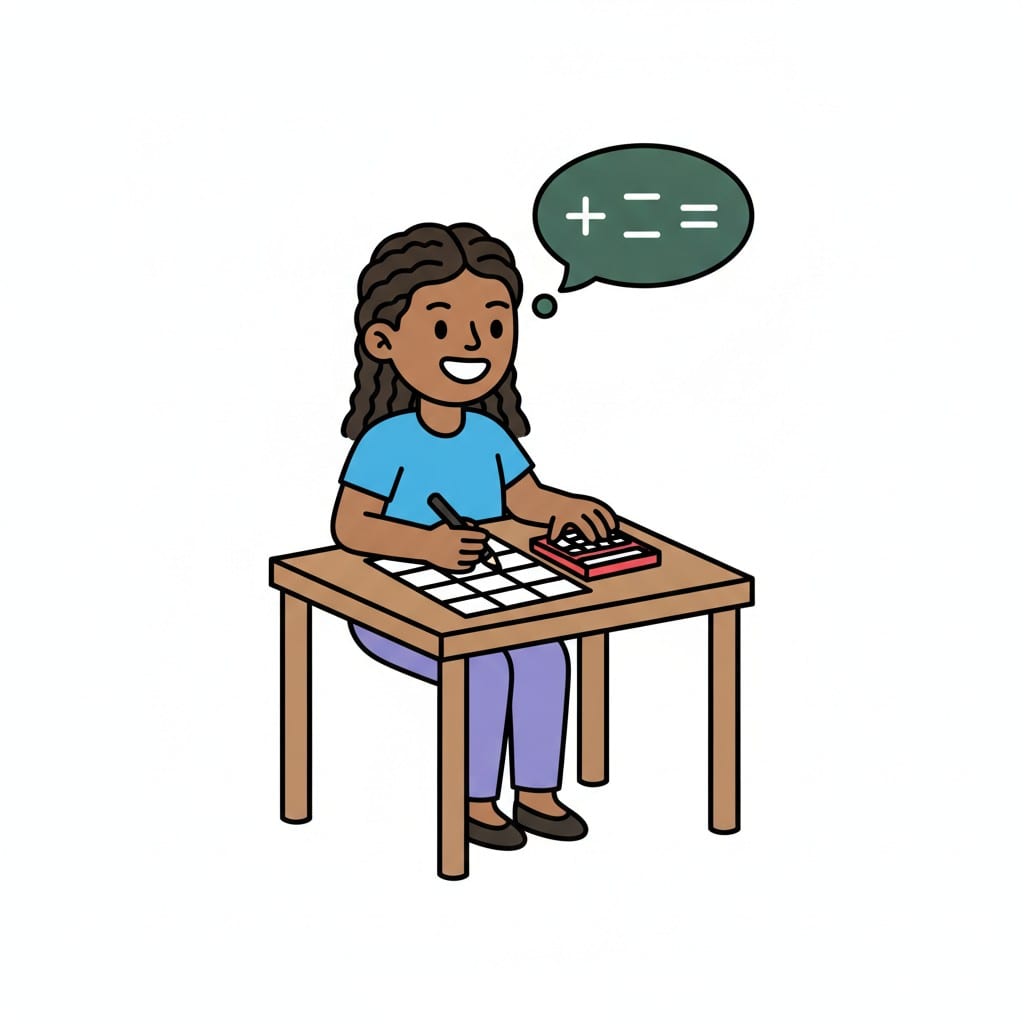 ♀
♀Person working with a calculator
A smiling person sits at a table with squared paper and a red calculator, with a thought bubble showing plus, minus and equals signs.
About this visual support
The cognitive load in a simple math problem is often invisible to an adult. The child needs to remember which rule applies, hold the digits in mind, count in the right order and manage the sense that the clock or the teacher is pushing the pace. One small mistake can knock the whole calculation over, and the thinking has to restart from zero.
When the task is shown as pictures, every part gets a place outside the head. The numbers sit there. The rule sits there. The answer comes last. The eye rests on one step while the brain works, and the child no longer has to carry everything at once. For many children, just seeing the order is enough to release the block.
A concrete tip: cover the other rows with a sheet of paper or a hand so only the current problem is visible. Visual quiet around the task lowers stress more than extra explanations do. If you want a reusable layout for homework time, the pictures can be gathered in Routined with a gentle timer and a soft signal when the task is finished. The first 14 days are free to try.
Use this image in a schedule
Build your own visual schedule with this image and download it as a print-ready PDF. Completely free.
More similar visual supports

Danish
A round pastry icon with golden petals, white sprinkles and a red round filling ...

Morning lessons
A boy sits at a desk writing in an open book, with a sun and a moon above.

Math and reading
A child sits at a desk with an open letter book, a calculator and number blocks.
Christian studies
A smiling pupil points at a large open blue book showing a cross and a scroll, b...
Practice math
A girl sits at a desk pointing at a tablet showing 3 x 4, with a speech bubble c...

English
A girl holds a book with a globe and a British flag, with speech bubbles above.

Write
A girl writes with a large pencil at a desk.

Do dictation
A person's head speaks into a microphone, with a speech bubble showing waves. Ne...
This visual support in other languages
Take the visual supports with you
In Routined you build schedules from these pictures, add timers and voice instructions, and your child follows the day on their own.


* 14-day free trial, then $2.39 a month or $20.99 a year (US pricing). Cancel anytime.