Practice letters
Forming a single letter asks the hand and eye to work together, and after a few rows the fingers tire and concentration slips. Break the shapes into smaller pieces with the visual support below.
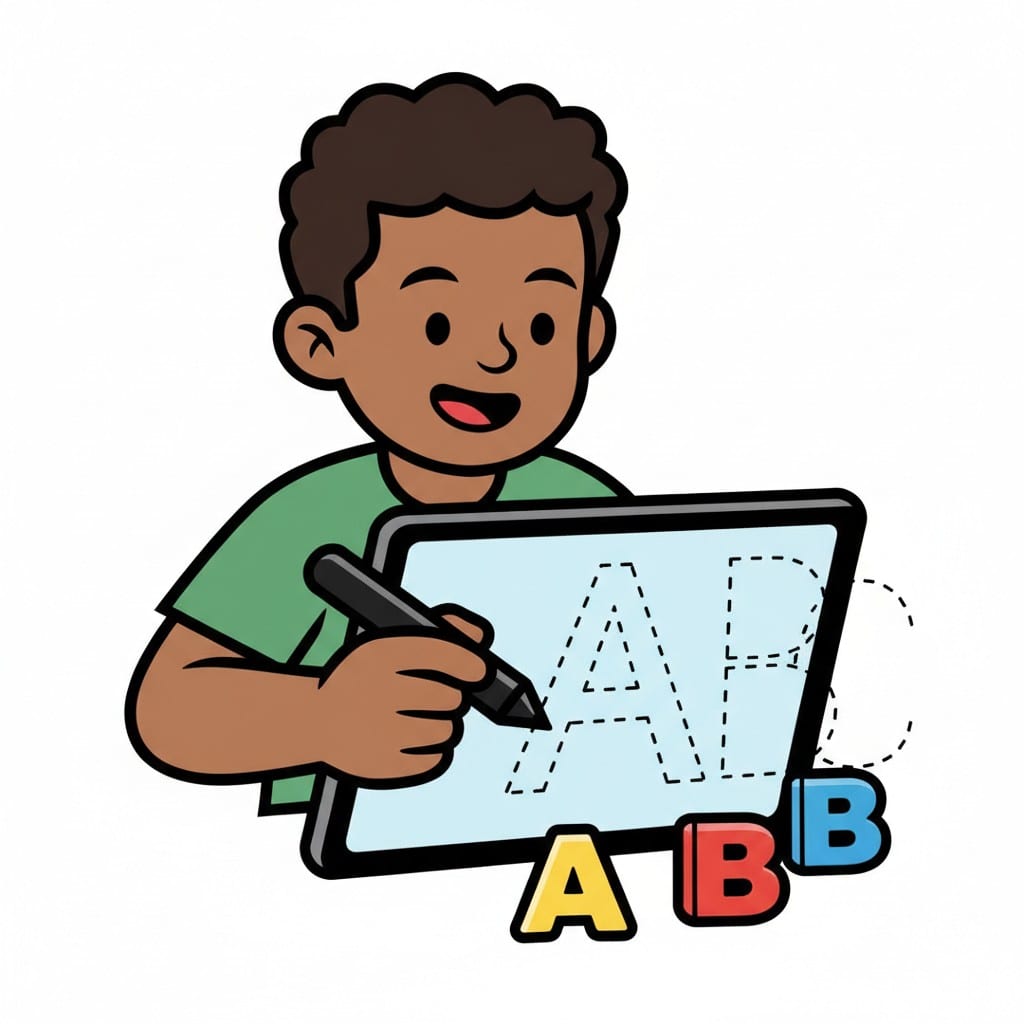 ♂
♂Practice letters
A boy with a pen traces the letters A, B and C on a white board.
About this visual support
The pencil has to follow exact curves and lines just as the hand starts to tire, and that is where letter practice so often stops long before the row is finished. Fine motor work costs more energy than we assume, and when the strength fades the letters wobble and the child gives up in frustration.
Visual support helps by showing the shape in advance and splitting the movement into clear moments: where the pencil starts, where the line turns, where it ends. When the child sees the whole path as a picture, there is no need to hold everything in mind at once, and each letter becomes a manageable task rather than a long uncertain struggle.
One concrete tip is to slip short rests between groups of letters and let the child shake out the hand before the next row, so tiredness does not pile up. Show one picture at a time instead of the entire alphabet. To build on this digitally, you can gather the letters and the breaks in Routined, where the images sit in the order you practise.
Use this image in a schedule
Build your own visual schedule with this image and download it as a print-ready PDF. Completely free.
More similar visual supports

Grab pen and paper
A smiling boy holds a blue pen and some sheets of paper, ready to write.
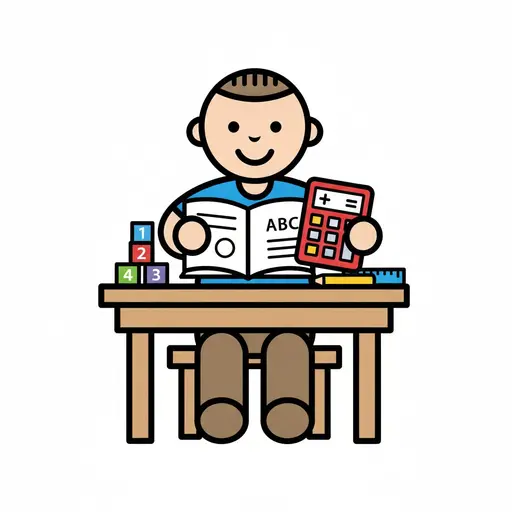
Math and reading
A child sits at a desk with an open letter book, a calculator and number blocks.
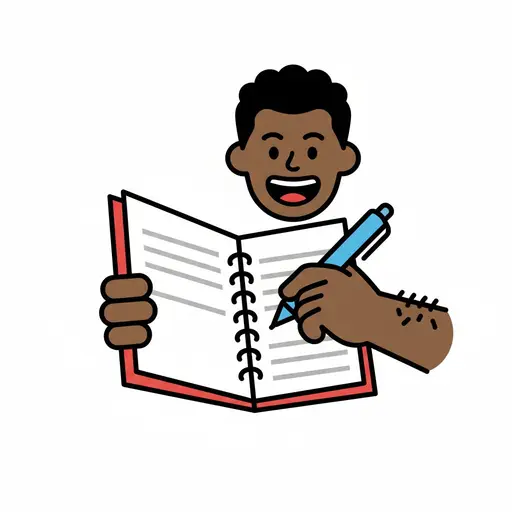
Take a note
A person writing in a notebook with a pen.

Fetch pen and paper
A boy reaches toward a sheet of paper while holding a pen.
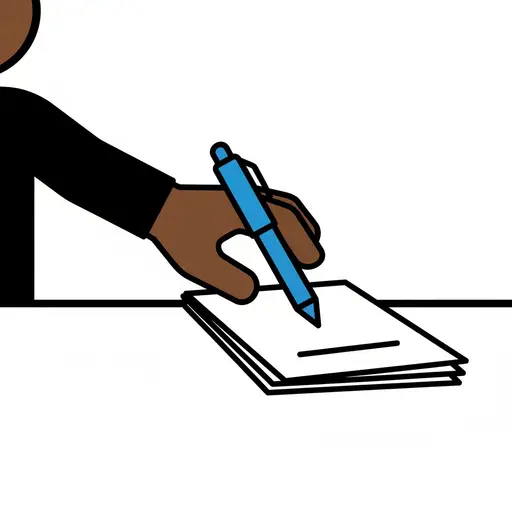
Get pen and paper
A person leans forward and writes with a blue pen on a stack of paper.

Count
A white card with rounded corners showing the numbers 1, 2 and 3 in blue, green ...

Work
A person works at a laptop under a wooden roof, with a coffee cup and symbols fo...
Study
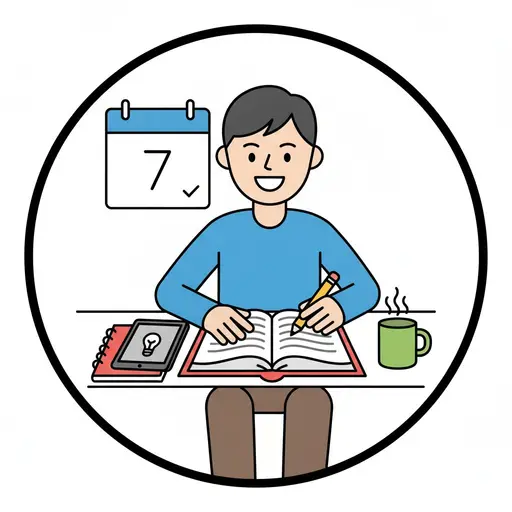
A person sits at a desk writing in a book, with a calendar, a tablet and a mug b...
This visual support in other languages
Take the visual supports with you
In Routined you build schedules from these pictures, add timers and voice instructions, and your child follows the day on their own.


* 14-day free trial, then $2.39 a month or $20.99 a year (US pricing). Cancel anytime.