School day
A school day decides on its own when your child is supposed to be hungry, focused or moving. The clock leads, not the body. The visual support below shows the day's framework so your child can see the next lesson, the next break and the way home in good time.
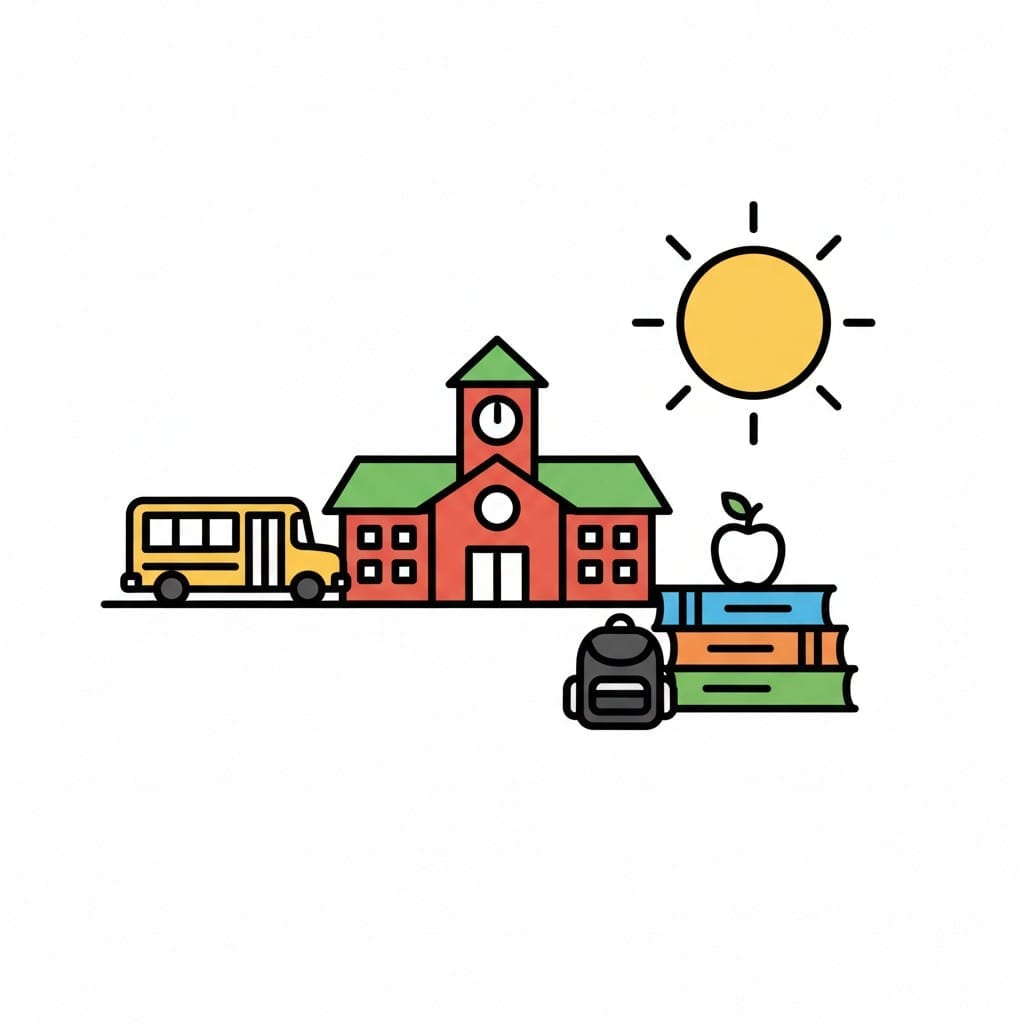
School day overview
An overview image with a red school building, a yellow school bus, a stack of books topped with an apple, a black backpack, and a shining sun above the roofs.
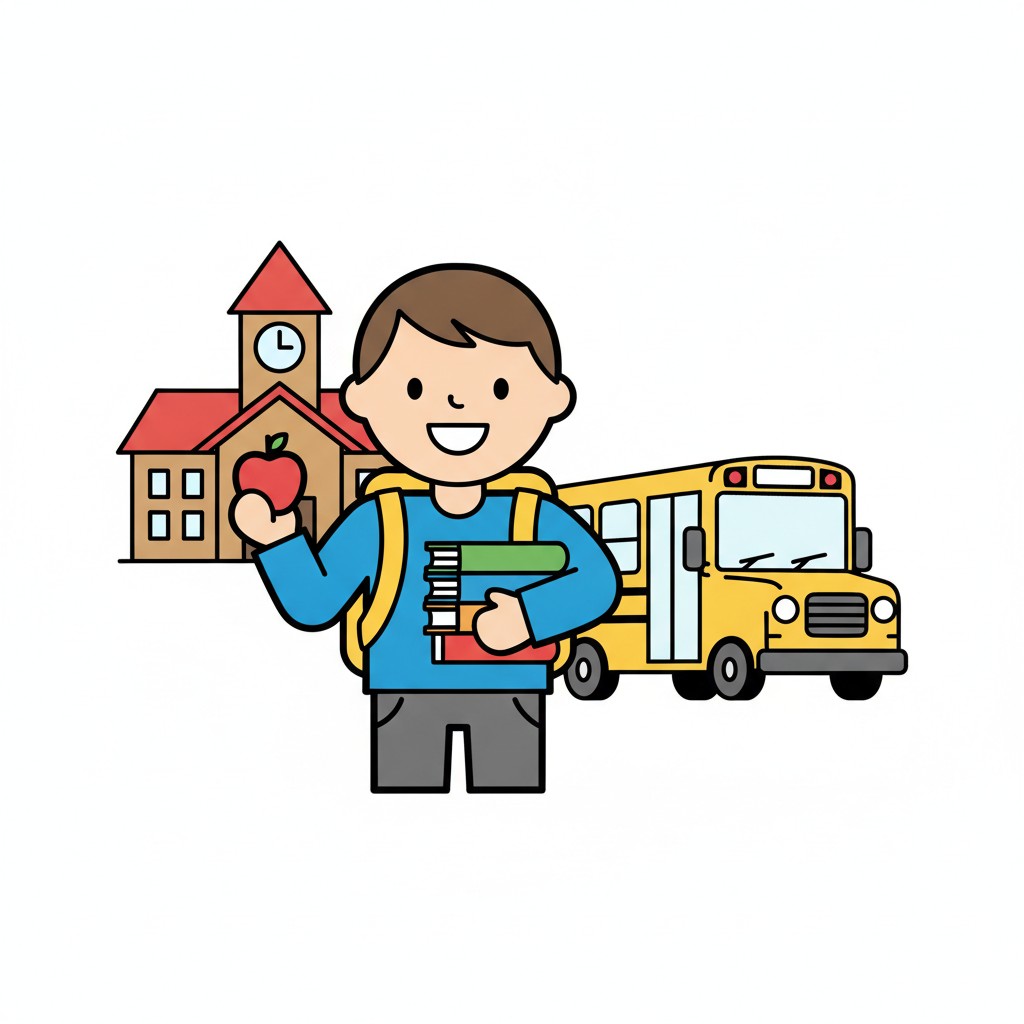 ♂
♂School day
A boy holds books and an apple in front of the school and a school bus.
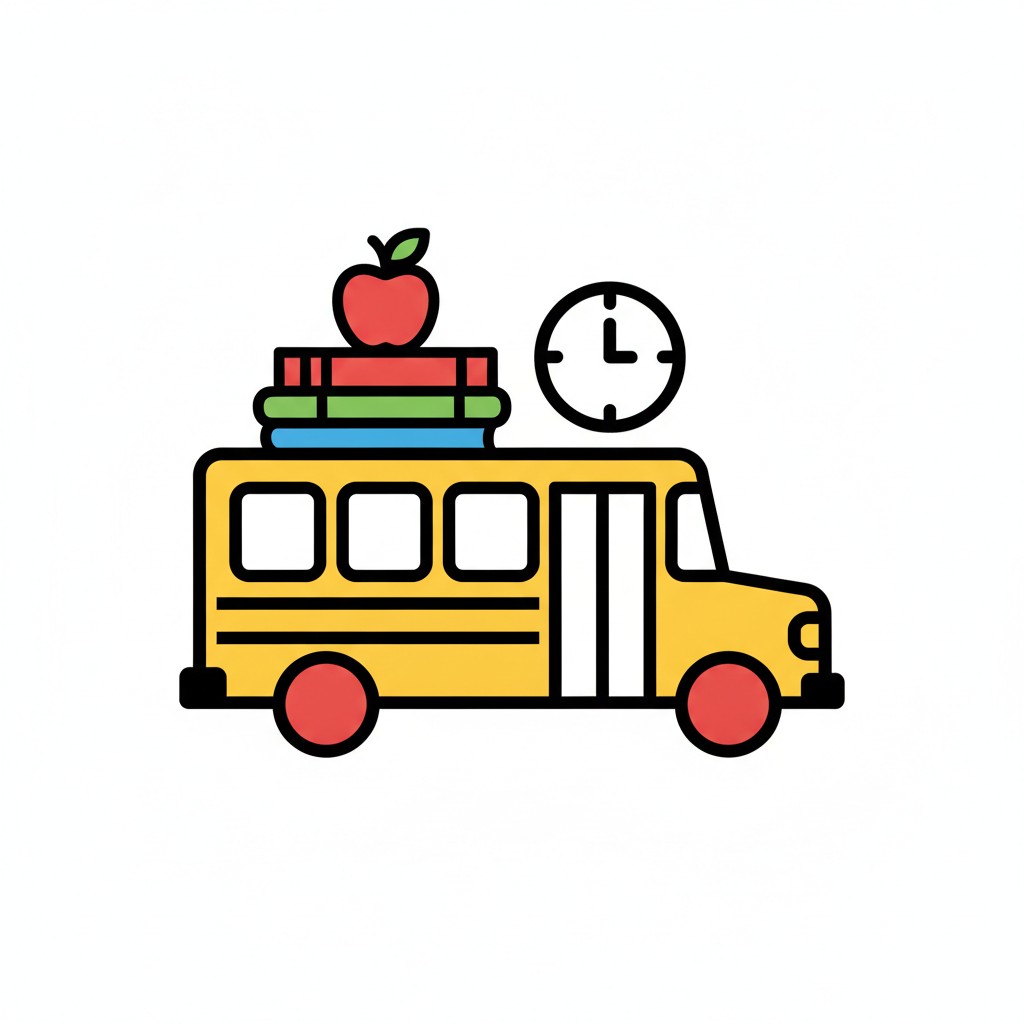
The school day
A yellow school bus with a stack of books, an apple and a clock on top.
About this visual support
The school day is one of the few structures in a child's life that cannot really be negotiated with. The schedule decides when there is maths, when there is recess and when lunch is served, and the body's own signals about hunger or restlessness have to fit in around that. This is where a visual support for the school day earns its keep: it makes the invisible frame of the day visible, so your child does not have to hold everything in mind while also thinking about fractions and spelling.
A day overview tends to work best when it mirrors the actual blocks: morning at home, the bus, first lesson, recess, lunch, afternoon lessons, the ride home, afternoon at home. That way it becomes clear that lunch comes after two lessons, and that recess is still there even when maths feels long.
One concrete tip: let your child move a marker or clip a clothes peg onto the current block at each transition. Ticking off becomes a physical act instead of just a thought, and it works even on the bus where pulling out a phone is not ideal. Inside Routined you can build a school-day routine that adapts to the different weekday schedules, so your child can check the plan independently on a phone or tablet.
Use this image in a schedule
Build your own visual schedule with this image and download it as a print-ready PDF. Completely free.

More similar visual supports

School
An exhibition ground with domes, a ferris wheel, a robot and a clock.
School activities
A boy stands holding an open book surrounded by symbols of a pencil, a globe, a ...
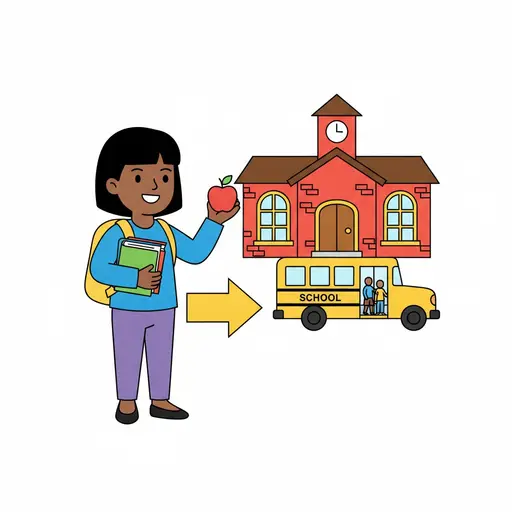
Start school
A smiling child with a yellow backpack holds books and a red apple, with a yello...
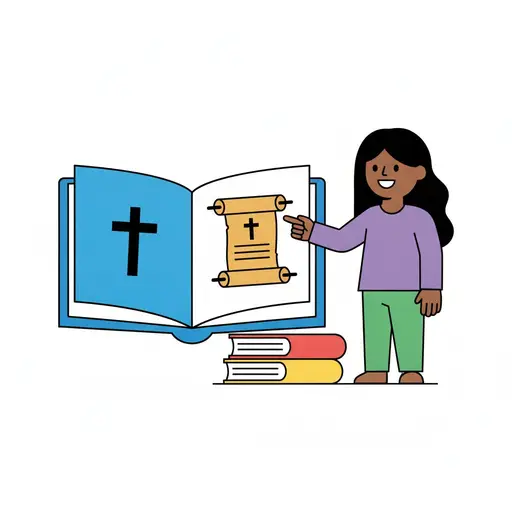
Christian studies
A smiling pupil points at a large open blue book showing a cross and a scroll, b...

Circle time
A group of people standing in a circle holding hands, with one person in the cen...

Danish
A round pastry icon with golden petals, white sprinkles and a red round filling ...
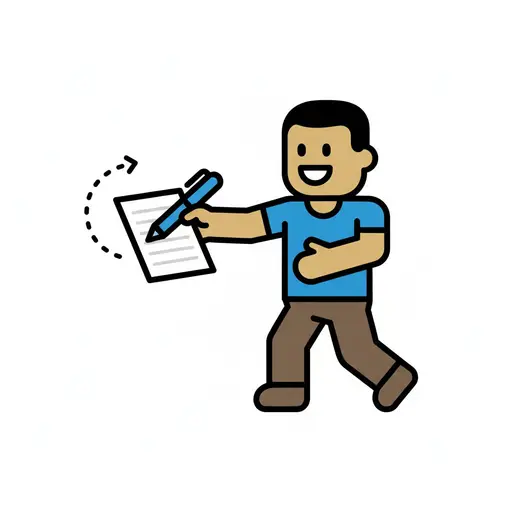
Fetch pen and paper
A boy reaches toward a sheet of paper while holding a pen.
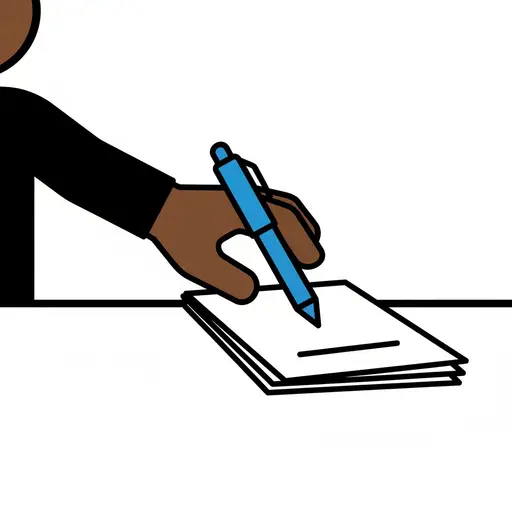
Get pen and paper
A person leans forward and writes with a blue pen on a stack of paper.
Take the visual supports with you
In Routined you build schedules from these pictures, add timers and voice instructions, and your child follows the day on their own.


* 14-day free trial, then $2.39 a month or $20.99 a year (US pricing). Cancel anytime.