Take a note
Catching the key point of what a teacher just said, while the hand is supposed to start writing, is a lot of jobs at once for a young brain. The sequence below splits the task so one step happens at a time.
 ♂
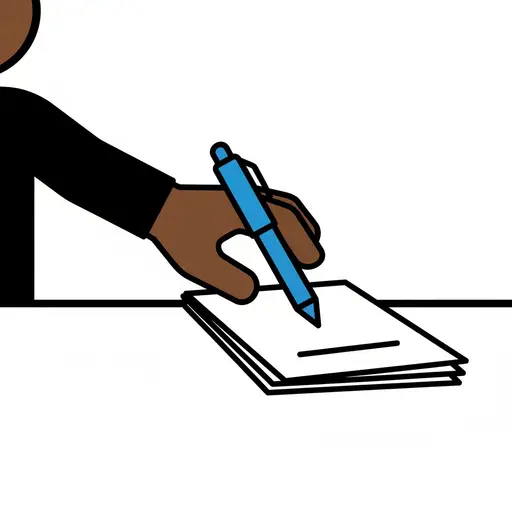
♂Taking a note
A person writing in a notebook with a pen.
About this visual support
Note-taking is not one action but several that overlap. The ear has to listen, the brain has to decide what matters, an inner voice has to translate it into words the child owns, and the hand has to get there before the next sentence rolls in. Drop one link and the whole thought is usually gone.
A picture sequence works as an outside memory for that chain. When the steps sit visibly on the desk, the child can glance back without asking, which protects concentration once the teacher has moved on. Younger writers, second-language learners and children still building handwriting fluency benefit from the same scaffolding.
One specific tip for note-taking: ask for one keyword per line, not full sentences. Three keywords are usually enough to rebuild the content at home, and the lower bar makes it easier to start at all. Inside Routined you can place this sequence next to the rest of the school day, so the child sees when notes are expected and can settle into the task before the teacher begins.
Use this image in a schedule
Build your own visual schedule with this image and download it as a print-ready PDF. Completely free.

More similar visual supports

Fetch pen and paper
A boy reaches toward a sheet of paper while holding a pen.
Get pen and paper
A person leans forward and writes with a blue pen on a stack of paper.

Grab pen and paper
A smiling boy holds a blue pen and some sheets of paper, ready to write.
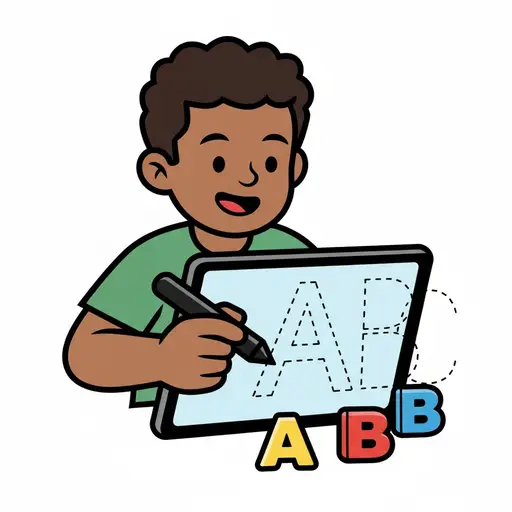
Practice letters
A boy with a pen traces the letters A, B and C on a white board.

Count
A white card with rounded corners showing the numbers 1, 2 and 3 in blue, green ...
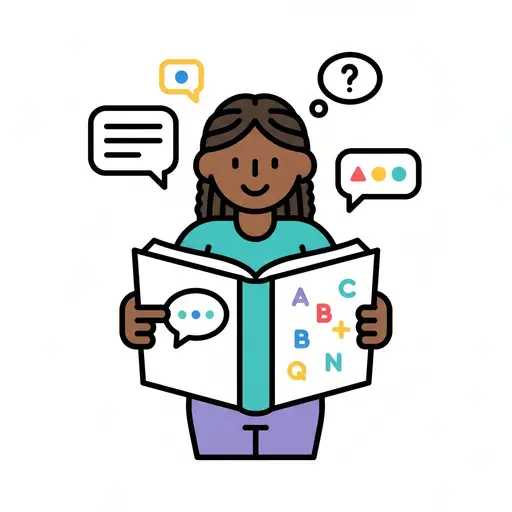
Learn words
A girl reads a book of letters with speech bubbles around her.
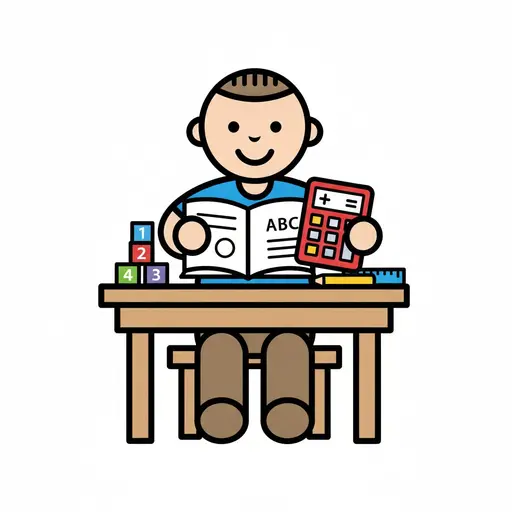
Math and reading
A child sits at a desk with an open letter book, a calculator and number blocks.
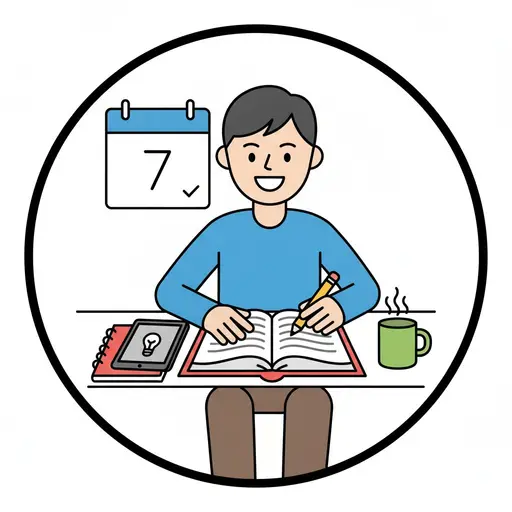
Study
A person sits at a desk writing in a book, with a calendar, a tablet and a mug b...
Take the visual supports with you
In Routined you build schedules from these pictures, add timers and voice instructions, and your child follows the day on their own.


* 14-day free trial, then $2.39 a month or $20.99 a year (US pricing). Cancel anytime.