Take note
Note-taking is really a sorting task: deciding what matters while the lesson rolls on. The visual schedule below breaks that decision into smaller, visible steps a child can lean on.
 ♂
♂Boy taking notes
A boy holding a pen and writing in a notebook. A glowing lightbulb floats above his head, with arrows pointing down to the book, symbolizing him getting an idea and writing it down.
About this visual support
Writing itself is usually not the hard part. The hard part is choosing what is worth the pen while the teacher has already moved on to the next example. That sorting happens silently, constantly, and it costs more energy than most adults remember from their own school years.
Making the process visible takes some of that load off. The cards below show small sub-steps that normally stay inside the head: listen for a key word, write one short line, leave a margin for later, return when there is a pause. With the steps laid out, the child does not have to hold the routine in working memory while also taking in new content.
One practical idea: agree on a personal mark — a star, a question mark — that the child can drop in the margin when something feels important but cannot be written down in time. It gives a place to come back to after the lesson without losing the thread in the moment. In Routined you can combine these visual cards into a lesson routine, with a timer for breaks and check-offs when the day's notes are done.
Use this image in a schedule
Build your own visual schedule with this image and download it as a print-ready PDF. Completely free.

More similar visual supports
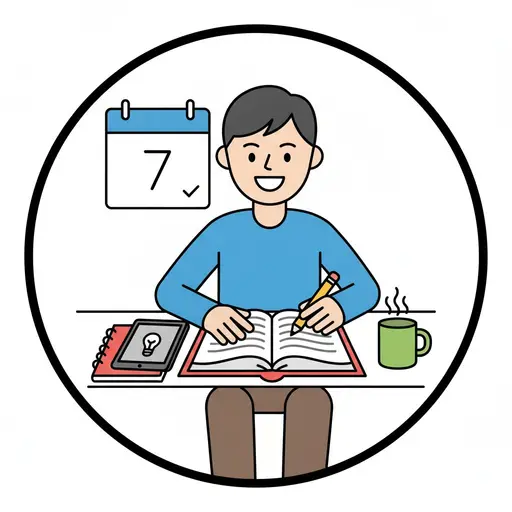
Study
A person sits at a desk writing in a book, with a calendar, a tablet and a mug b...

Fetch pen and paper
A boy reaches toward a sheet of paper while holding a pen.
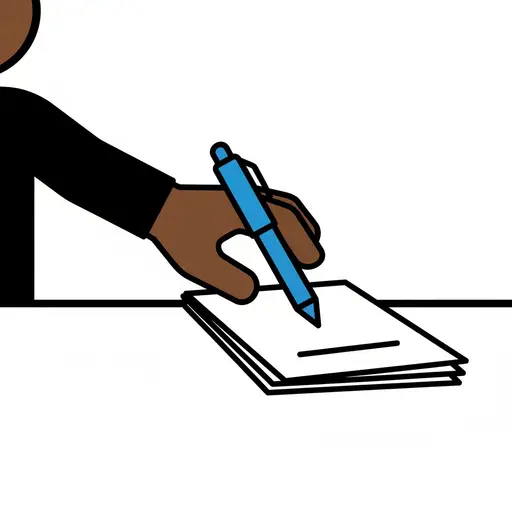
Get pen and paper
A person leans forward and writes with a blue pen on a stack of paper.

Grab pen and paper
A smiling boy holds a blue pen and some sheets of paper, ready to write.
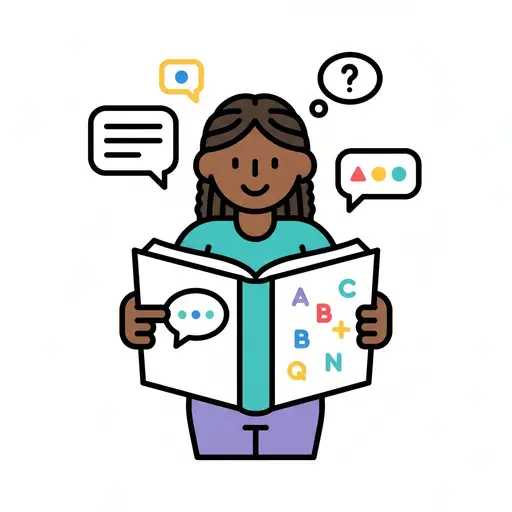
Learn words
A girl reads a book of letters with speech bubbles around her.
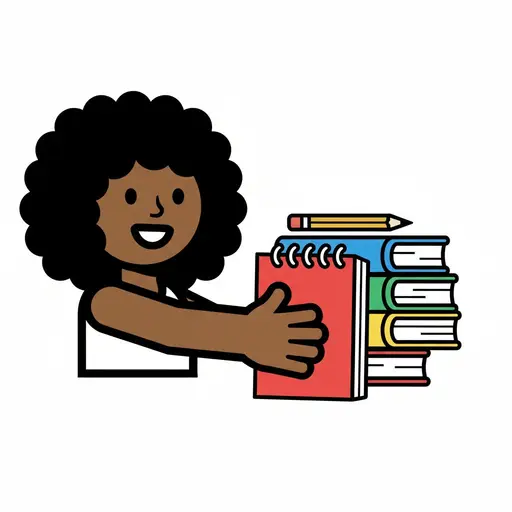
Get homework
A smiling girl hugs a notebook beside a stack of books and a pencil.
Write
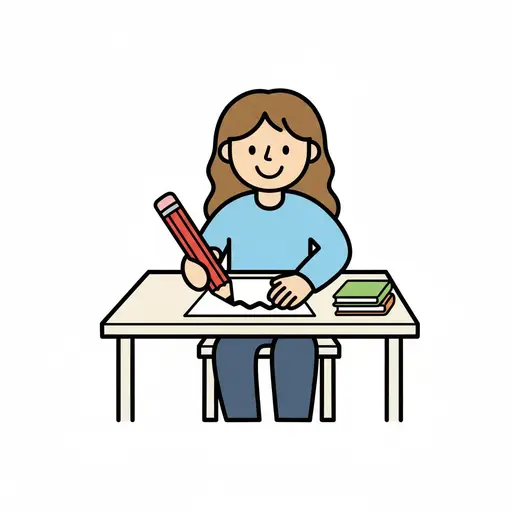
A girl writes with a large pencil at a desk.
After School Routine
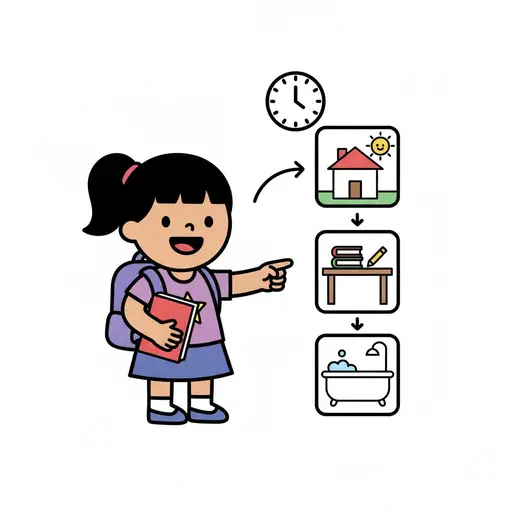
A girl with a backpack points at a schedule showing home, homework and bath afte...
Take the visual supports with you
In Routined you build schedules from these pictures, add timers and voice instructions, and your child follows the day on their own.


* 14-day free trial, then $2.39 a month or $20.99 a year (US pricing). Cancel anytime.