Take paper
”Just grab a piece of paper” sounds trivial, but it asks an ongoing thought to pause, the body to stand up and the eyes to find the right sheet in a pile. The visual support below breaks that small start into four visible moments.
 ♂
♂Take paper
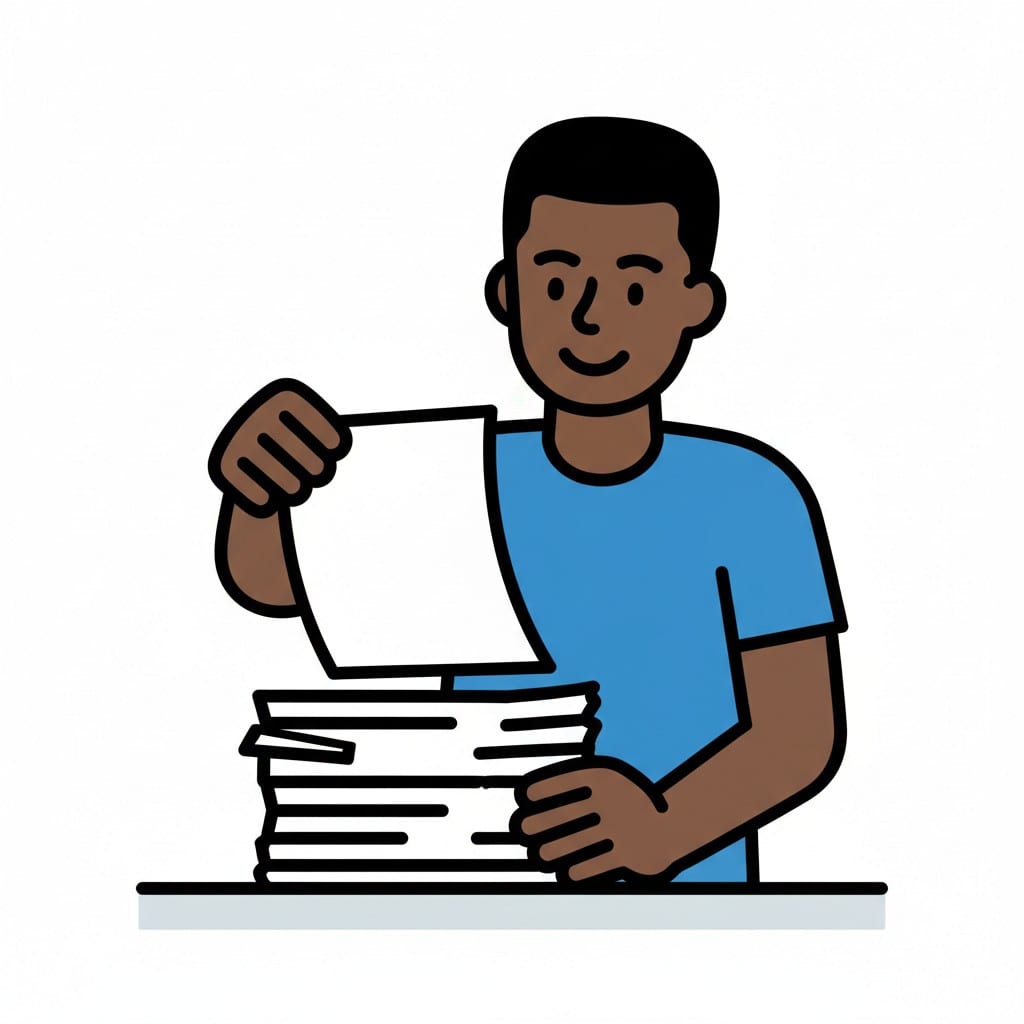
An illustration of a person holding a sheet of paper.
 ♂
♂Take paper
An illustration of a boy taking a sheet of paper from a stack on a table.
About this visual support
What looks like an obvious micro-action — taking a sheet of paper — actually contains a full executive start sequence. Something has to pull the child's focus off whatever felt important a second ago, the body has to switch position, and then the right sheet has to be located in a pile that may also hold drawings, old homework and mail.
Visual support helps by moving the starting step from ”an inner voice that reminds” to an outer picture that stays visible. Standing up becomes its own square, looking becomes its own square, picking up the sheet becomes its own square. The break from the current activity no longer has to be held in the head; looking at the card is enough.
One concrete tip: keep the paper in the same place every time and show that exact place on the card — a basket by the table, say, or one specific shelf. When the picture matches reality precisely, the searching shortens next time. To tie it into a longer school routine, you can build the cards into a sequence in Routined and open the series with a soft reminder.
Use this image in a schedule
Build your own visual schedule with this image and download it as a print-ready PDF. Completely free.

More similar visual supports

Fetch pen and paper
A boy reaches toward a sheet of paper while holding a pen.
Get pen and paper
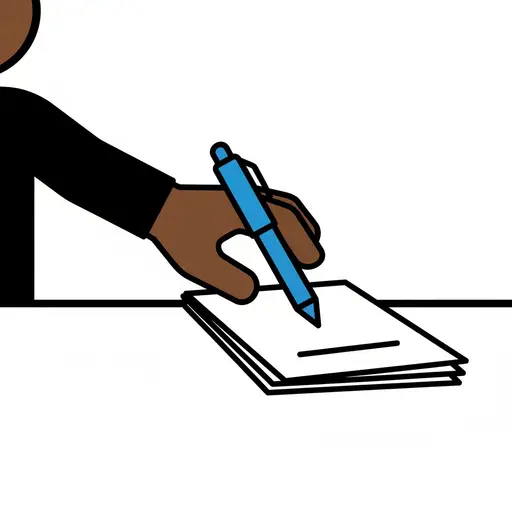
A person leans forward and writes with a blue pen on a stack of paper.

Grab pen and paper
A smiling boy holds a blue pen and some sheets of paper, ready to write.
Christian studies
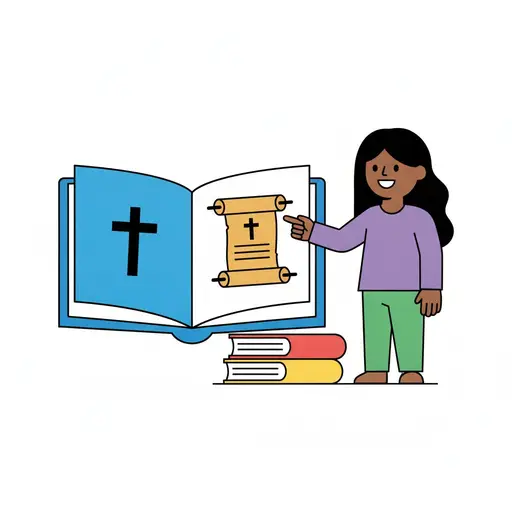
A smiling pupil points at a large open blue book showing a cross and a scroll, b...

Circle time
A group of people standing in a circle holding hands, with one person in the cen...

Danish
A round pastry icon with golden petals, white sprinkles and a red round filling ...
Letters
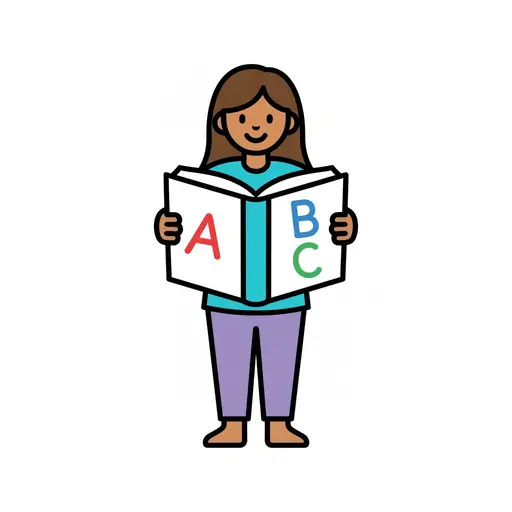
A smiling child with long hair holds up an open book showing the letters A, B an...

School
An exhibition ground with domes, a ferris wheel, a robot and a clock.
Take the visual supports with you
In Routined you build schedules from these pictures, add timers and voice instructions, and your child follows the day on their own.


* 14-day free trial, then $2.39 a month or $20.99 a year (US pricing). Cancel anytime.