Unknown
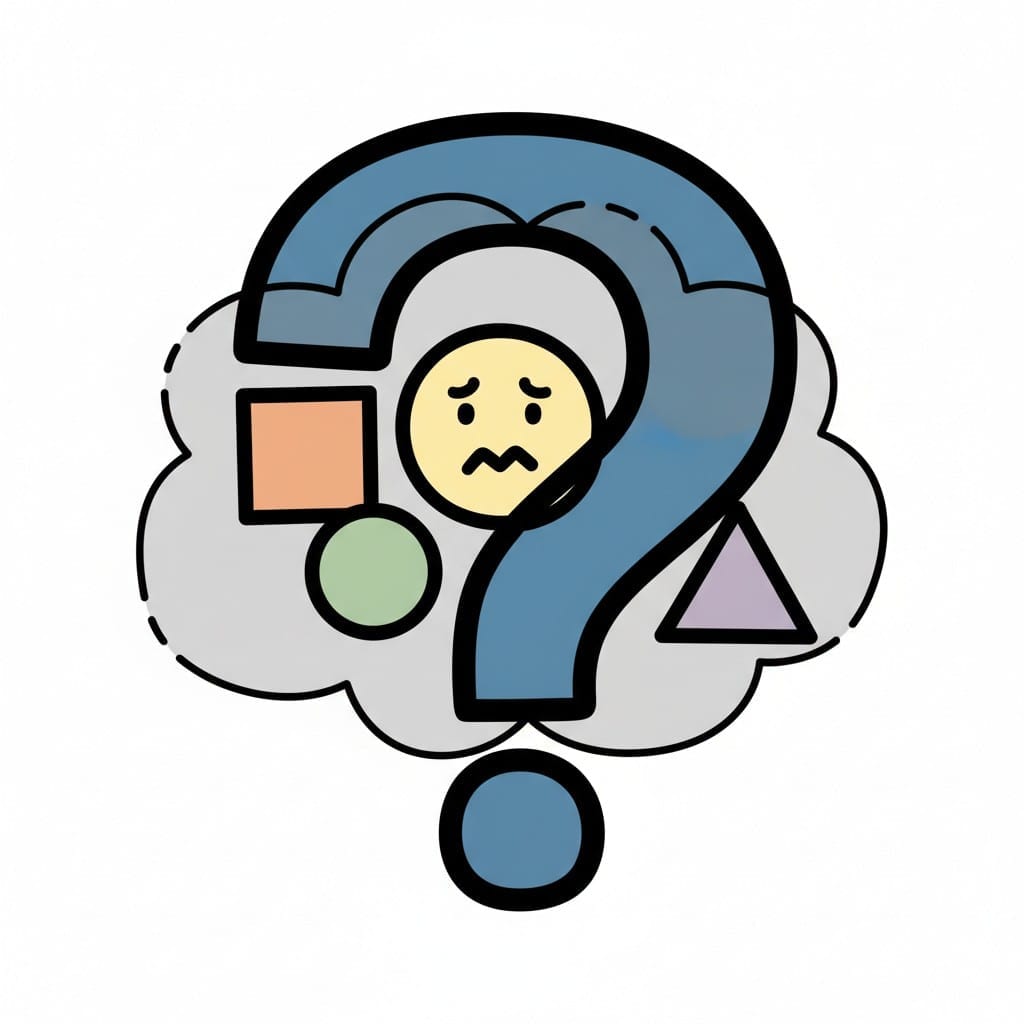
What is that? When a thing has no name, it often feels bigger than it is. This picture gives a child a way to point at the uncertainty itself before worry takes over. The options sit below.
Unknown
A large question mark with a thought bubble containing a sad face, a square, a circle, and a triangle.
About this visual support
For many children, it is not the surprise itself that bothers them, but the absence of a word for what is happening. A sound in the flat, a smell in the hallway, a person they do not recognise – as long as the experience has no name, the stomach tightens. Being able to say unknown becomes a first step out of that knot.
A symbol for the unknown gives the child a place to point when words run out. It is not an answer, but a signal to you: an explanation is needed here. You can reply concretely – that is the delivery van, the sound comes from the radiator, the person is Anna from work – and the question mark gets replaced with something recognisable next time.
A practical tip: link the picture to a simple hand sign so the child can use it in noisy rooms or from the back seat of the car. In Routined you can build a small dictionary of these symbols, and every time a question mark gets its real name, you move the image into the right category.
Use this image in a schedule
Build your own visual schedule with this image and download it as a print-ready PDF. Completely free.

More similar visual supports
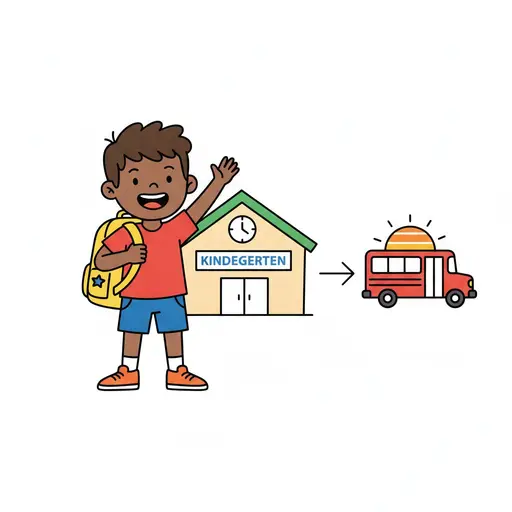
After preschool
A boy with a backpack waves by the preschool with a bus nearby.

After school
A girl with a backpack holds an open book in front of a school building with the...
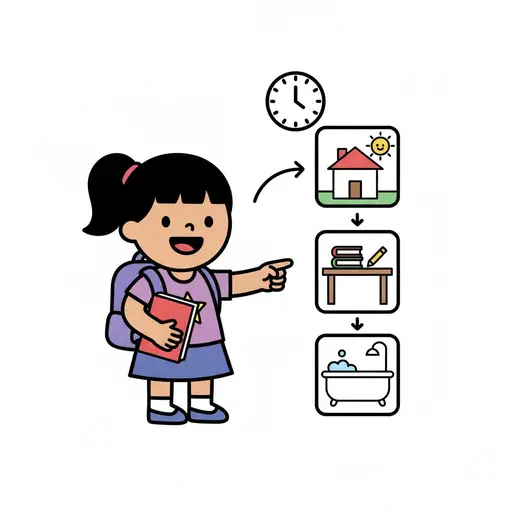
After School Routine
A girl with a backpack points at a schedule showing home, homework and bath afte...
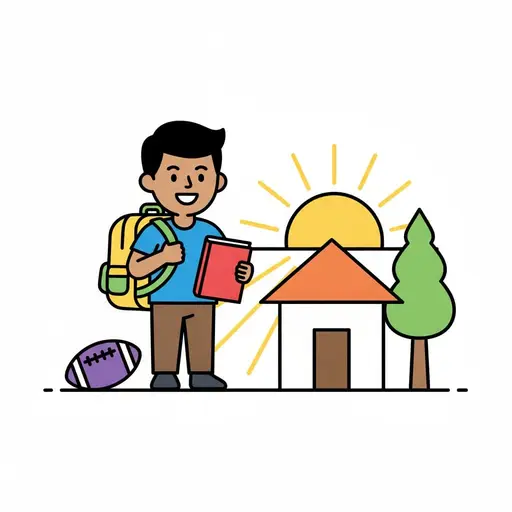
After the school day
A boy with a backpack holds a red book beside a house, a tree, the sun and a rug...
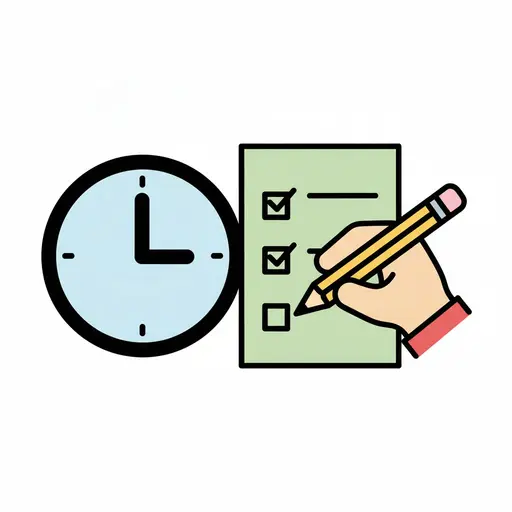
Afternoon checklist
A hand with a pencil ticks boxes on a green checklist beside a light blue wall c...
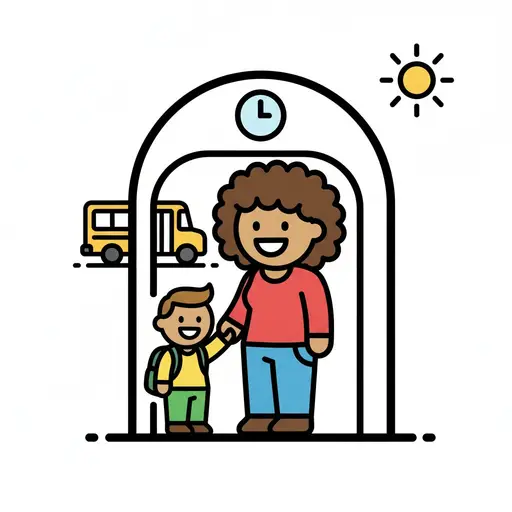
Afterschool pickup
A woman holds a child by the hand at the school gate, with a school bus behind t...
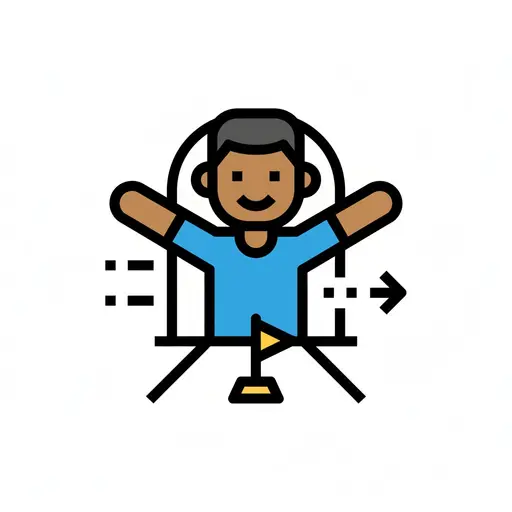
Arrive
A happy boy with outstretched arms at a finish line with a flag, symbolizing arr...
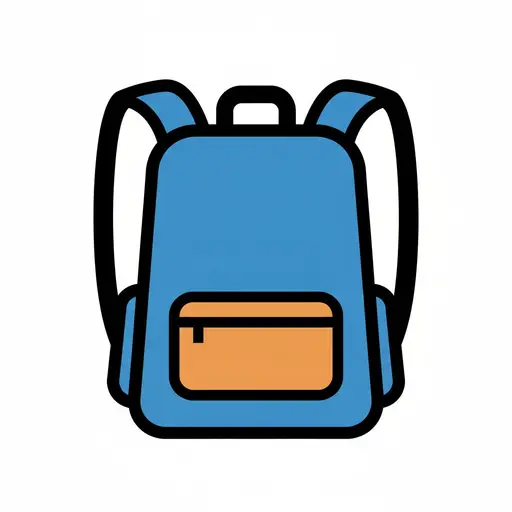
Backpack
A blue backpack with shoulder straps, a carry handle and an orange zip pocket on...
Take the visual supports with you
In Routined you build schedules from these pictures, add timers and voice instructions, and your child follows the day on their own.


* 14-day free trial, then $2.39 a month or $20.99 a year (US pricing). Cancel anytime.