Wait
Time stretches when you cannot see it. The pictures below give waiting a visible shape, so the child can follow what is happening right now and sense when the wait is almost done.
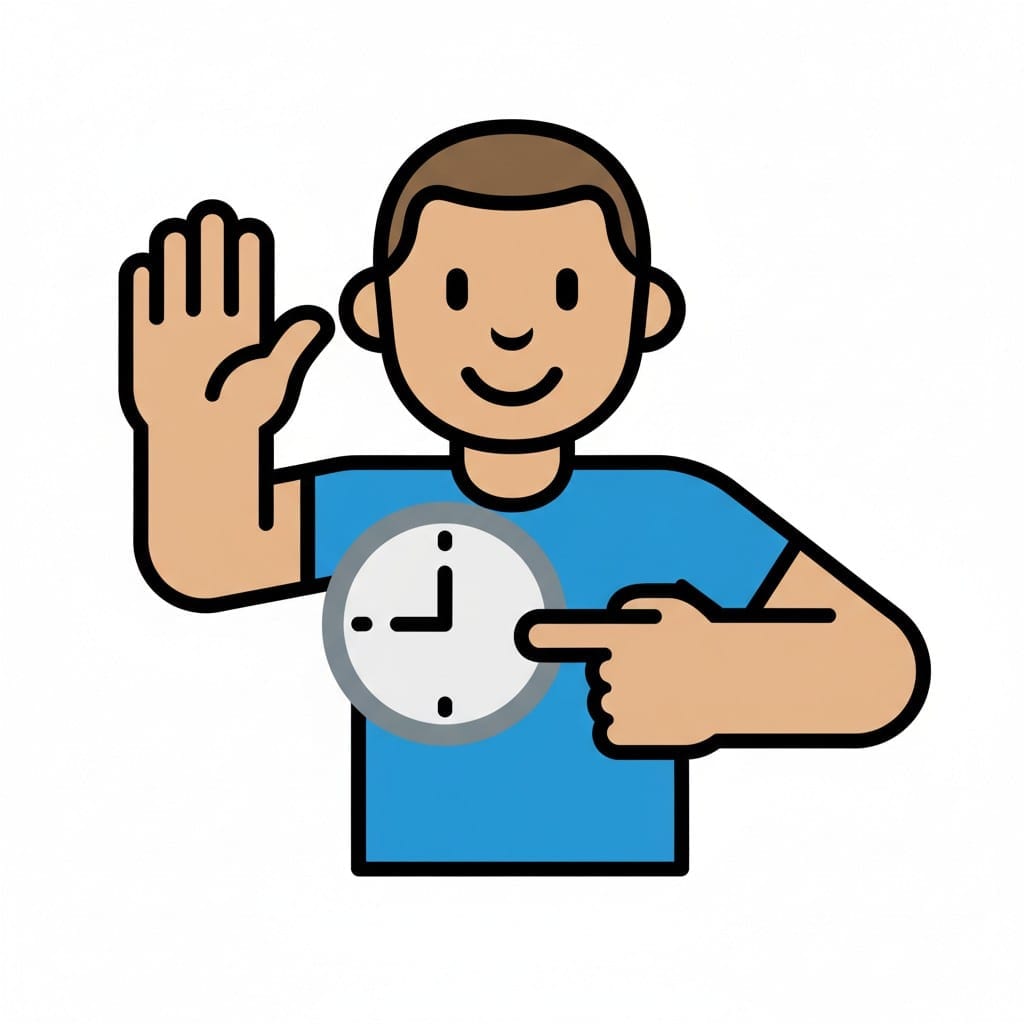 ♂
♂Wait, clock
A person in a blue t-shirt holds up one hand as a stop sign and points to a clock with a minute hand on their stomach.
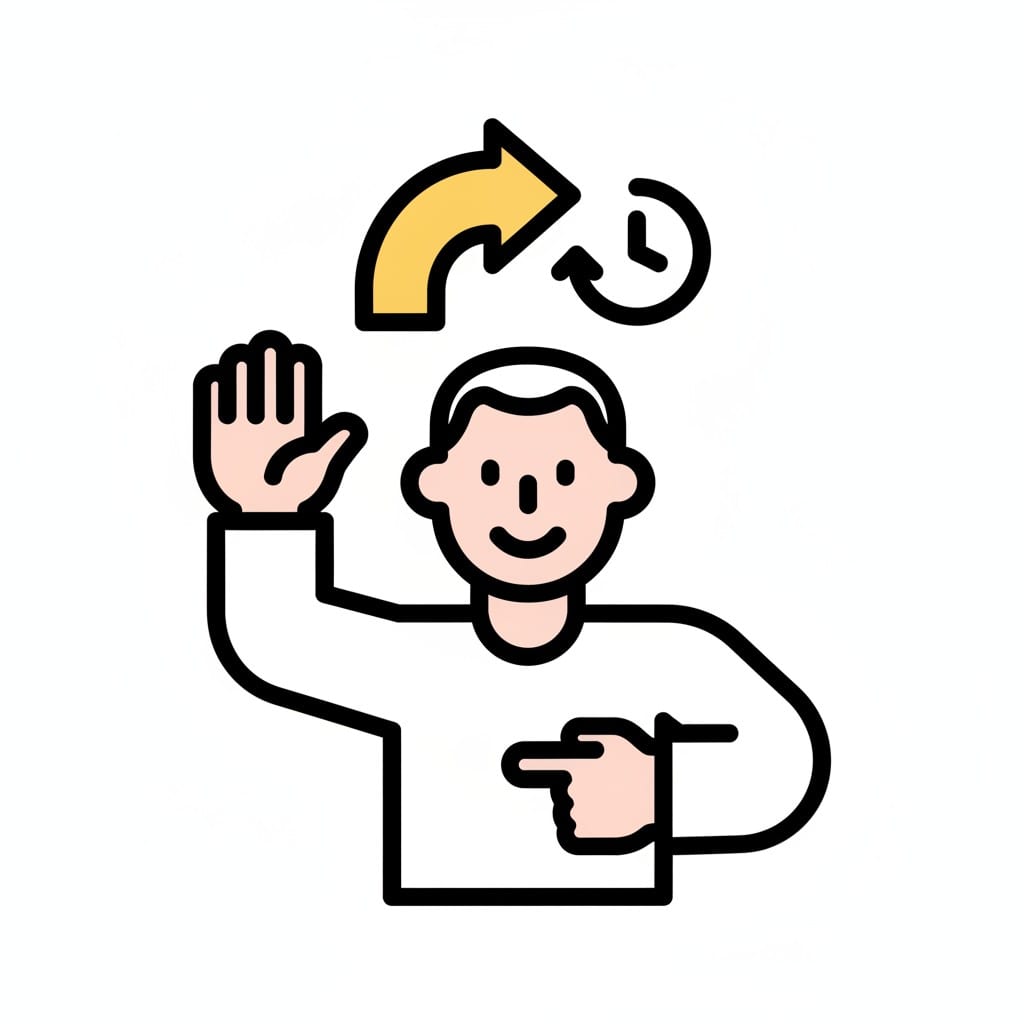 ♂
♂Man signals wait with a clock
A man in a white shirt holds up his palm to signal stop and points to the side, with a yellow arrow and a clock above him.
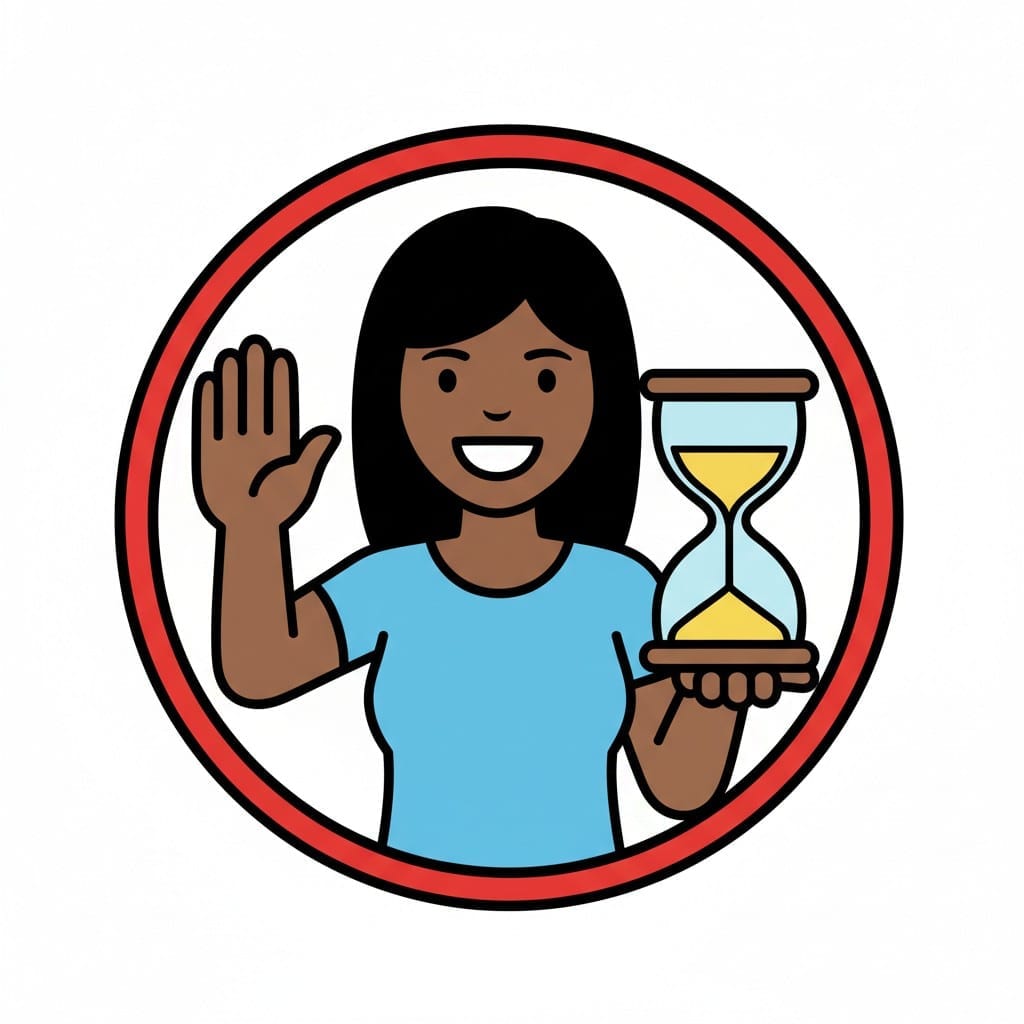 ♀
♀Wait, hourglass
A person in a blue t-shirt holds up one hand as a stop sign and holds an hourglass in the other hand, all within a red circle.
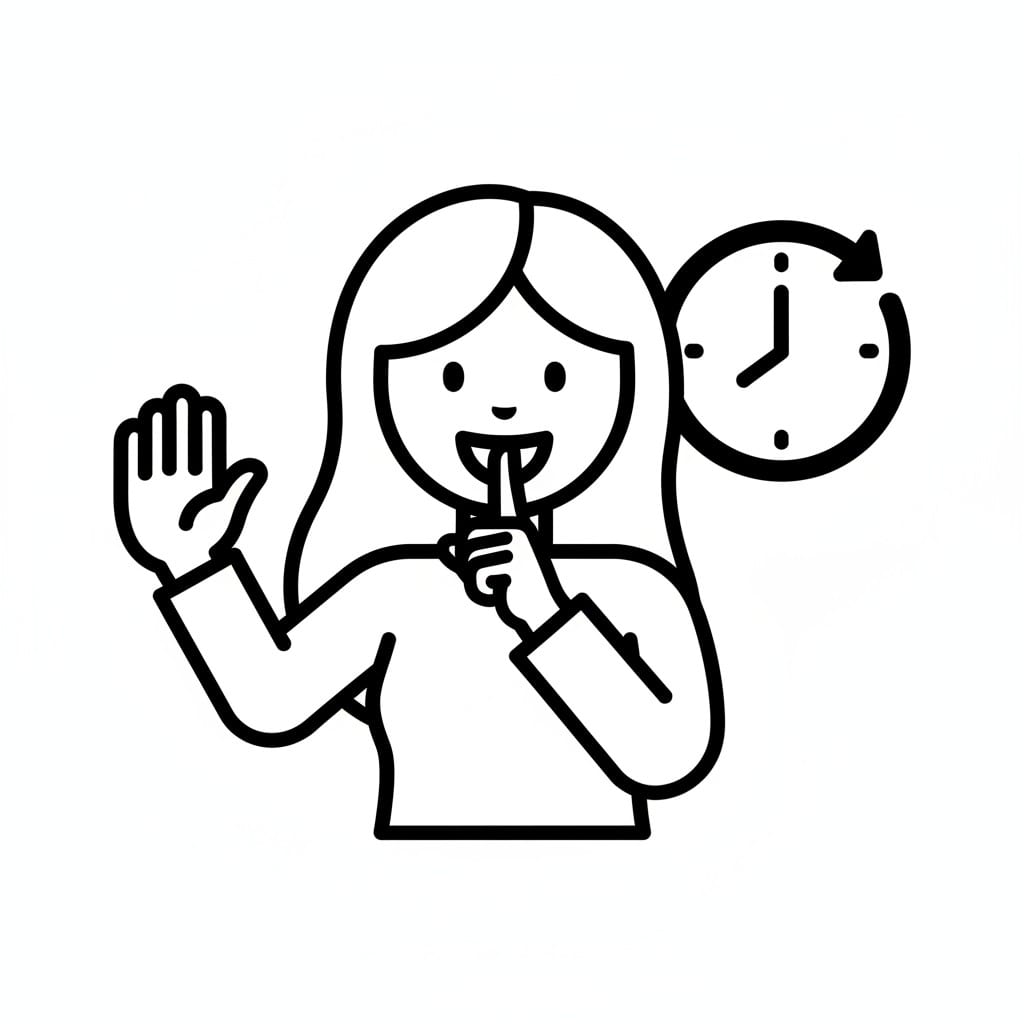 ♀
♀Wait quietly, clock
A person holds up one hand as a stop sign, has a finger on their lips to signal quiet, next to a clock icon with a refresh arrow.
About this visual support
The hard part of waiting is the time itself. A child who has not yet built a stable sense of minutes experiences a short wait as endless, and the body fills that emptiness with movement, questions and noise. It is not impatience as misbehaviour, it is the nervous system trying to cope with something it cannot see.
A picture gives the wait edges. The child can look at the card and know that waiting is the current step, not a punishment and not forever. Pairing the card with a timer or a countdown makes the abstract feeling of time something the eyes can track.
One thing that helps specifically with waiting: give the body a small job during the wait. Squeezing a soft toy, counting fingers, taking three slow breaths. The picture says what is happening, the small job gives the body something to do until it ends. In Routined you can build wait steps into a sequence and link them to a timer, so the child sees both the activity and the time left.
This image is part of these ready-made schedules
Use this image in a schedule
Build your own visual schedule with this image and download it as a print-ready PDF. Completely free.
More similar visual supports
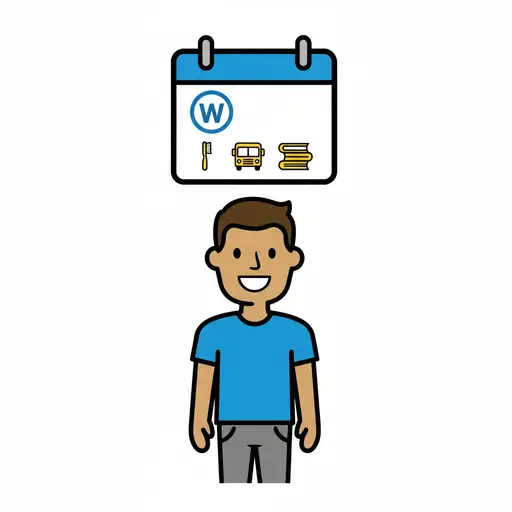
Wednesday routines
A boy stands under a calendar showing 'W' for Wednesday. Beneath the calendar ar...
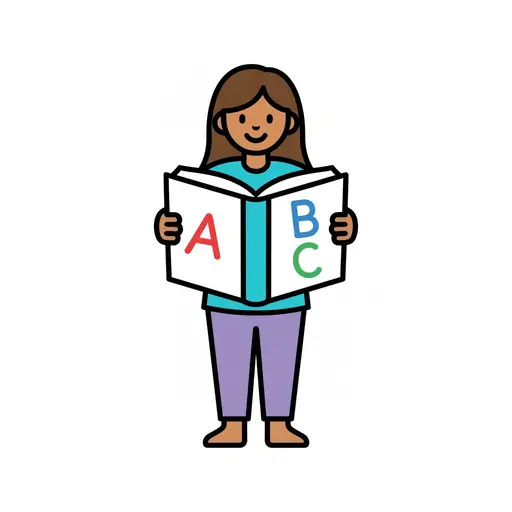
Letters
A smiling child with long hair holds up an open book showing the letters A, B an...
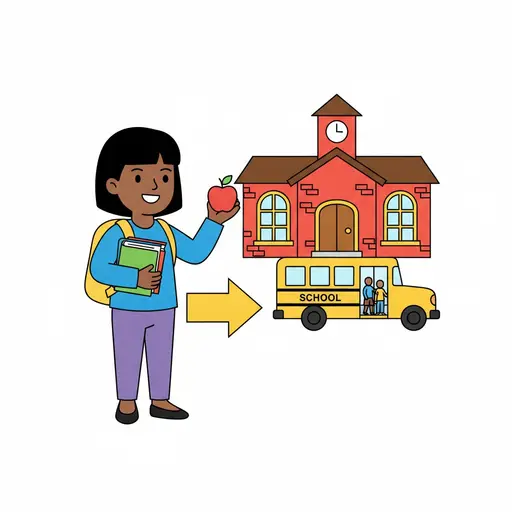
Start school
A smiling child with a yellow backpack holds books and a red apple, with a yello...

School days
A school-like building with a clock, an open book, a smiling sun, and a calendar...

School
An exhibition ground with domes, a ferris wheel, a robot and a clock.
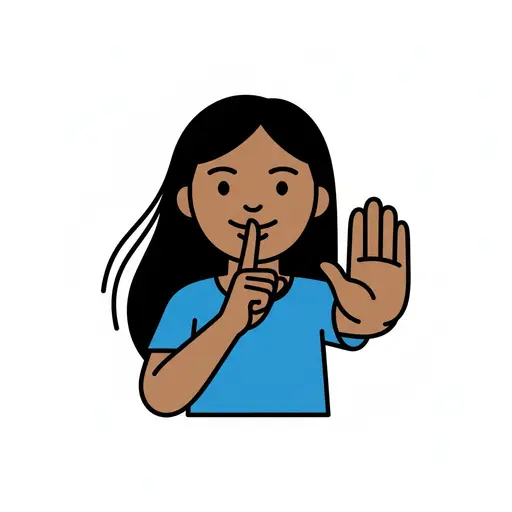
Be quiet
An illustration of a person holding a finger to their lips to signal to be quiet...
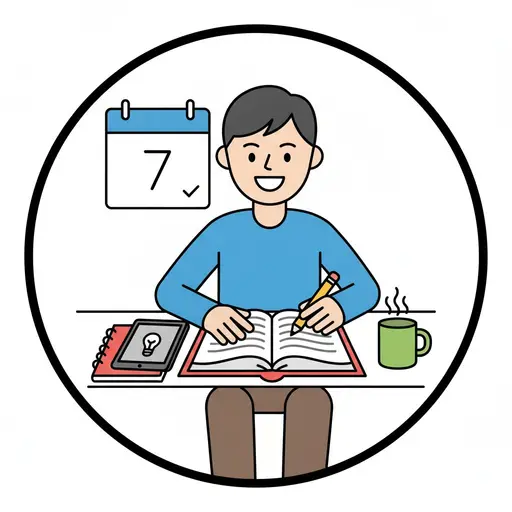
Study
A person sits at a desk writing in a book, with a calendar, a tablet and a mug b...
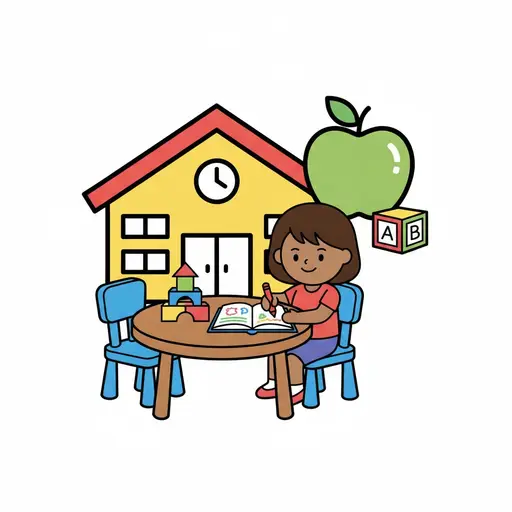
Kindergarten
Three stacked building bricks in red, blue and yellow.
This visual support in other languages
Take the visual supports with you
In Routined you build schedules from these pictures, add timers and voice instructions, and your child follows the day on their own.


* 14-day free trial, then $2.39 a month or $20.99 a year (US pricing). Cancel anytime.