Summer Chores Without Nagging: Getting Kids to Help on the Holiday
With everyone home all day, the house takes more of a beating — and somehow it’s always you tidying it. Here’s how to get kids genuinely helping over the summer, without it becoming a daily battle.
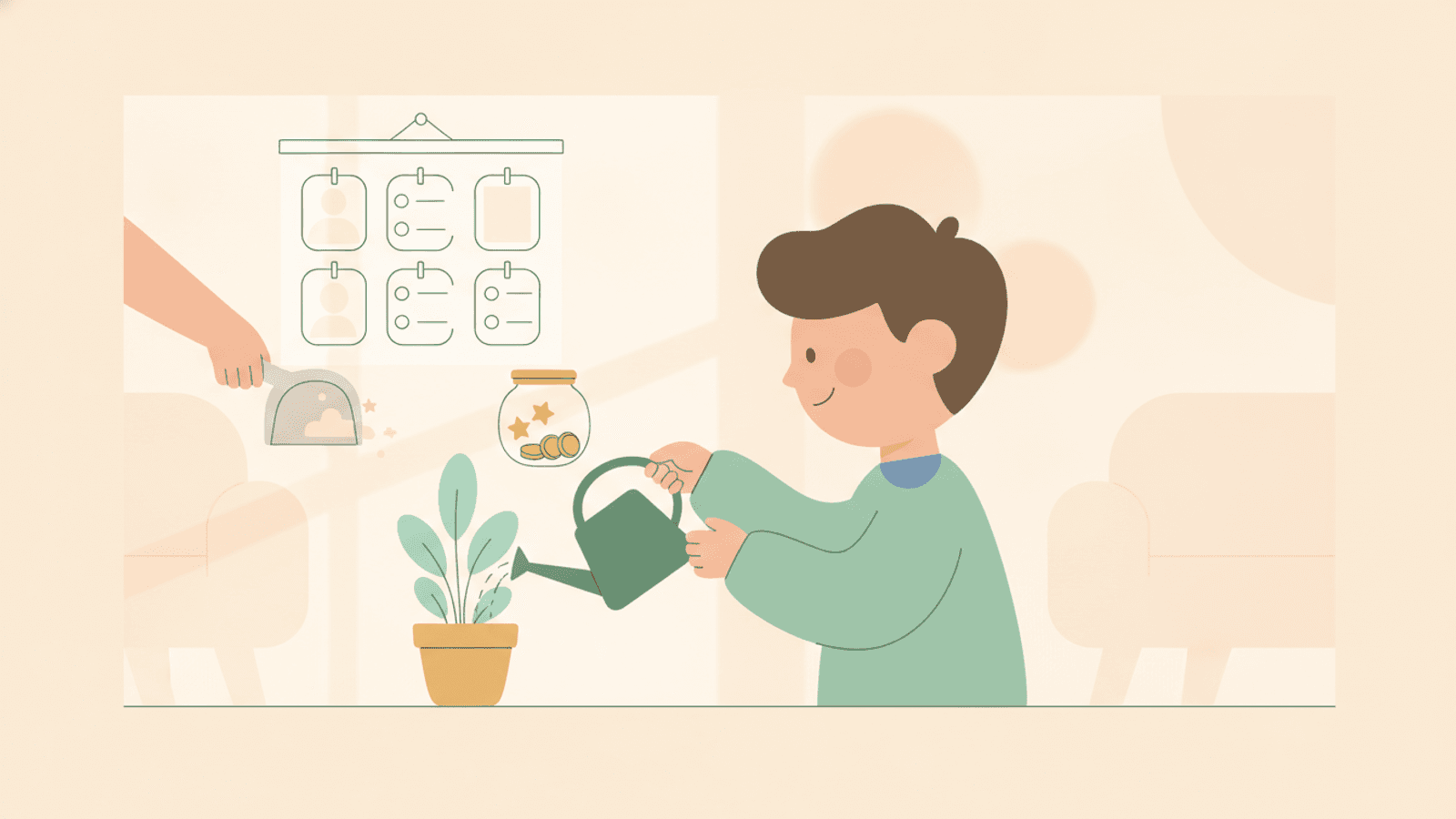
Summer holidays are a fantastic time for family fun, but they can also be an ideal period to gently introduce and reinforce positive habits, especially when it comes to summer chores for kids. To get children to help without constant nagging, the key lies in setting clear, visual expectations, making tasks age-appropriate, and tying them to consistent, predictable motivators rather than bribes. By doing so, families can enjoy a more harmonious holiday while fostering valuable life skills and a sense of shared responsibility.
Why Summer is the Right Time to Build Chore Habits
With school schedules set aside and longer, brighter days ahead, summer offers a unique window to cultivate helpfulness within your family. Unlike the frantic pace of school mornings, summer provides a more relaxed environment for teaching and practicing new skills. There's less pressure, more time for demonstrating tasks thoroughly, and ample room for mistakes without the rush. This unhurried pace is particularly beneficial for all children, and especially for those who might need more time to process instructions or practice routines, such as children with ADHD or autism. Establishing summer chores for kids now means these habits can carry through into the school year, making future transitions smoother and nurturing a sense of contribution.
Match the Chore to the Age
The secret to successful chore integration is ensuring tasks are perfectly matched to your child’s developmental stage, abilities, and even their unique interests. When chores feel achievable, children are more likely to engage and feel a sense of accomplishment. It’s crucial to remember that what one child finds easy, another might find challenging, especially within the spectrum of neurodiverse learning styles. Always start by demonstrating the task, breaking it down into small steps, and offering support until they feel confident.
Toddlers (Ages 2-3): Little Helpers with Big Enthusiasm
Chores are about participation and fun.
- Putting toys into a designated basket.
- Helping to wipe up small spills.
- Placing dirty clothes in a hamper.
Preschoolers (Ages 4-5): Building Independence
As fine motor skills and comprehension grow, preschoolers can take on slightly more complex routines. Visual cues are very helpful.
- Setting the table with non-breakable items.
- Sorting laundry by color or type.
- Watering houseplants.
- Making their bed (pulling up a duvet, arranging pillows).
Early Elementary (Ages 6-9): Developing Responsibility
Children in this age group are ready for tasks requiring a bit more planning and sequence.
- Packing their own lunch.
- Tidying their room – making the bed, putting away clothes and books.
- Helping with meal prep – washing vegetables, setting the table.
- Clearing their own plate to the sink/dishwasher.
- Basic pet care, like filling water bowls.
Pre-teens & Teens (Ages 10+): Mastering Life Skills
Older children can take on significant household responsibilities, preparing them for independent living.
- Preparing simple family meals.
- Doing their own laundry, from sorting to folding.
- Vacuuming or mopping floors.
- Mowing the lawn or other yard work.
- Managing specific family zones, like keeping the living room tidy.
Remember, the goal is progress, not perfection. Be patient, provide clear instructions, and celebrate efforts.
Make it Visual and Consequence-Based, Not Nag-Based
One of the most powerful tools in your chore-management arsenal is a visual chart or checklist. This simple, effective method shifts the burden of remembering from you to a tangible system. For children, especially those with ADHD or autism who often thrive on predictability and clear structure, a visual representation makes all the difference. It removes ambiguity and helps them understand what needs to be done, in what order, and what the expectations are.
Instead of you repeatedly reminding or 'nagging' your child, the chart becomes the 'reminder.' They can see tasks laid out, check them off, and track progress, fostering independence. Use pictures for younger children, lists for older ones. Place it in a high-traffic area.
Connecting chores to natural consequences also strengthens the system. If a child needs clean sports clothes and laundry is their responsibility, the natural consequence of not doing it is not having clean clothes. This isn't about punishment; it's about understanding cause and effect, teaching valuable life lessons about responsibility and planning in a way that nagging simply can't.
Rewards That Motivate Without Bribing
Motivation is key, but distinguish between healthy motivation and bribery. Bribery often gives a reward *before* a task; motivation rewards *after* completion, teaching children their efforts have value and lead to positive outcomes.
- Stars, Stickers, or Tokens: For younger children, immediate visual feedback is powerful. A sticker on their chart can accumulate towards a larger, predetermined reward (e.g., five stars earn a trip to the park). This builds excitement and teaches goal-setting.
- Pocket Money/Allowance: For older children, linking chores to pocket money teaches financial literacy and responsibility. Clearly define which chores earn money and how much. This focuses on tasks that genuinely uplift the household, beyond basic contributions (e.g., washing the family car, preparing a family meal).
- Screen Time or Special Privileges: Highly effective. Implement a system where completed chores unlock a set amount of screen time or a special privilege (e.g., choosing the family movie). Be consistent and clear about the 'exchange rate.'
Whatever system you choose, ensure it is predictable, clearly communicated, and fairly administered. Consistency is paramount. Children thrive when they know what to expect. External motivators are excellent stepping stones towards the intrinsic satisfaction of being helpful.
Avoid the Common Traps
Even with the best intentions, families can sometimes fall into common traps that undermine their chore system.
One significant trap is assigning too many chores too soon. Overwhelming a child, especially if new to chores, leads to burnout and refusal. Start small, perhaps one or two tasks, and gradually add more. Consistent success with a few is better than sporadic attempts at many.
Another pitfall is making rewards too high or disproportionate. If the incentive is too grand for a simple chore, it teaches children contribution is purely transactional. Rewards should be meaningful but not extravagant.
Inconsistency is a major destroyer of any routine. If you enforce chores and rewards one day but let things slide the next, children learn the system isn't rigid. This sends mixed messages and makes re-establishing expectations harder. Be prepared to be consistent, even on busy days.
Finally, a trap often overlooked is a lack of initial training and ongoing support. Don’t just assign a chore; show your child how to do it. Break it down, do it alongside them, and offer constructive feedback. Expecting a child to instinctively know how to perfectly tidy a room without guidance is unrealistic. Patience and support in the learning phase are crucial.
Read more
Frequently asked questions
What chores can a 5-year-old realistically do?
A 5-year-old can realistically do many simple, age-appropriate tasks. These include setting the table with non-breakable items, sorting laundry by color, watering houseplants, making their bed (pulling up the duvet), and putting away their toys. Focus on tasks that build independence and contribute visually to the household.
Should I pay my child for chores?
It depends on your family's philosophy; there's no single right answer. Some families pay for specific chores beyond basic family contributions, using it to teach financial literacy and the value of work. Others prefer to frame all chores as contributing to the family, linking rewards to privileges or special activities instead of money.
How do I get my child to do chores without nagging?
The key is a consistent visual system, like a chore chart, that clearly outlines tasks and expectations. This externalizes the reminder, so the chart 'nags' instead of you. Couple this with predictable rewards and natural consequences, consistently reinforcing the system rather than relying on verbal prompts.
What if my child just refuses to help?
When refusal occurs, calmly reinforce the connection between chores and family privileges or rewards. Avoid power struggles; instead, state the consequence clearly, such as "We can't have screen time until your room is tidy." Consistency and following through on stated consequences without anger are vital.
How many chores per day is reasonable for a child?
The number of chores depends heavily on the child's age, developmental stage, and the complexity of the tasks. For younger children (2-5), 1-2 simple chores per day might be plenty. Older children (6+) can manage 3-5 daily or weekly tasks. Prioritize consistency over quantity, ensuring tasks are achievable.