Load the dishes
A dishwasher looks tidy to a grown-up and chaotic to a child. Plates go one way, glasses another, and fingers get wet on something still warm. The cards below show what belongs where, before the help turns into give-ups.
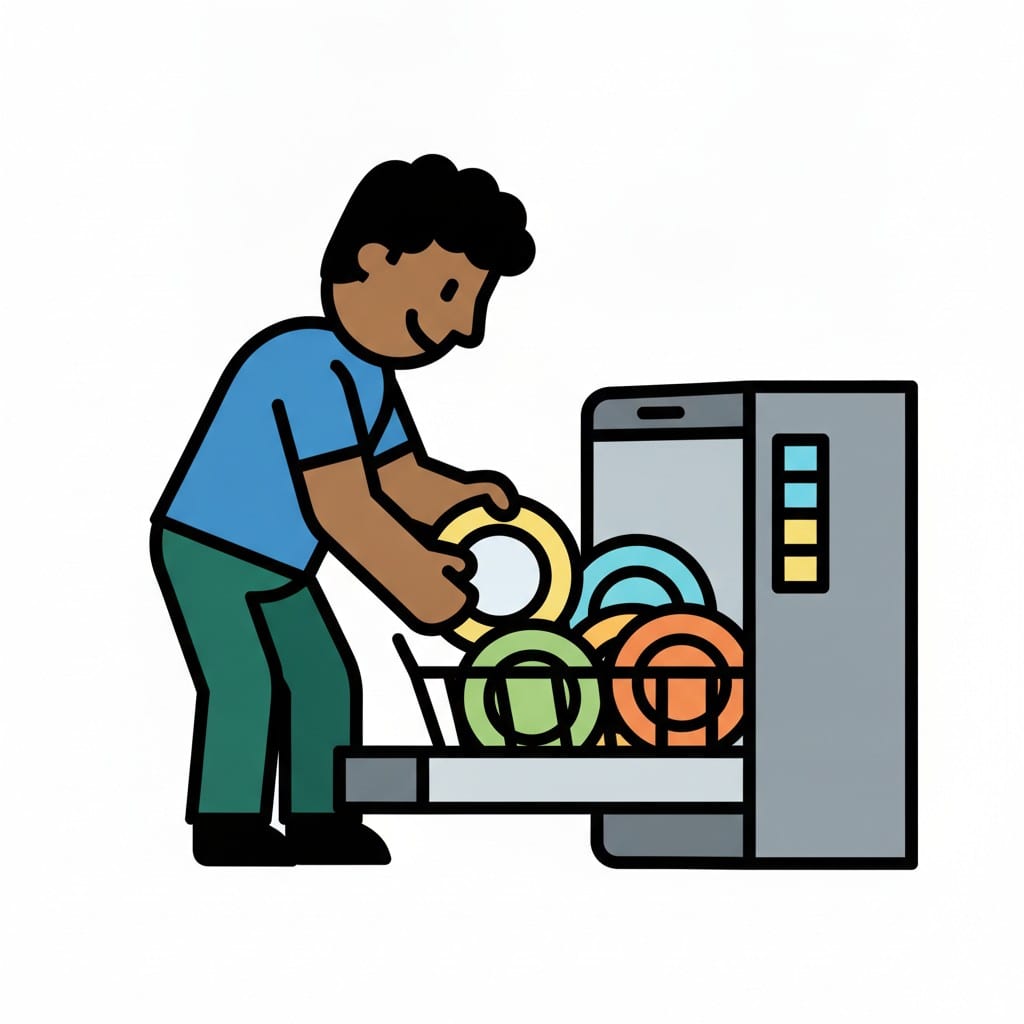 ♂
♂Person loading the dishwasher
A smiling person bends down and places colourful plates into an open dishwasher.
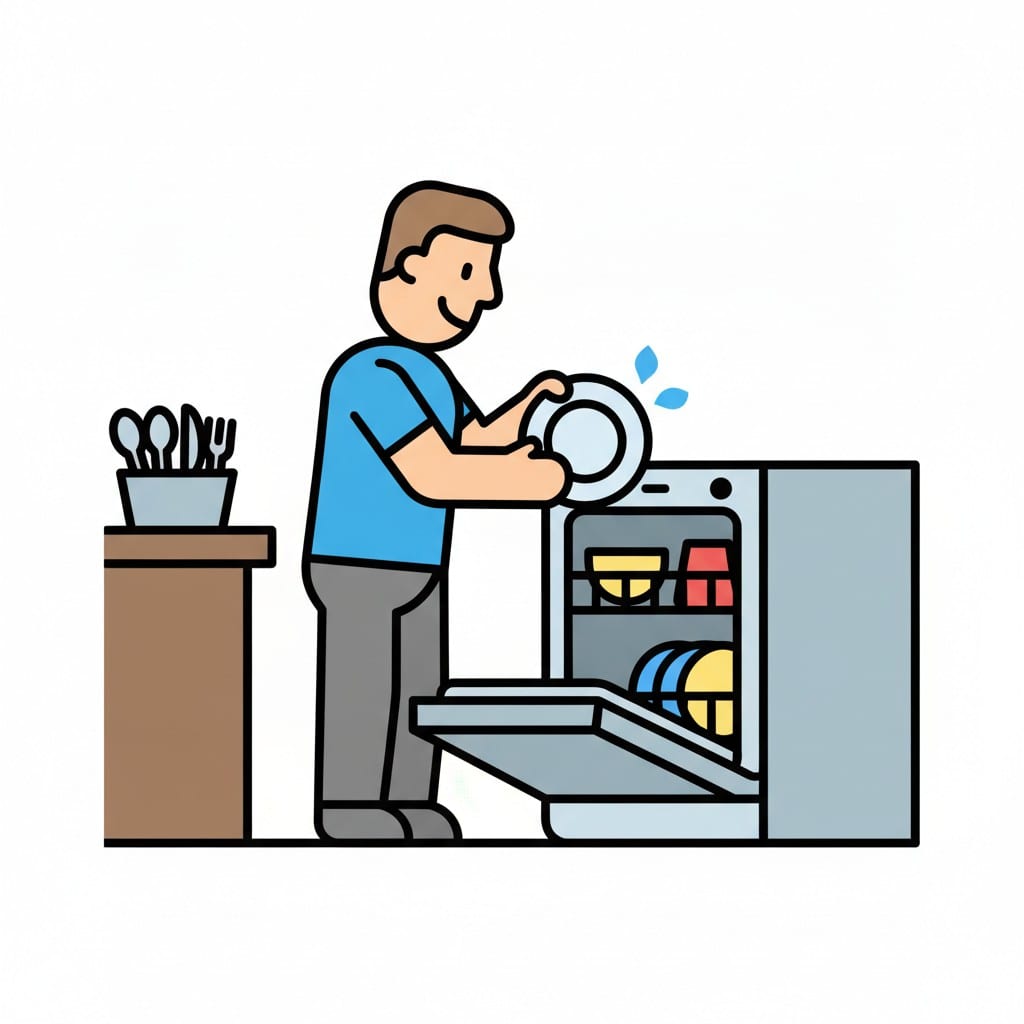 ♂
♂Putting plates in
A man puts a plate into an open dishwasher that already holds plates and cups.
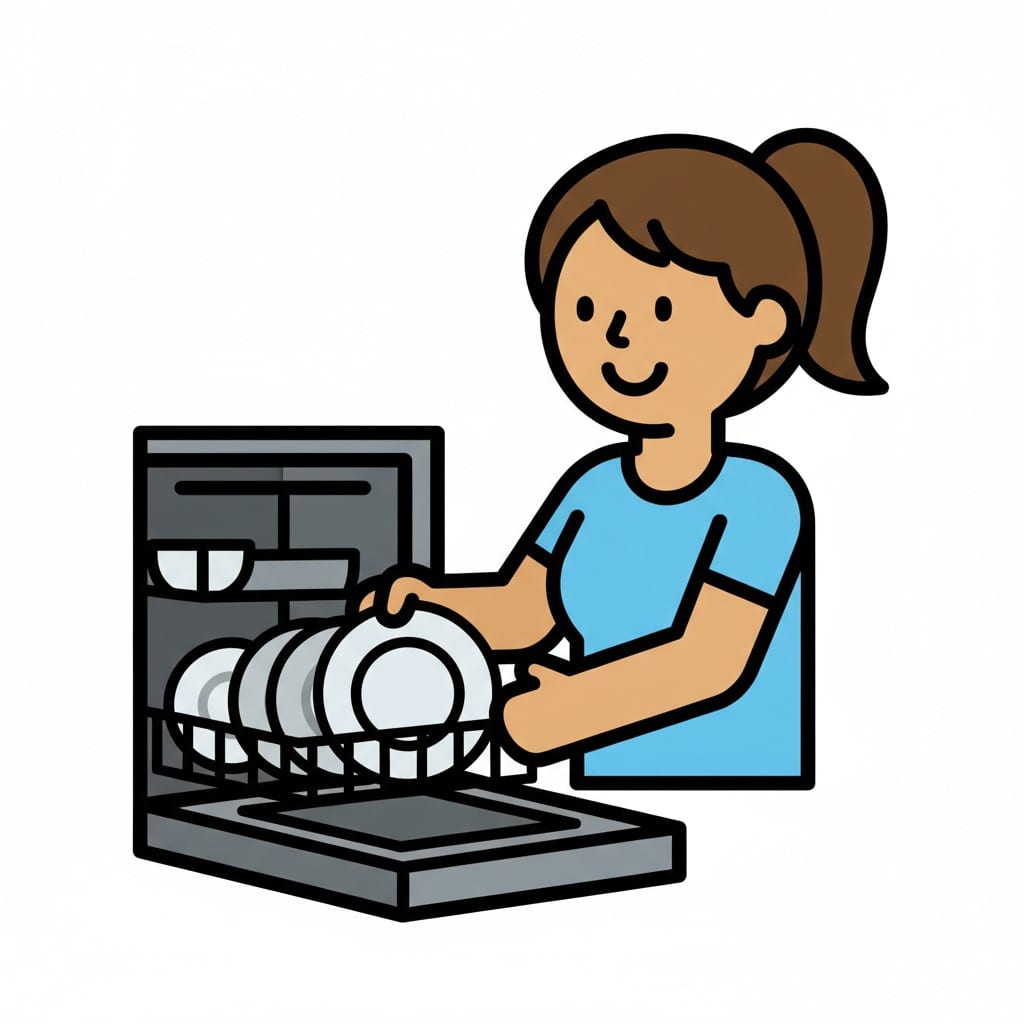 ♀
♀Load dishwasher
A woman with brown hair puts plates into a dishwasher.
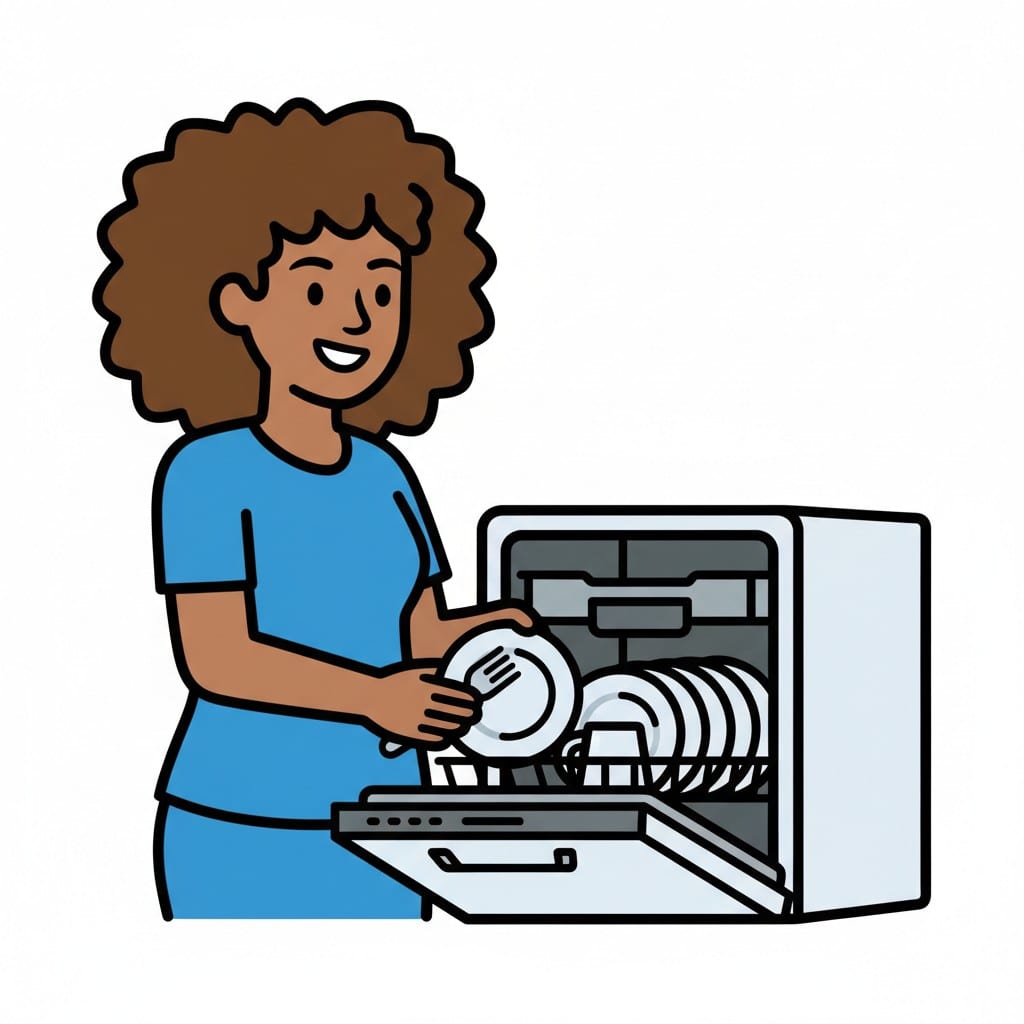 ♀
♀Load dishwasher
A woman with curly brown hair puts a plate and fork into a dishwasher.
 ♀
♀Load dishwasher
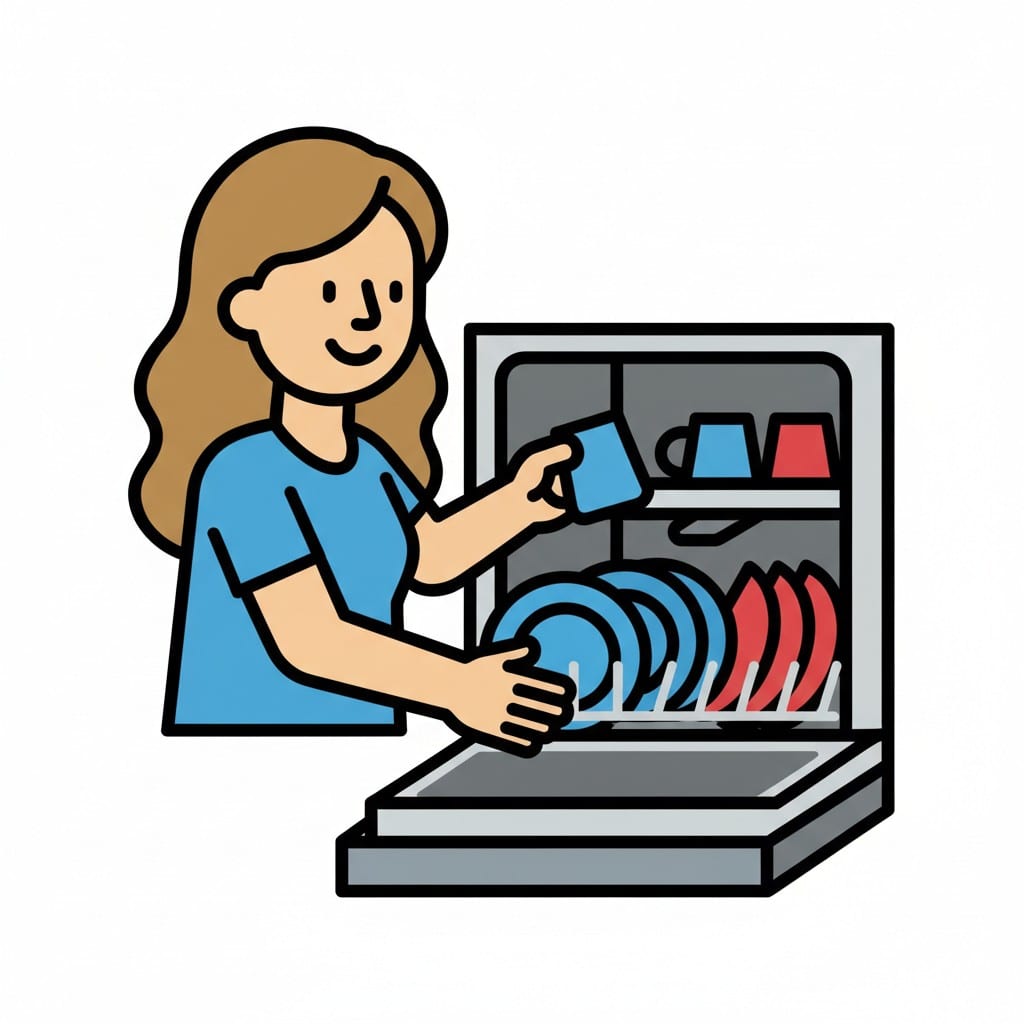
Illustration of a person loading a dishwasher with plates and cups.
 ♀
♀Woman loading dishwasher
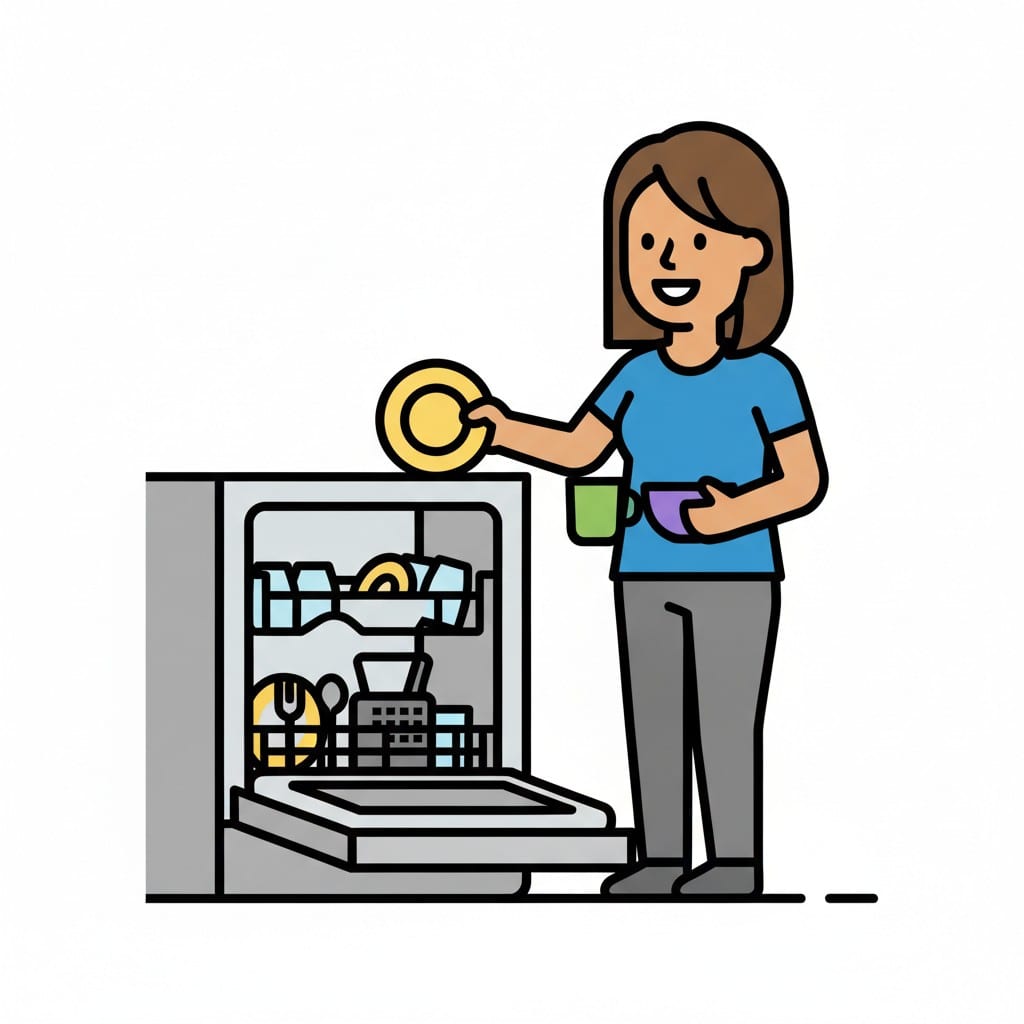
A woman puts plates and cups into the dishwasher.
About this visual support
A dishwasher is a small puzzle of fine motor work and logic at the same time. Plates tilt the same way, glasses go upside down but cannot squeeze together, cutlery faces up or down depending on the family habit, and some of the load comes straight from a hot rack or counter, warm and wet at once. It is easy to lose the thread mid-task.
The pictures split that task into clear little zones. A lower-basket card says plates go here, an upper-basket card says glasses and mugs go there, and a cutlery card marks where the small things belong. When your child can match the thing in their hand to a picture, they stop having to ask every single time or guess. That is where real independence shows up.
A concrete idea: start with one basket only, maybe the lower one for a week, before adding the next. The win becomes visible before the difficulty grows. In Routined the dishwasher step can sit inside a short after-meal routine, so it has its own place instead of being a fresh negotiation every evening.
Use this image in a schedule
Build your own visual schedule with this image and download it as a print-ready PDF. Completely free.
More similar visual supports
Clear the Table
A smiling person carries a stack of plates and a bowl away from a dining table w...
Dishwasher
An open dishwasher with cups in the top rack and plates in the bottom.
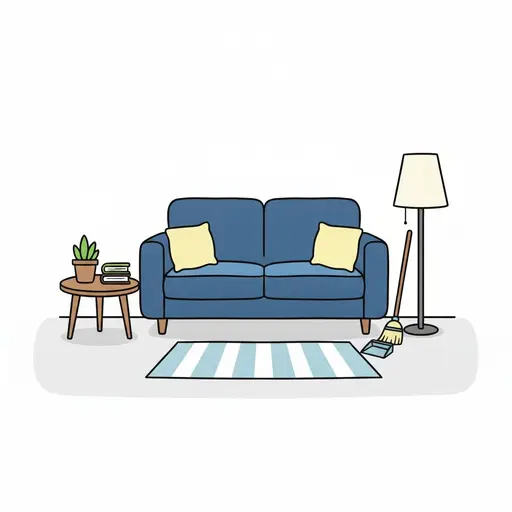
Clean the living room
A living room with a blue sofa, floor lamp and side table, with a broom leaning ...
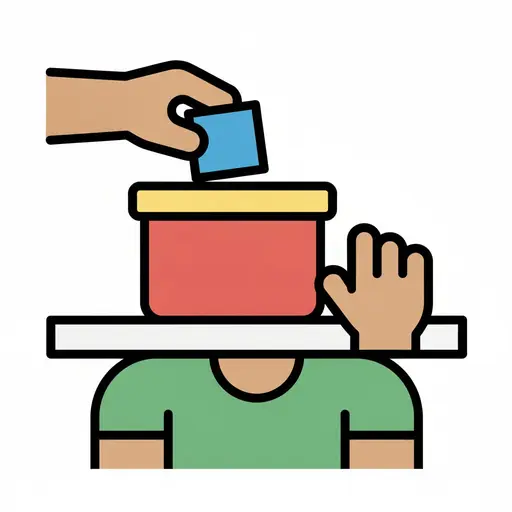
Put away
A hand places a blue block into a red container on a shelf.
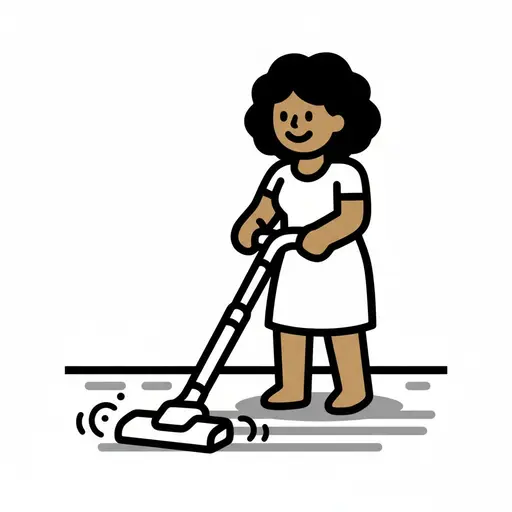
Vacuum the floor
A woman in a white dress runs a vacuum cleaner with a long wand across the floor...
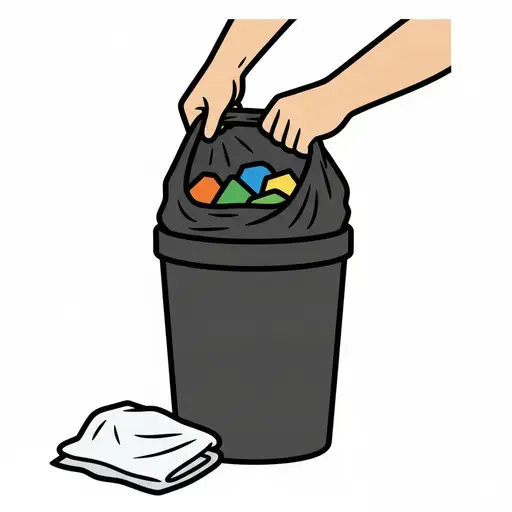
Change the bin bag
Two hands lift a full black bin bag out of the bin, with a new folded bag lying ...
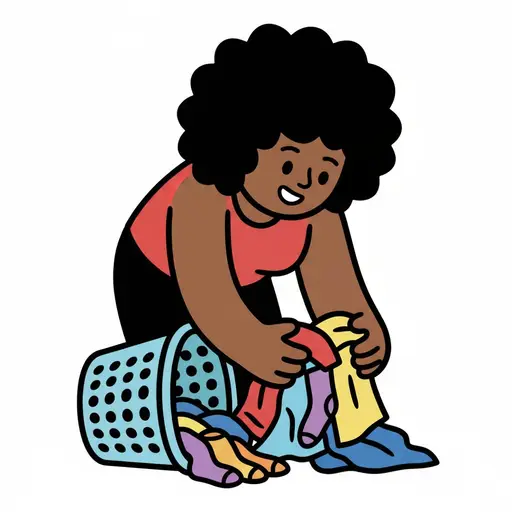
Pick up the laundry
A child picks clothes out of a tipped-over laundry basket.
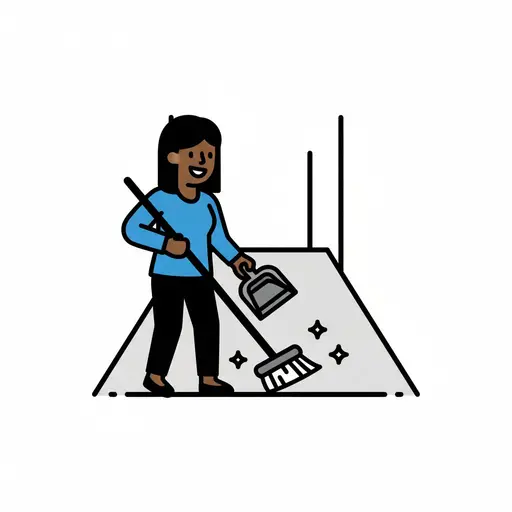
Clean the hallway
A child sweeping the hallway floor with a broom while holding a dustpan, with sp...
This visual support in other languages
Take the visual supports with you
In Routined you build schedules from these pictures, add timers and voice instructions, and your child follows the day on their own.


* 14-day free trial, then $2.39 a month or $20.99 a year (US pricing). Cancel anytime.