Dishwasher
A dishwasher has its own rules: glasses on the top rack, knives pointing down, nothing blocking the spray arm. The cards below turn those invisible rules into something you can see at a glance.
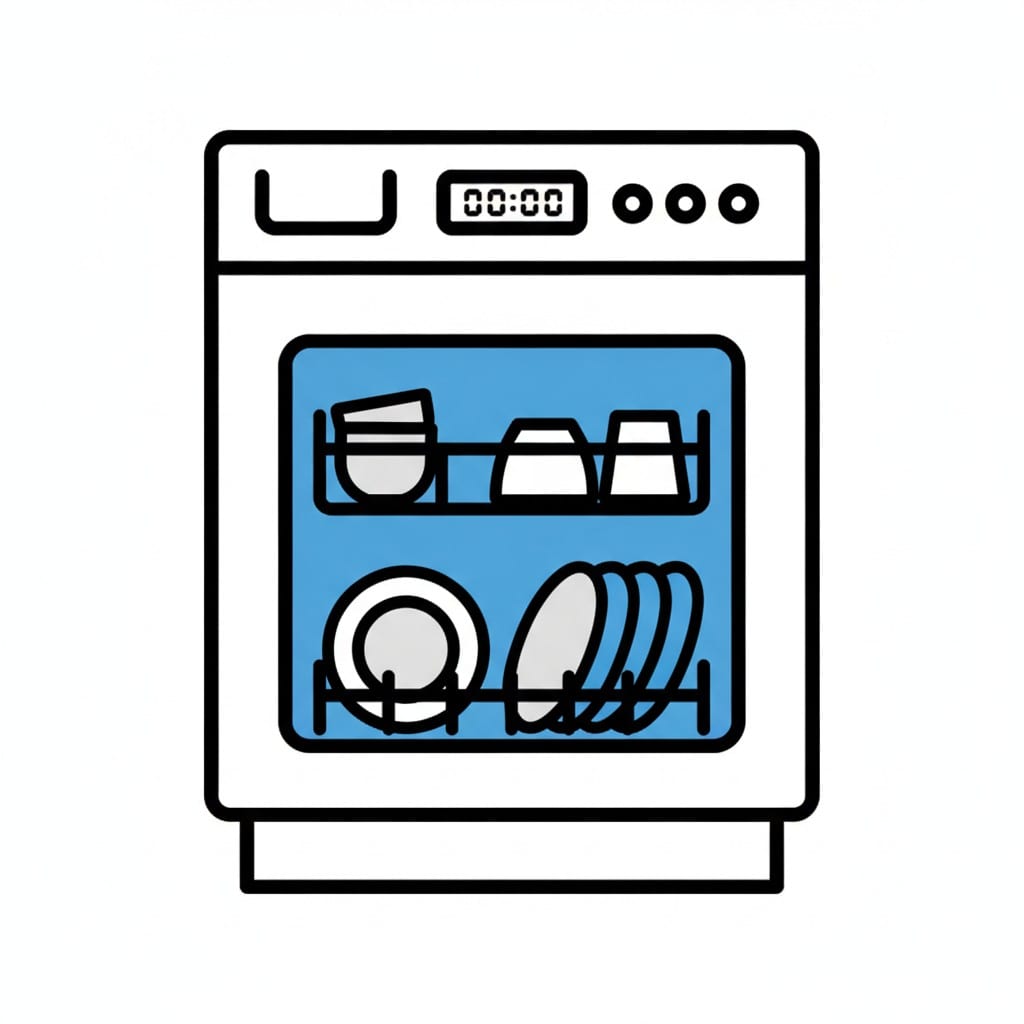
Loaded dishwasher
A dishwasher stands with its door open, showing plates, bowls and cups arranged neatly in the two racks.
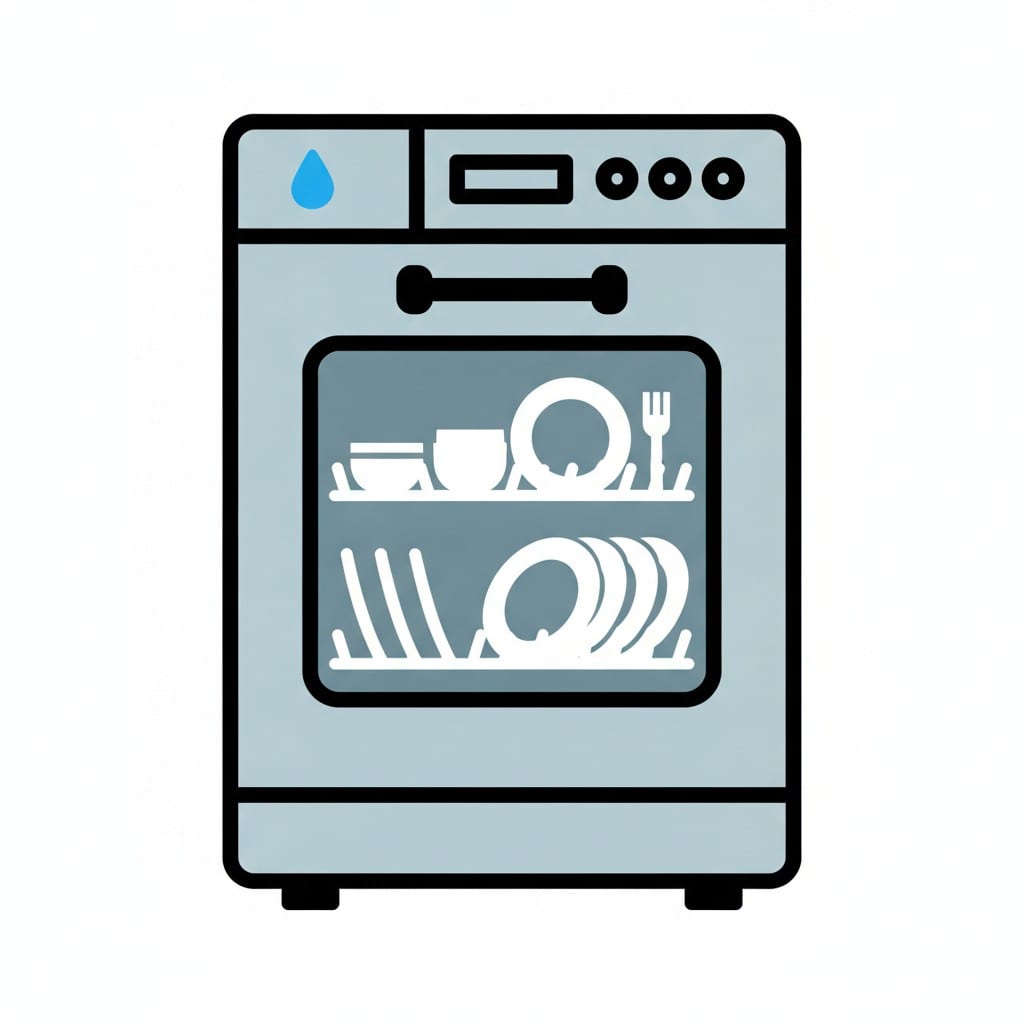
Dishwasher
A dishwasher with plates and bowls behind the glass door.
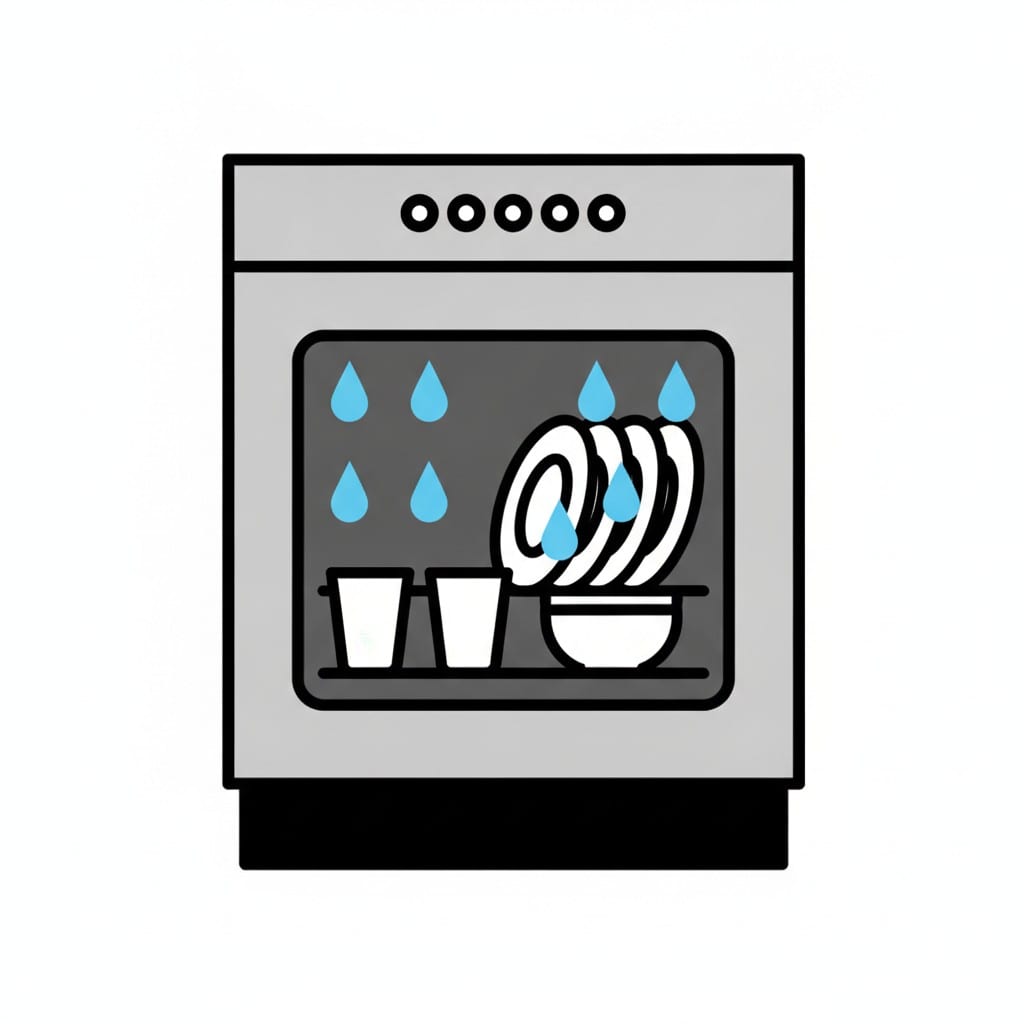
Dishwasher running
A dishwasher with water drops, plates and glasses inside.
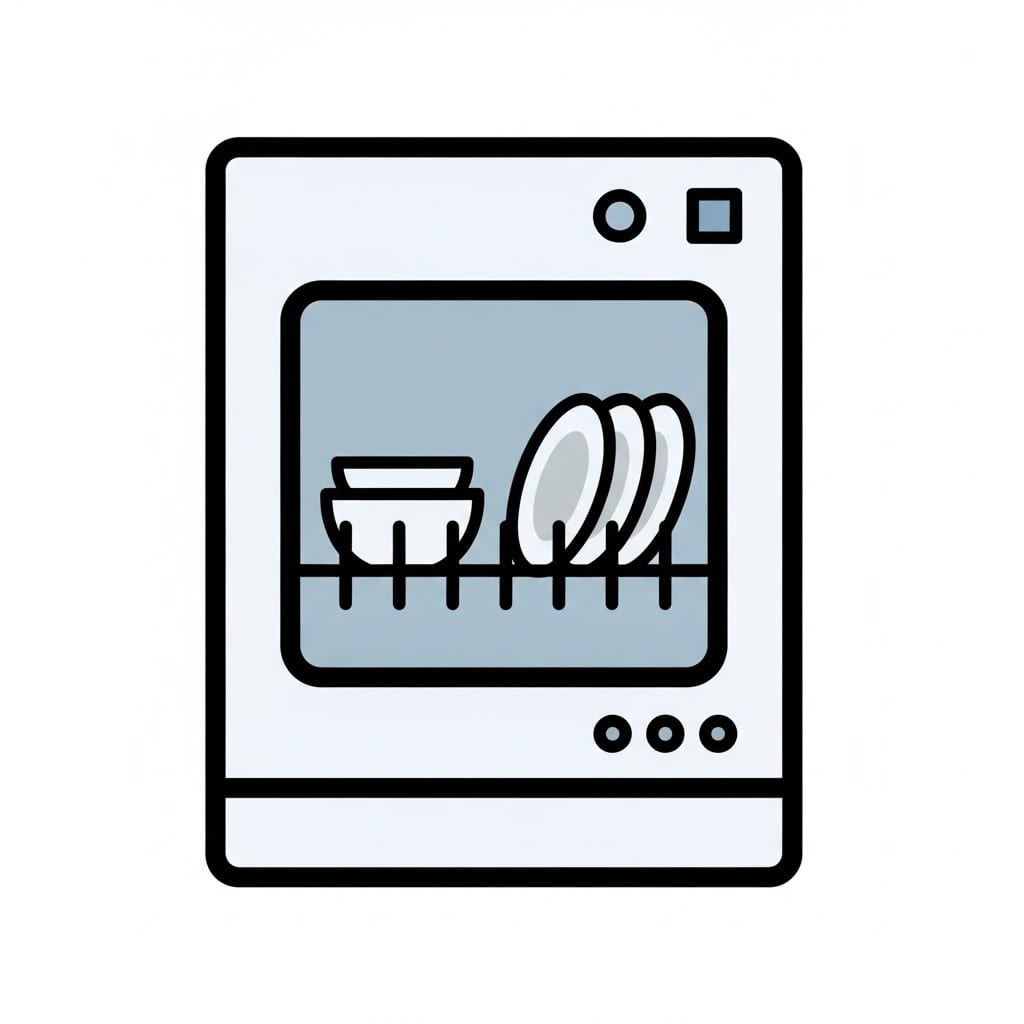
White dishwasher
A white dishwasher with bowls and plates in the rack.
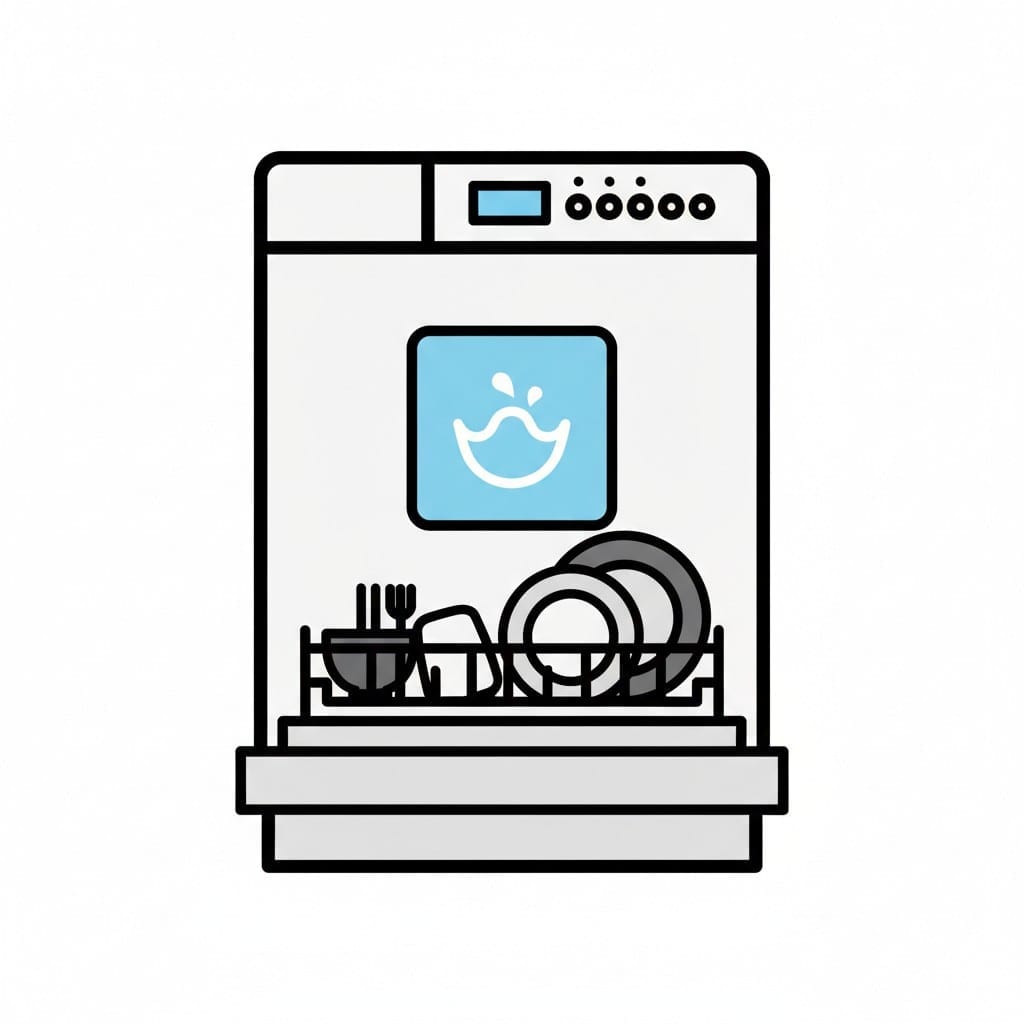
Dishwasher
A white dishwasher is open, revealing a full rack of plates, cutlery, and bowls. A blue square with a white water splash symbol is visible in the middle of the machine.
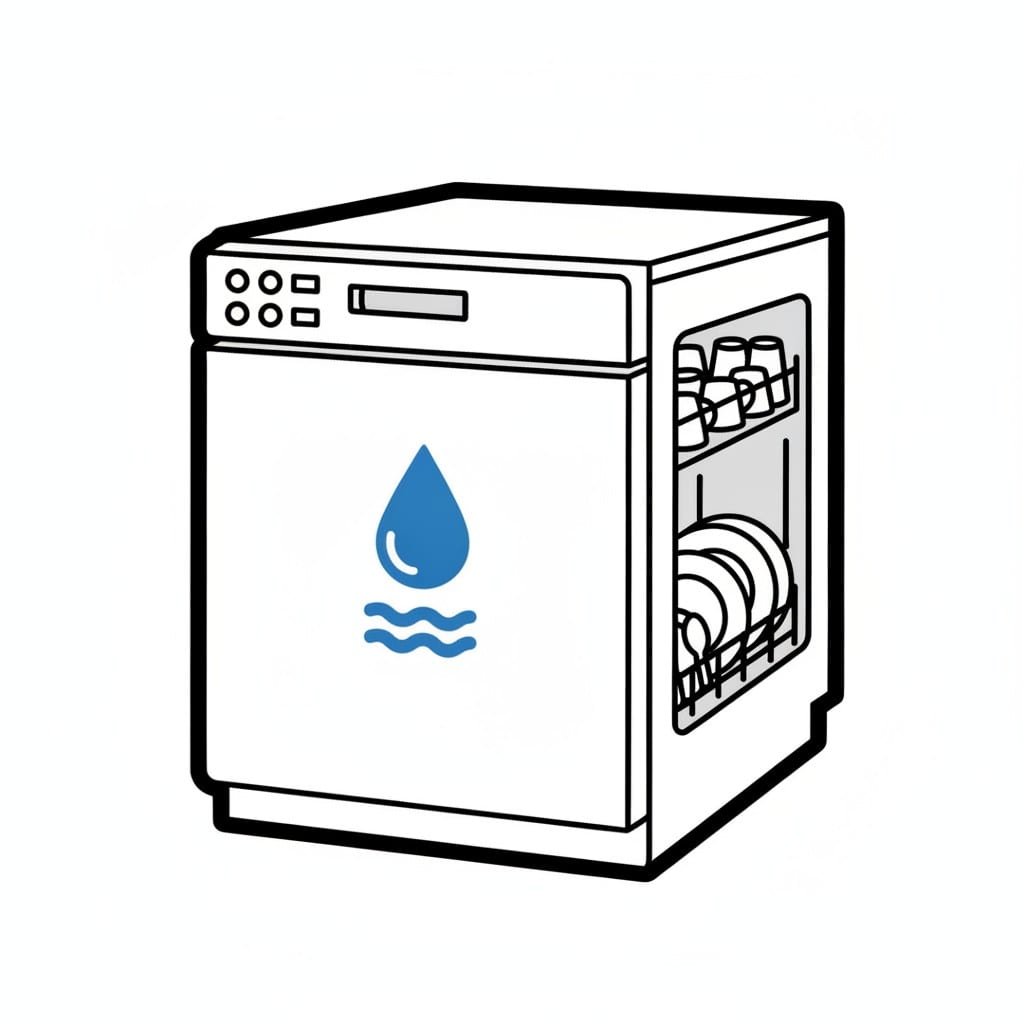
Closed dishwasher
A white dishwasher with its door closed shows a blue water drop on the front, and racks of plates and cups are visible through the side.
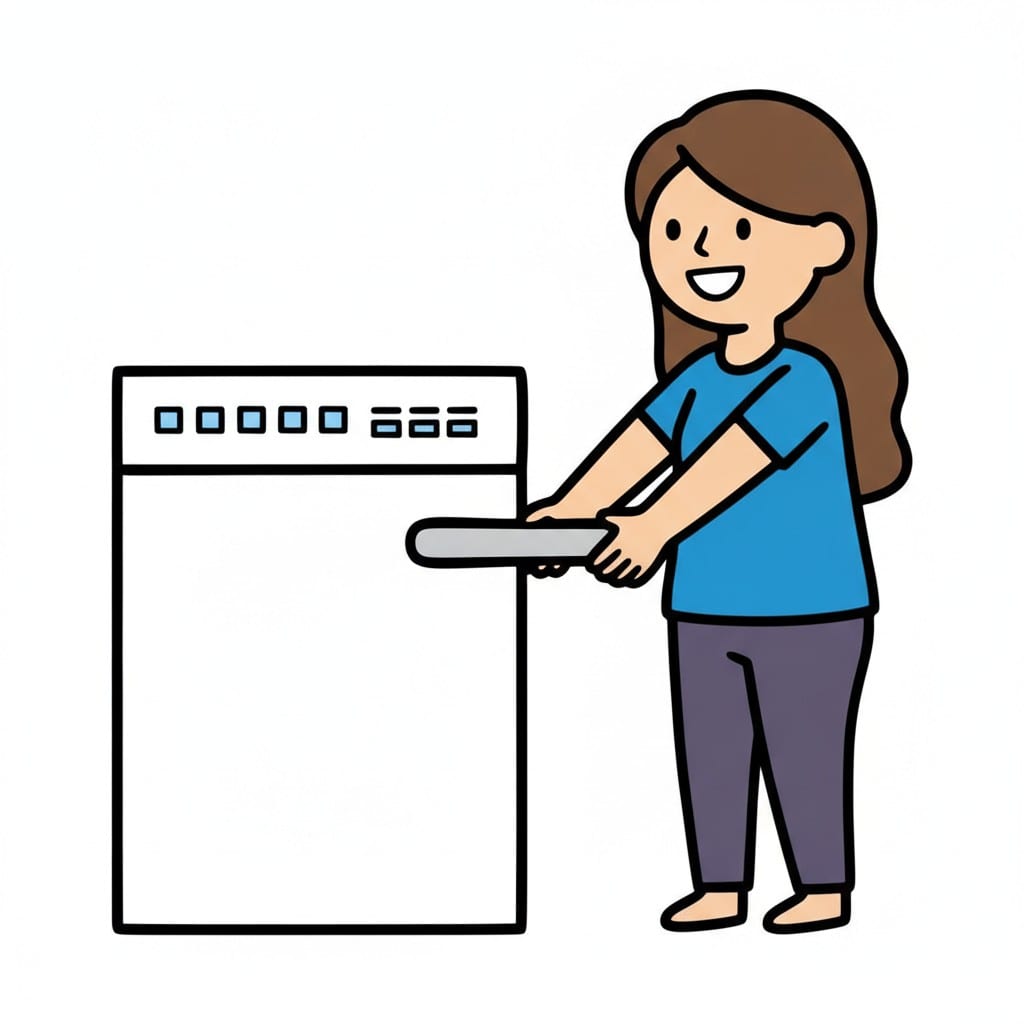 ♀
♀Person opening the dishwasher
A smiling person pulls the handle and opens the door of a white dishwasher with a control panel at the top.
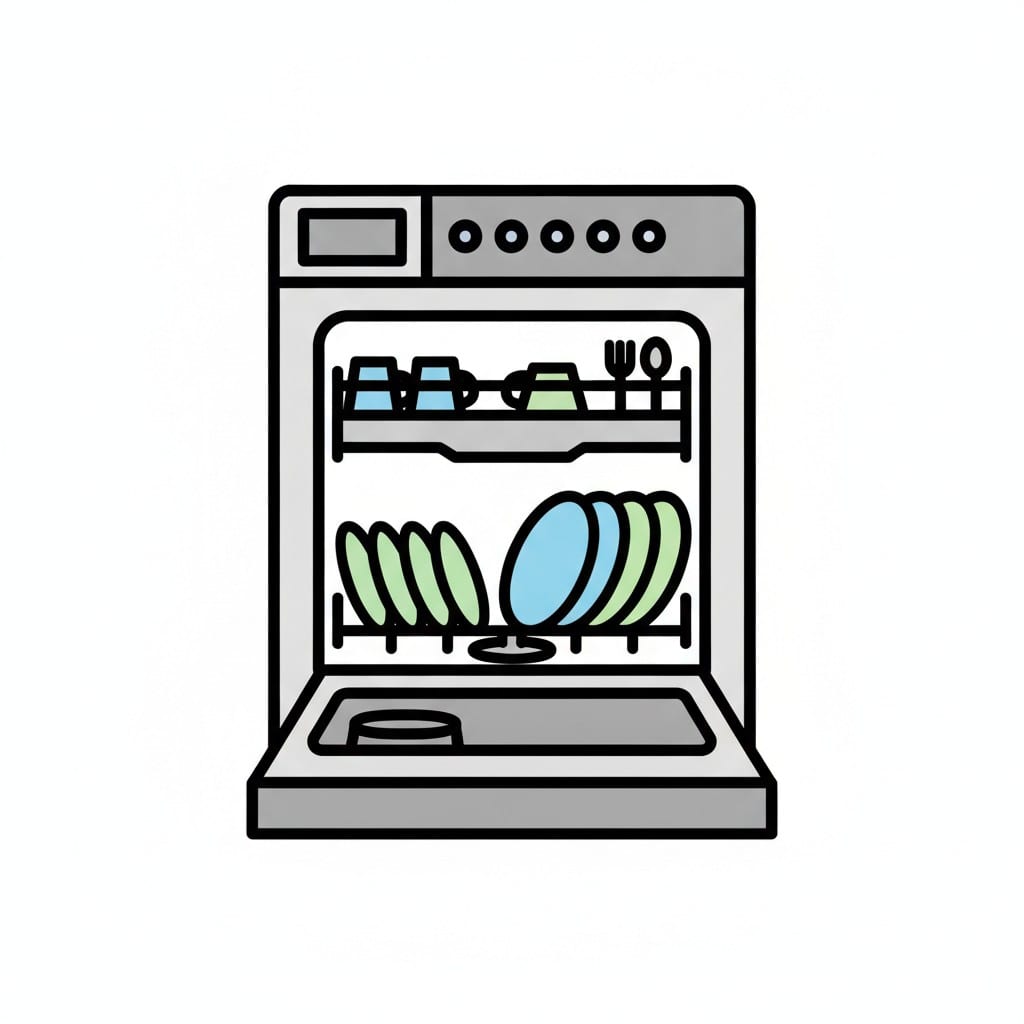
Open dishwasher
An open dishwasher with cups in the top rack and plates in the bottom.
About this visual support
Loading a dishwasher is more of a puzzle than a chore. Plates have to stand on edge, glasses must not lean against each other, a frying pan can’t block the cutlery basket. The order you place things in decides whether tonight’s wash actually fits or half of it stays out until morning.
When the rules show up as pictures, your child doesn’t have to hold them all in their head at once. Rinse off the big bits, sort the cutlery, stand the glasses on the upper rack, lay the large plates at the bottom, finish with pans and dishes. Being able to pick the next step from a strip of cards rather than asking out loud makes the whole job feel doable.
One practical tip: include a card showing the spray arm spinning freely. That is the single most common reason a load comes out dirty, and most children (and adults) forget to check. Spin the arm by hand as the final step before closing the door. In the Routined app you can chain the whole sequence into a short routine with a start button, and the 14-day trial is enough to see whether a younger teen can take over loading.
Use this image in a schedule
Build your own visual schedule with this image and download it as a print-ready PDF. Completely free.
More similar visual supports
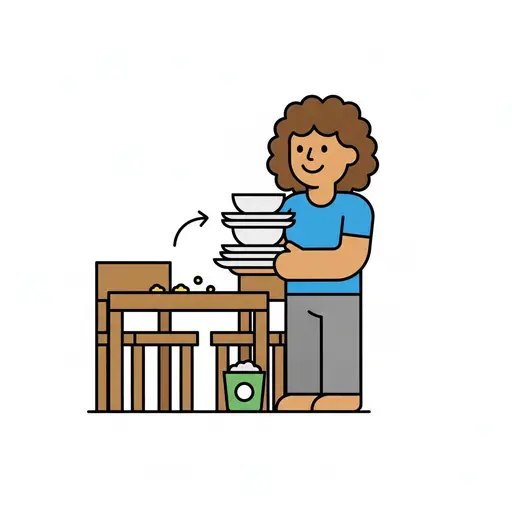
Clear the Table
A smiling person carries a stack of plates and a bowl away from a dining table w...
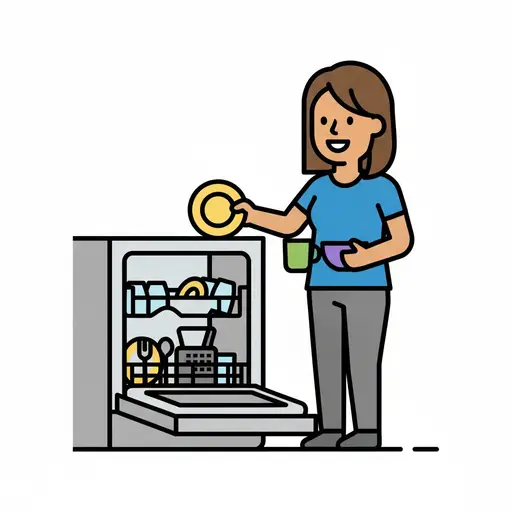
Load the dishes
A woman puts plates and cups into the dishwasher.
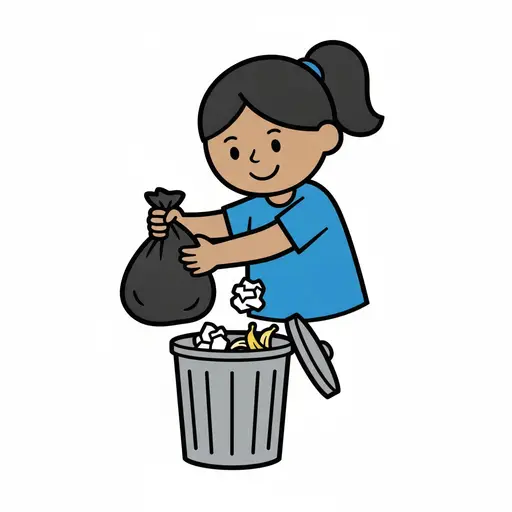
Put out the garbage
A girl drops a black rubbish bag into an open bin with the lid off.
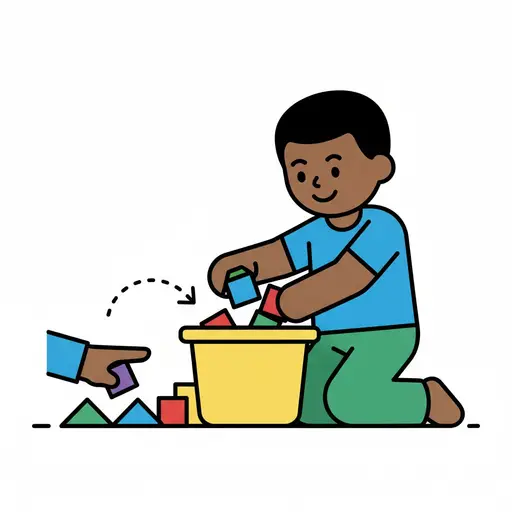
Help clean up
A boy kneels on the floor and puts building blocks into a yellow box.
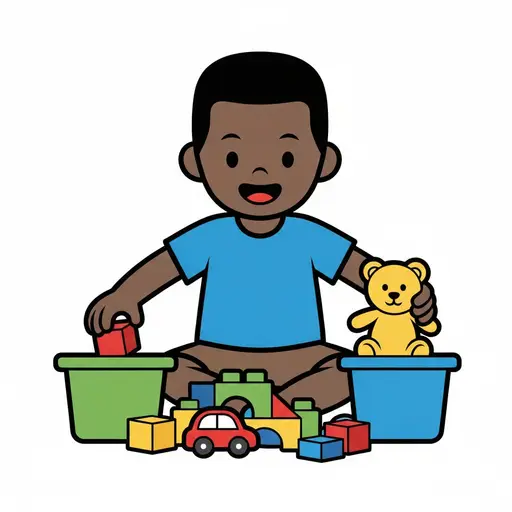
Sort toys
A boy sorts blocks and toys into a green and a blue bin.
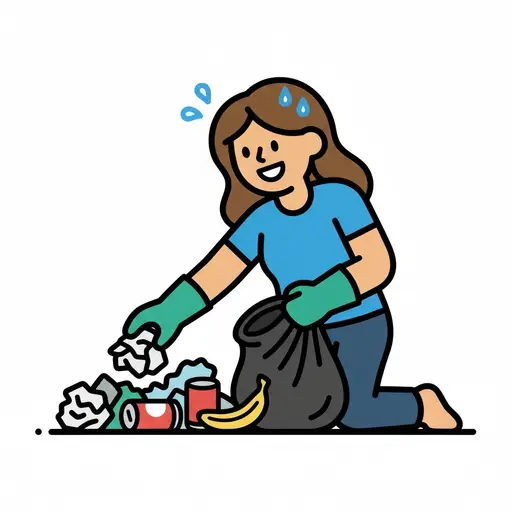
Clean up trash
A person wearing gloves picks up litter and puts it into a trash bag.
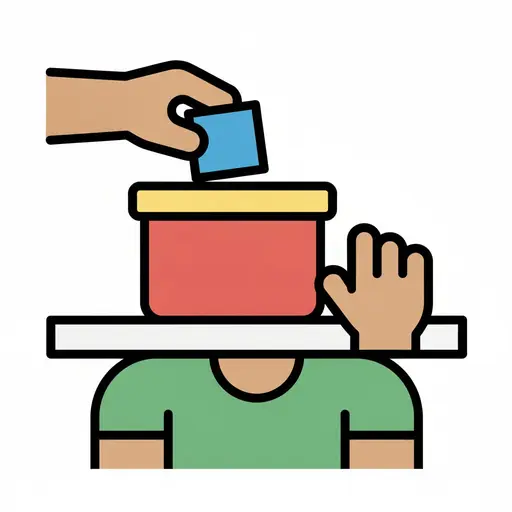
Put away
A hand places a blue block into a red container on a shelf.
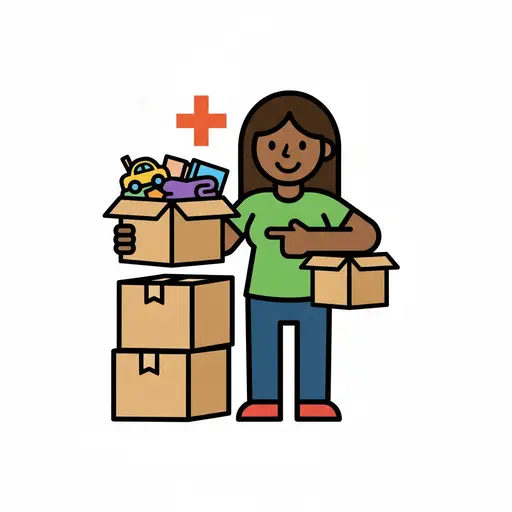
Pick up things
A woman stands by a stack of boxes with things inside.
This visual support in other languages
Take the visual supports with you
In Routined you build schedules from these pictures, add timers and voice instructions, and your child follows the day on their own.


* 14-day free trial, then $2.39 a month or $20.99 a year (US pricing). Cancel anytime.