Bed
Lying down in bed does not automatically bring the body and the mind along. The steps below show small, quiet things that happen on the way from upright to asleep, without demanding sleep on cue.
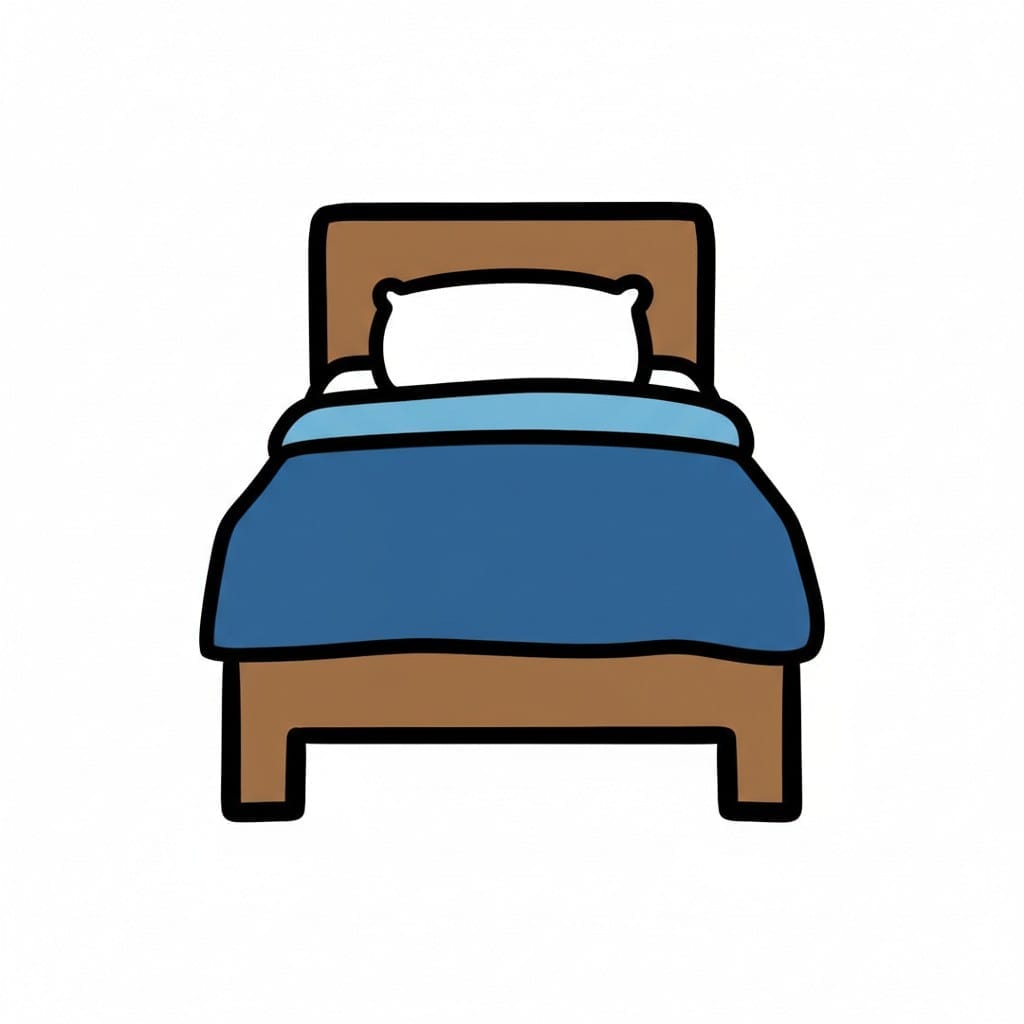
Bed
A bed with a headboard, a white pillow, and a blue blanket.
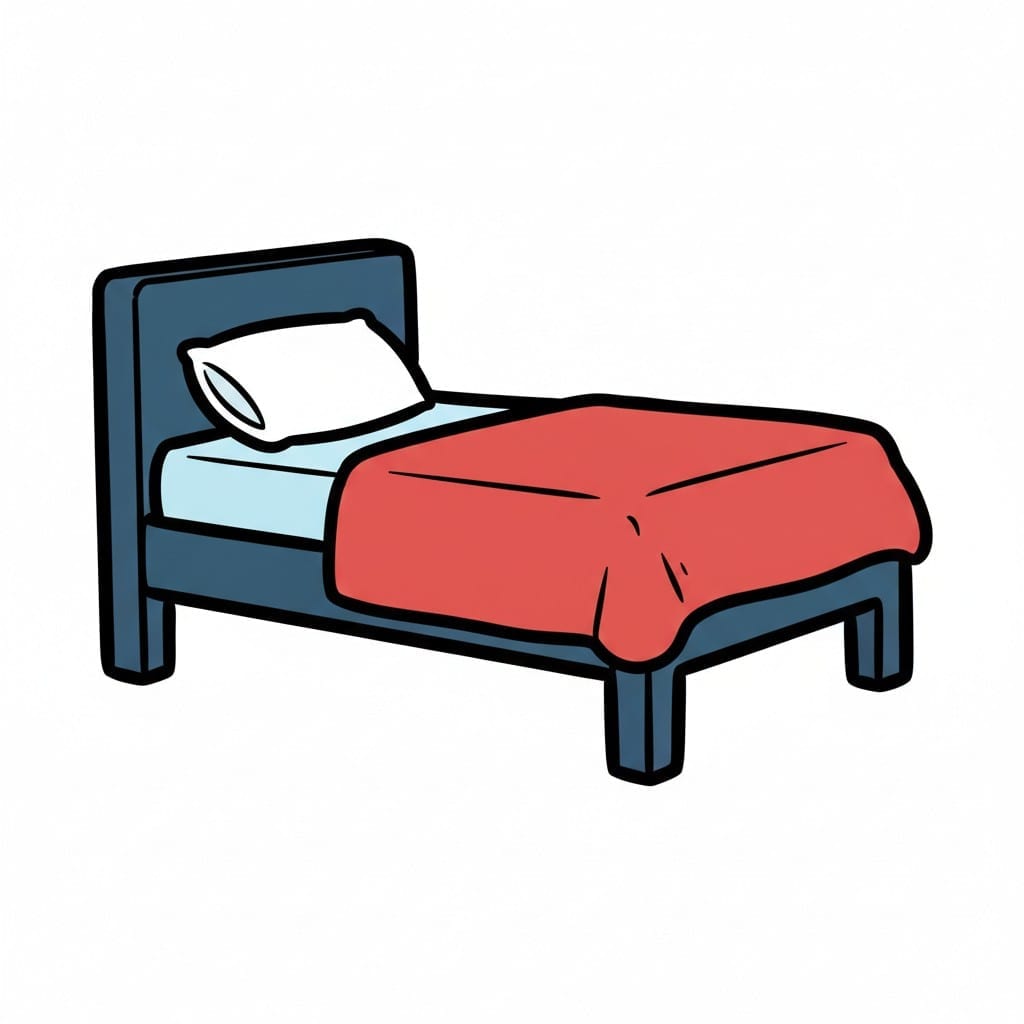
Bed
A bed with a blue frame, light blue sheets, a white pillow, and a red blanket.
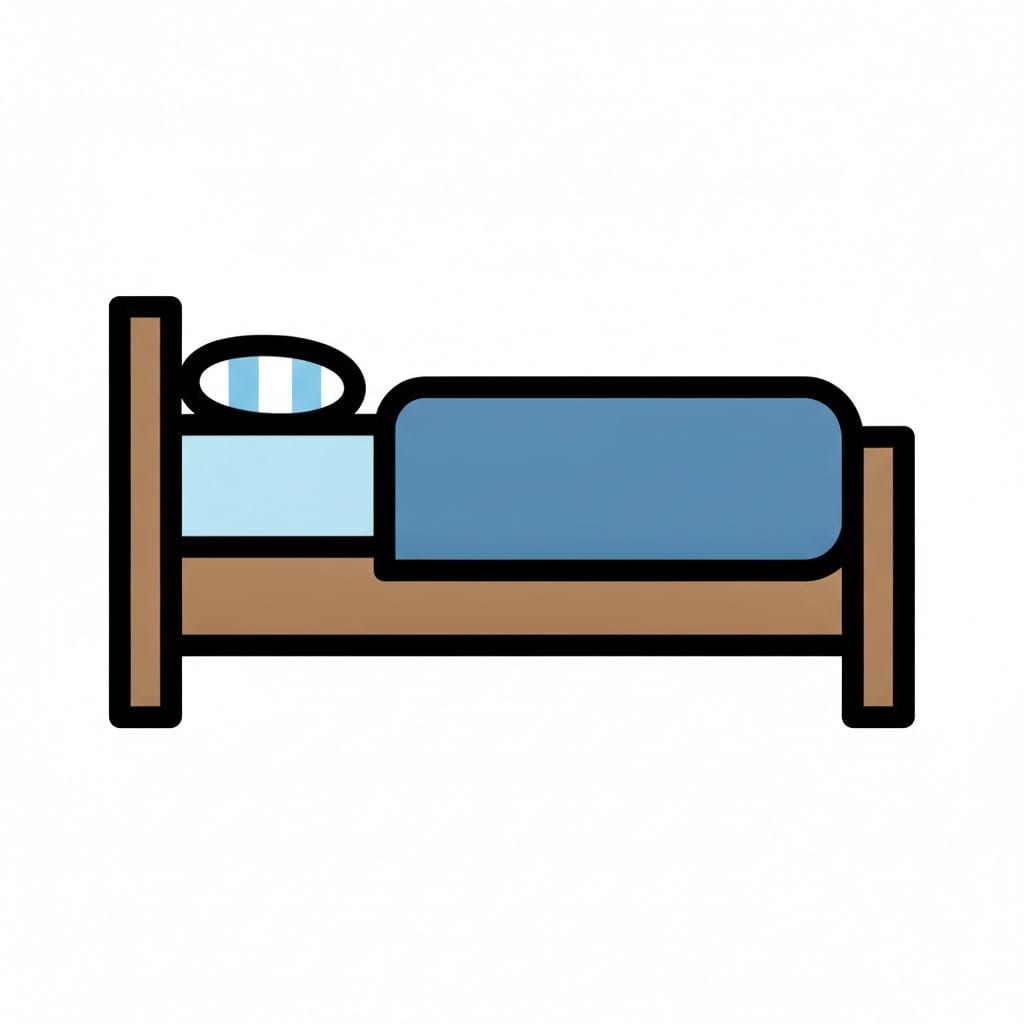
Bed
A bed with a blue blanket and a pillow.
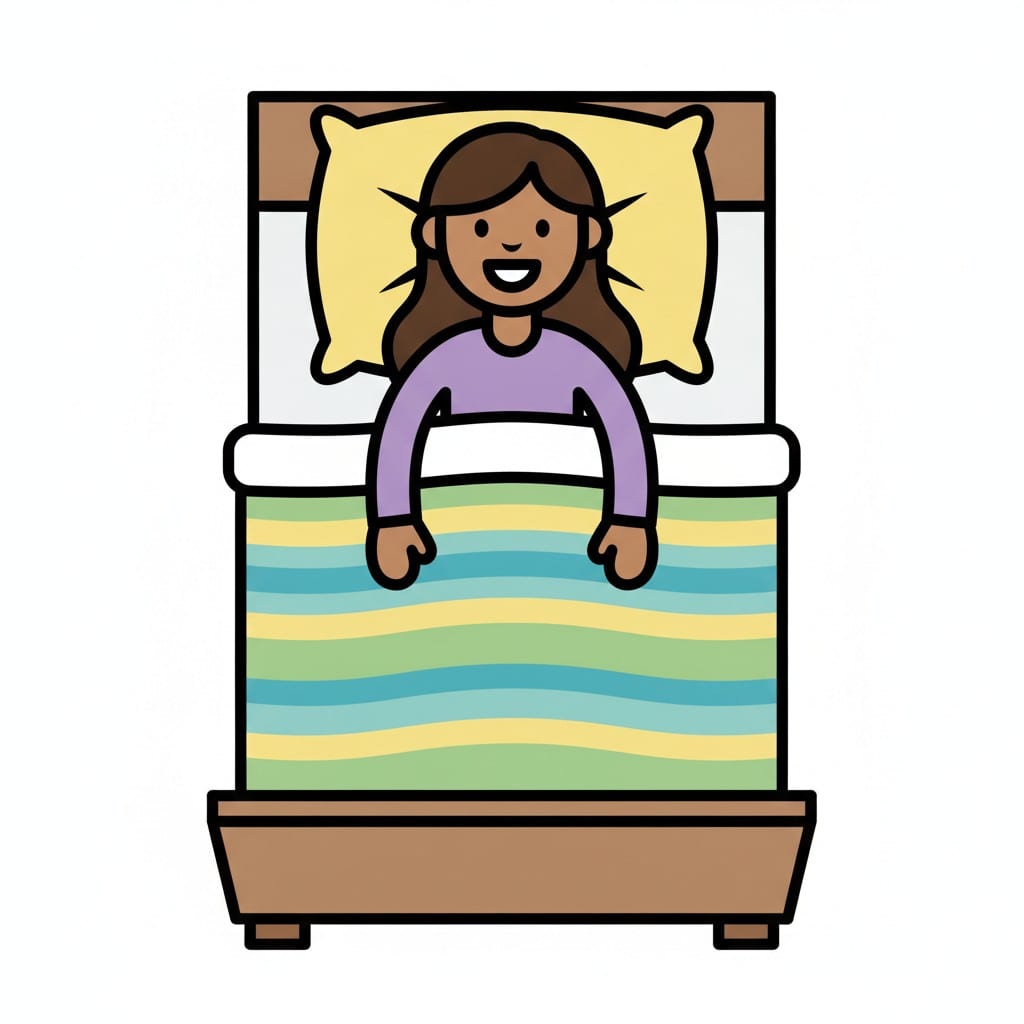 ♀
♀Girl lying in bed
A smiling girl lies in a bed with a yellow pillow and a striped duvet in green, yellow and blue.
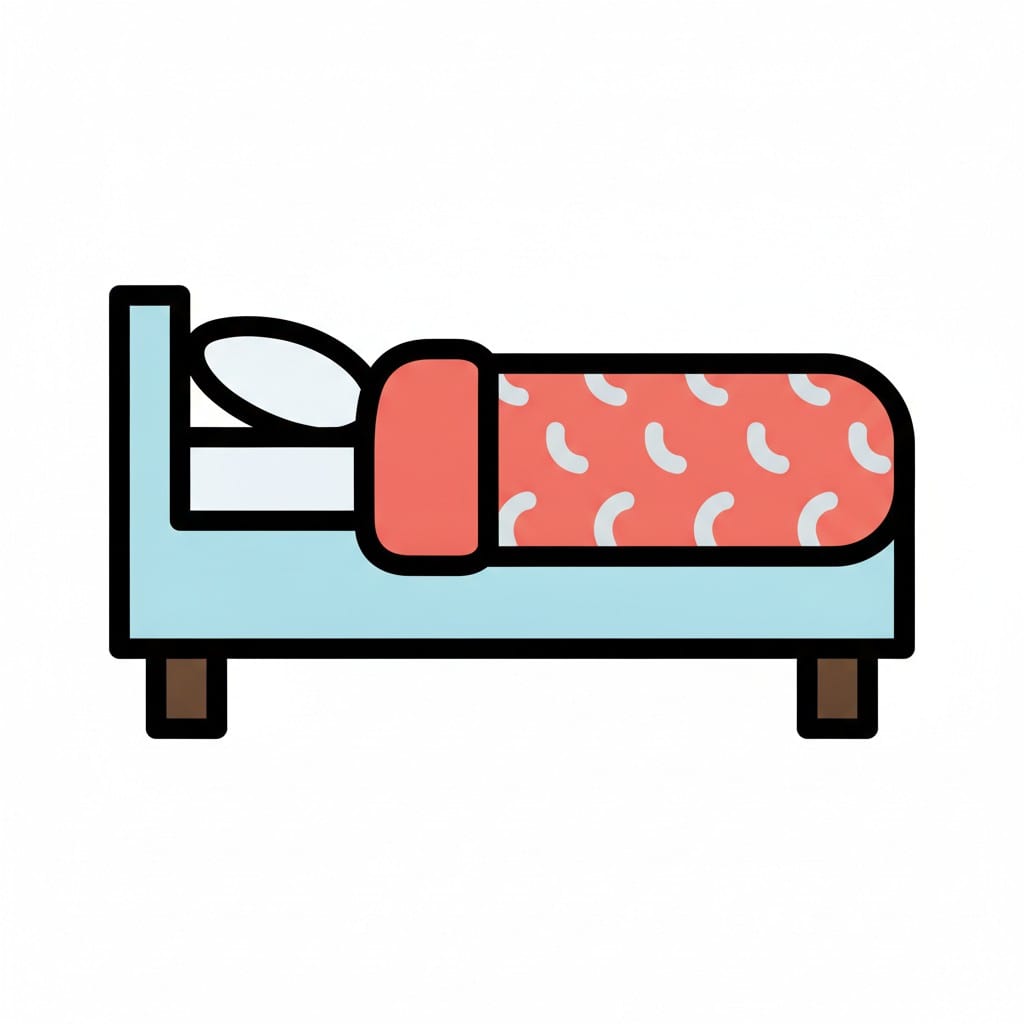
Bed with red duvet
A bed with a white pillow and a red duvet with a white pattern.
About this visual support
Stillness is the hardest part of going to bed. The body lies flat, but the brain still has a list of everything that happened today and a hint of everything that might happen tomorrow. Lying with open eyes can feel endless, especially when the expectation is "sleep now".
The pictures in this set shift the focus from the goal (sleep) to the path: make the bed, dim or off lights, fill the water glass, a book, hug a soft toy, close eyes. None of the steps is falling asleep, which means the child can complete the order without failing at it. Sleep arrives the way it usually does, once the thoughts slow.
Concrete tip: place a slightly boring, repetitive book last in the order, the same book every night. The brain gets something to anchor in without starting new thoughts, which often slows things down faster than a fully silent bed does. To attach these picture steps to an evening routine with a set time, Routined can be tried for 14 days.
Use this image in a schedule
Build your own visual schedule with this image and download it as a print-ready PDF. Completely free.
More similar visual supports
Go to sleep
A girl sleeps with her eyes closed under a purple blanket with a moon and stars,...
Bedtime
A girl with long wavy hair sleeps peacefully in her bed under a white duvet, wea...
Stay In Bed
A girl lies contentedly in bed under the covers with a bedside lamp nearby.
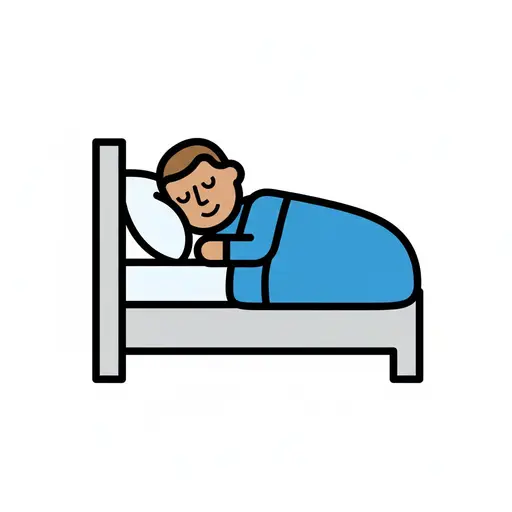
Sleep alone
A person is sleeping peacefully in a bed, covered with a blue blanket.
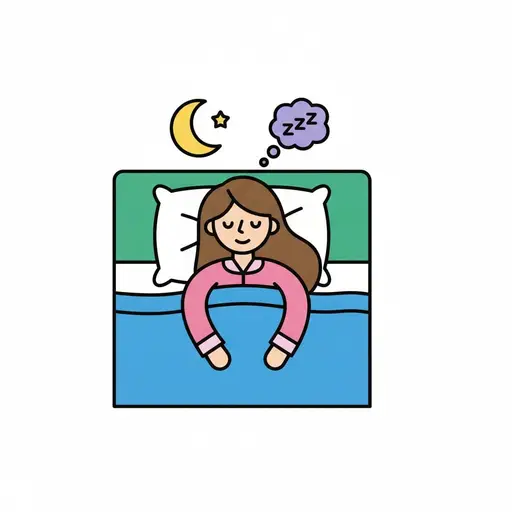
Lights out
A girl sleeps in her bed with a moon, a star and a zzz bubble above her.
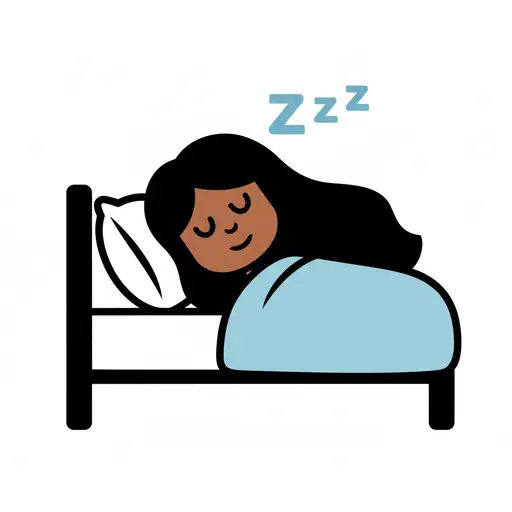
Time to sleep
A person is sleeping in bed under a blue blanket, with symbols indicating sleep.
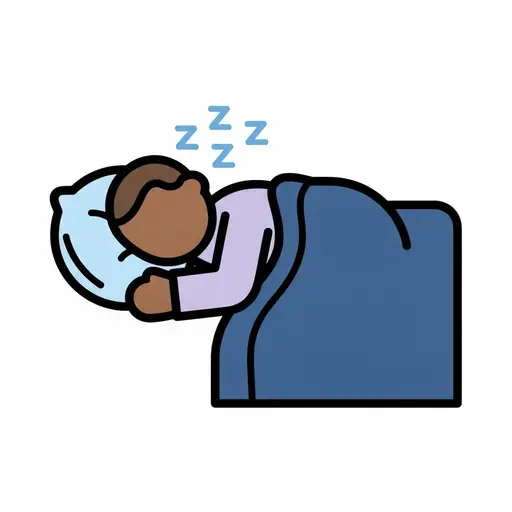
Sleep
A child sleeps with their head on the pillow under a blue blanket, with Z letter...
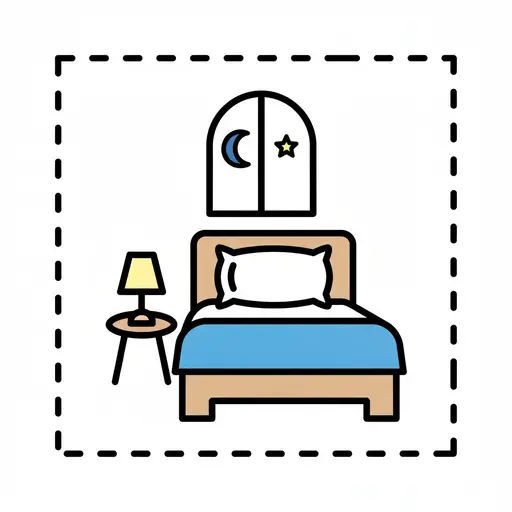
Bedroom
A bedroom scene with a made bed, a bedside table with a lamp, and a window showi...
This visual support in other languages
Take the visual supports with you
In Routined you build schedules from these pictures, add timers and voice instructions, and your child follows the day on their own.


* 14-day free trial, then $2.39 a month or $20.99 a year (US pricing). Cancel anytime.