Bedtime
The clock says sleep, but the brain never got the memo. For many children falling asleep is not about being tired — it is about lowering the volume in their head while the body stays still. The steps below show what that lowering can look like.
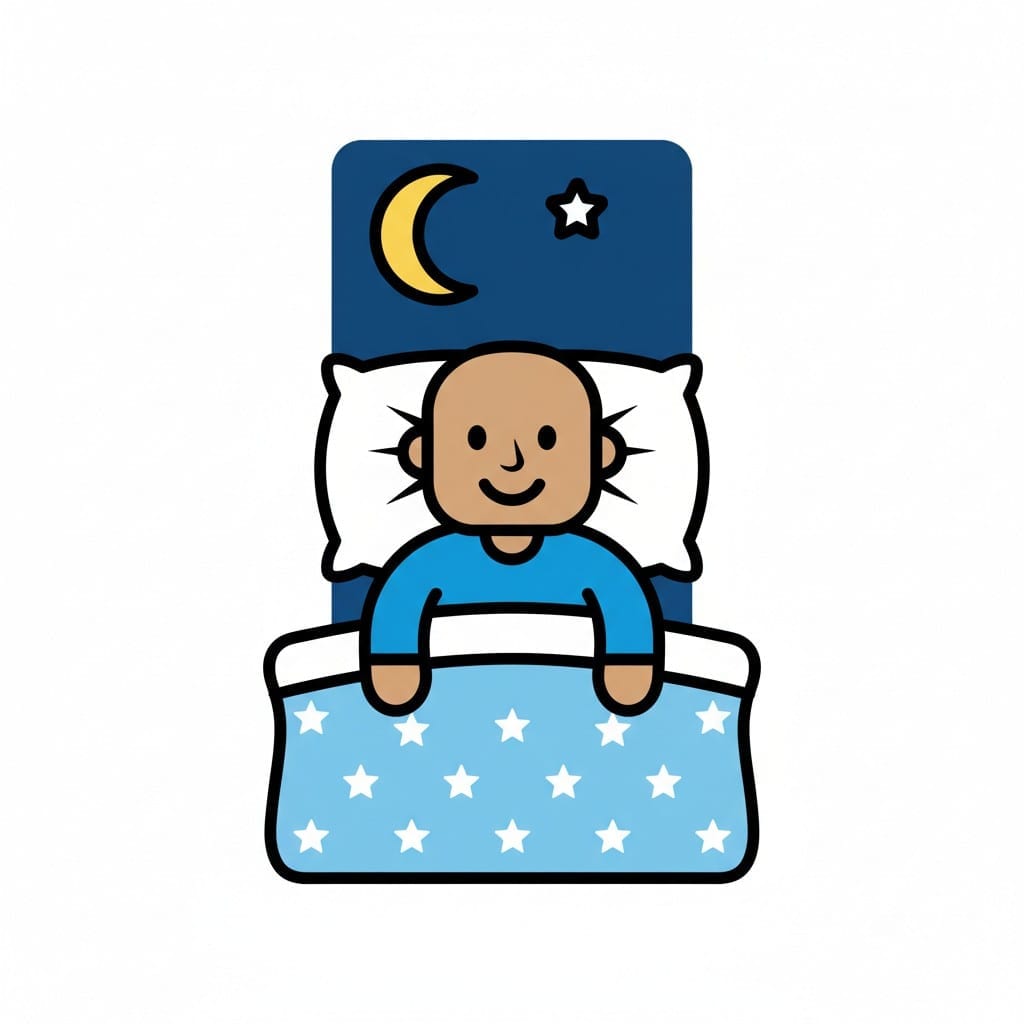 ♂
♂Man in bed
A man is lying in bed under a star-patterned blue blanket with a moon and star visible in the dark window above.
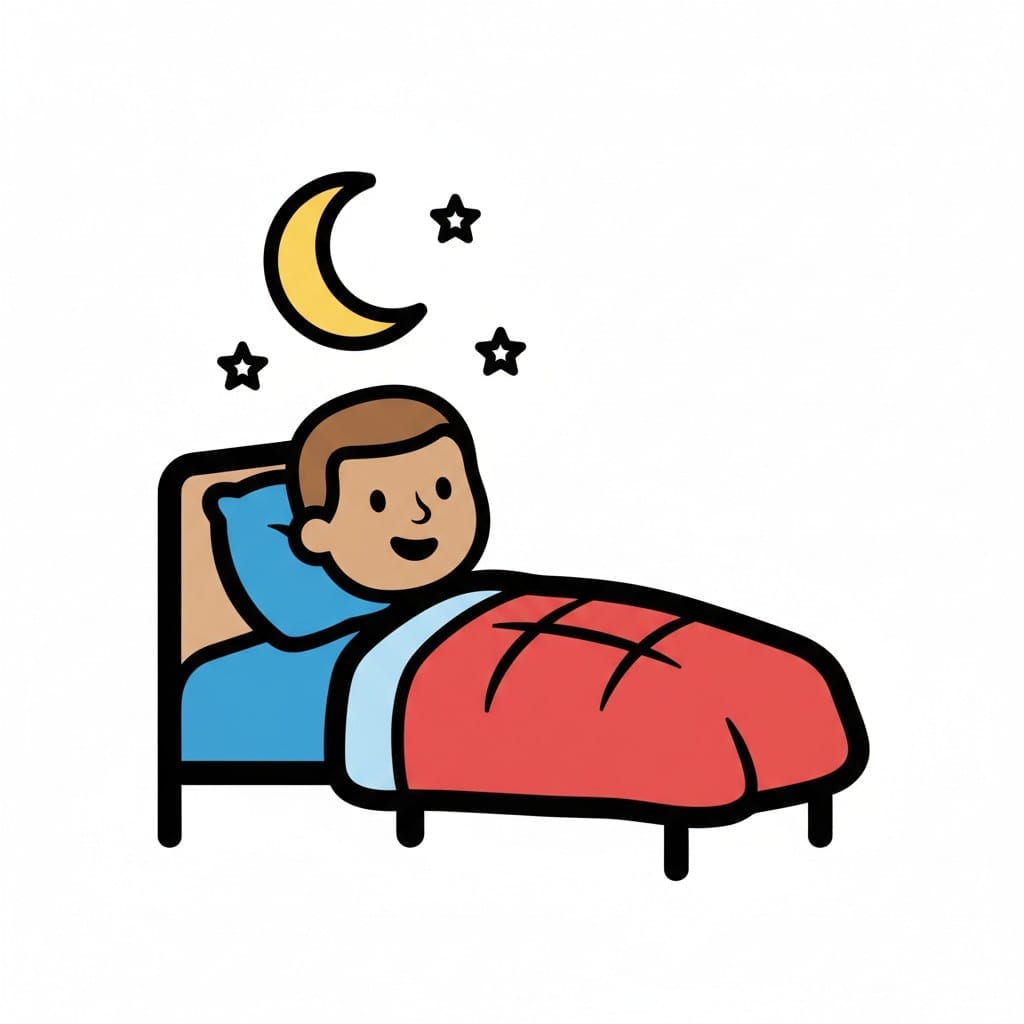 ♂
♂Boy in bed
A boy is lying awake in bed under a red blanket with a moon and stars visible above his head.
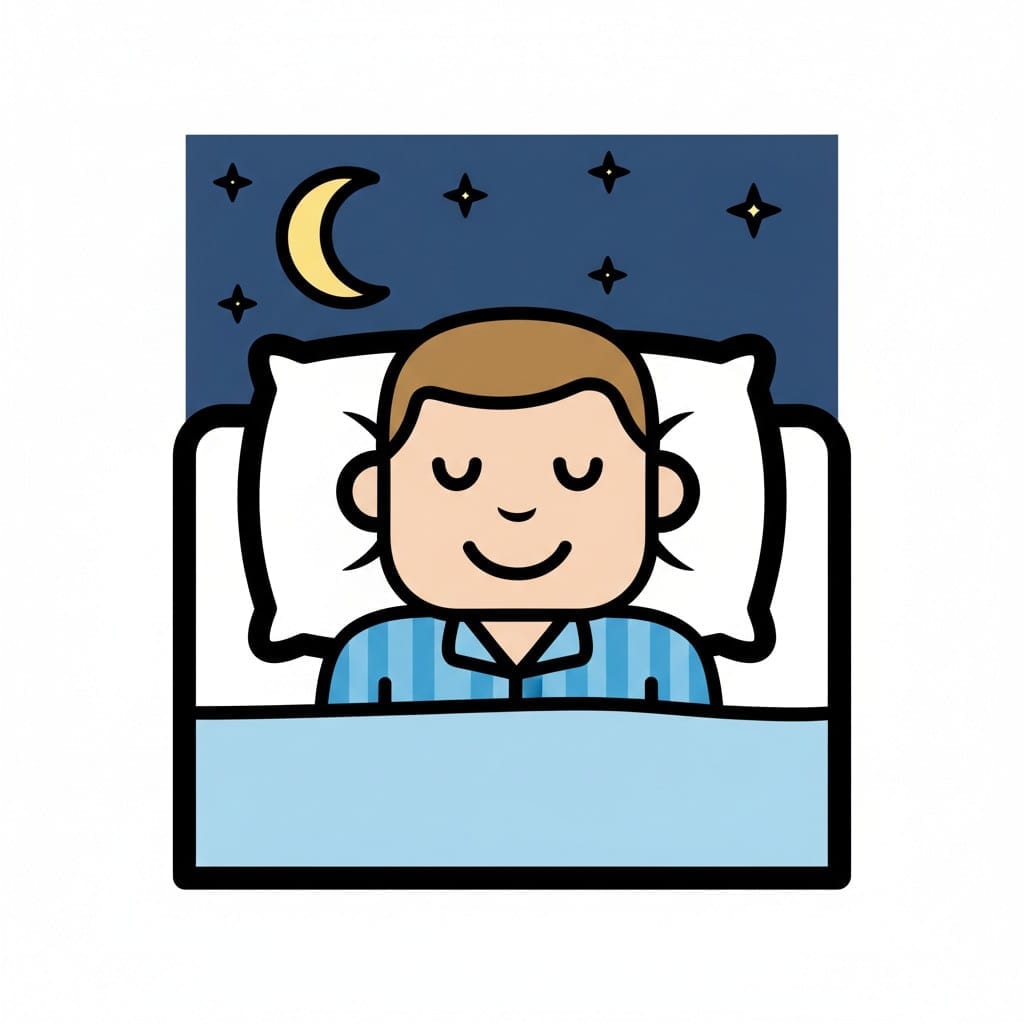 ♂
♂Man sleeping in bed
A man is sleeping peacefully in bed, wearing striped pajamas, with a moon and stars visible in the dark window above.
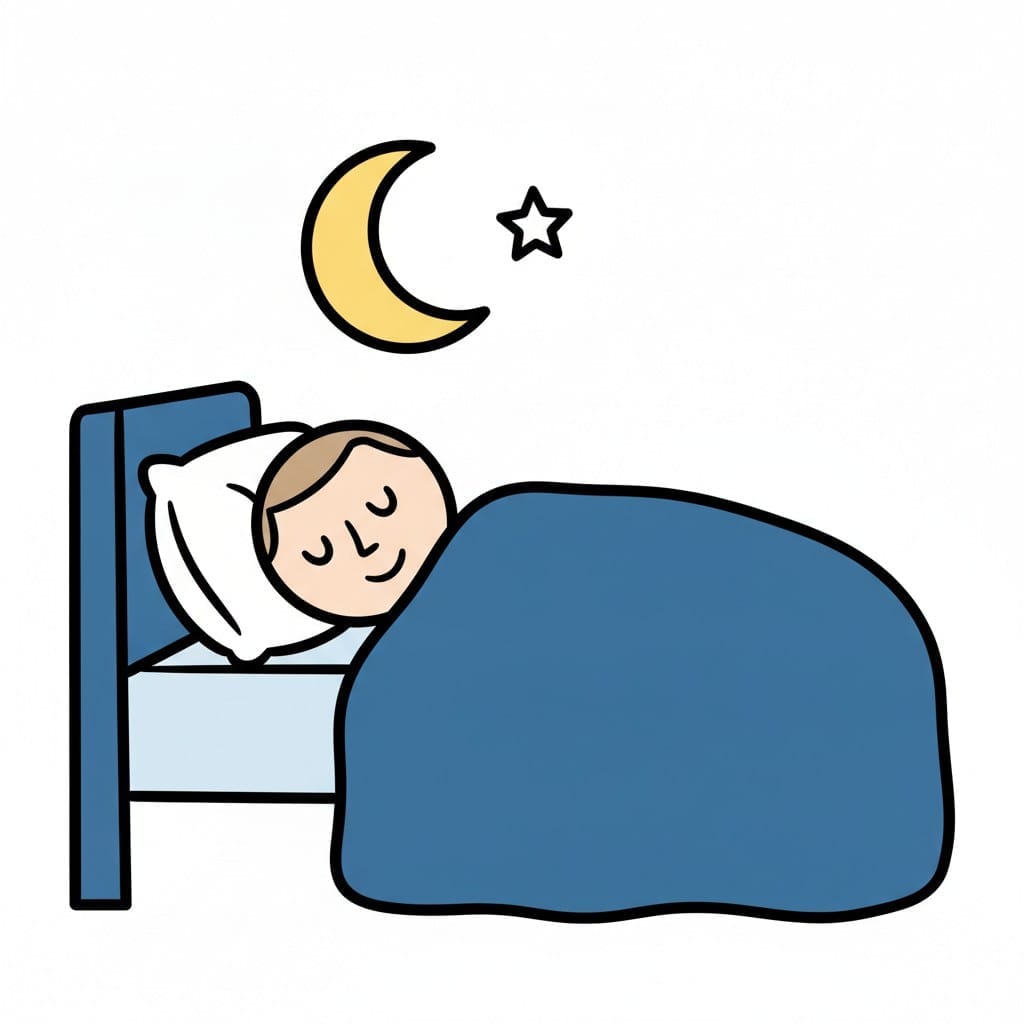 ♂
♂Boy asleep under a blue blanket
A boy sleeps with closed eyes on a white pillow under a blue blanket, while a yellow crescent moon and a star hang above the bed.
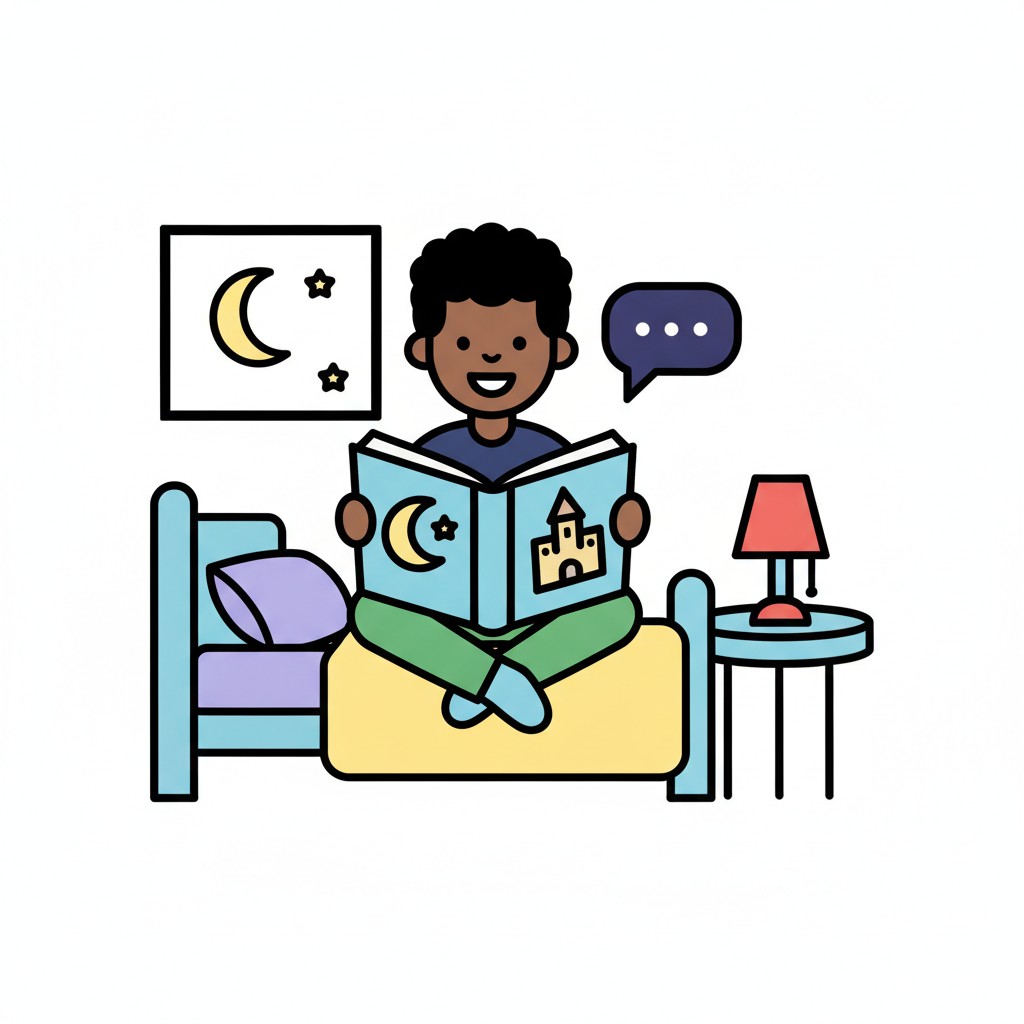 ♂
♂Before bedtime
A boy sits on his bed reading a book with the moon in the window.
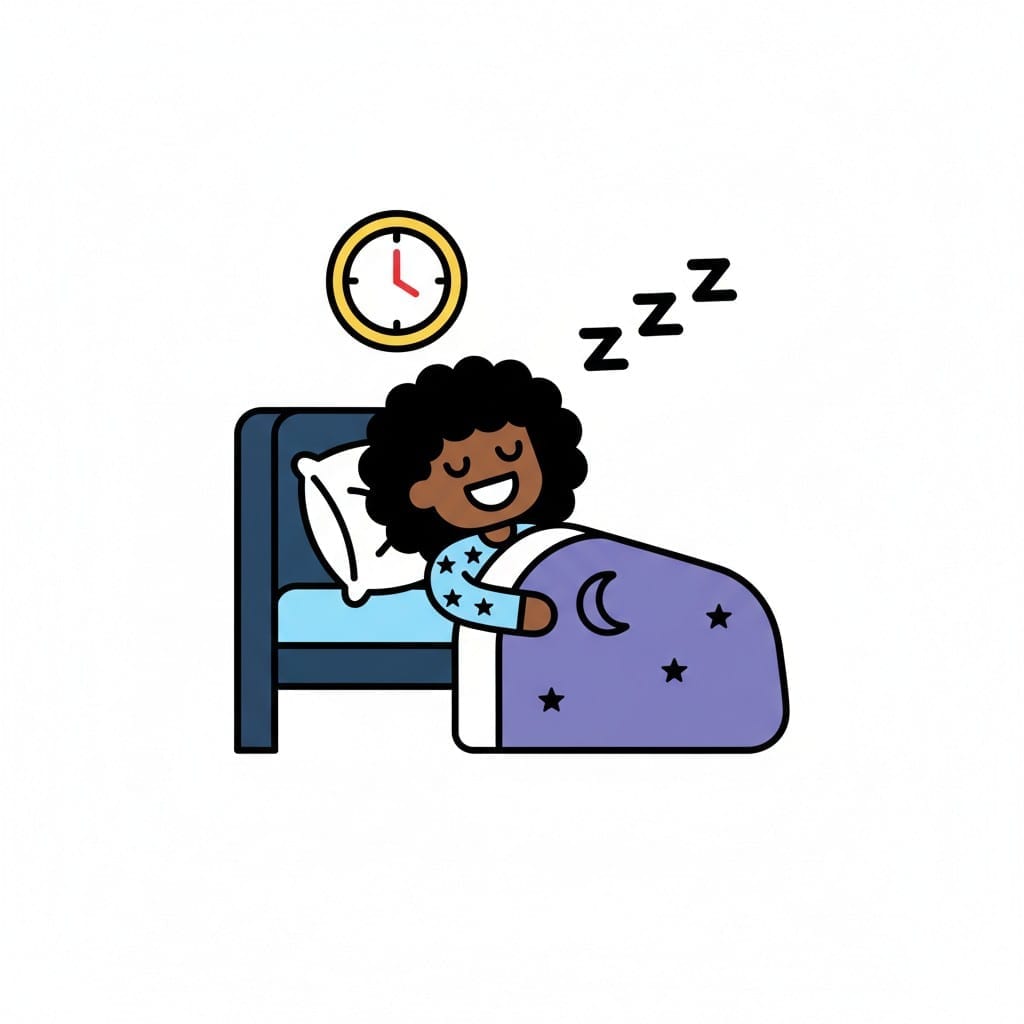 ♀
♀Sleeping
A person is sleeping in bed under a purple blanket, with a clock in the background.
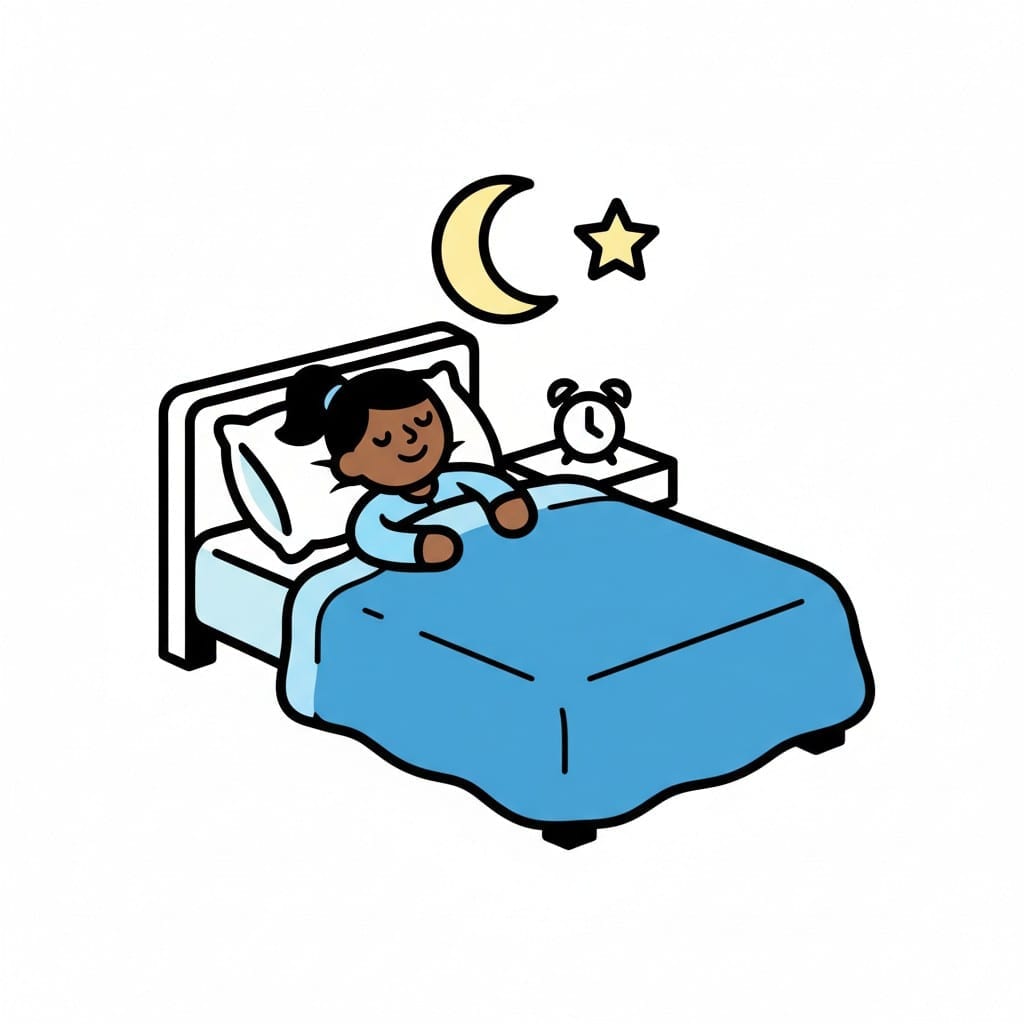 ♀
♀Go to bed
A person is lying in bed under a blue blanket, with an alarm clock next to them.
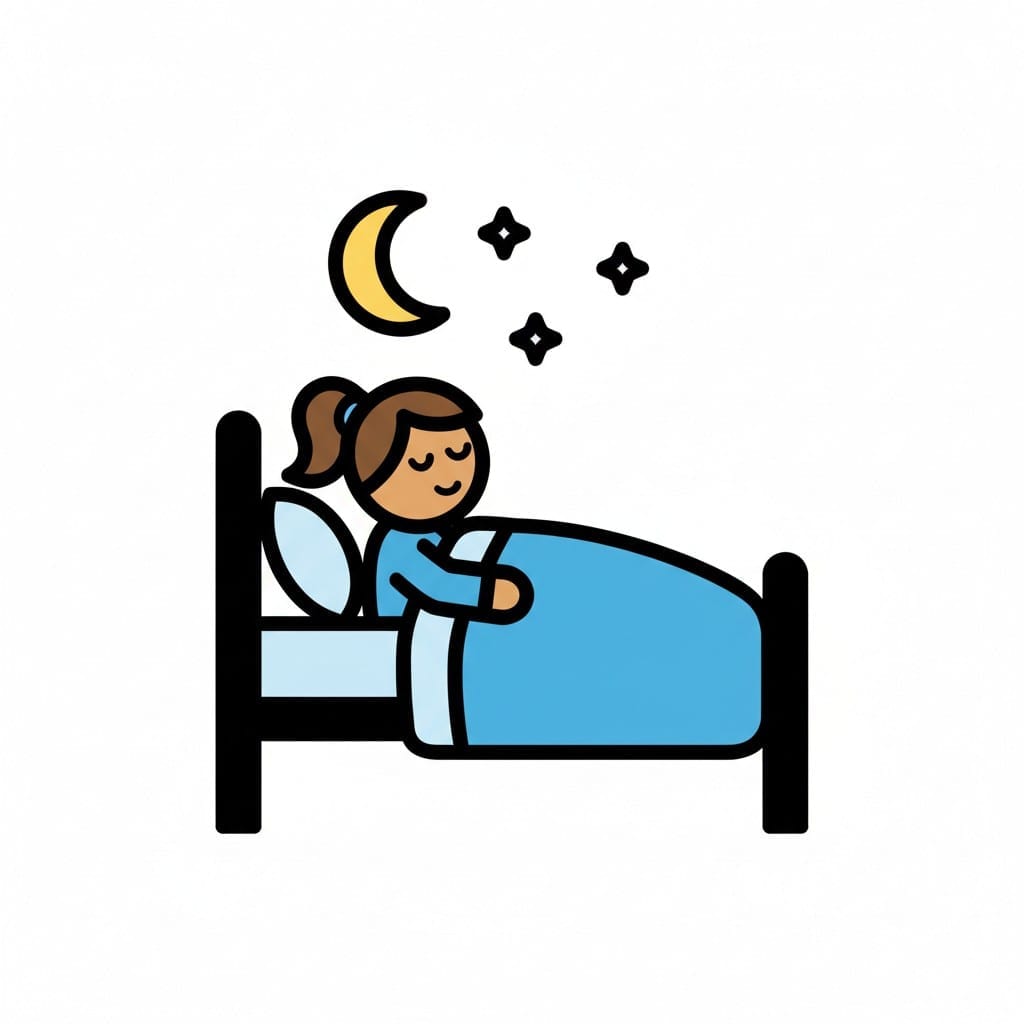 ♀
♀Sleeping
A person is sleeping in bed under a blue blanket, with a moon and stars above them.
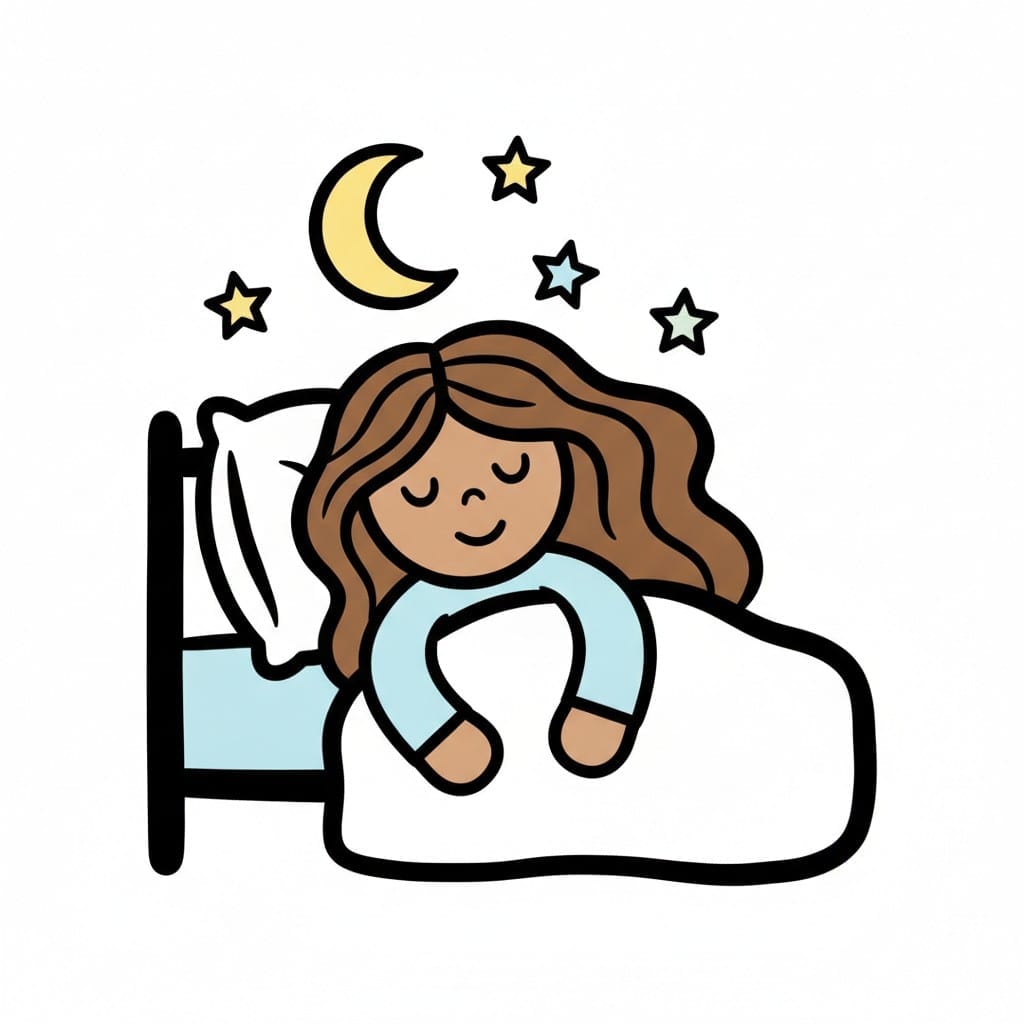 ♀
♀Girl asleep under a white duvet
A girl with long wavy hair sleeps peacefully in her bed under a white duvet, wearing light blue pyjamas, with a crescent moon and stars above her.
About this visual support
Sleep on demand is one of the hardest things we ask children to do. The clock strikes its hour, the body is laid down, and now a system that does not obey orders is supposed to wind itself down anyway. Plenty of children lie there with open eyes and a brain replaying yesterday's games, tomorrow's worries, and everything in between, regardless of how tired they actually are.
Visual support pulls the wind-down out of words and turns it into a concrete chain the child can follow with eyes half closed. A card for deep breathing, one for still hands under the duvet, one for a last thought that can be parked until morning. It is not a magic sleep button, but it is a visible rhythm the body can lean on when the brain refuses to help.
A tip that often works: use the same three cards in the same order every night for at least two weeks before judging the method. The brain needs repetition before the images start to register as sleep signals. The sequence can live in Routined so it is ready each evening without you having to search.
Use this image in a schedule
Build your own visual schedule with this image and download it as a print-ready PDF. Completely free.

More similar visual supports
Sleep
A child sleeps soundly in bed under a striped blanket.
Bedroom
A bedroom scene with a made bed, a bedside table with a lamp, and a window showi...
Crawl into bed
A child crawls under the duvet in bed.
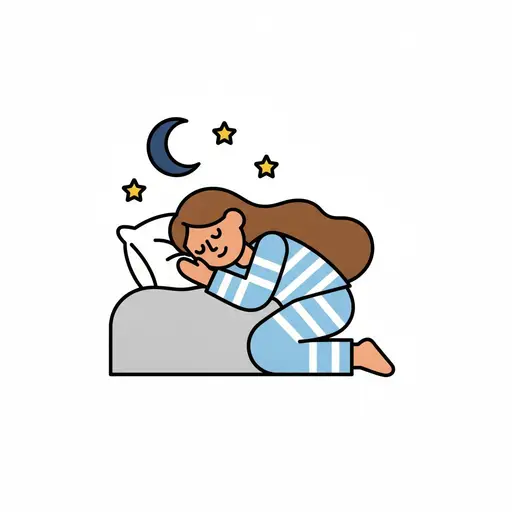
Go to sleep
A girl in blue striped pyjamas lies asleep on a pillow, with a moon and stars ab...
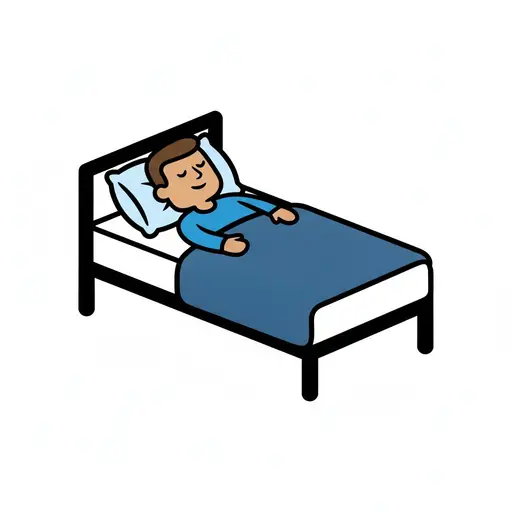
Lie in bed
A boy lies resting in bed under a blue blanket.
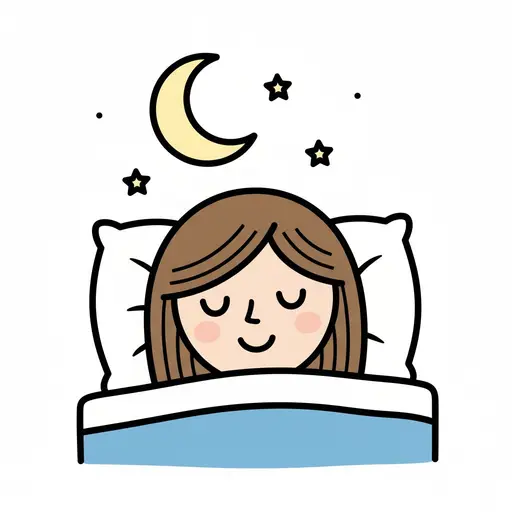
Lights out
Between two white pillows, a girl with long brown hair sleeps peacefully under a...
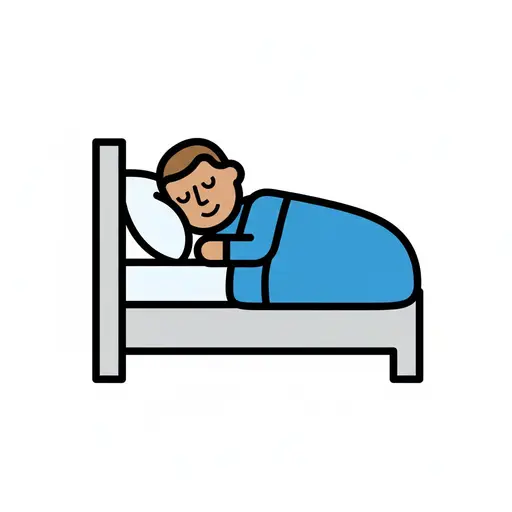
Sleep alone
A person is sleeping peacefully in a bed, covered with a blue blanket.
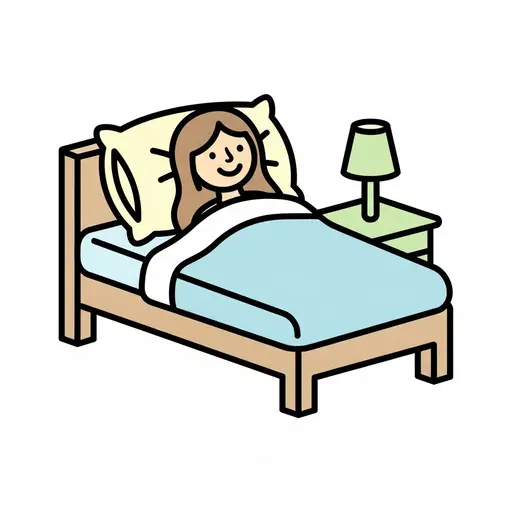
Stay In Bed
A girl lies contentedly in bed under the covers with a bedside lamp nearby.
Take the visual supports with you
In Routined you build schedules from these pictures, add timers and voice instructions, and your child follows the day on their own.


* 14-day free trial, then $2.39 a month or $20.99 a year (US pricing). Cancel anytime.