Bedtime routine
Six things have to happen in the right order, with a child whose battery is almost out. The bedtime routine is executive function on very low energy, which is one of the hardest combinations in a child's day. The visual support below lifts some of the thinking off their shoulders.
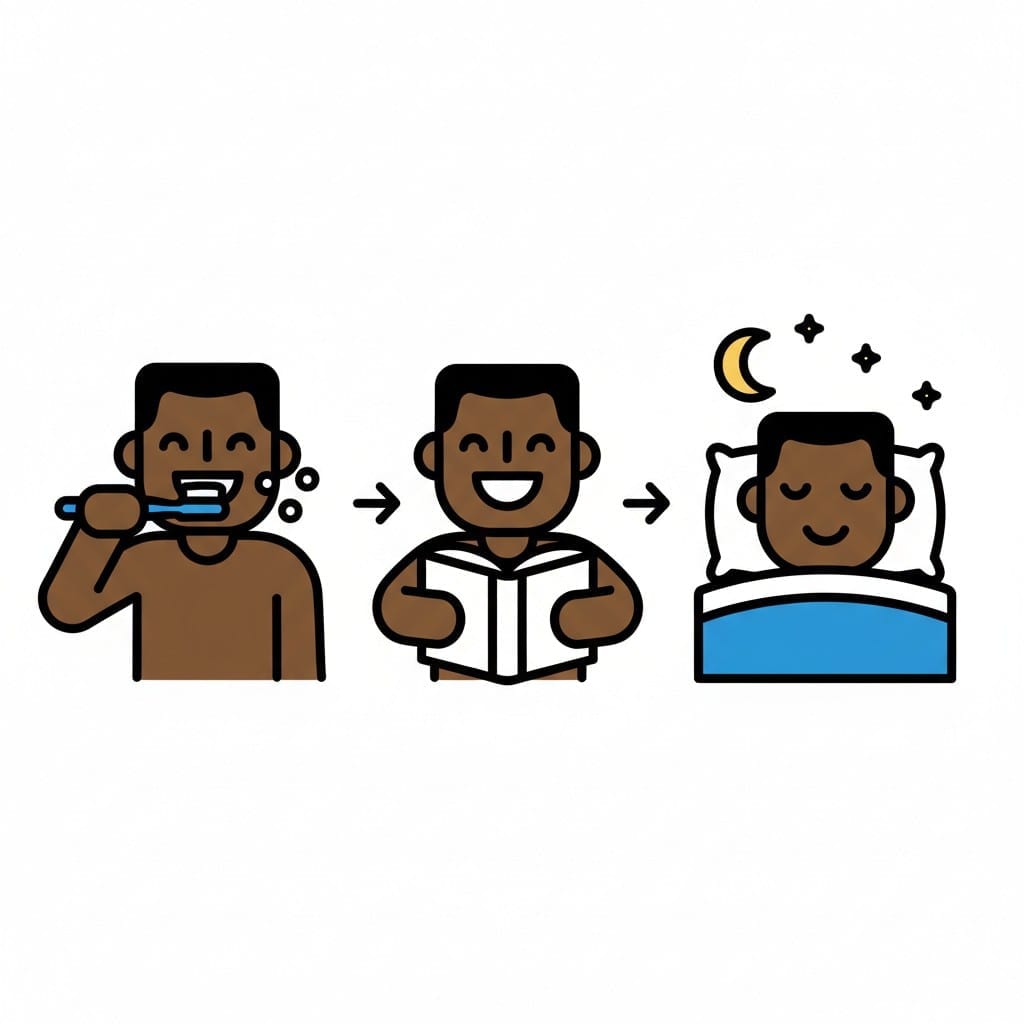 ♂
♂Bedtime Routine
An illustration of a person's bedtime routine. First, the person is brushing their teeth. Next, the person is reading a book. Finally, the person is sleeping peacefully in bed.
 ♂
♂Boy brushing his teeth before bed
A boy in striped pyjama bottoms brushes his teeth with a towel over his arm, and behind him stands a bed with a blue blanket.
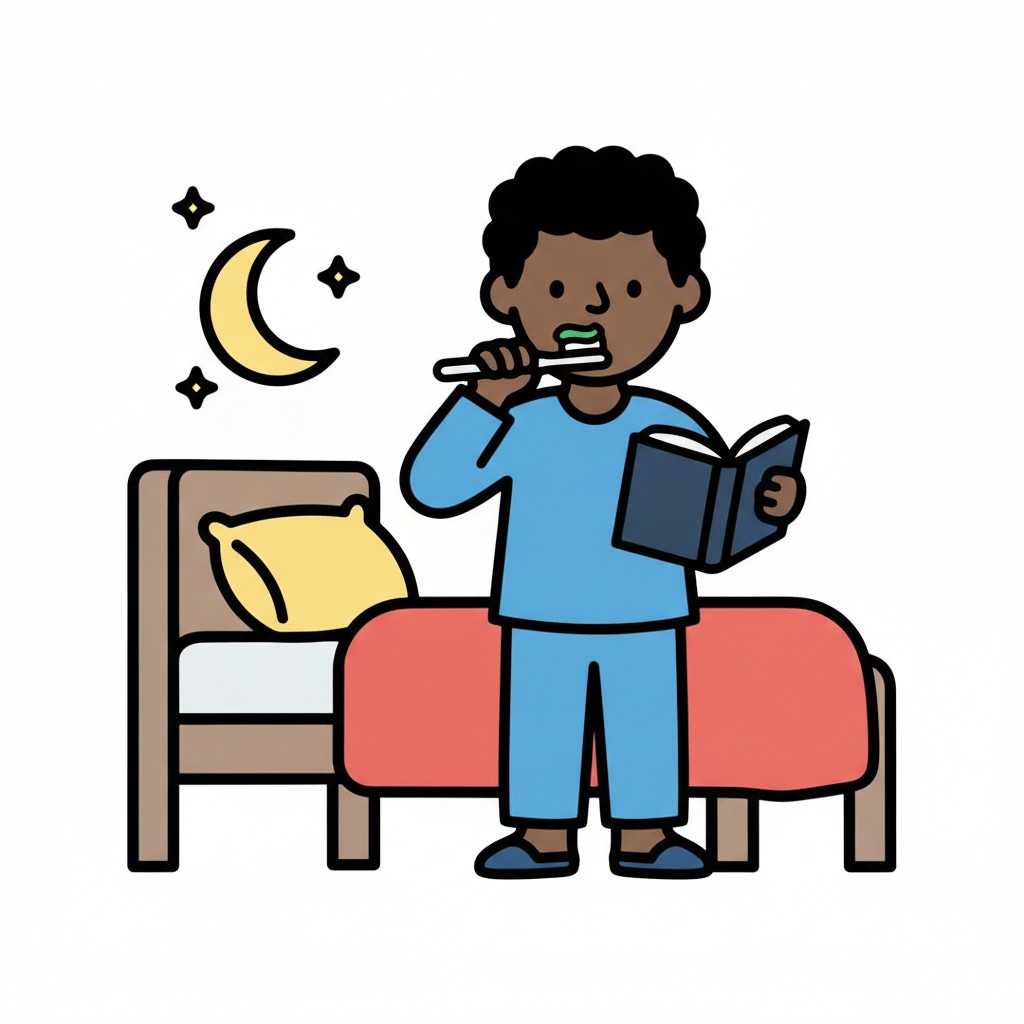 ♂
♂Brush and read before bed
A child in pyjamas brushes their teeth holding a book by the bed, with a moon and stars.
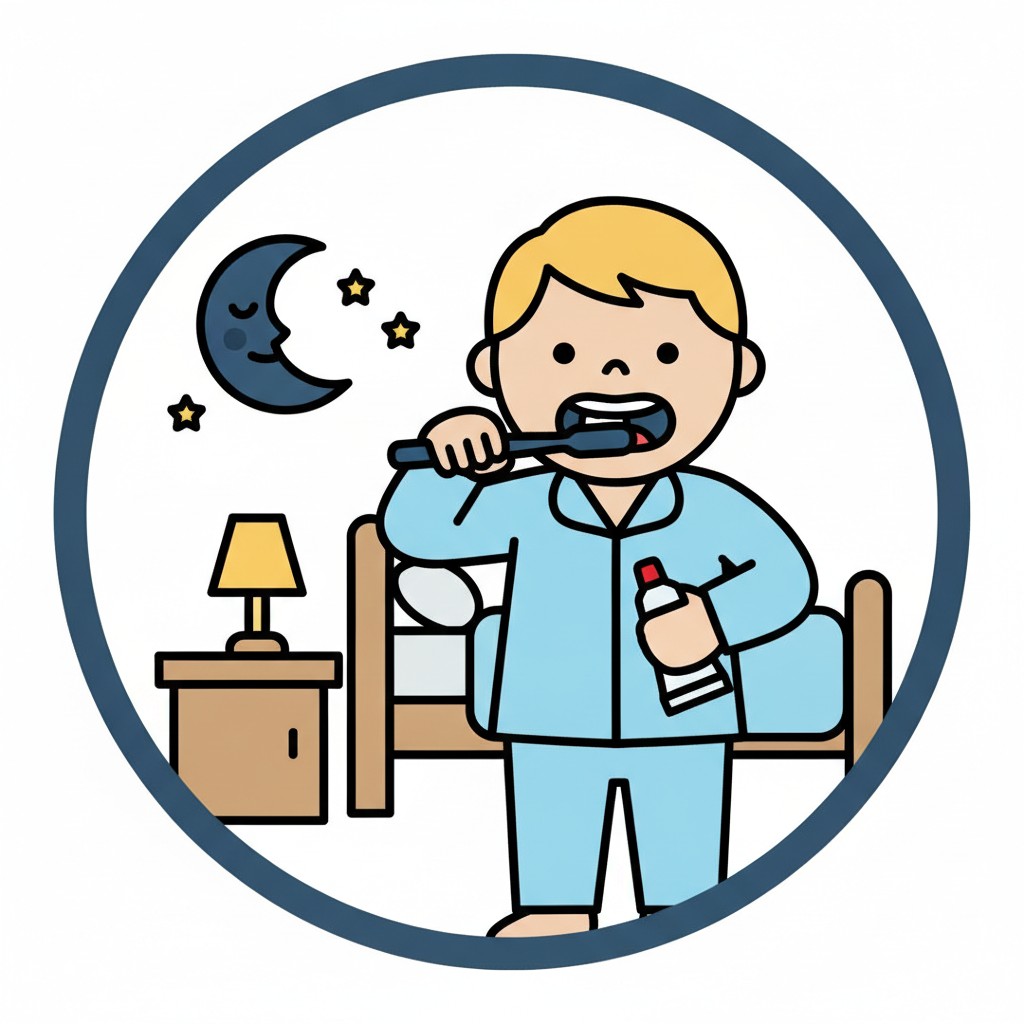 ♂
♂Brush your teeth in the evening
A child in pyjamas brushes their teeth by the bed with a night lamp, a moon and stars.
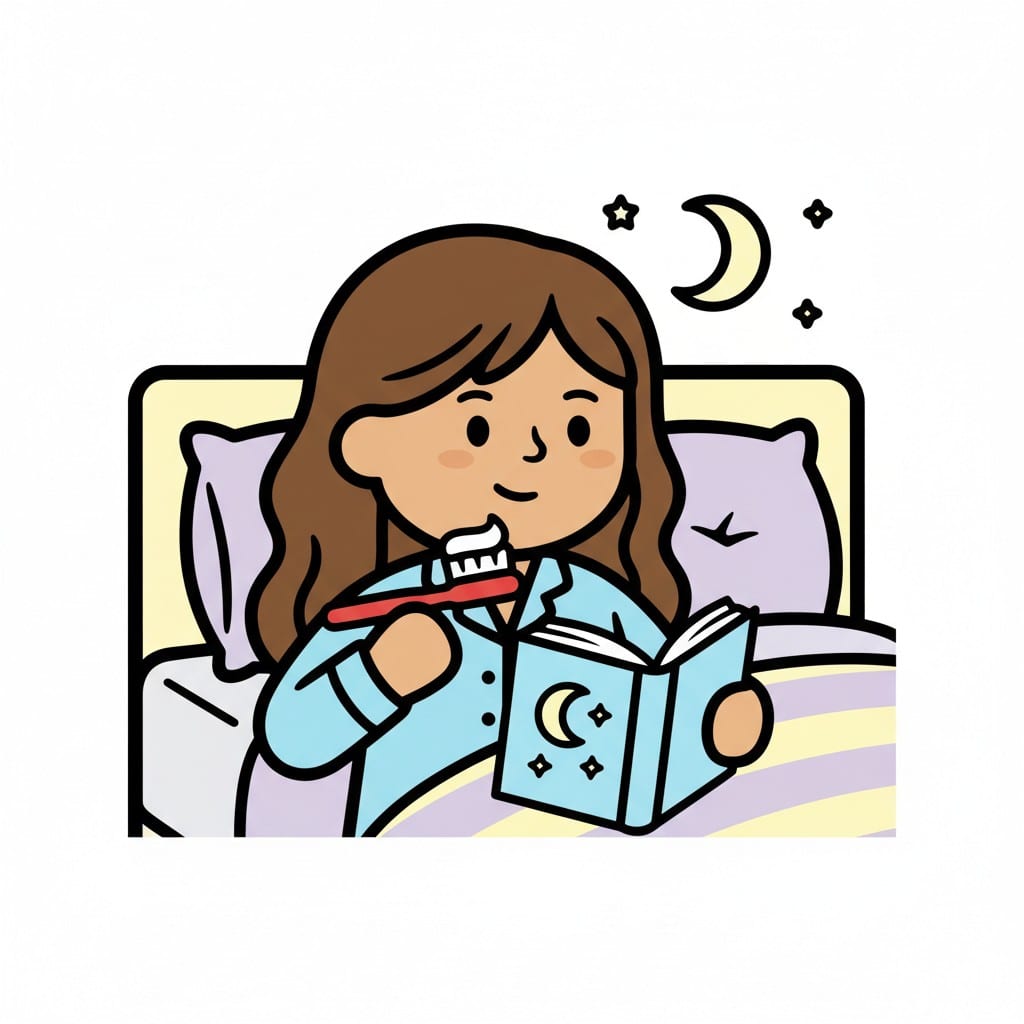 ♀
♀Bedtime routine
A girl in bed is brushing her teeth and reading a book. A moon and stars are visible in the background.
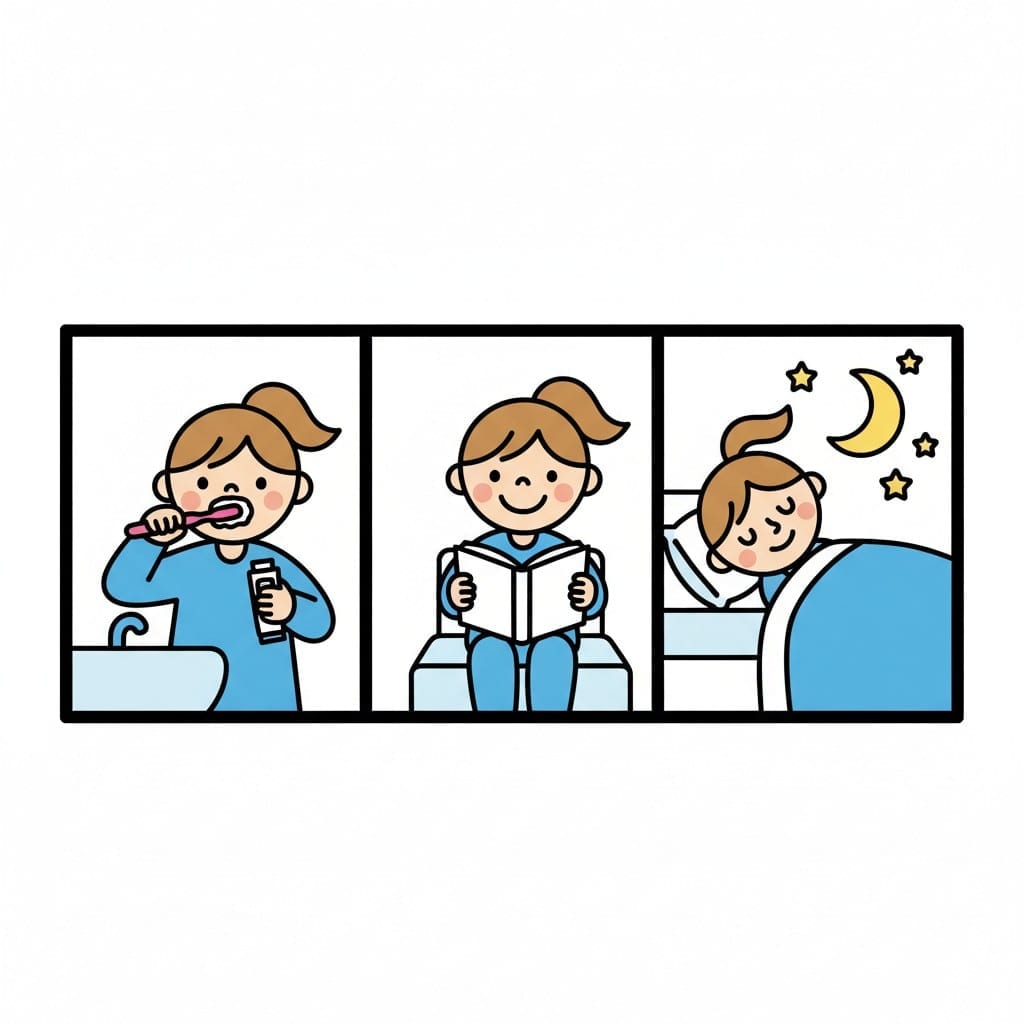 ♀
♀Bedtime routine in three steps
Three panels show a girl's evening routine: first she brushes her teeth at the sink, then she reads a book in bed, and finally she sleeps under a moon and stars.
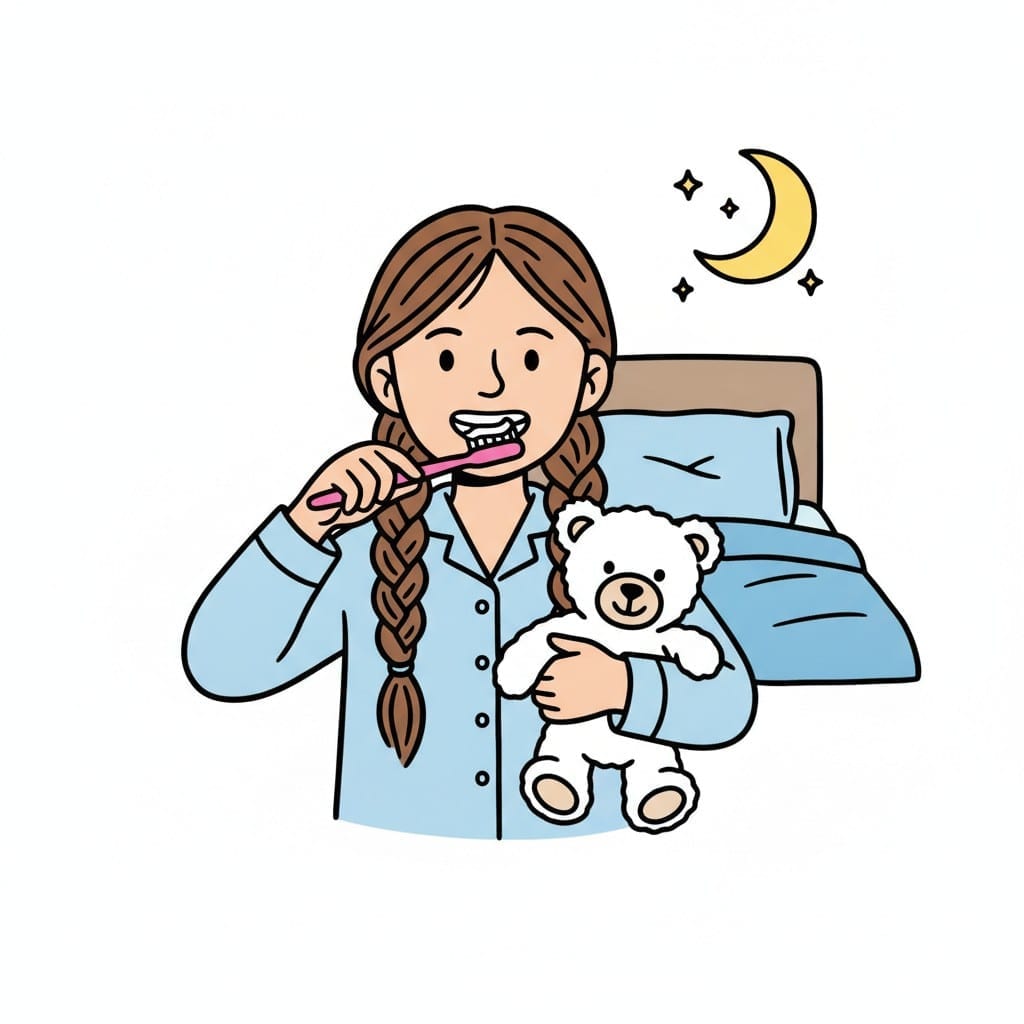 ♀
♀Girl brushing her teeth with a teddy
A girl in light blue pyjamas with a braid brushes her teeth while holding a white teddy bear, with her bed and a crescent moon behind her.
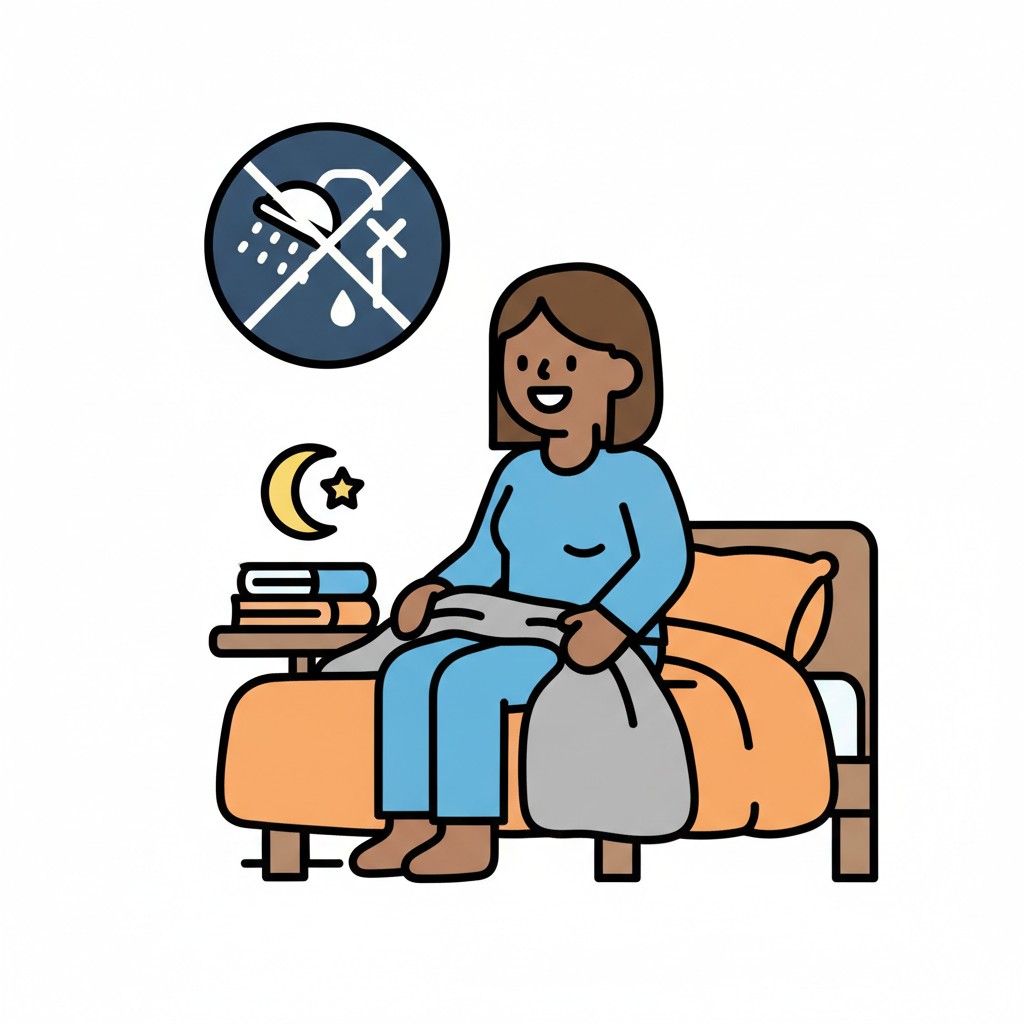 ♀
♀Evening routine without a shower
A person sits on the bed with books beside them, with a symbol showing the shower is skipped and a moon.
About this visual support
The lovely thing about a bedtime routine is that it is predictable. The hard thing is that it has to happen exactly when planning skills are at their most scattered. Toothbrush, pyjamas, toilet, water, story, lights off — the list is short but asks the child to keep track of what comes next while the body is already drifting toward sleep. For many children the routine falls apart not from refusal but from losing the thread.
Visual support takes over the job of being that thread. When each step sits as a card in a visible row, the child does not have to hold the sequence in their head — it lives on the counter or on the door. The remaining energy goes into actually doing the steps instead of being swallowed by the effort of remembering what follows brushing teeth. That is the difference between navigating and just walking.
A specific tip: make the bedtime row shorter than you think you need. Four to five cards is often enough, and a short row feels possible to finish on tired legs. The sequence can be built in Routined so the same cards appear every night without an adult having to set them up again.
Use this image in a schedule
Build your own visual schedule with this image and download it as a print-ready PDF. Completely free.
More similar visual supports
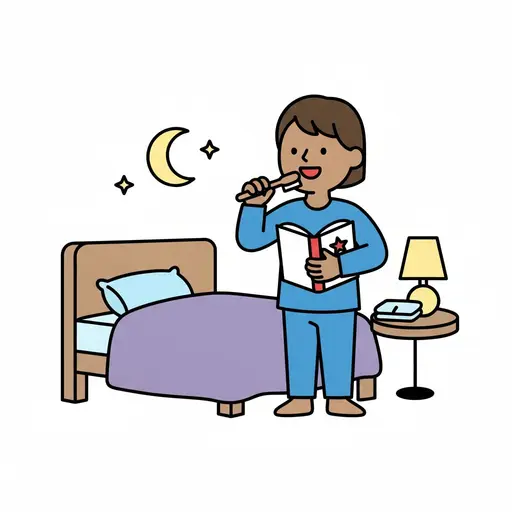
Evening routines
A child in pajamas brushes their teeth and reads a book next to the bed.
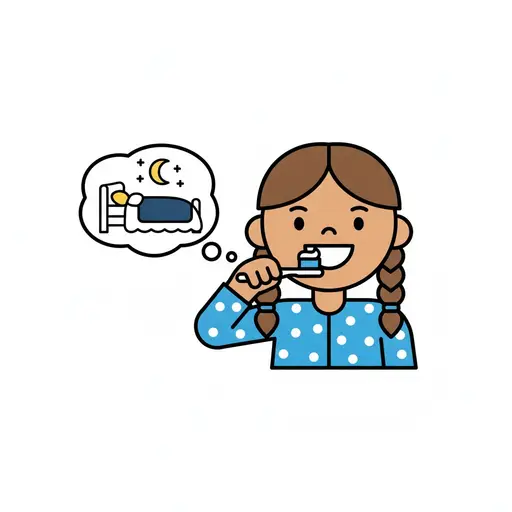
Get ready for bed
A girl in spotted pyjamas brushes her teeth while a thought bubble shows a bed u...
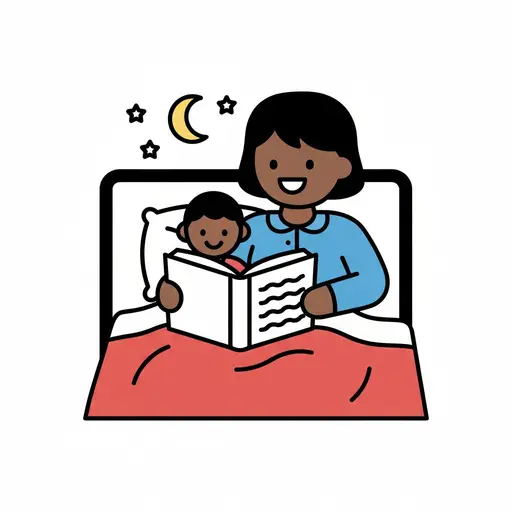
Read bedtime story
A smiling woman in a blue shirt reads from a book together with a child lying un...
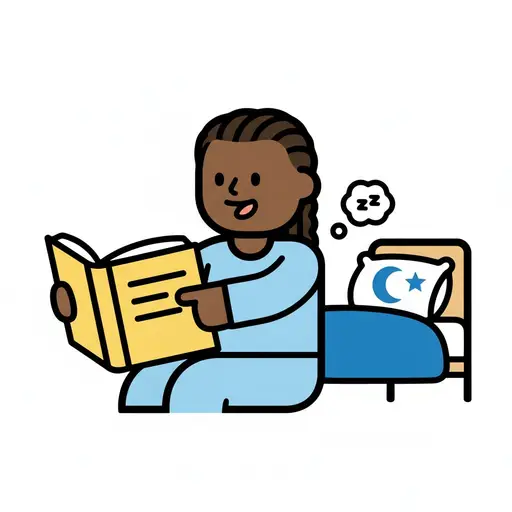
Read a story
A person in pajamas is sitting in bed, reading a book. A thought bubble with 'zz...
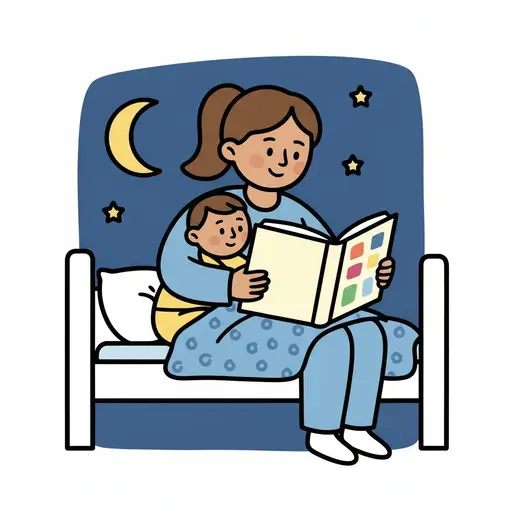
Bedtime Story
A woman with a ponytail sits on the edge of a bed reading a large book while a c...
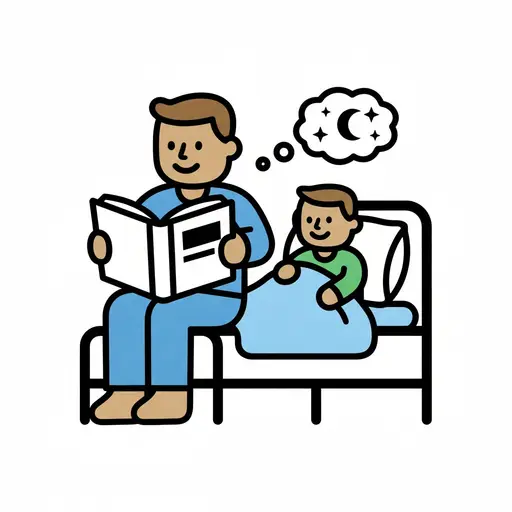
Bedtime stories
An adult reads a bedtime story to a child in bed.
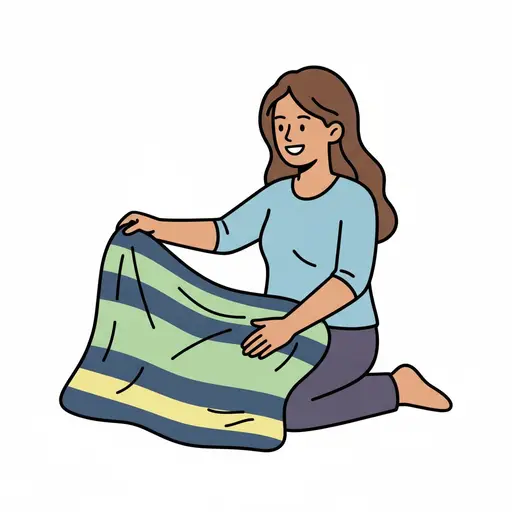
Get blankie
A woman kneels and spreads out a striped blanket.

Summer evening routine
A girl in pyjamas holds a toothbrush and a book while a sun and a moon appear be...
This visual support in other languages
Take the visual supports with you
In Routined you build schedules from these pictures, add timers and voice instructions, and your child follows the day on their own.


* 14-day free trial, then $2.39 a month or $20.99 a year (US pricing). Cancel anytime.