Get pajamas
The pajamas say something your child does not want to hear: the day is over. The visual support below treats getting them out as its own clear step, so the shift does not collide head-on with the play still in progress.
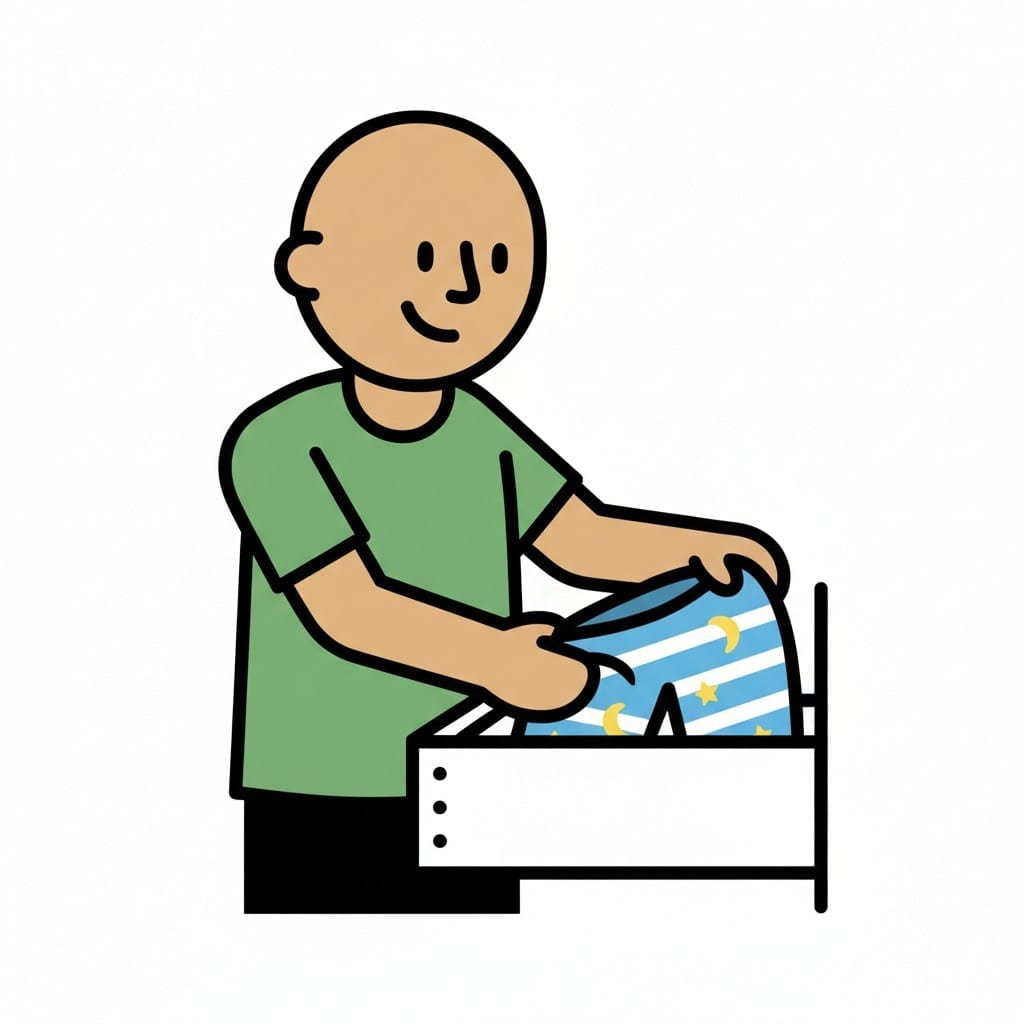 ♂
♂Get pajamas
A person takes pajamas with moon and star patterns from a dresser drawer.
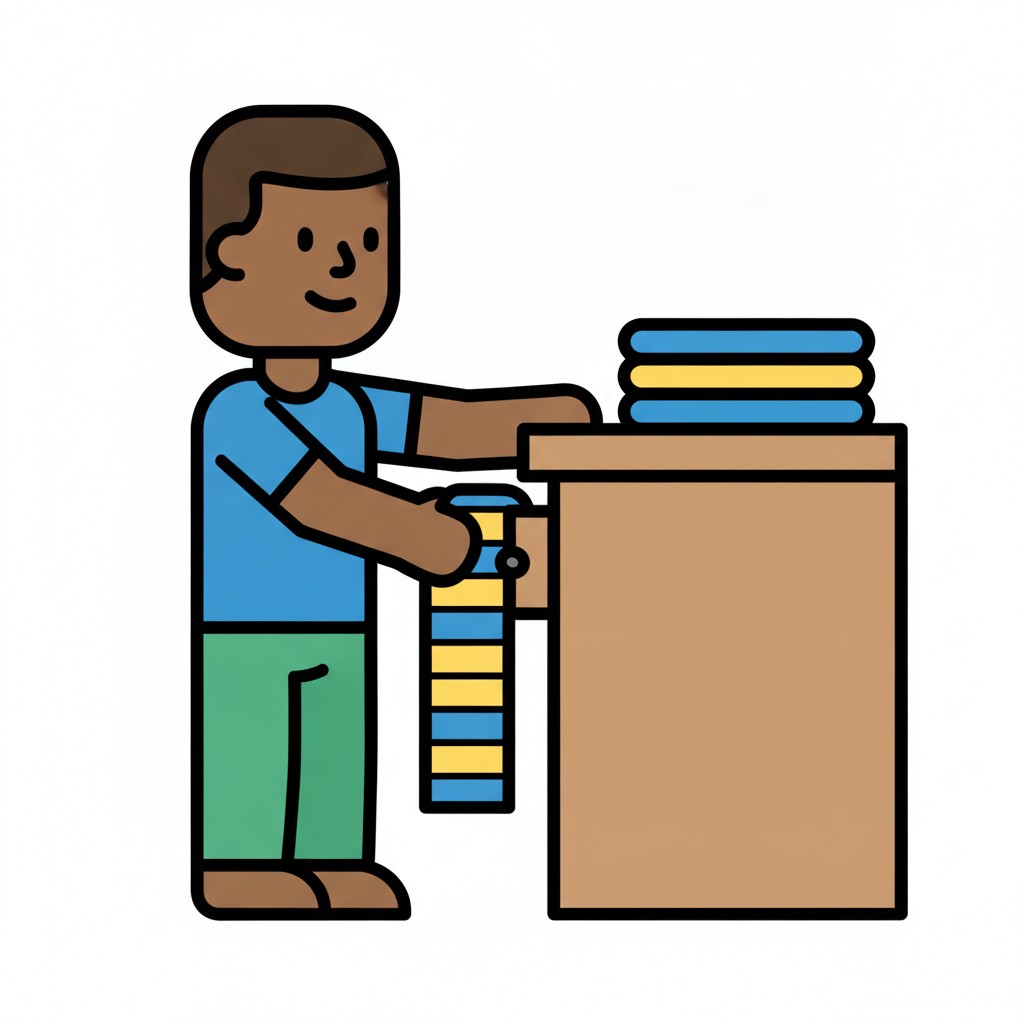 ♂
♂Fetch the pyjamas
A person takes striped pyjamas out of a drawer under a dresser with folded clothes on top.
About this visual support
Resistance to the pajamas is rarely about the garment itself — it is about what the garment means. The evening has often only just turned calm, the lamp is warm, the play is flowing, and right then comes a break to fetch something that signals the end. The brain reads the step as a threat to what is finally working.
A picture of the pajamas, placed as its own beat in the sequence, gives the step a softer landing. Your child sees it approaching and is not ambushed mid-build or mid-page. The heads-up is half the work — the pajamas themselves are rarely the real fight.
One concrete tip: keep the pajamas in a set drawer or basket, so fetching them is the same motion every night. It becomes a short, almost mechanical task instead of a decision. In the Routined app you can place the pajamas step earlier in the evening than actual bedtime, letting the transition happen without pressure once it really is time to sleep.
Use this image in a schedule
Build your own visual schedule with this image and download it as a print-ready PDF. Completely free.

More similar visual supports
Dress for bed
A smiling boy holds up his blue and white striped pyjama top, ready to put it on...
Get Your Pajamas On
A girl pulls a blue star pajama top over her head.
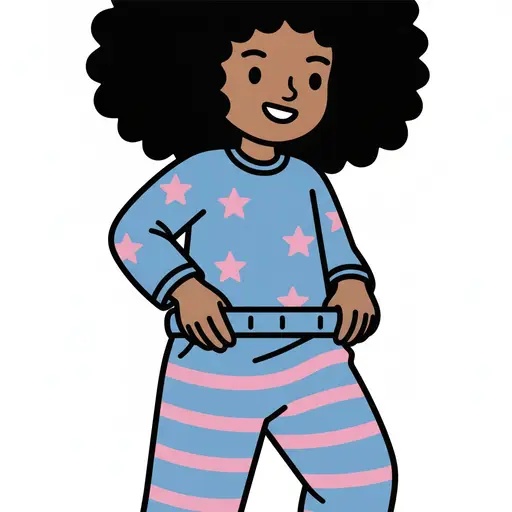
Put On Your Pajamas
A girl wears blue star pajamas with striped pants.
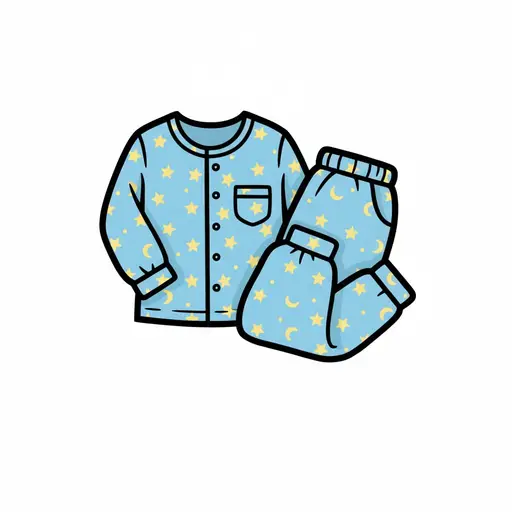
Change into night clothes
A folded light blue pajama set with yellow stars and crescent moons.
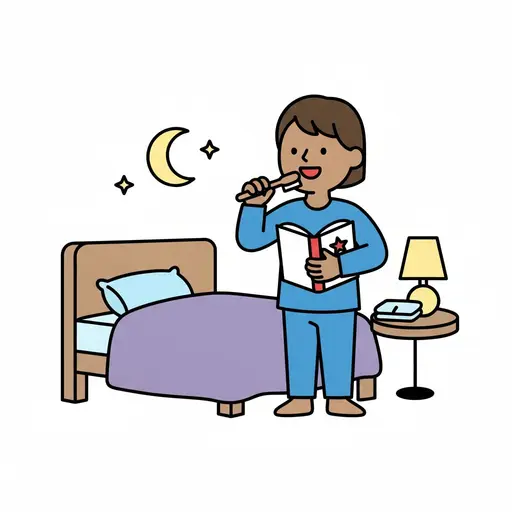
Evening routines
A child in pajamas brushes their teeth and reads a book next to the bed.
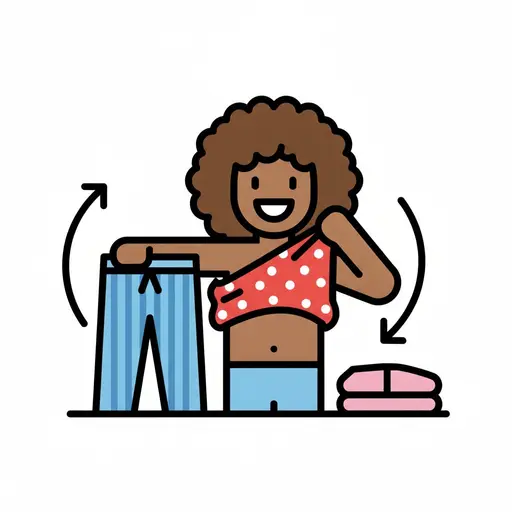
Change into pyjamas
A child pulls off a top next to a pair of pyjama trousers and a pile of clothes.
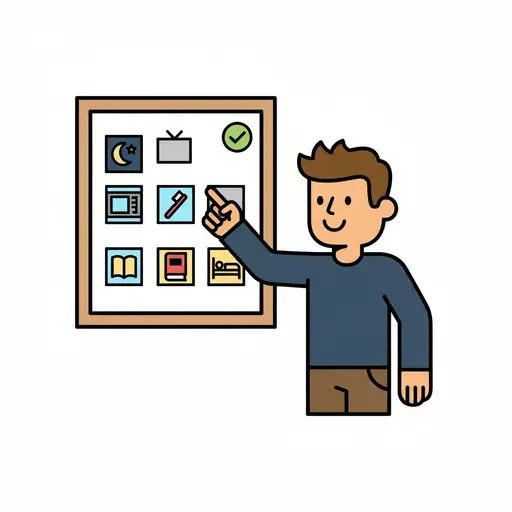
Check evening routine board
A cartoon boy points at an evening routine board with icons representing watchin...
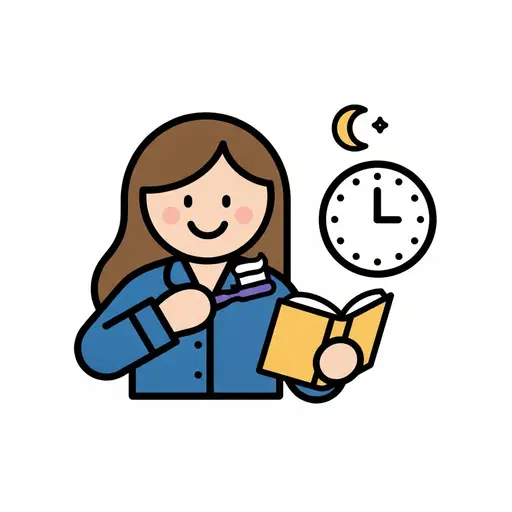
Evening preparation
A child holds a toothbrush and a book, with a clock and moon beside them.
Take the visual supports with you
In Routined you build schedules from these pictures, add timers and voice instructions, and your child follows the day on their own.


* 14-day free trial, then $2.39 a month or $20.99 a year (US pricing). Cancel anytime.