Go to bed
The hard part of bedtime is rarely the bed itself, but asking body and brain to wind down on cue after an evening that may have been fun. The steps below give the wind-down a visible direction.
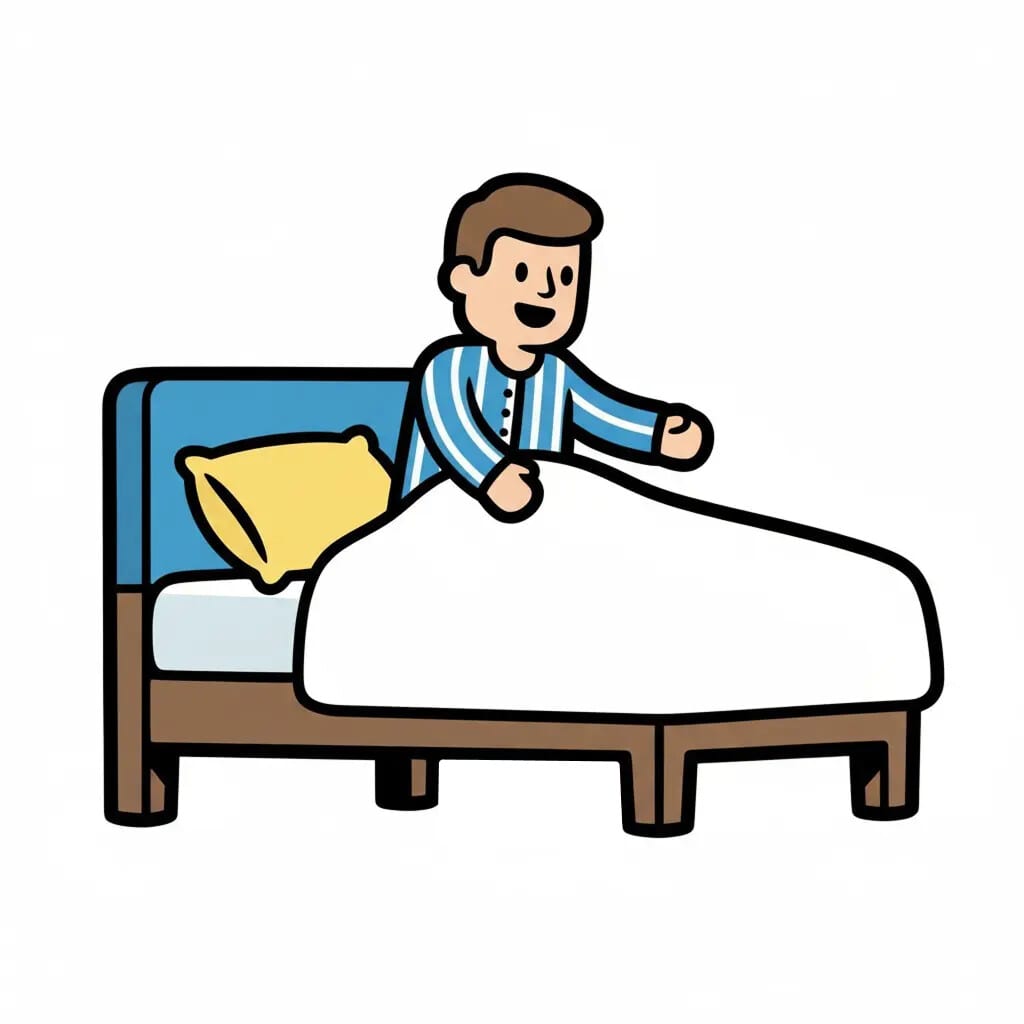 ♂
♂Pull up covers
A boy in pajamas pulling up covers on a bed.
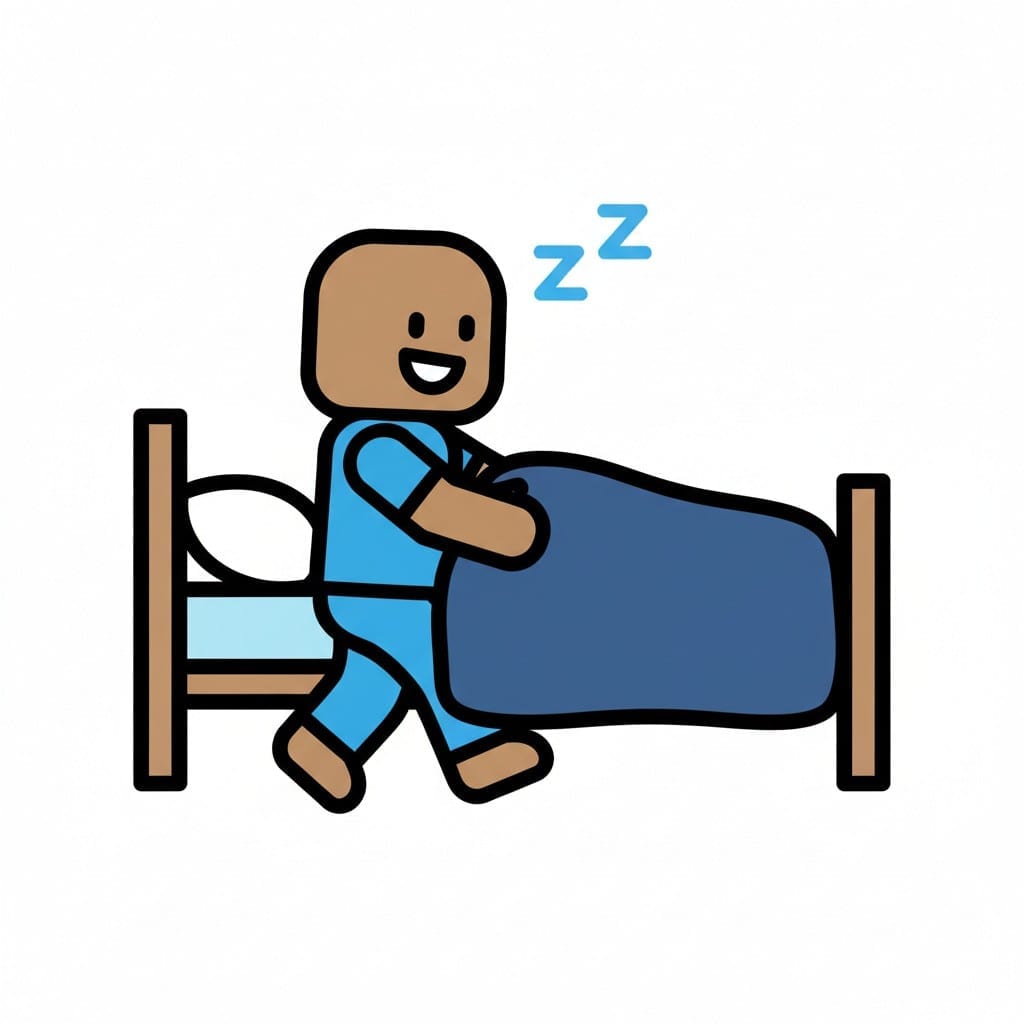 ♂
♂Go to bed
A boy in pajamas walking towards a bed with sleep symbols above his head.
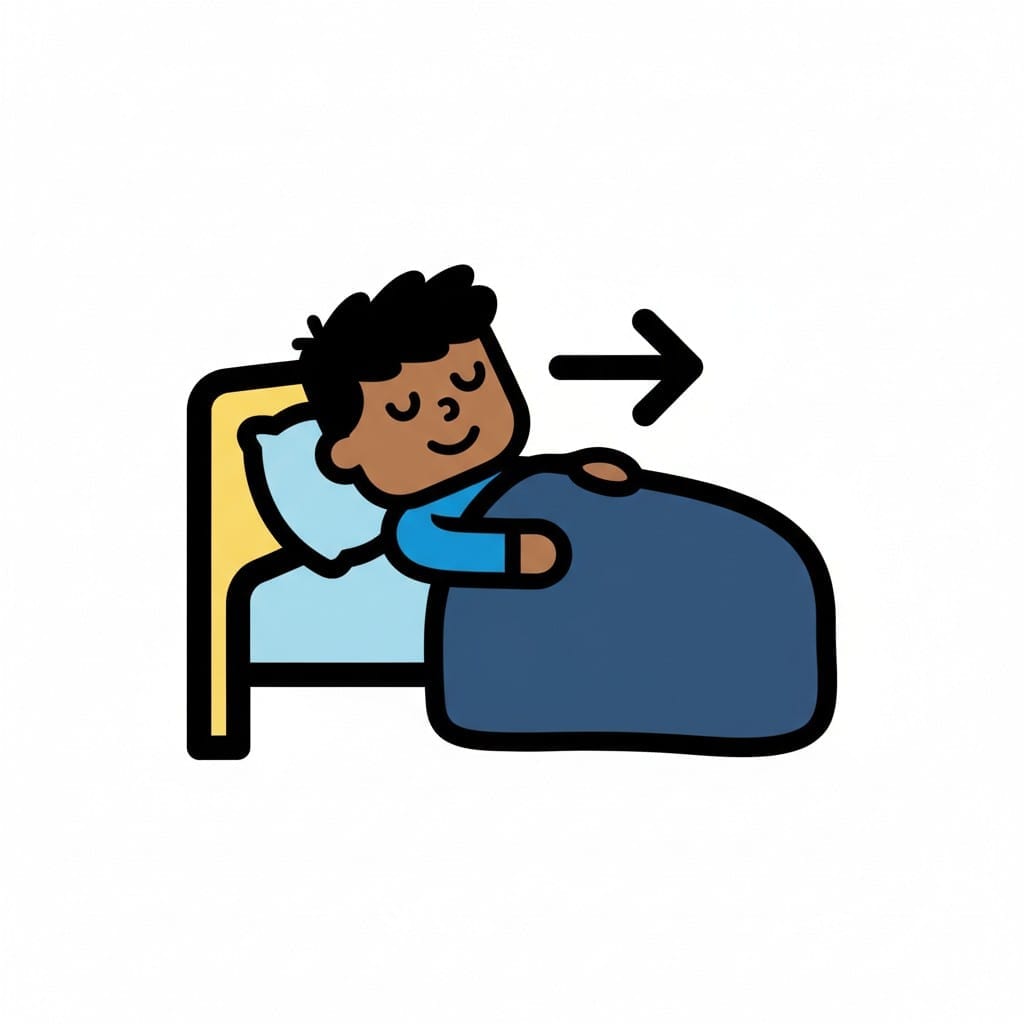 ♂
♂Lie in bed
A boy is lying in bed with his eyes closed, covered by a blanket, with an arrow pointing right.
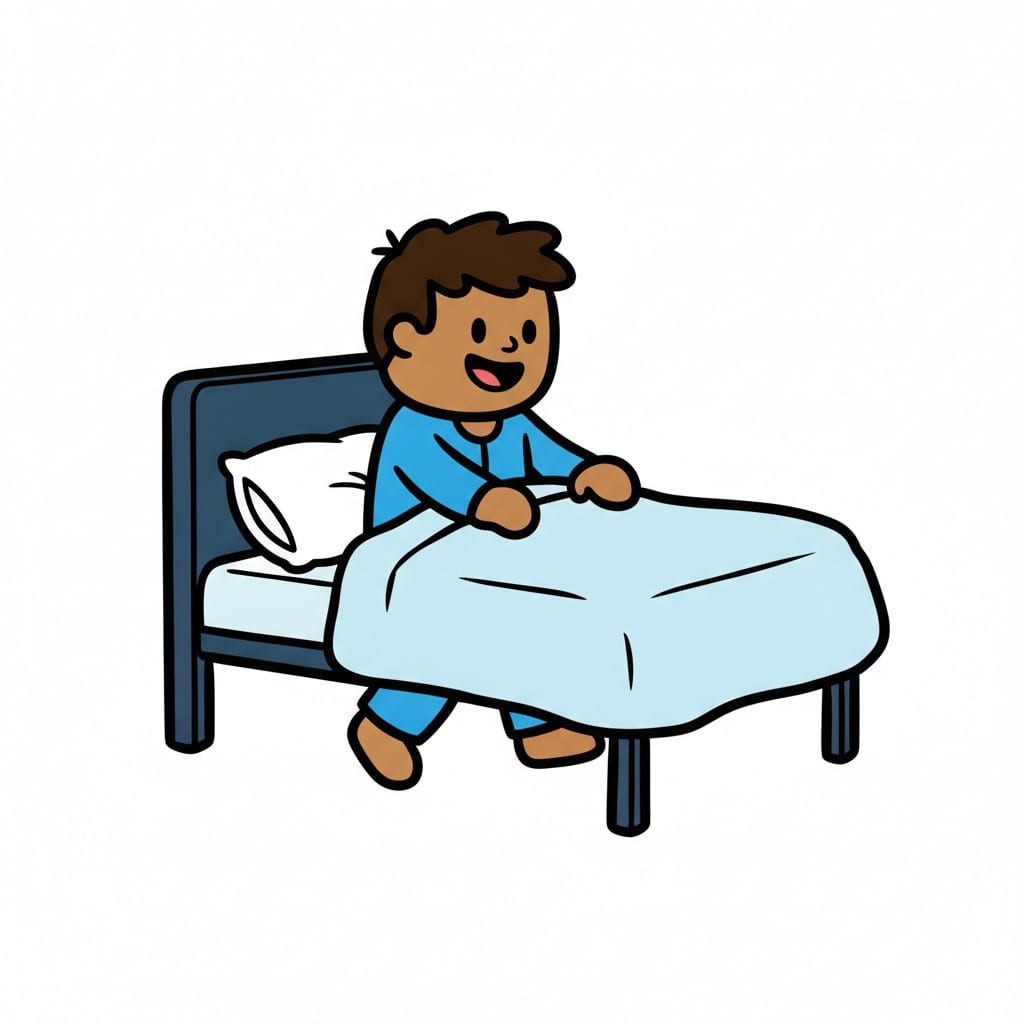 ♂
♂Boy going to bed
A boy in pajamas climbs into bed and pulls up the blanket.
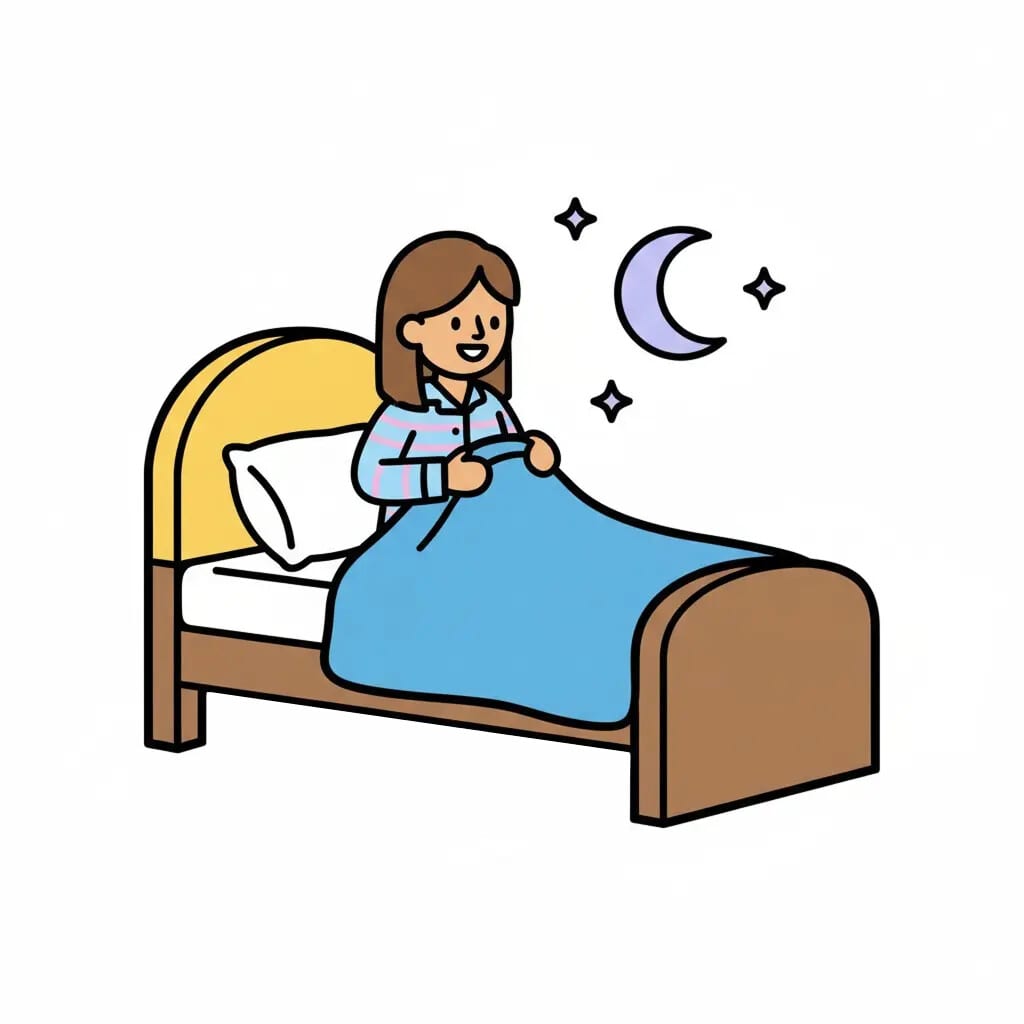 ♀
♀Go to bed
A girl in pajamas is getting into bed, pulling up a blue blanket. A moon and stars are visible in the background, indicating nighttime.
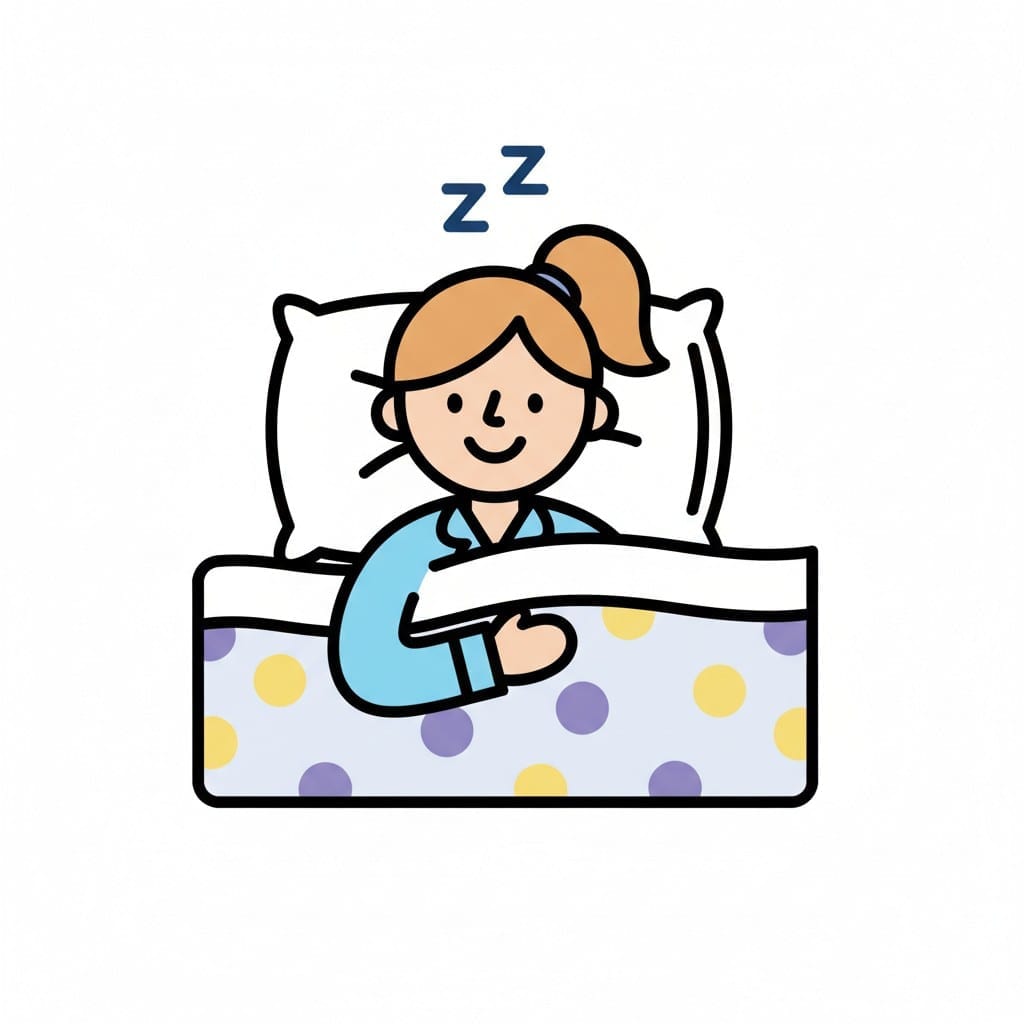 ♀
♀Sleeping
A cartoon illustration of a girl sleeping peacefully in bed, with 'Zz' symbols above her head.
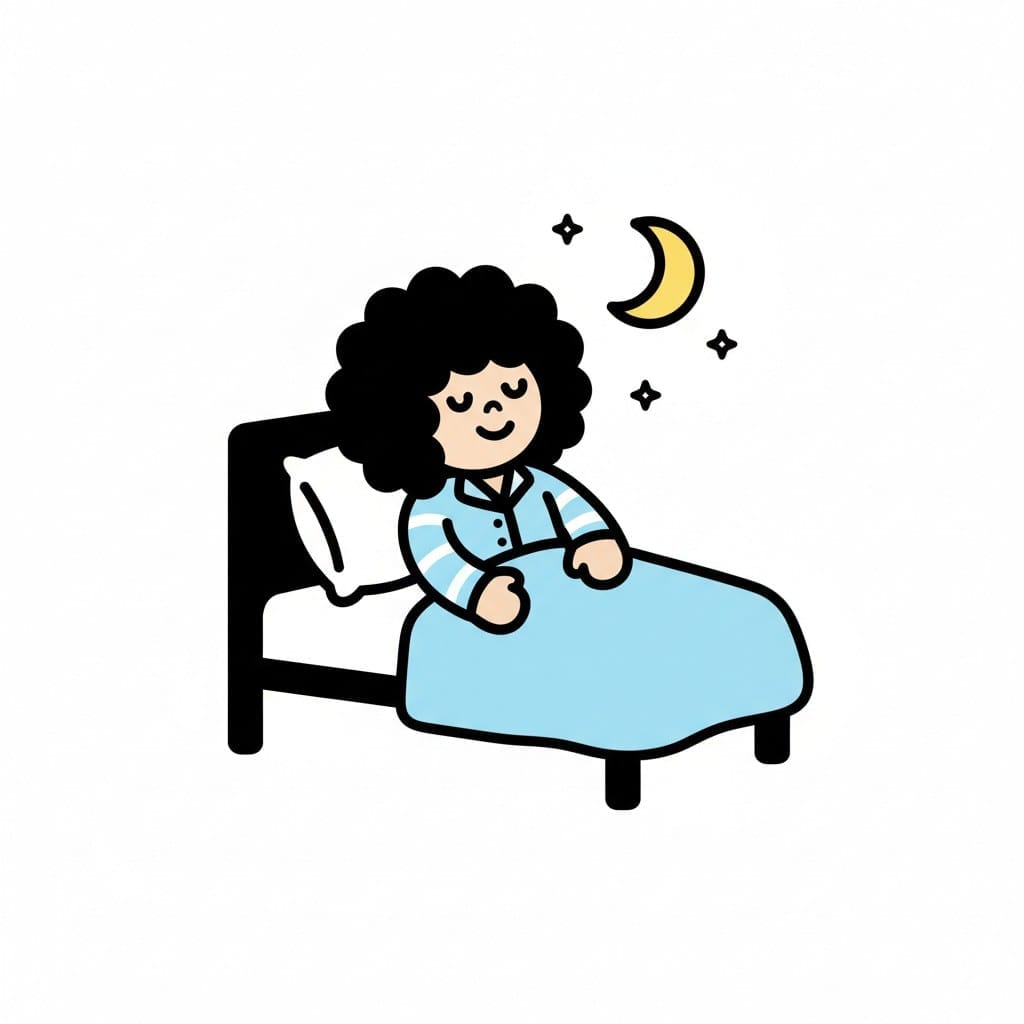 ♀
♀Go to bed
A person in blue pajamas is lying in bed, sleeping soundly under a light blue blanket. A crescent moon and stars are visible above, indicating nighttime.
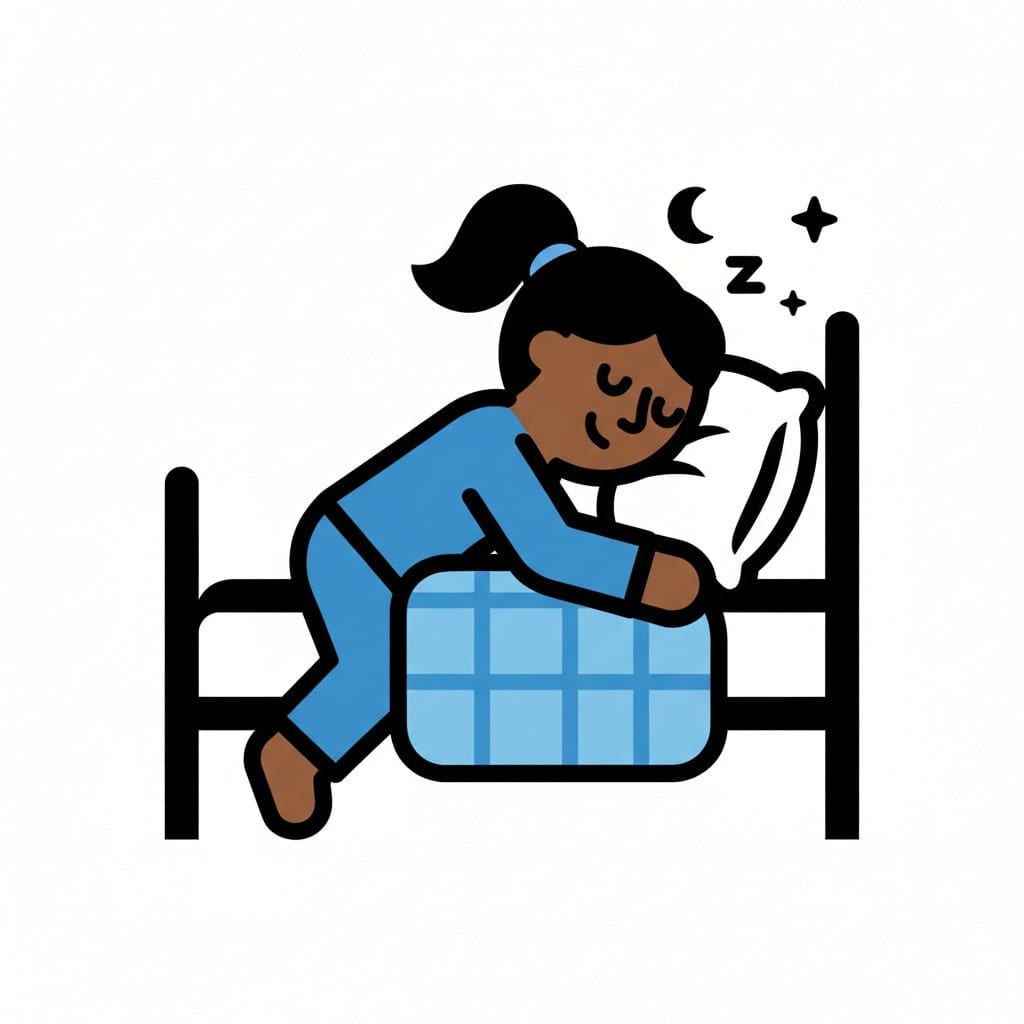 ♀
♀Sleep
A person in blue pajamas is sleeping on their side in bed under a blue checkered blanket. Zzz marks and stars are above their head, indicating deep sleep.
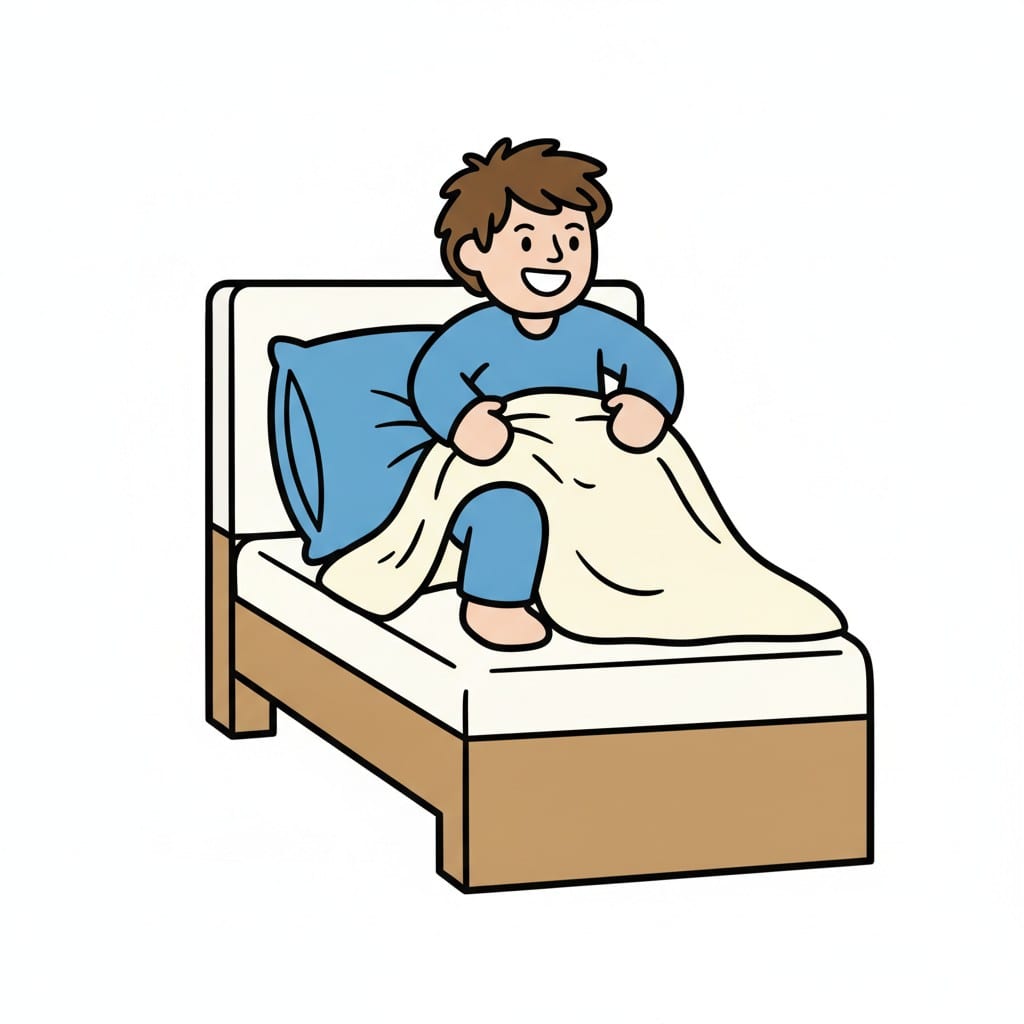 ⚲
⚲Climbing into bed
A child in pajamas climbs under the blanket in bed.
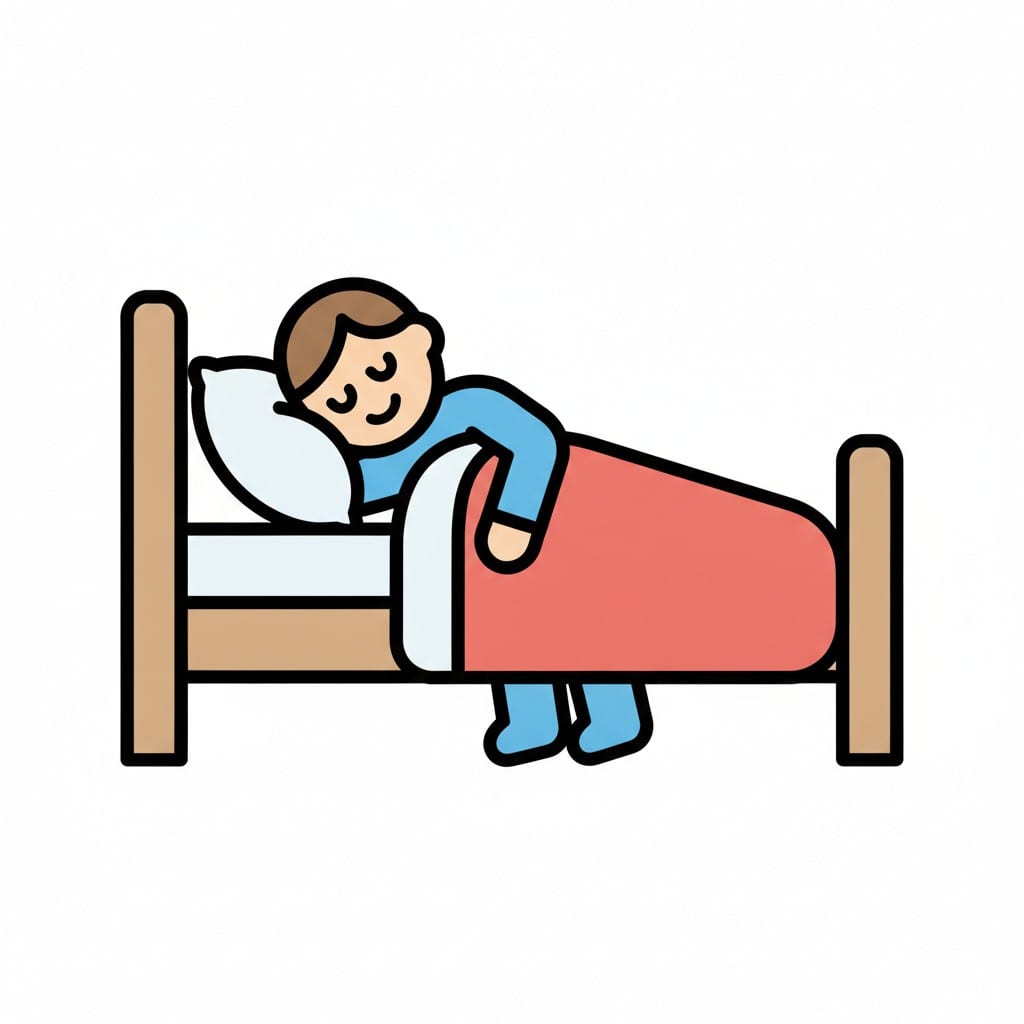 ⚲
⚲Sleeping in bed
A child sleeps with their head on the pillow under a red blanket.
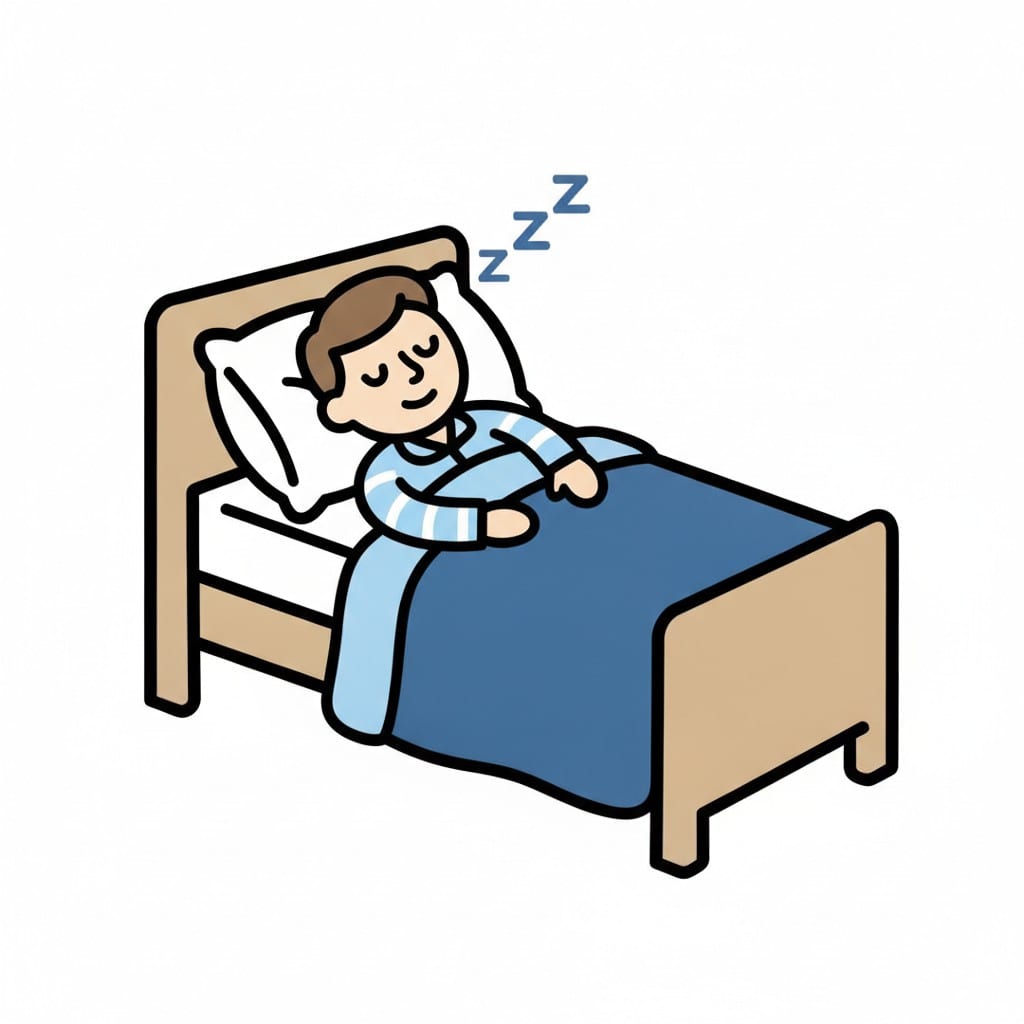 ⚲
⚲Asleep in bed
A child in striped pyjamas sleeps under a blue blanket, with zzz above their head.
About this visual support
Sleep is not something a child can choose to do. Everything else in the evening routine – brushing teeth, putting on pyjamas, switching off the light – is an active step, but actually falling asleep only happens if the body is at the right tempo. And the right tempo is hard to reach if the past hours have been full of play, screens or visitors.
A visual schedule therefore works less like a checklist and more like a ramp down. Each picture is one notch lower: book before toothbrush, toothbrush before toilet, toilet before bed, bed before lights out. The brain learns that this order means sleep is near, and the body starts preparing before the child has even lain down.
A concrete tip: put the calmest picture second to last, not last. The book or cuddle should come right before bed, so the move into darkness happens from an already softened state.
For families who want the evening routine as a visual sequence with a gentle timer, Routined is free to try for fourteen days.
This image is part of these ready-made schedules
Use this image in a schedule
Build your own visual schedule with this image and download it as a print-ready PDF. Completely free.
More similar visual supports
Sleep
A child sleeps with their head on the pillow under a blue blanket, with Z letter...
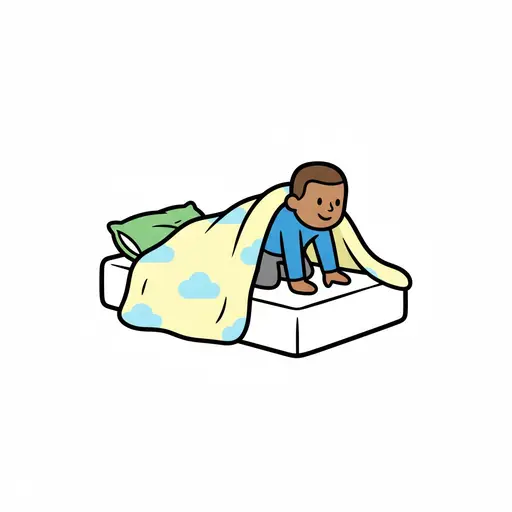
Crawl into bed
A child crawls under the duvet in bed.
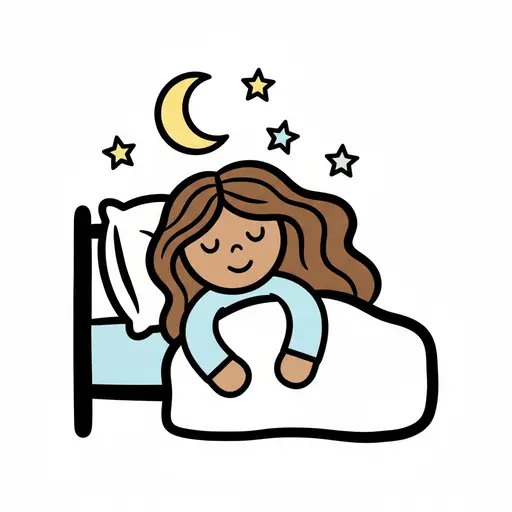
Bedtime
A girl with long wavy hair sleeps peacefully in her bed under a white duvet, wea...

Night Diaper
A diaper icon with a moon, a star, and 'zzz' symbols, indicating a night diaper.
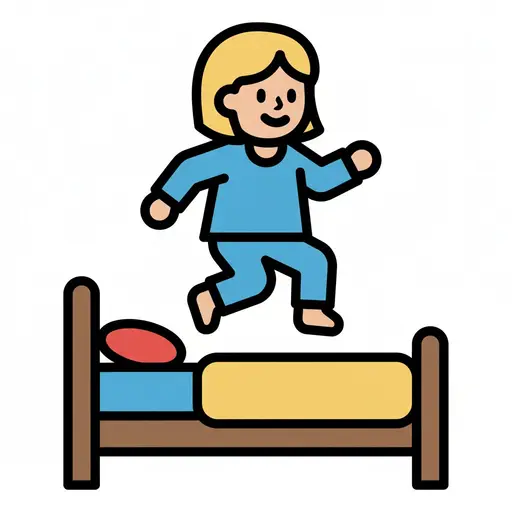
Hop in bed
A happy girl in pajamas hops into a bed with a red pillow and a yellow blanket.
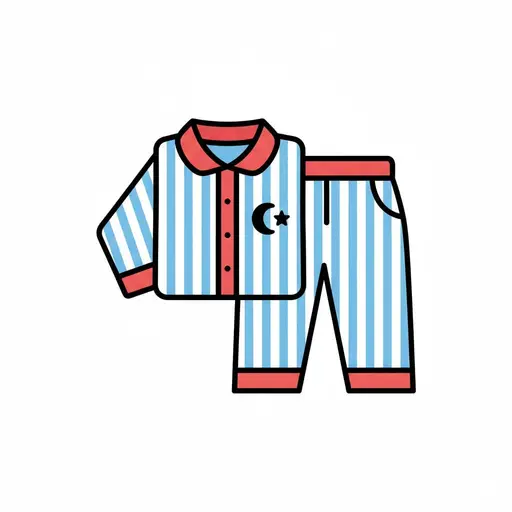
Pajamas
Striped pajamas with a moon and a star on the chest.
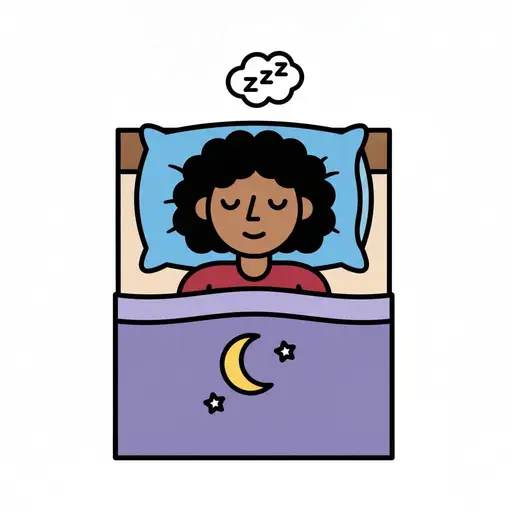
Go to sleep
A girl sleeps with her eyes closed under a purple blanket with a moon and stars,...
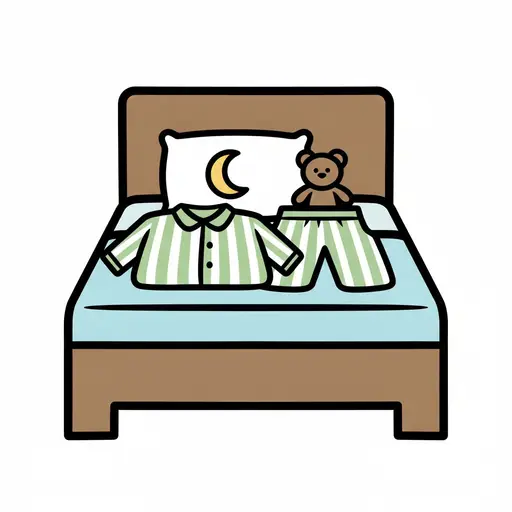
Pyjamas on the bed
Striped pyjamas lie ready on the bed next to a teddy bear and a pillow with a mo...
This visual support in other languages
Take the visual supports with you
In Routined you build schedules from these pictures, add timers and voice instructions, and your child follows the day on their own.


* 14-day free trial, then $2.39 a month or $20.99 a year (US pricing). Cancel anytime.