Goodnight hug
A hug is meant to comfort, but on the wrong evening it can land like too much skin all at once. The cards below show the hug and other ways to say goodnight, so the closeness stays even when the body says not tonight.
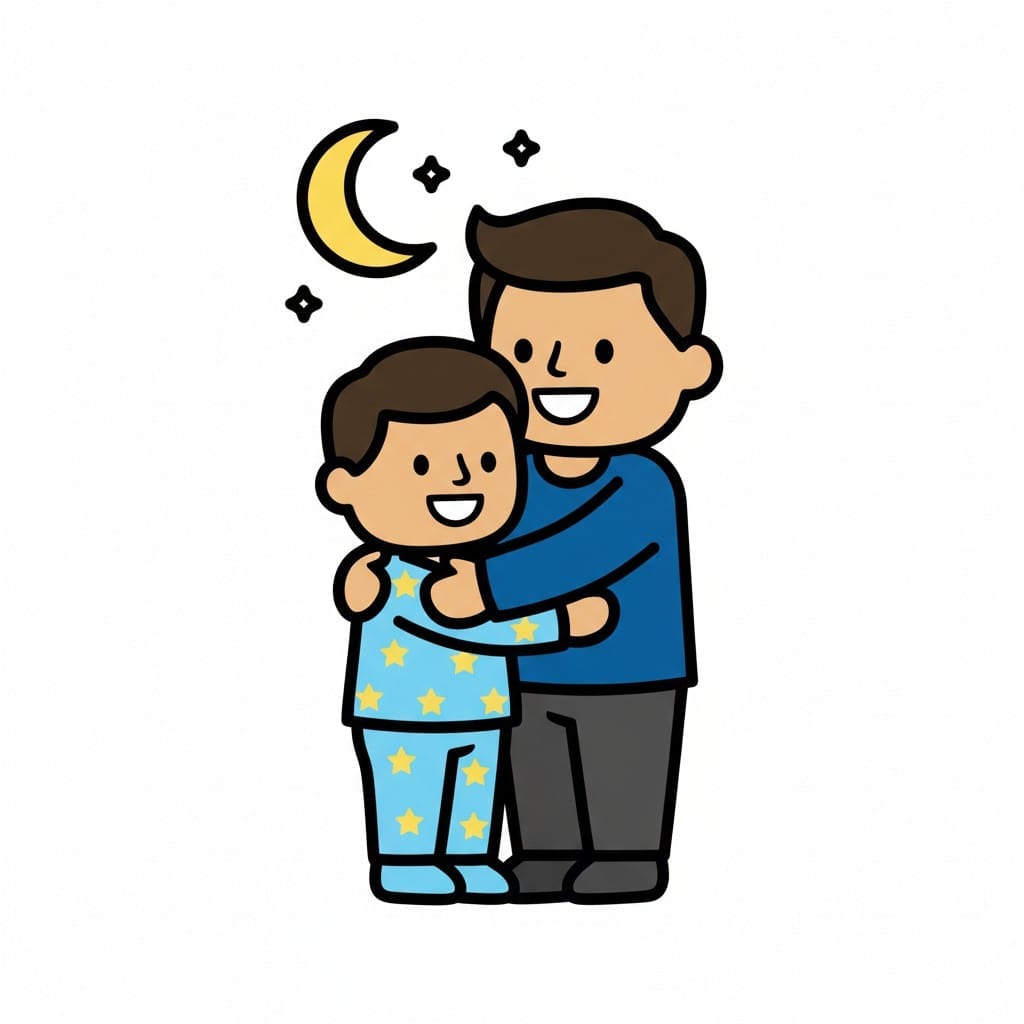 ♂
♂Goodnight hug
An adult man is hugging a child in pajamas, with a moon and stars in the background. Both are smiling.
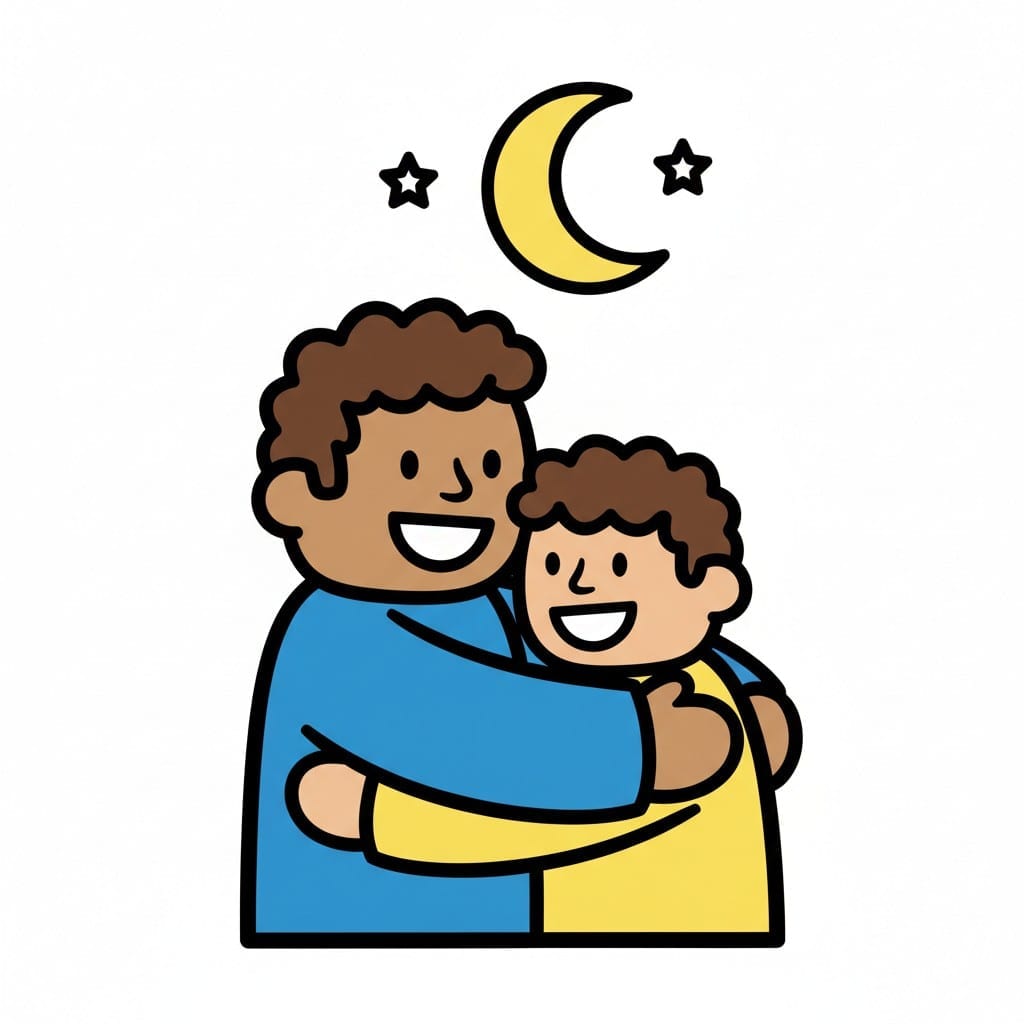 ♂
♂Goodnight hug
Two figures hugging, with a crescent moon and stars in the background, representing a goodnight hug.
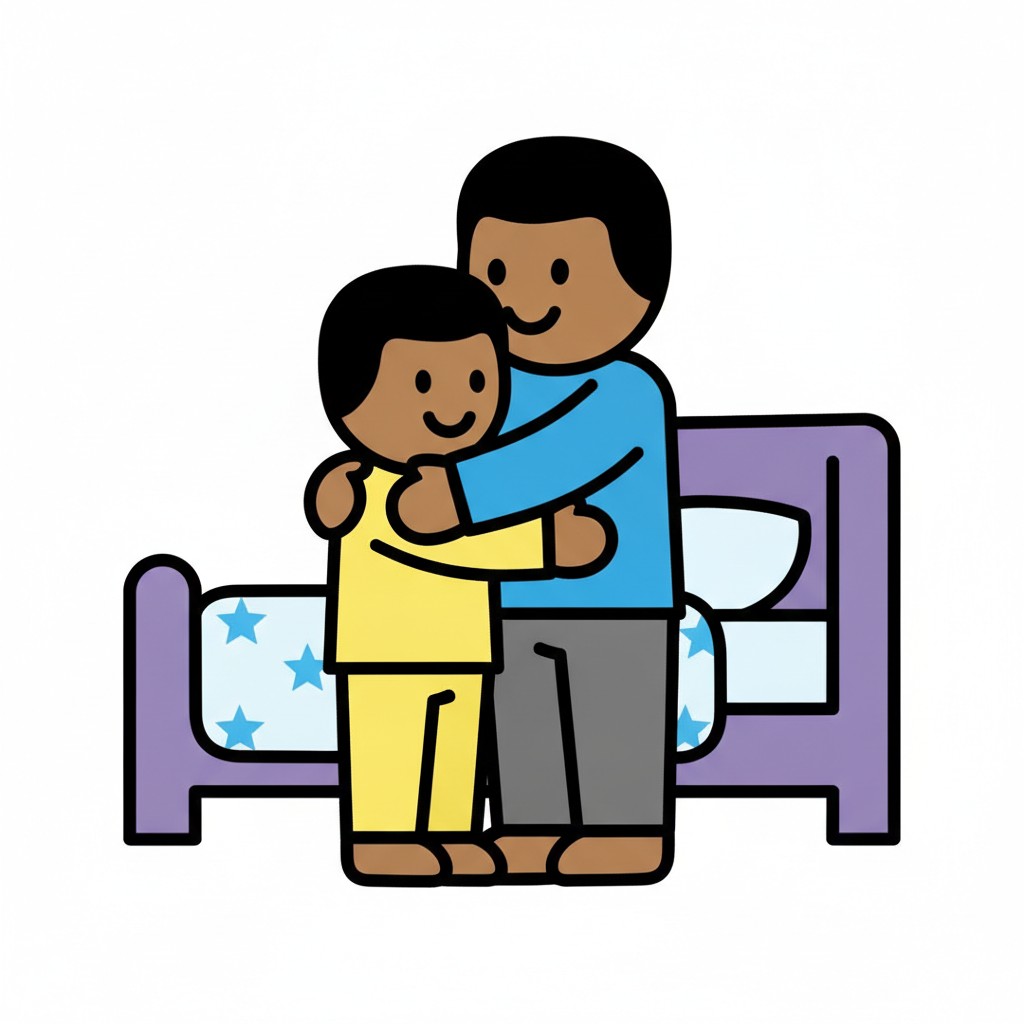 ♂
♂Goodnight hug
An adult and a child in pajamas hug by the bed.
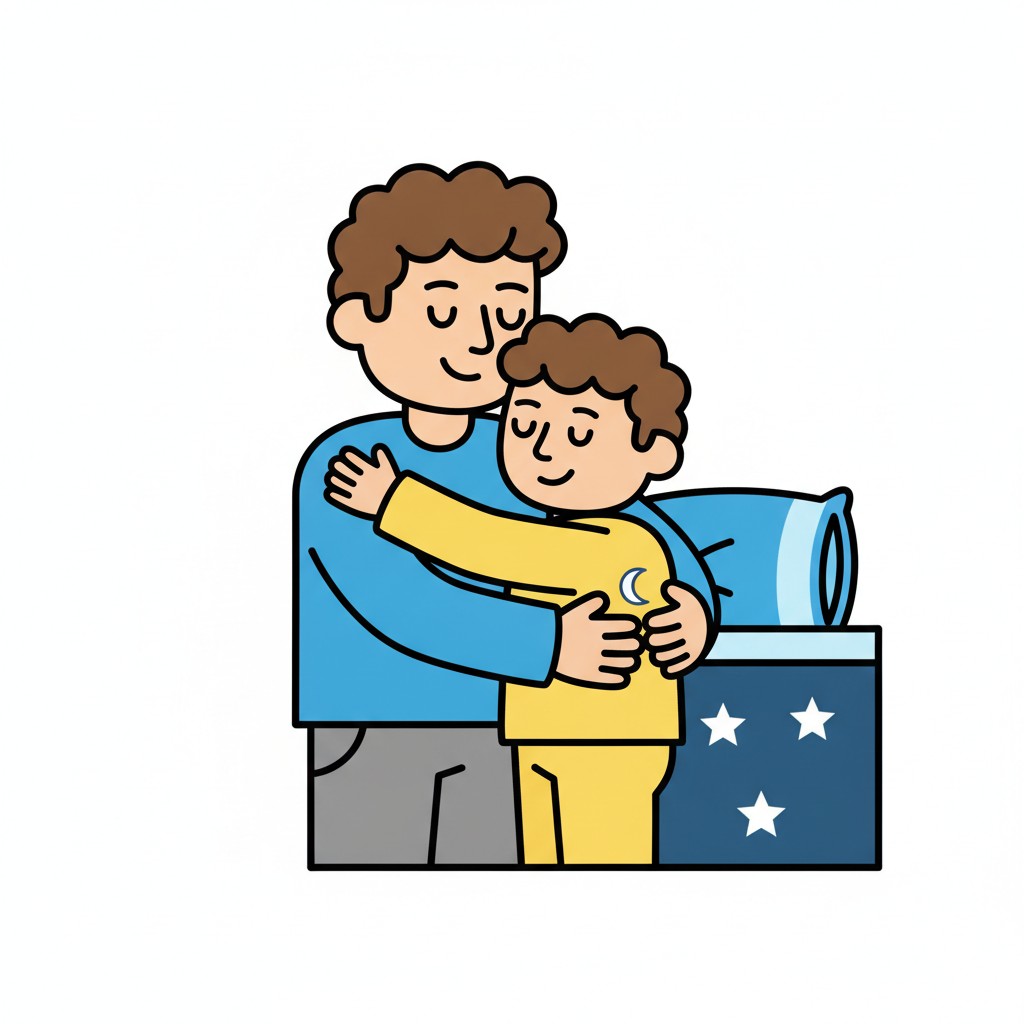 ♂
♂Hug before sleep
An adult hugs a sleepy child in pajamas.
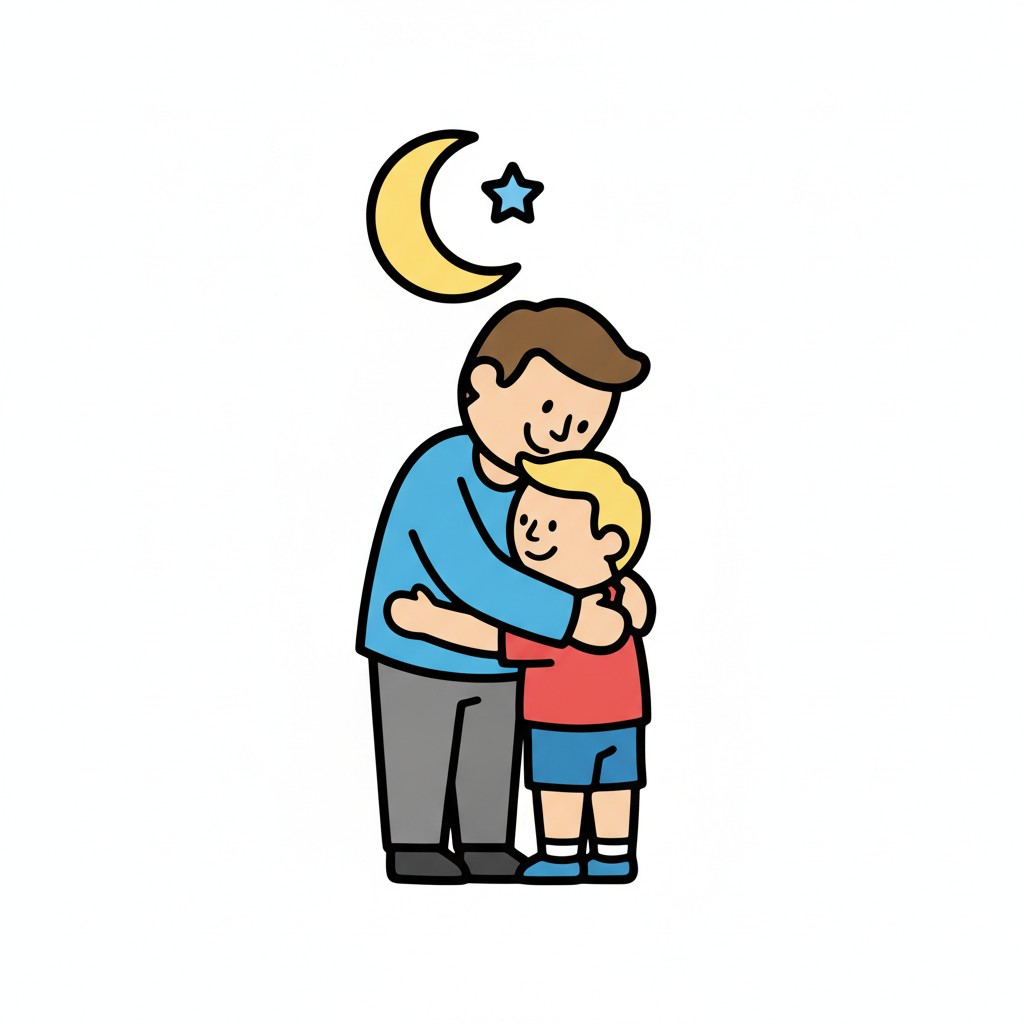 ♂
♂Hugging goodnight
A man and a boy hug under the moon.
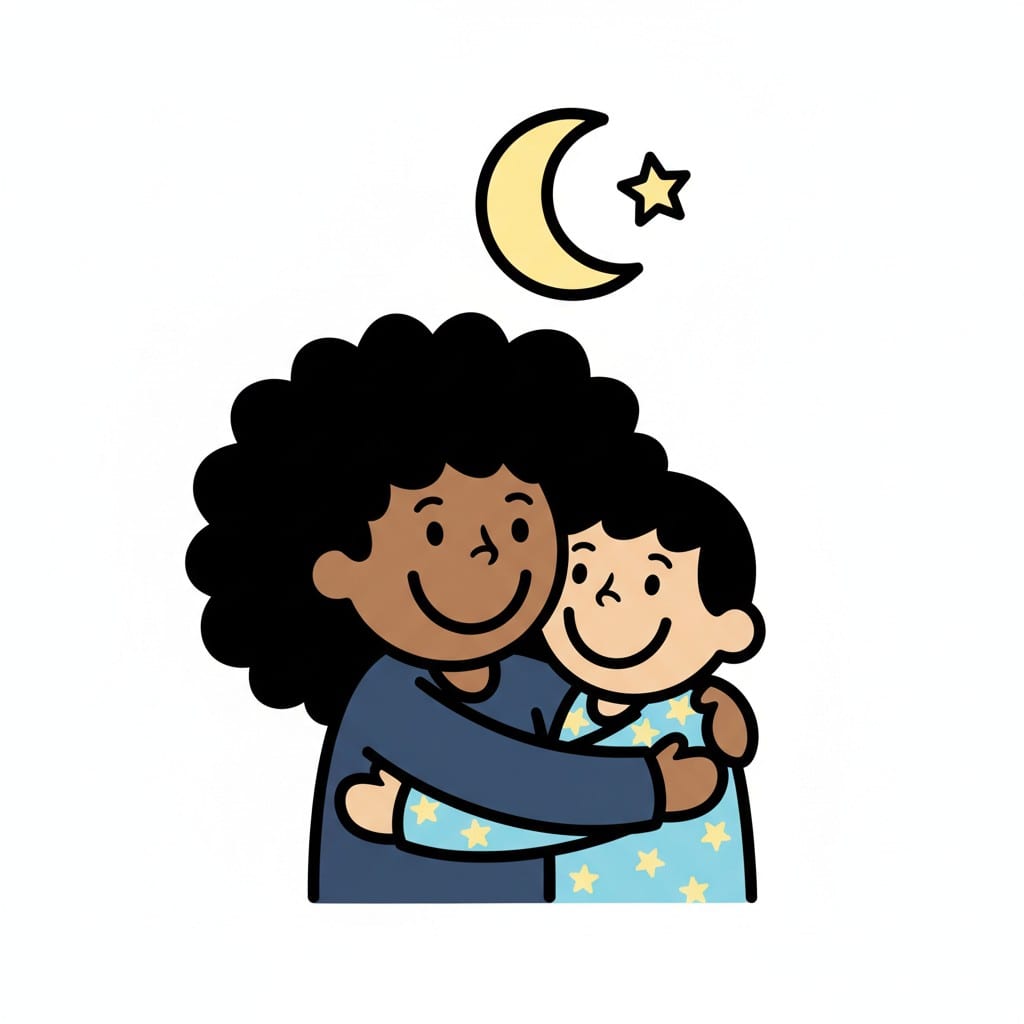 ♀
♀Goodnight hug
An adult female gives a girl a goodnight hug. A crescent moon and a star are above them.
About this visual support
Sensory and social signals collide in the goodnight hug. The adult sees a gesture of closeness, while the child may feel the pyjama against the skin, the smell of soap, an arm across the chest, and suddenly the hug becomes one input too many after an already full day. The expected yes turns into a no, and both sides read it wrong.
With a visual support, closeness becomes an offer rather than a requirement. Pointing to a hug, a hand kiss, foreheads together, a spoken word, a thumbs up makes love able to take the shape that fits the evening. The gesture stays available tomorrow even if it is not taken tonight.
A practical idea: ask with the card, not the voice. Hold up two or three options and let the child point. Pointing carries less pressure than answering, and the answer ends up more honest. On the heavy evenings the hand often goes to forehead-to-forehead or thumbs up first, and the hug returns on its own a few nights later.
Use this image in a schedule
Build your own visual schedule with this image and download it as a print-ready PDF. Completely free.

More similar visual supports
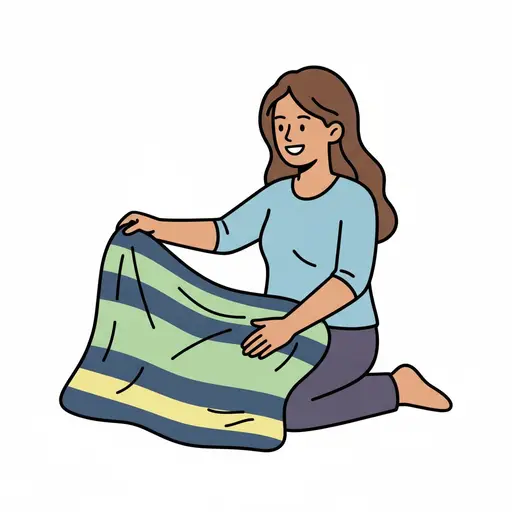
Get blankie
A woman kneels and spreads out a striped blanket.
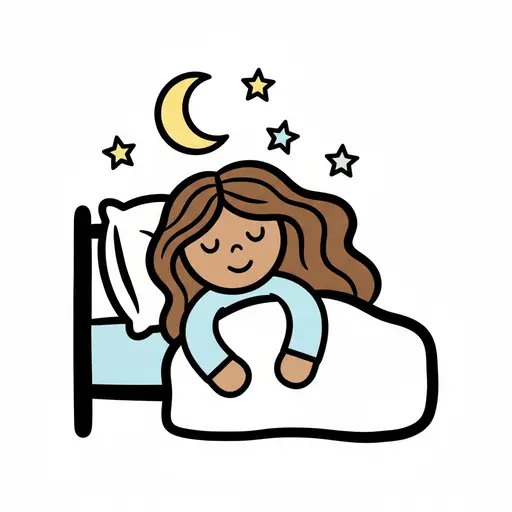
Bedtime
A girl with long wavy hair sleeps peacefully in her bed under a white duvet, wea...
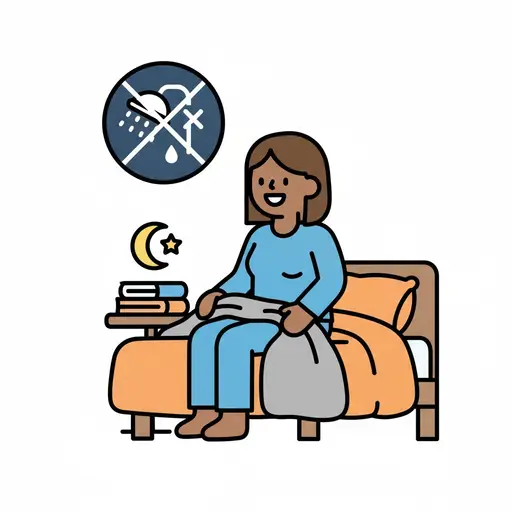
Bedtime routine
A person sits on the bed with books beside them, with a symbol showing the showe...
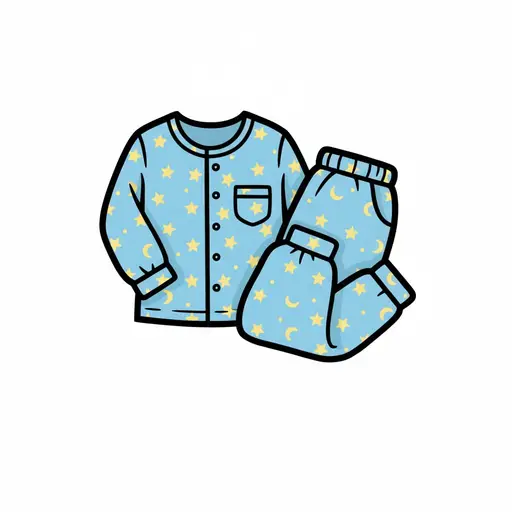
Change into night clothes
A folded light blue pajama set with yellow stars and crescent moons.
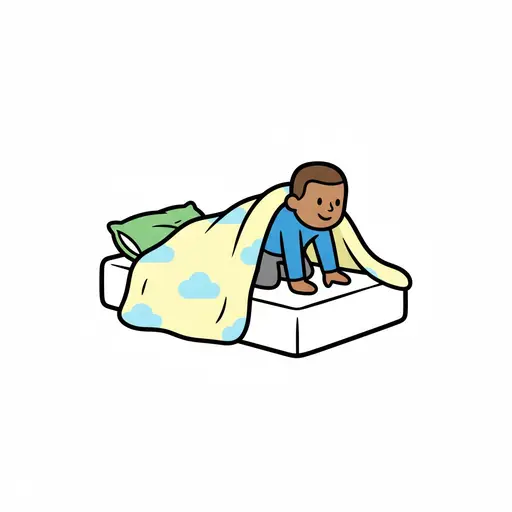
Crawl into bed
A child crawls under the duvet in bed.
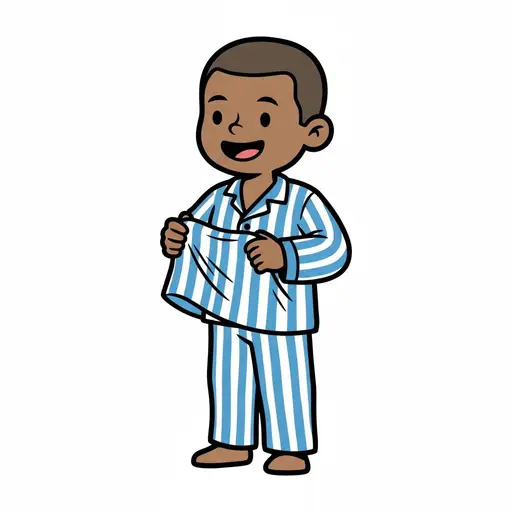
Dress for bed
A smiling boy holds up his blue and white striped pyjama top, ready to put it on...
Dress pajamas
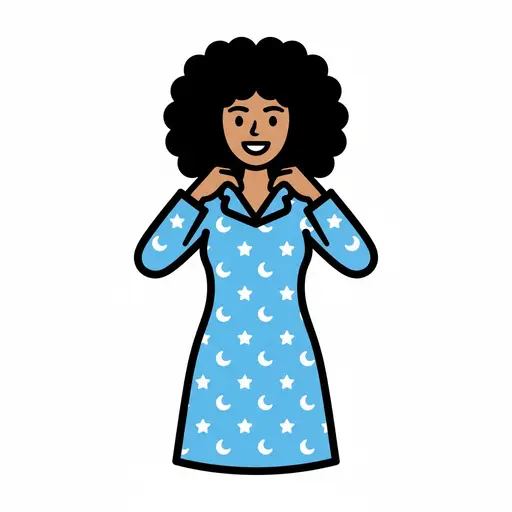
A woman is putting on blue pajamas with stars and moons on them.
Get Into Bed
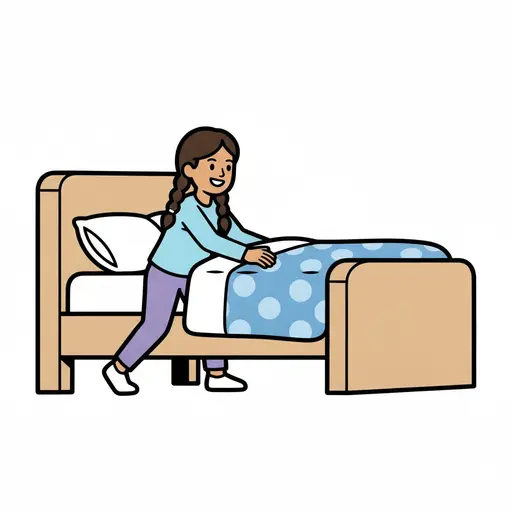
A girl gets into bed under a spotted duvet.
Take the visual supports with you
In Routined you build schedules from these pictures, add timers and voice instructions, and your child follows the day on their own.


* 14-day free trial, then $2.39 a month or $20.99 a year (US pricing). Cancel anytime.