In Bed Quiet Time
The light goes out and the body should slowly shift down to low energy, yet thoughts keep spinning and the line between awake and sleepy is hard to feel. The steps below give the wind-down a soft, recognisable shape.
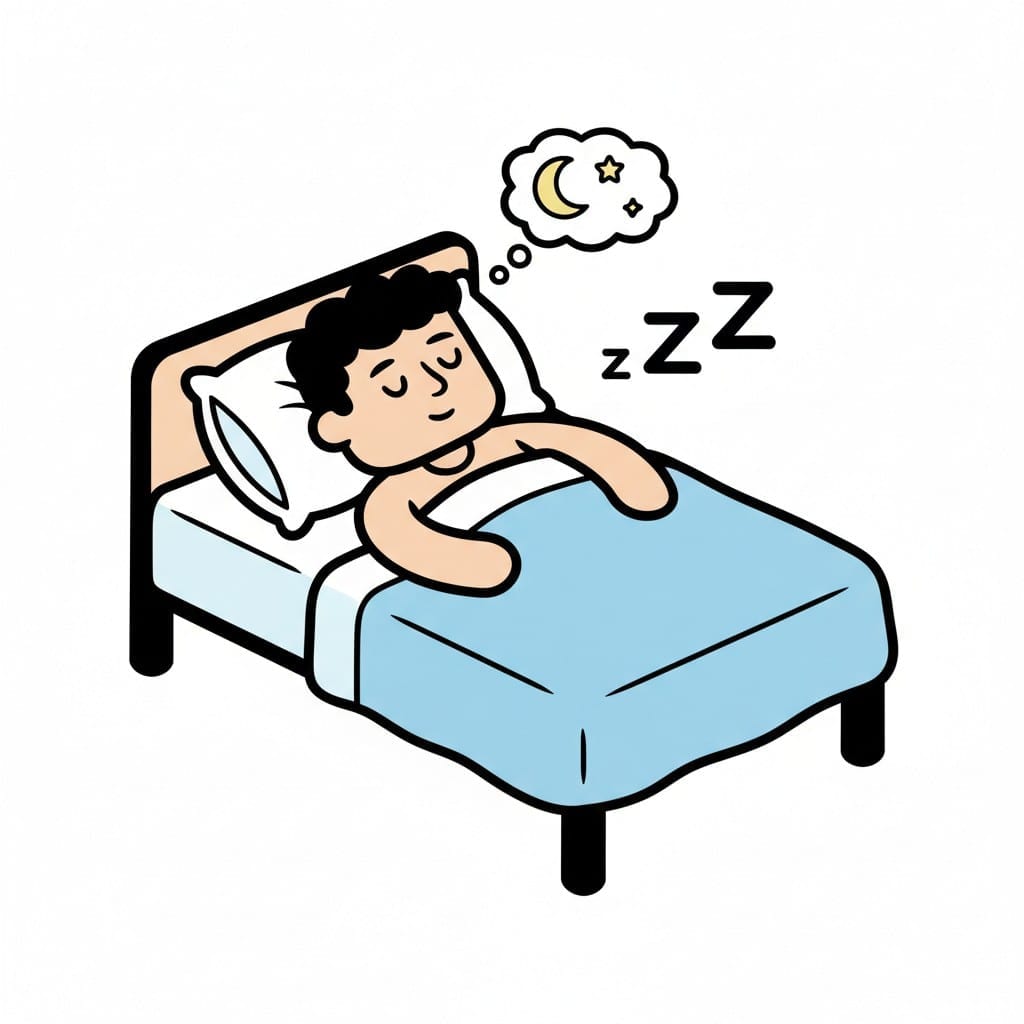 ♂
♂Resting in bed
A boy lies in a bed under a blue blanket with a thought bubble showing a moon and star above him.
About this visual support
In the dark the body has to do something it cannot be forced into: let go of the day's pace and slide over into sleep. For many children this is exactly where it gets hard, because thoughts keep spinning long after the lamp is off, and the very feeling of getting sleepy is vague and hard to trust.
Quiet time in bed benefits from having a visible shape even when the room is dark. Visual support that the child has looked at before the light goes out becomes an inner order to follow: lie still, breathe slowly, think of a calm place, close the eyes. When the steps are familiar, the brain does not have to track what happens next, and then it switches off more easily.
A concrete tip: tie each picture to something the body already feels, such as breathing in as the shoulders drop, so winding down becomes something the child does with the body rather than only thinks about. If you want the pictures alongside a gentle sleep timer, Routined is free to try for fourteen days.
Use this image in a schedule
Build your own visual schedule with this image and download it as a print-ready PDF. Completely free.
More similar visual supports
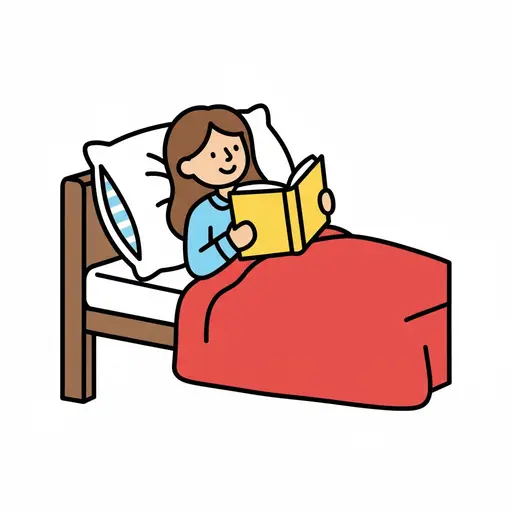
Goodnight Story
A girl sits up in bed reading a book while thinking of the moon and stars.
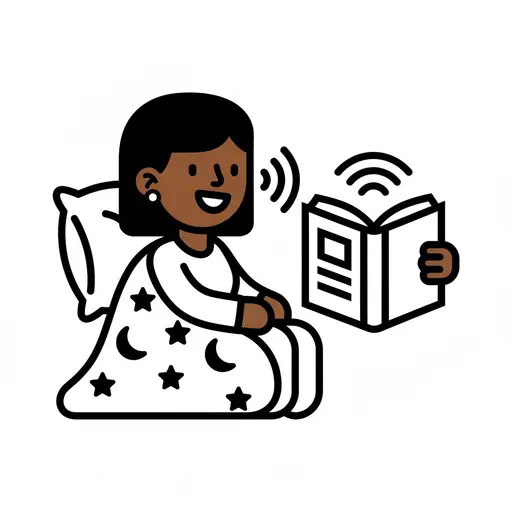
Listen to a bedtime story
A child lies in bed listening to a book with sound waves.

Bedtime stories
An adult reads a bedtime story to a child in bed.
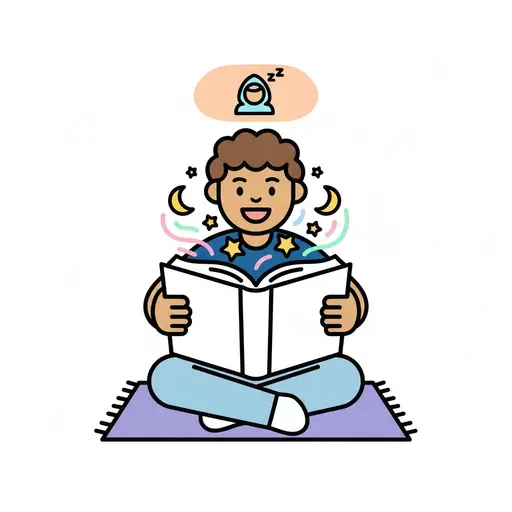
Magical bedtime stories
A boy sits on a rug reading a book with stars and moons around him.
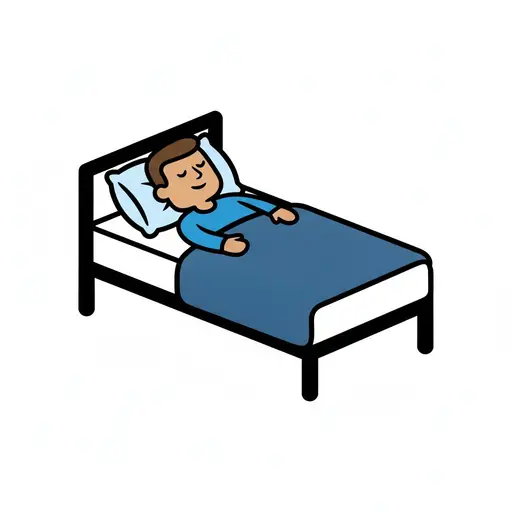
Lie in bed
A boy lies resting in bed under a blue blanket.

Evening calm
A picture of a dark blue night sky with a moon and stars above a house and some ...
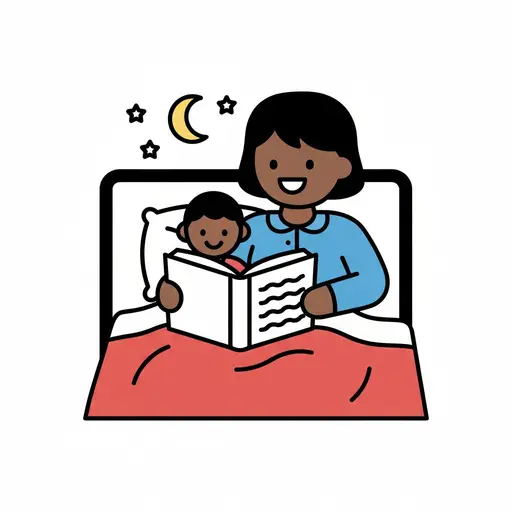
Read bedtime story
A smiling woman in a blue shirt reads from a book together with a child lying un...
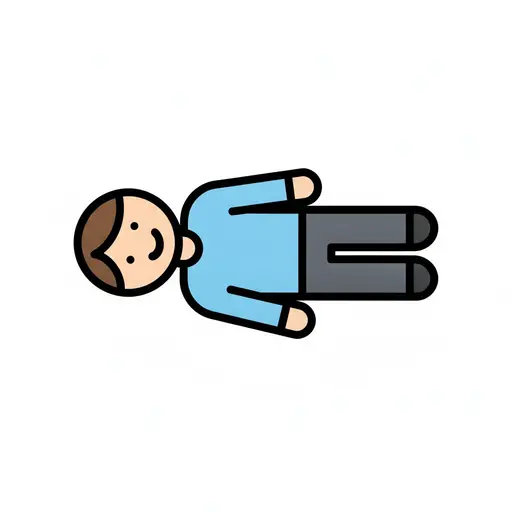
Lie down
A child lies flat on their back.
This visual support in other languages
Take the visual supports with you
In Routined you build schedules from these pictures, add timers and voice instructions, and your child follows the day on their own.


* 14-day free trial, then $2.39 a month or $20.99 a year (US pricing). Cancel anytime.