Pajamas
Changing into pajamas is not just a clothes swap, it is the signal that the day is over. For a child who has not yet settled, that alone can spark resistance. The steps below make the shift visible in advance.
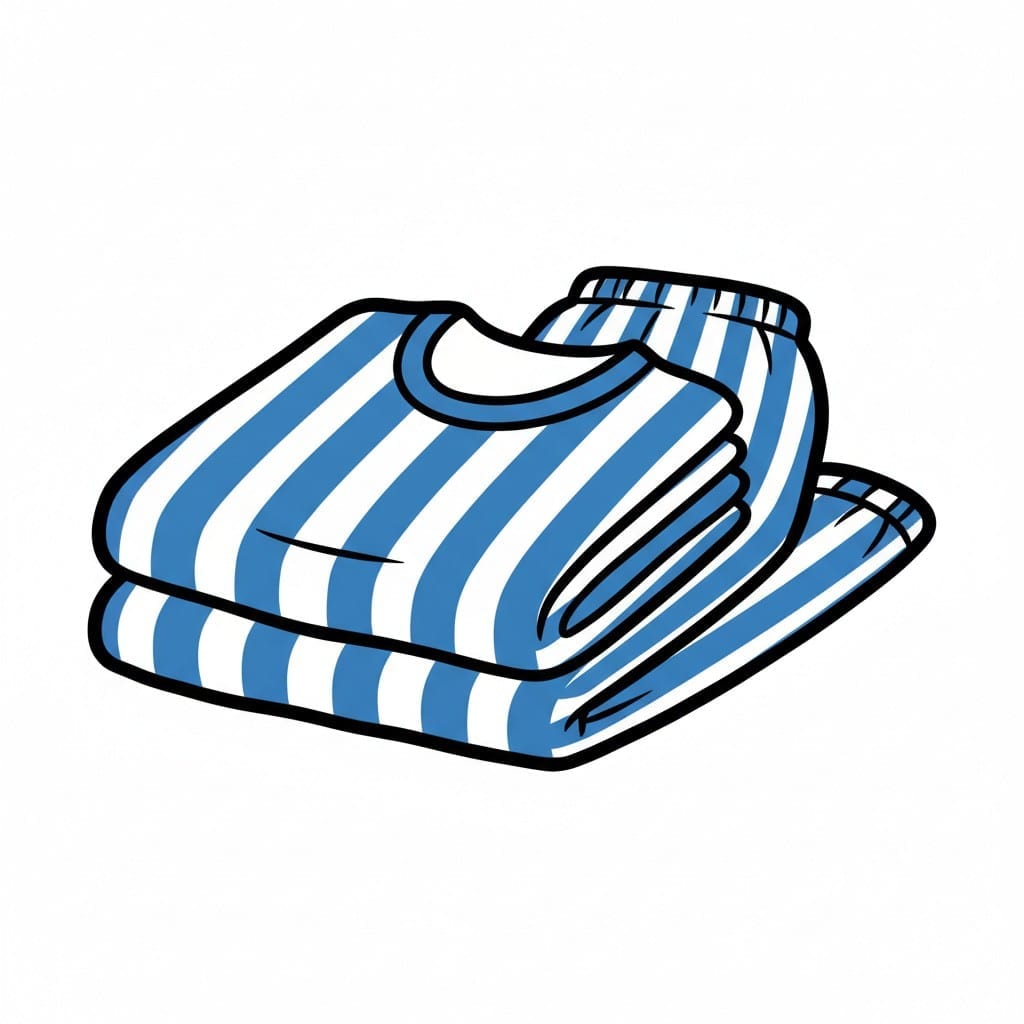
Pajamas
A pair of folded blue and white striped pajamas.
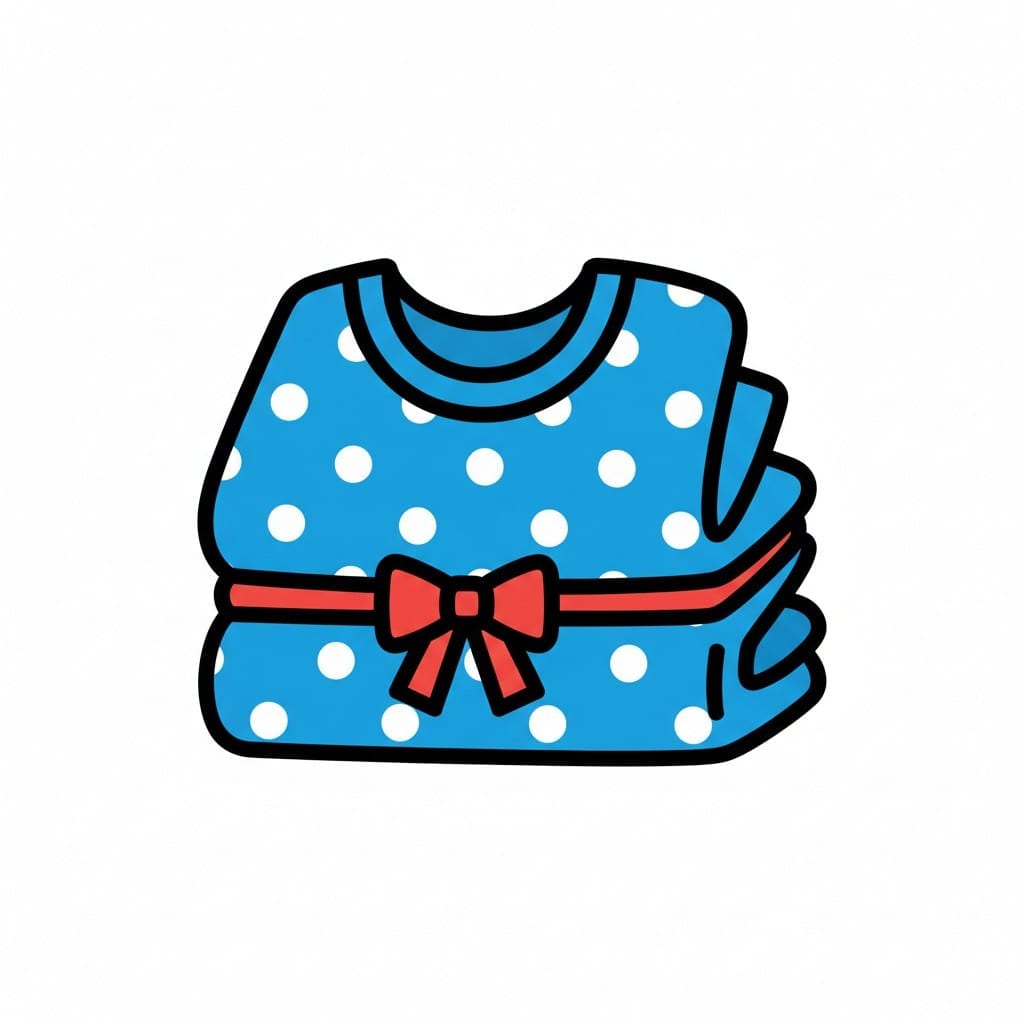
Pajamas
A pair of folded blue polka dot pajamas with a red bow.
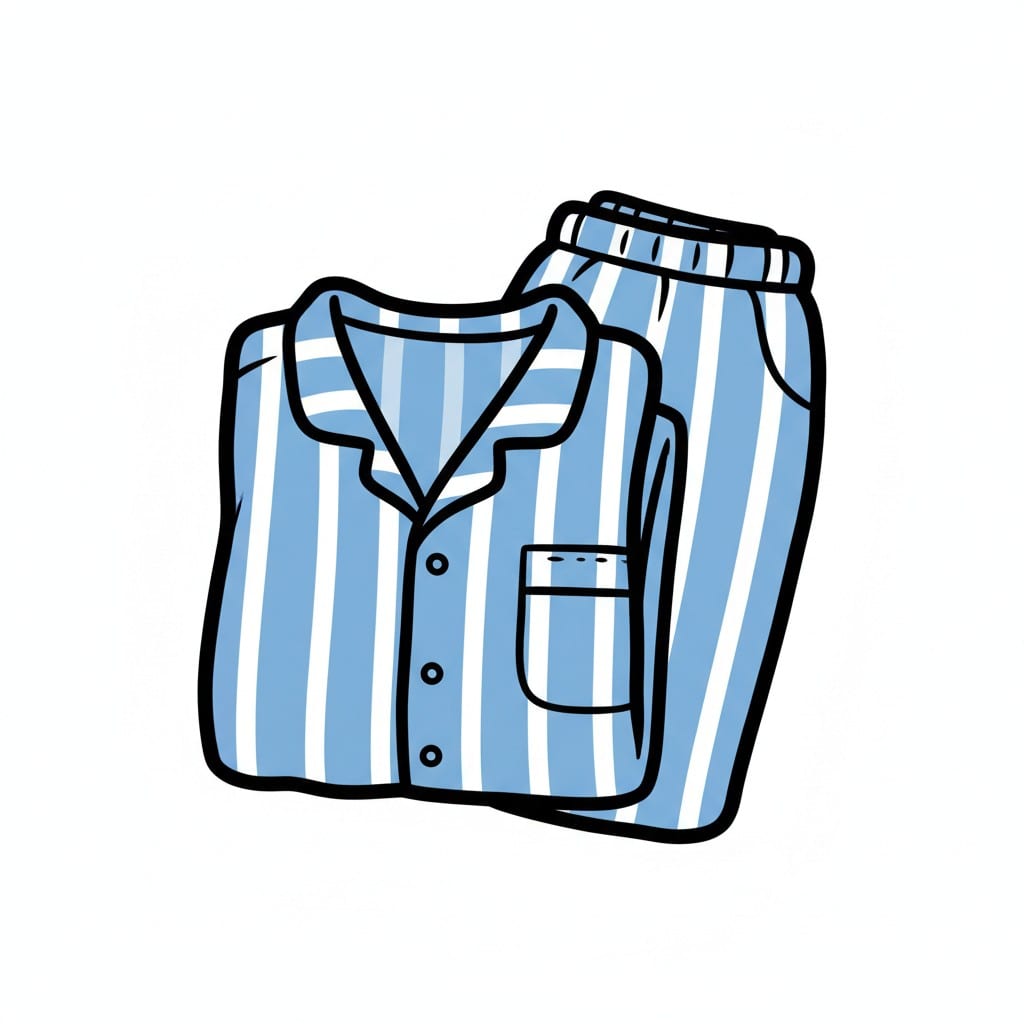
Pajamas
A pair of folded blue and white striped button-up pajamas.

Pajamas (stars)
A blue pajama set with white stars.
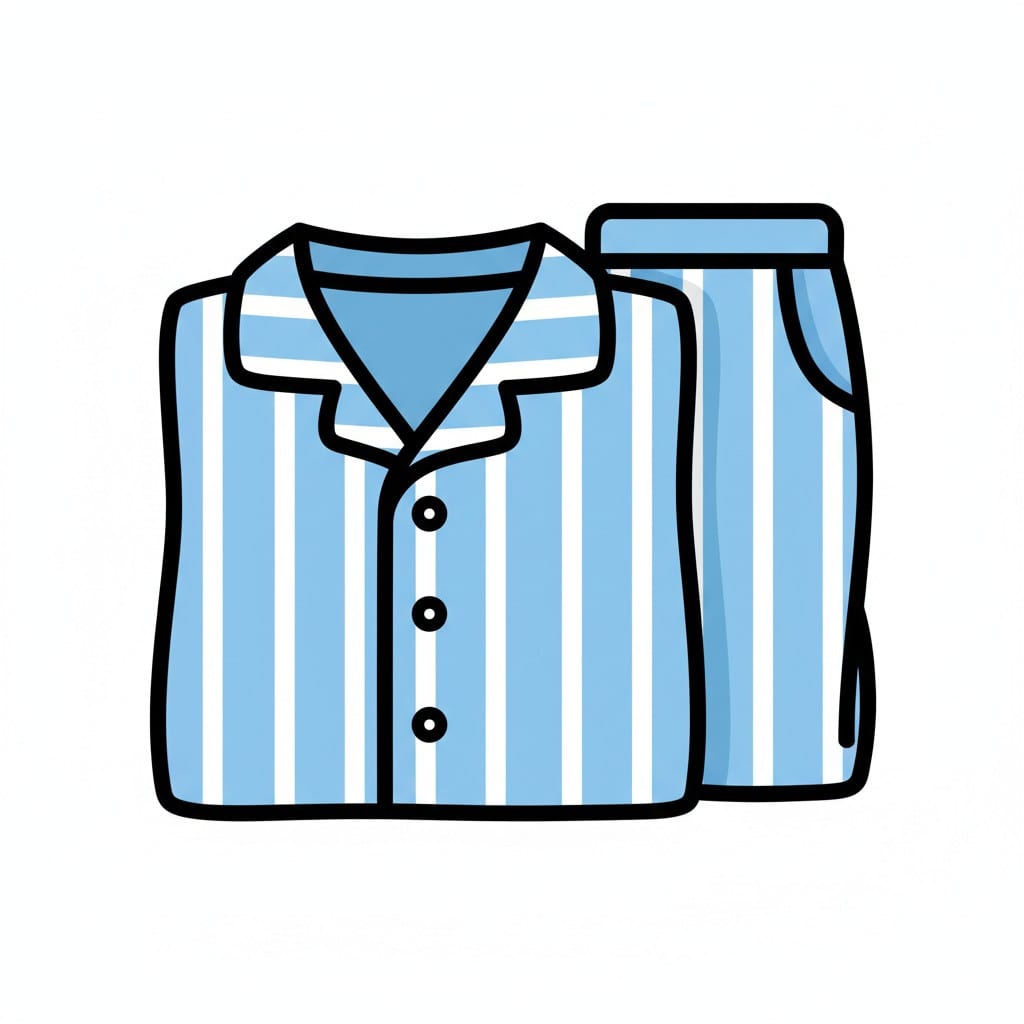
Pajamas (stripes)
A light blue pajama set with white stripes.

Pajamas with stars and moons
A folded blue pajama set patterned with yellow stars and crescent moons.

Blue pajamas with white stars
Neatly folded blue pajamas covered in white stars and moons, finished with a white neckband.
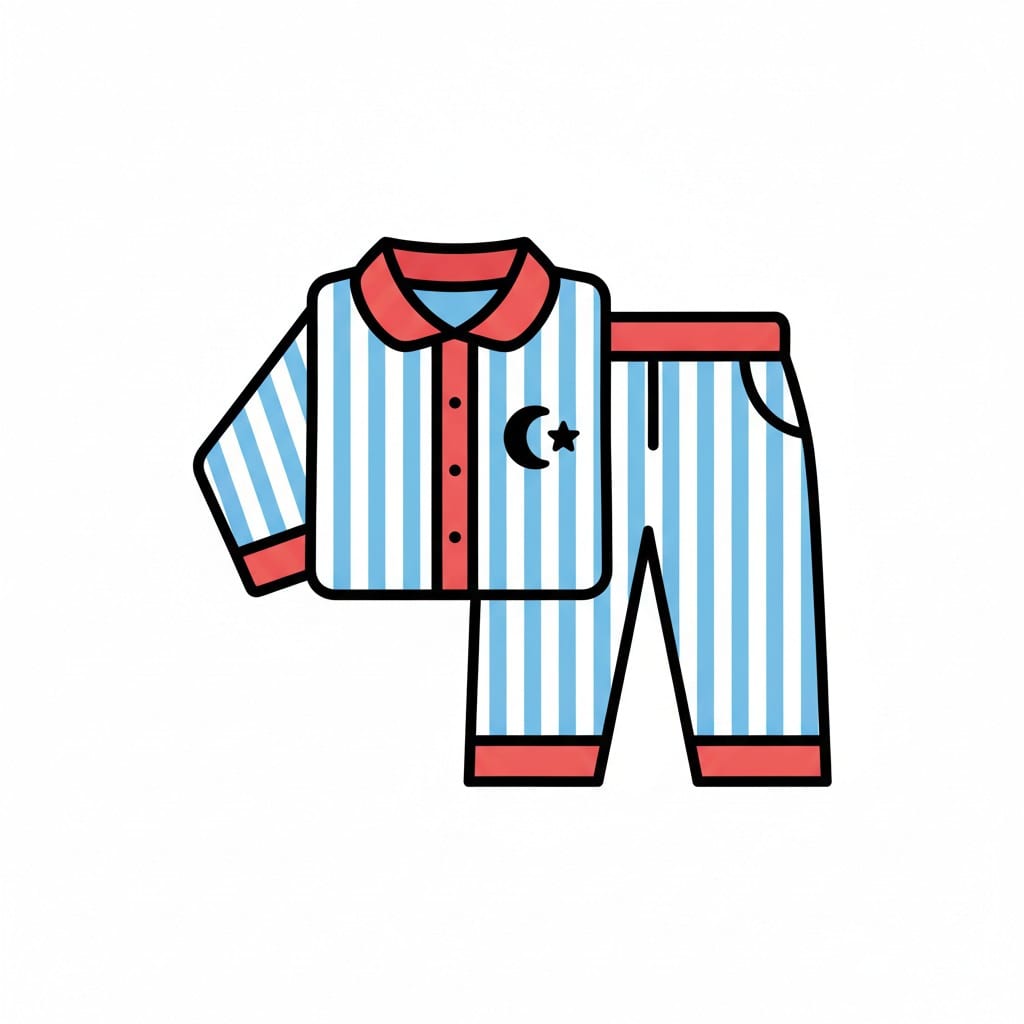
Pajamas
Striped pajamas with a moon and a star on the chest.
About this visual support
Pajamas are in a way the day's contract: once they are on, the evening activities are over. That is why resistance often shows up right here, even with children who otherwise dress without fuss. The brain has not yet shifted gear, and the garment itself carries the full weight of the transition.
When the same steps appear in pictures night after night, that signal softens. The child sees pajamas as one station along the way, not a final stop. It also becomes easier to prepare mentally when what comes next is visible – toothbrush, a hug, a story – so the pajamas no longer stand alone as the marker for night.
A small trick that often helps: place a card showing a calm activity, like a book or a soft toy cuddle, right after the pajamas card. The change then becomes a doorway into something cozy rather than a goodbye to the day. If you want to build the whole evening flow with a timer and small wins, you can try Routined for fourteen days at no cost.
Use this image in a schedule
Build your own visual schedule with this image and download it as a print-ready PDF. Completely free.
More similar visual supports
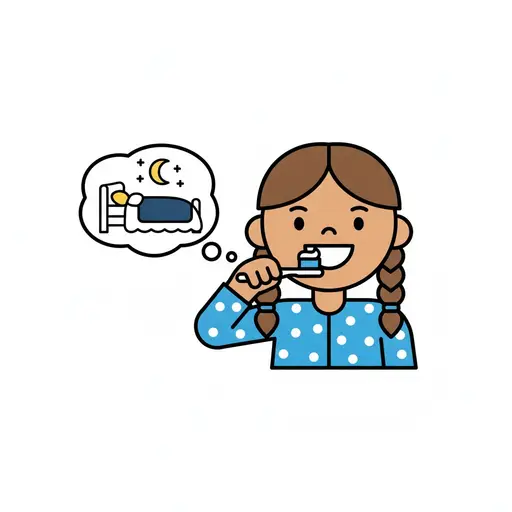
Get ready for bed
A girl in spotted pyjamas brushes her teeth while a thought bubble shows a bed u...
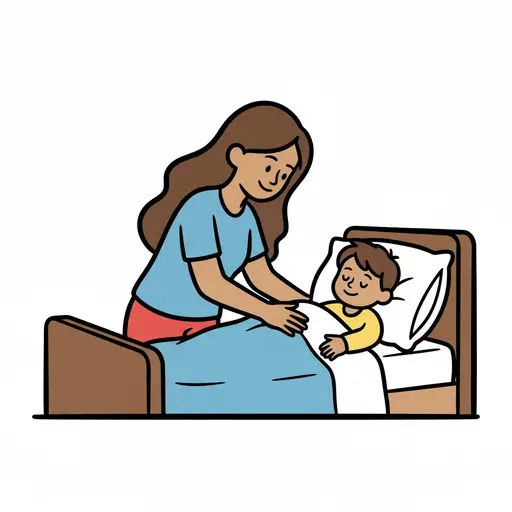
Put boy to bed
A woman tucks a boy into bed.
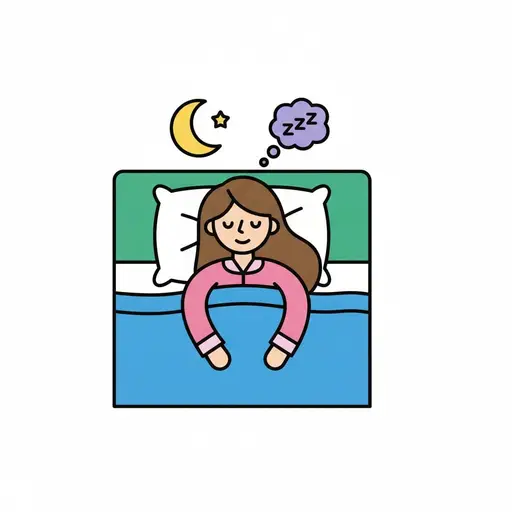
Lights out
A girl sleeps in her bed with a moon, a star and a zzz bubble above her.
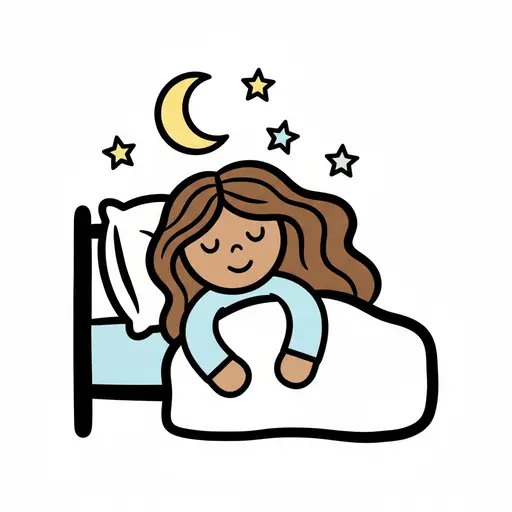
Bedtime
A girl with long wavy hair sleeps peacefully in her bed under a white duvet, wea...
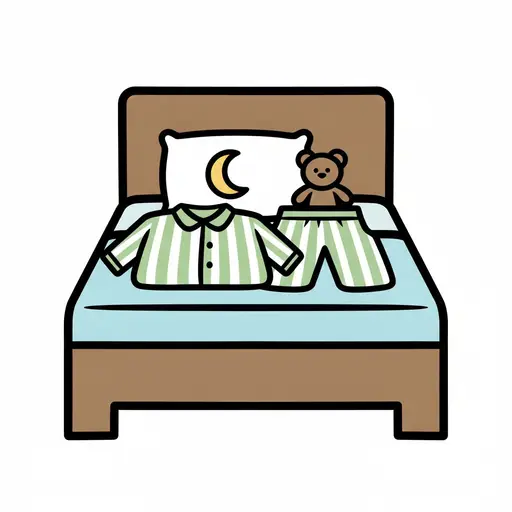
Pyjamas on the bed
Striped pyjamas lie ready on the bed next to a teddy bear and a pillow with a mo...
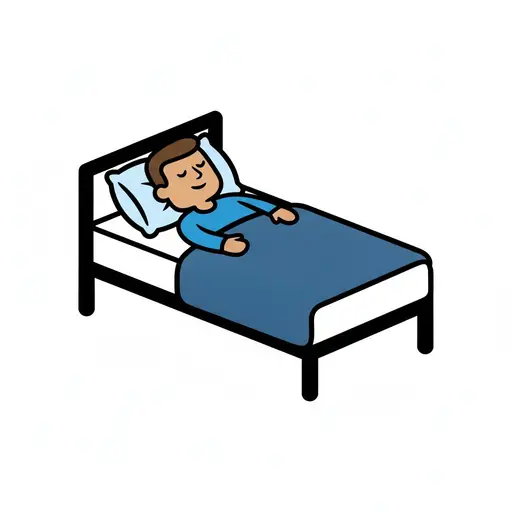
Lie in bed
A boy lies resting in bed under a blue blanket.
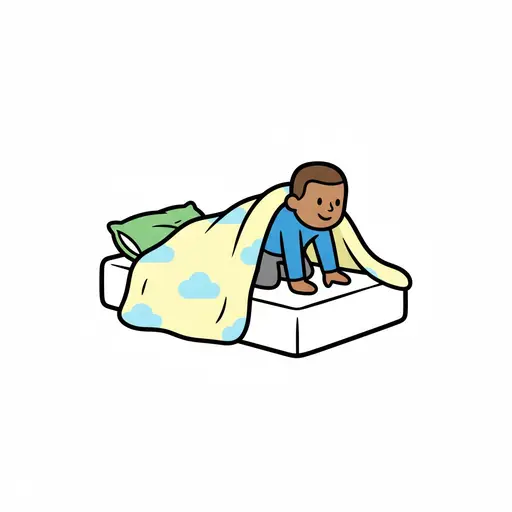
Crawl into bed
A child crawls under the duvet in bed.
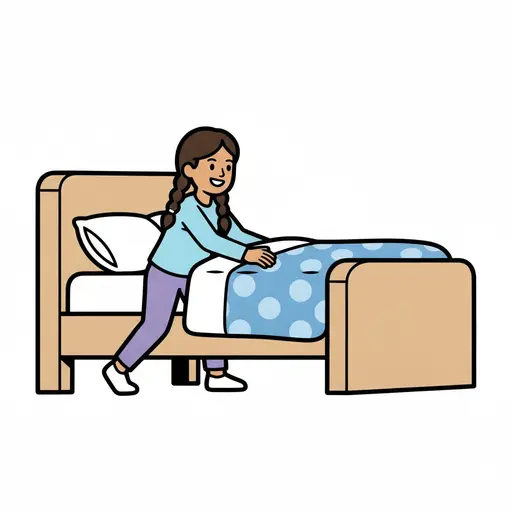
Get Into Bed
A girl gets into bed under a spotted duvet.
This visual support in other languages
Take the visual supports with you
In Routined you build schedules from these pictures, add timers and voice instructions, and your child follows the day on their own.


* 14-day free trial, then $2.39 a month or $20.99 a year (US pricing). Cancel anytime.