Put boy to bed
A body can't always flip from full speed to sleep in a minute. The visual support below shows the wind-down step by step, so he can feel the evening actually closing.
 ♀
♀Woman puts boy to bed
A woman tucks a boy into bed.
About this visual support
The gap between rolling around on the floor and lying still in the dark is bigger than adults tend to remember. A boy's nervous system needs concrete signals that the day is shifting down, otherwise the tempo stays in his body long after the lamp is off.
A visual schedule lets him see the whole wind-down as a chain: dinner, toothbrush, pyjamas, a book, lights low. Following the row with his eyes turns each step into a small reminder that we're heading toward sleep, not toward the next thing. For boys who often want one more activity, it helps that the picture clearly shows the chain ending after the last square.
One concrete tip: place the calmest image, usually the book or a soft toy, right at the end before lights out. That way the final visual input is already dimmed. If you want to assemble the whole evening as a digital schedule with reminders, you can do that in Routined, where the trial runs for 14 days.
Use this image in a schedule
Build your own visual schedule with this image and download it as a print-ready PDF. Completely free.

More similar visual supports
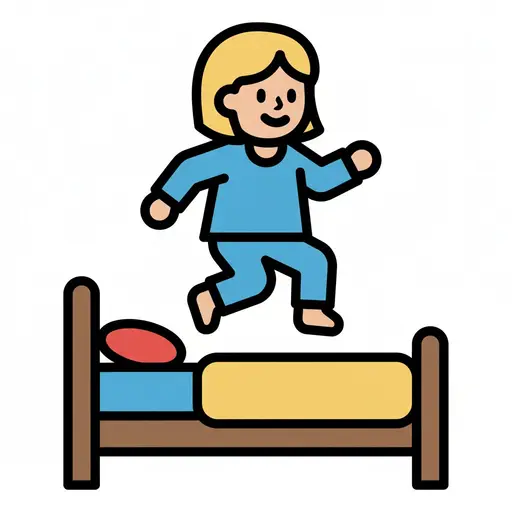
Hop in bed
A happy girl in pajamas hops into a bed with a red pillow and a yellow blanket.

Bedtime
A girl with long wavy hair sleeps peacefully in her bed under a white duvet, wea...

Bedtime routine
A person sits on the bed with books beside them, with a symbol showing the showe...

Crawl into bed
A child crawls under the duvet in bed.

Dress for bed
A smiling boy holds up his blue and white striped pyjama top, ready to put it on...

Dress pajamas
A woman is putting on blue pajamas with stars and moons on them.

Go to sleep
A girl in blue striped pyjamas lies asleep on a pillow, with a moon and stars ab...

Good night
A girl sleeps in bed under the moon and stars.
Take the visual supports with you
In Routined you build schedules from these pictures, add timers and voice instructions, and your child follows the day on their own.


* 14-day free trial, then $2.39 a month or $20.99 a year (US pricing). Cancel anytime.