Put on nightclothes
Fabric against the skin should feel soothing at night, yet seams and elastic can scrape exactly when the body wants to settle. The visual support below helps the child past those details.
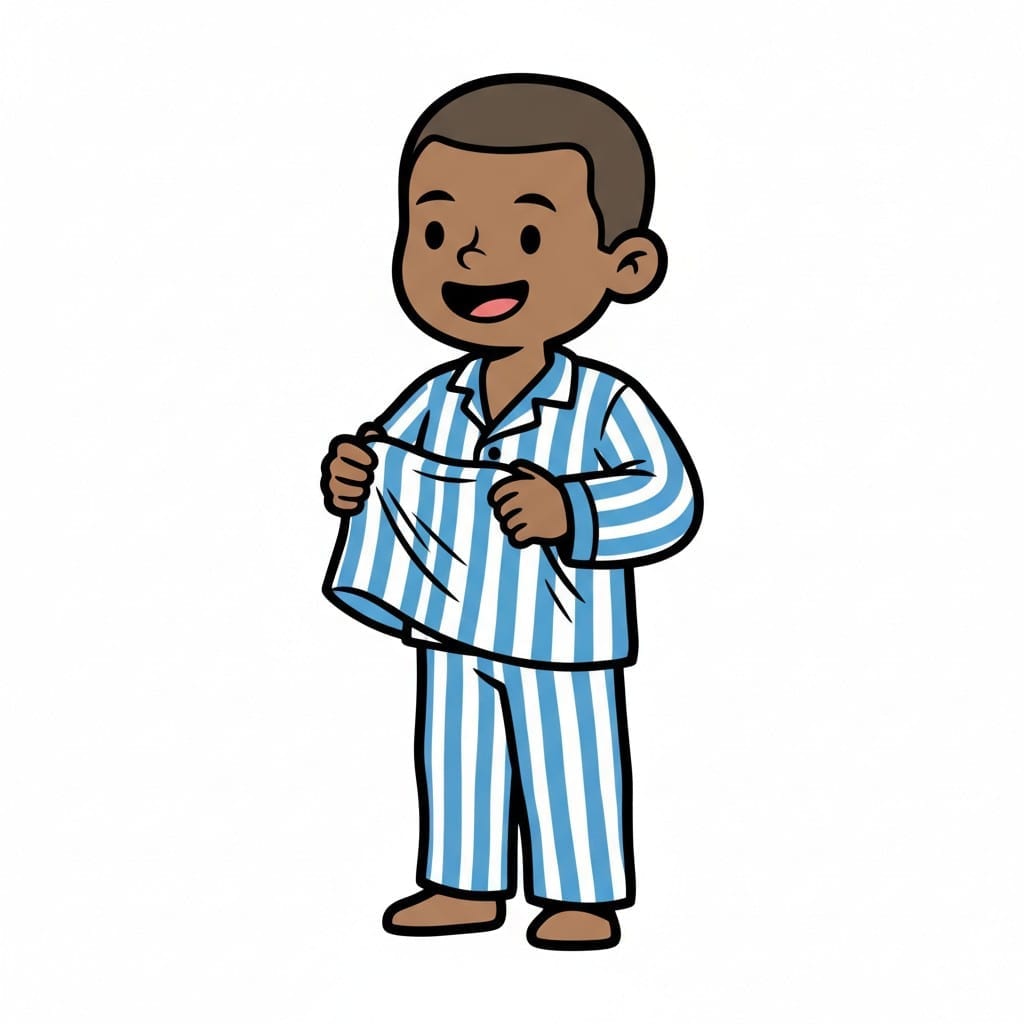 ♂
♂Put on pyjamas
An illustration of a boy pulling up blue and white striped pyjama bottoms. He is also wearing a red pyjama top with yellow stars.
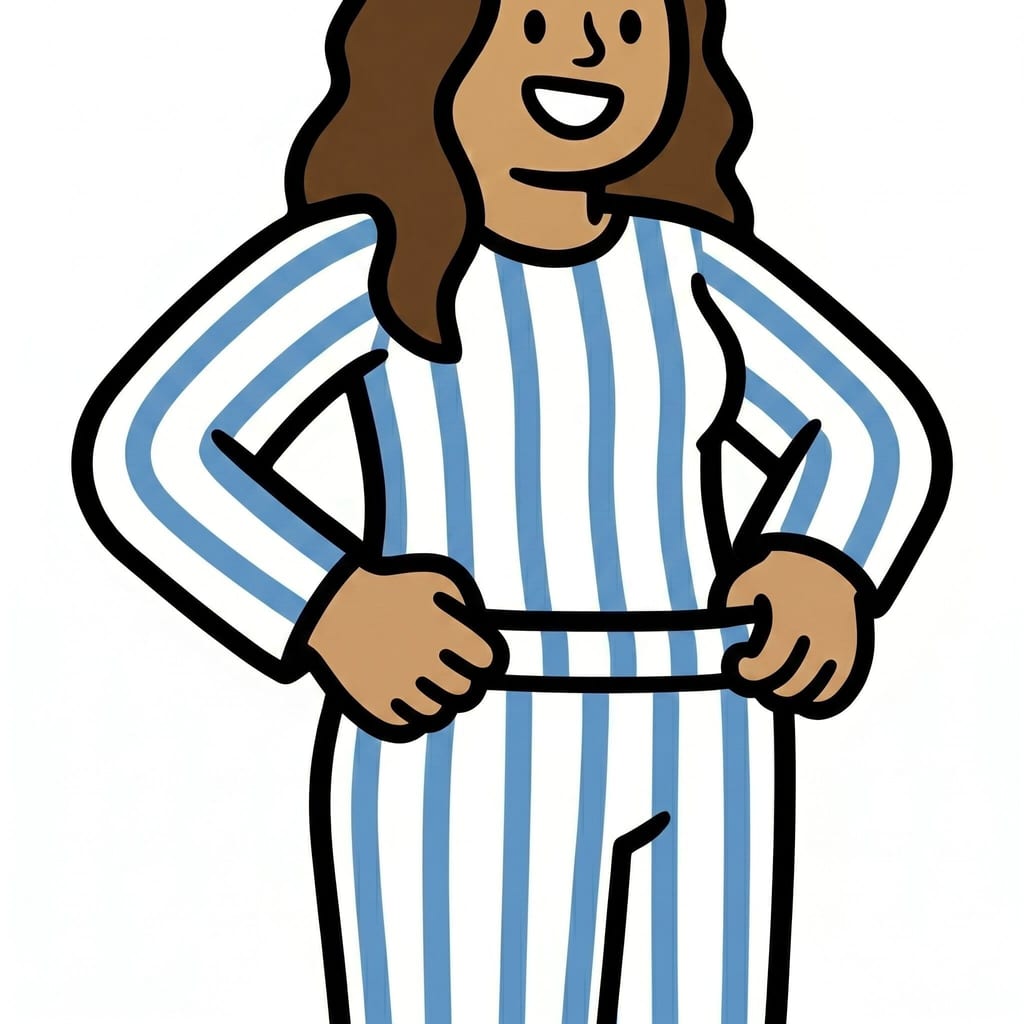 ♀
♀Woman putting on pyjama bottoms
An illustration of a woman putting on striped pyjama bottoms.
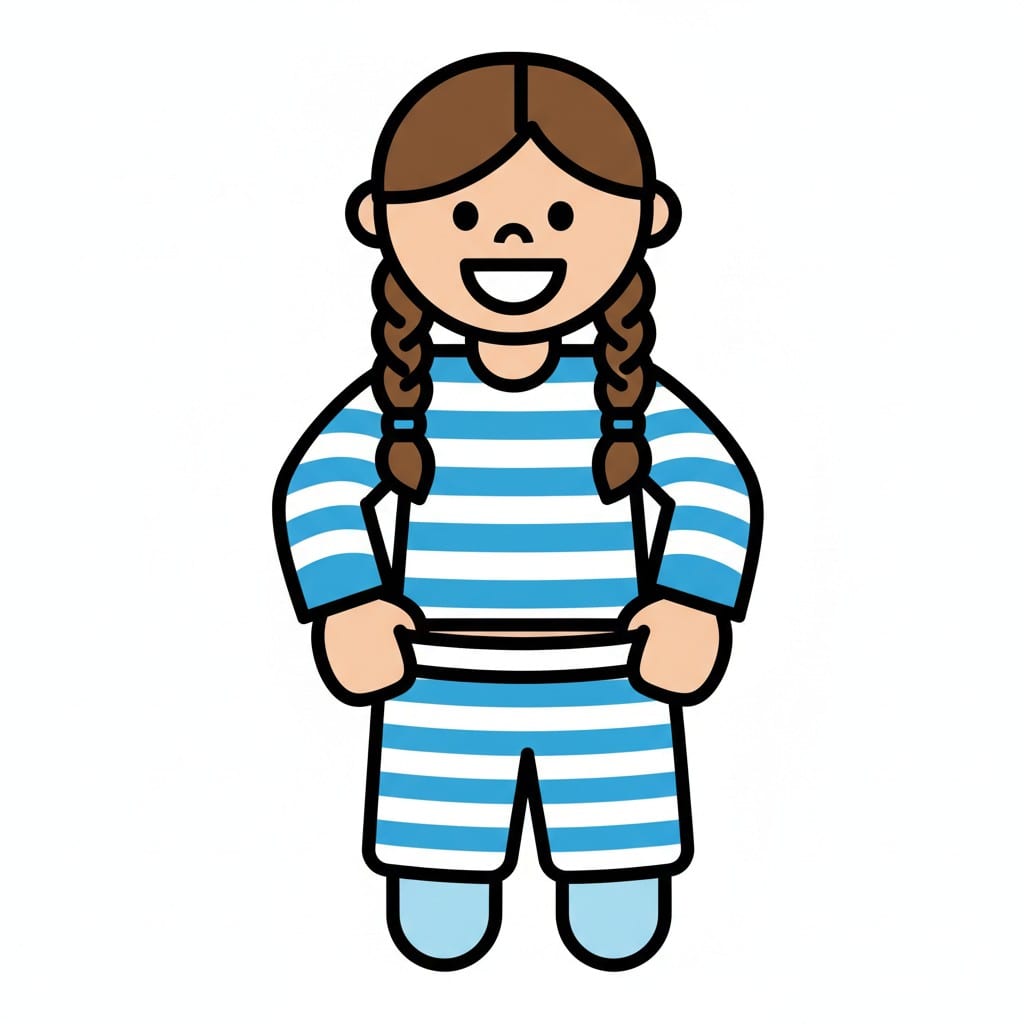 ♀
♀Striped pyjamas on
A girl with braids wears a blue and white striped pyjama set and holds the waistband of the shorts.
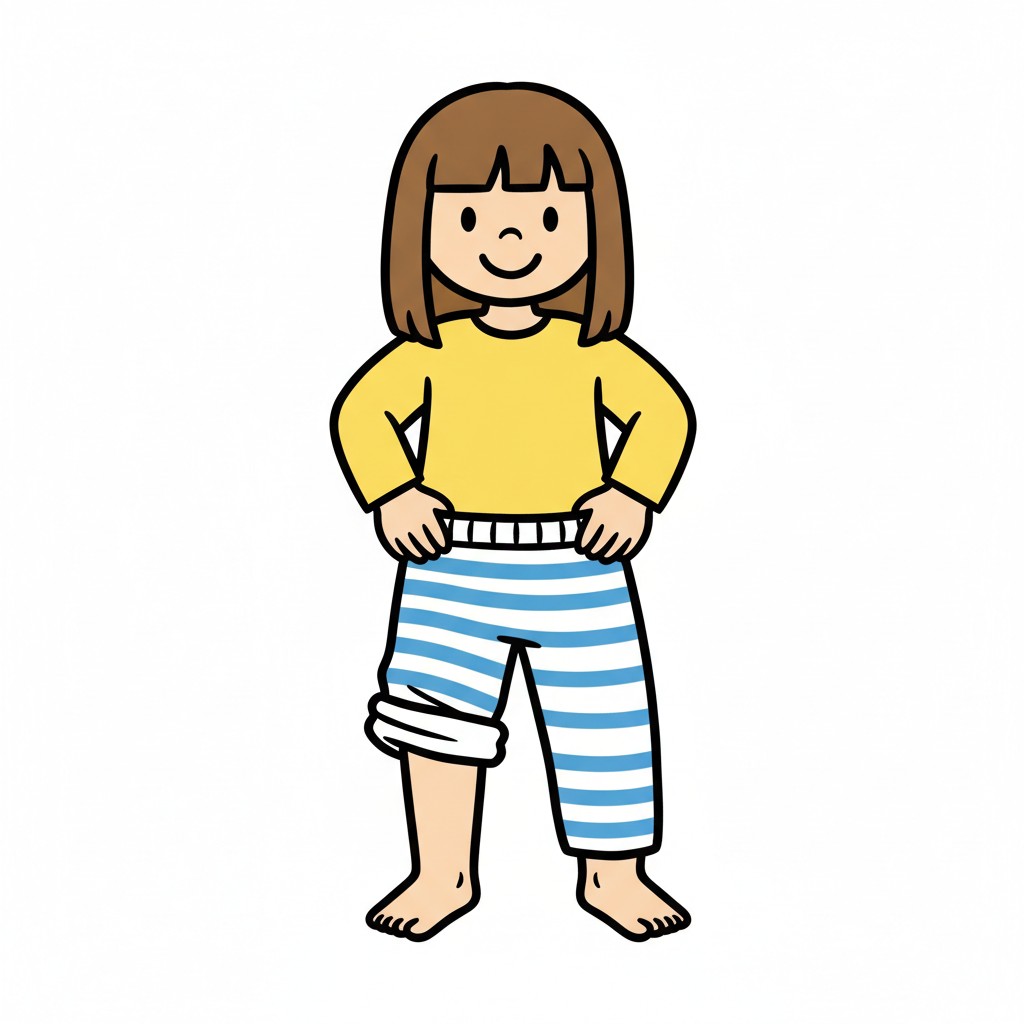 ♀
♀Girl putting on pajamas
A girl pulls up striped pajama trousers.
About this visual support
Nightclothes are usually described as soft and cosy, yet for many children it is the seams, the elastic at the wrists or the crawling labels at the neck that take all the attention. Then getting dressed is not a calm closing of the day, but a moment full of small inputs that cannot be sorted.
Visual support lets the order be laid out so the child knows exactly which garment comes next and is not surprised by the next material on the skin. The predictability means the body does not need to brace itself, and attention is freed up for the actual feel of the fabric. For children with ADHD or another neurodivergent profile, that buffering is often what makes the difference.
An activity-specific tip: turn the clothes right-side out together before starting, so the correct side is ready and the elastics do not surprise anyone. It becomes a small ritual that takes the edge off the trickier moments. With Routined you can build a nightclothes sequence with visual support and try the app for 14 days at no cost.
Use this image in a schedule
Build your own visual schedule with this image and download it as a print-ready PDF. Completely free.

More similar visual supports
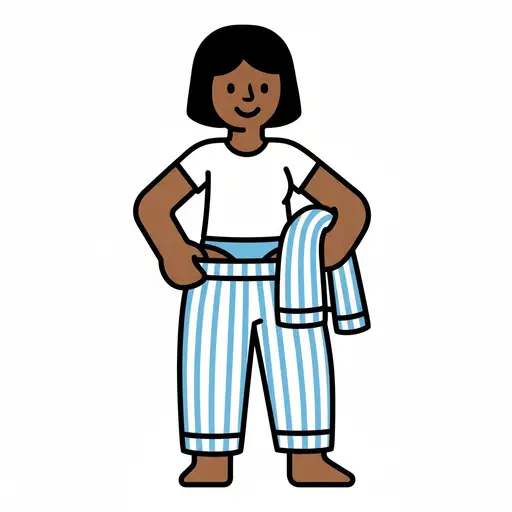
Put on pyjamas
A girl stands in striped pyjama trousers, holding the rest of the pyjamas in her...
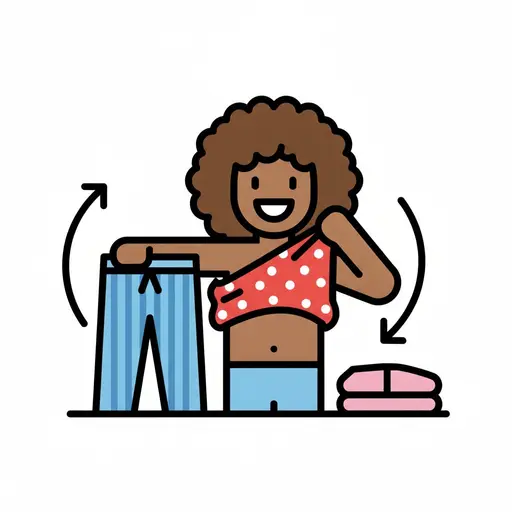
Change into pyjamas
A child pulls off a top next to a pair of pyjama trousers and a pile of clothes.
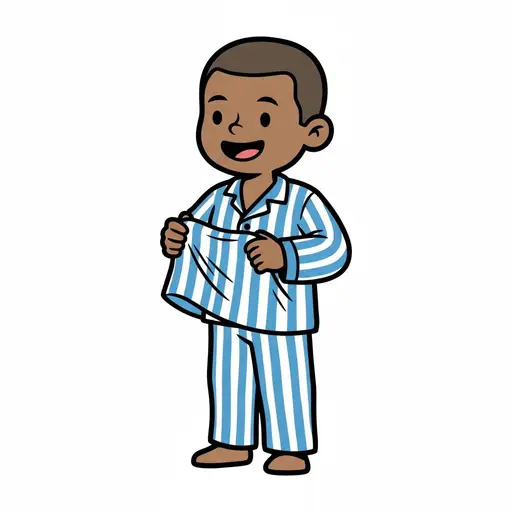
Dress for bed
A smiling boy holds up his blue and white striped pyjama top, ready to put it on...
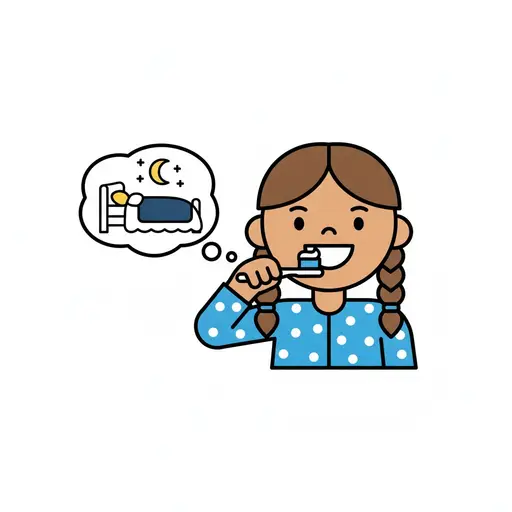
Get ready for bed
A girl in spotted pyjamas brushes her teeth while a thought bubble shows a bed u...
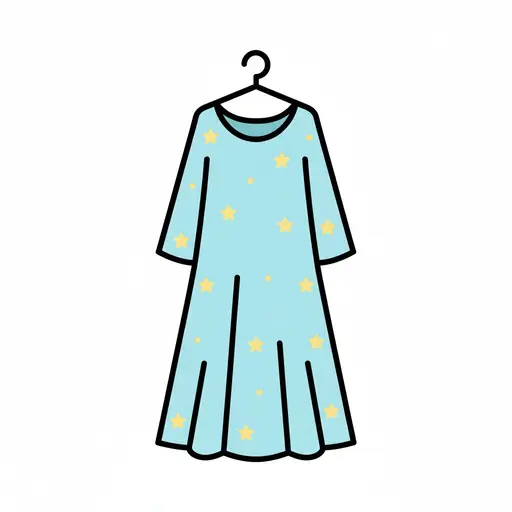
Put on the nightgown
A light blue nightgown with stars on a hanger.
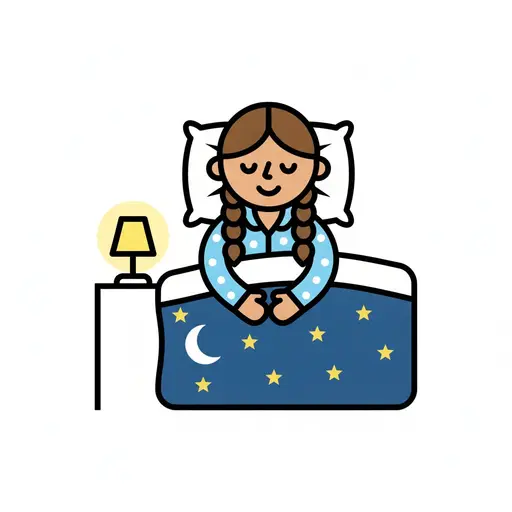
Pyjamas at bedtime
A girl in spotted pyjamas sits in bed with her eyes closed while the bedside lam...
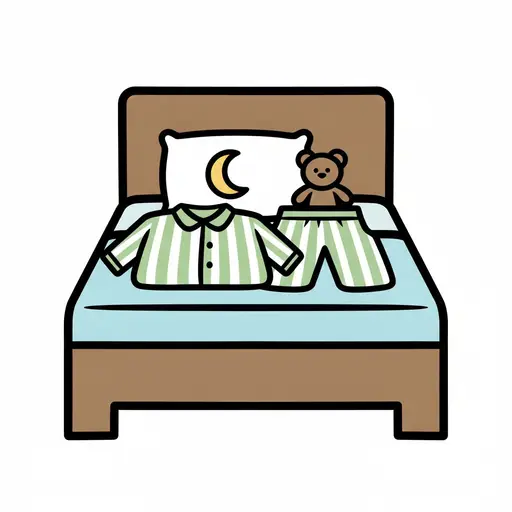
Pyjamas on the bed
Striped pyjamas lie ready on the bed next to a teddy bear and a pillow with a mo...
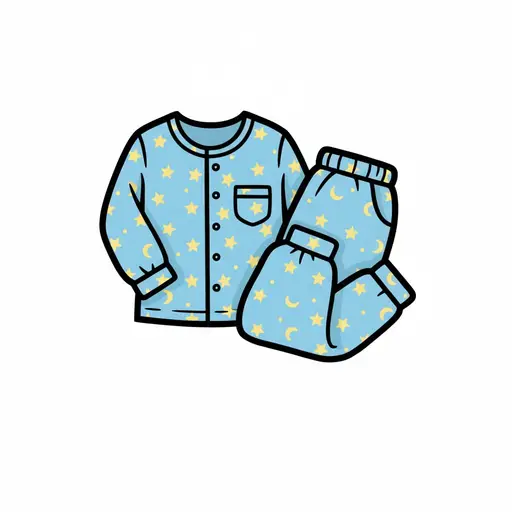
Change into night clothes
A folded light blue pajama set with yellow stars and crescent moons.
Take the visual supports with you
In Routined you build schedules from these pictures, add timers and voice instructions, and your child follows the day on their own.


* 14-day free trial, then $2.39 a month or $20.99 a year (US pricing). Cancel anytime.