Read bedtime story
The story itself is rarely the problem, the ending is. When a child does not want to let the day go, every last sentence turns into a negotiation. The pictures below give the ending a visible shape.
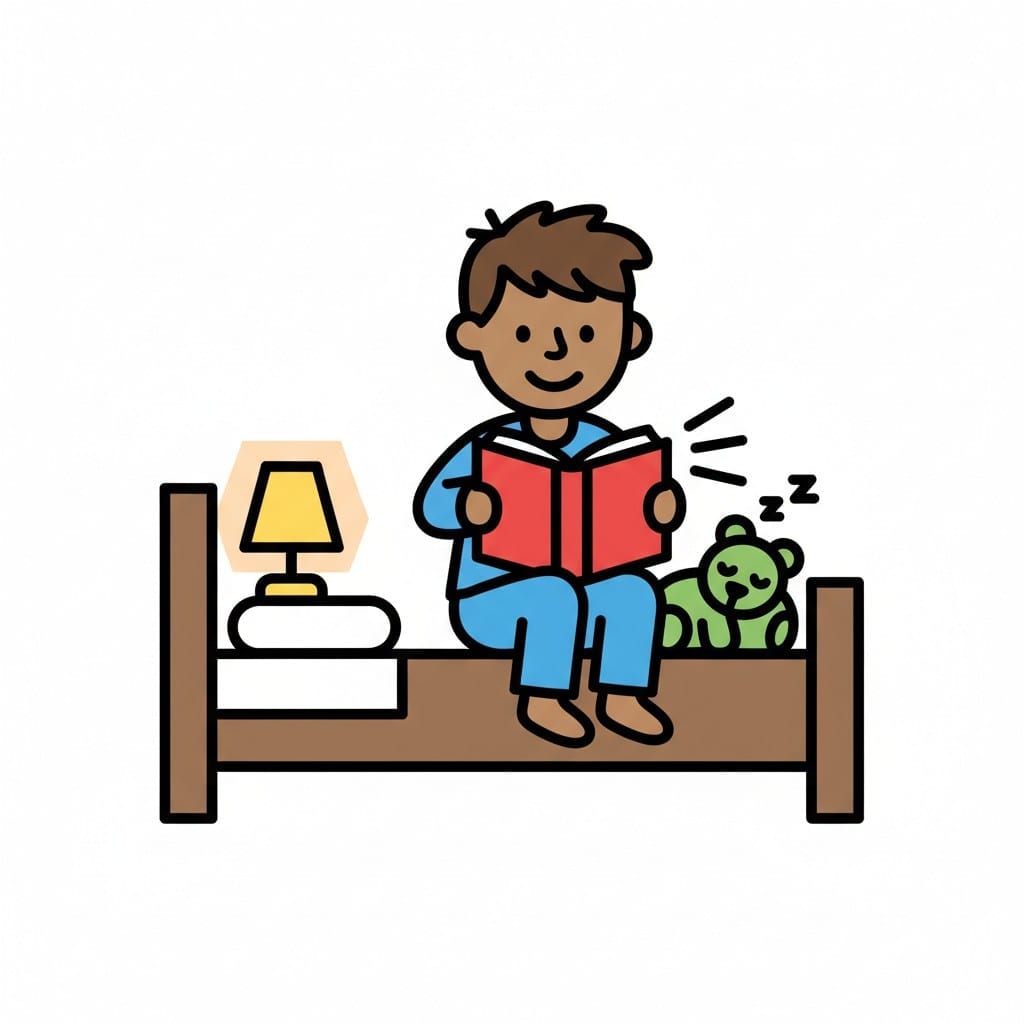 ♂
♂Boy reads bedtime story
A boy sits on a bed, reading a red book. Next to him is a nightstand with a lamp and a sleeping teddy bear.
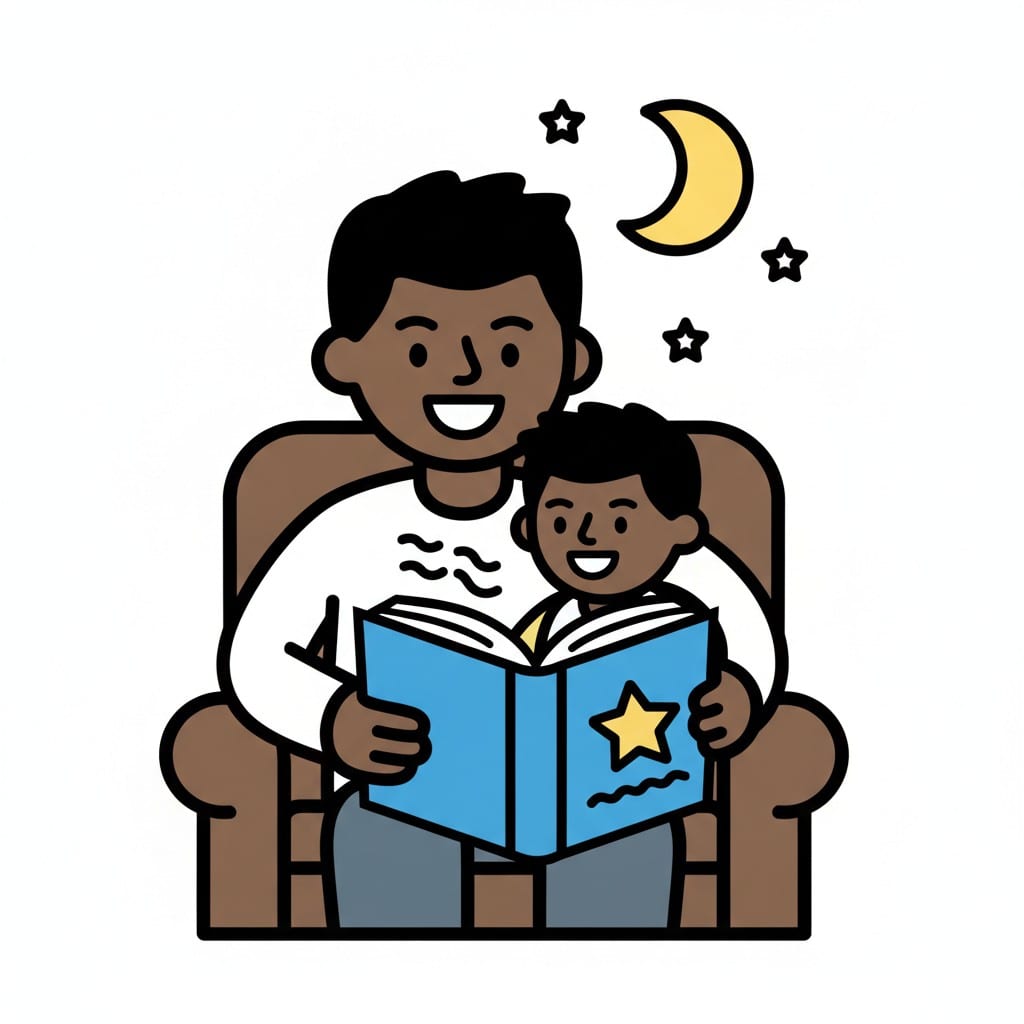 ♂
♂Father reading bedtime story in armchair
A father and a child sit together in a brown armchair with a blue book showing a star, while a moon and stars glow above them.
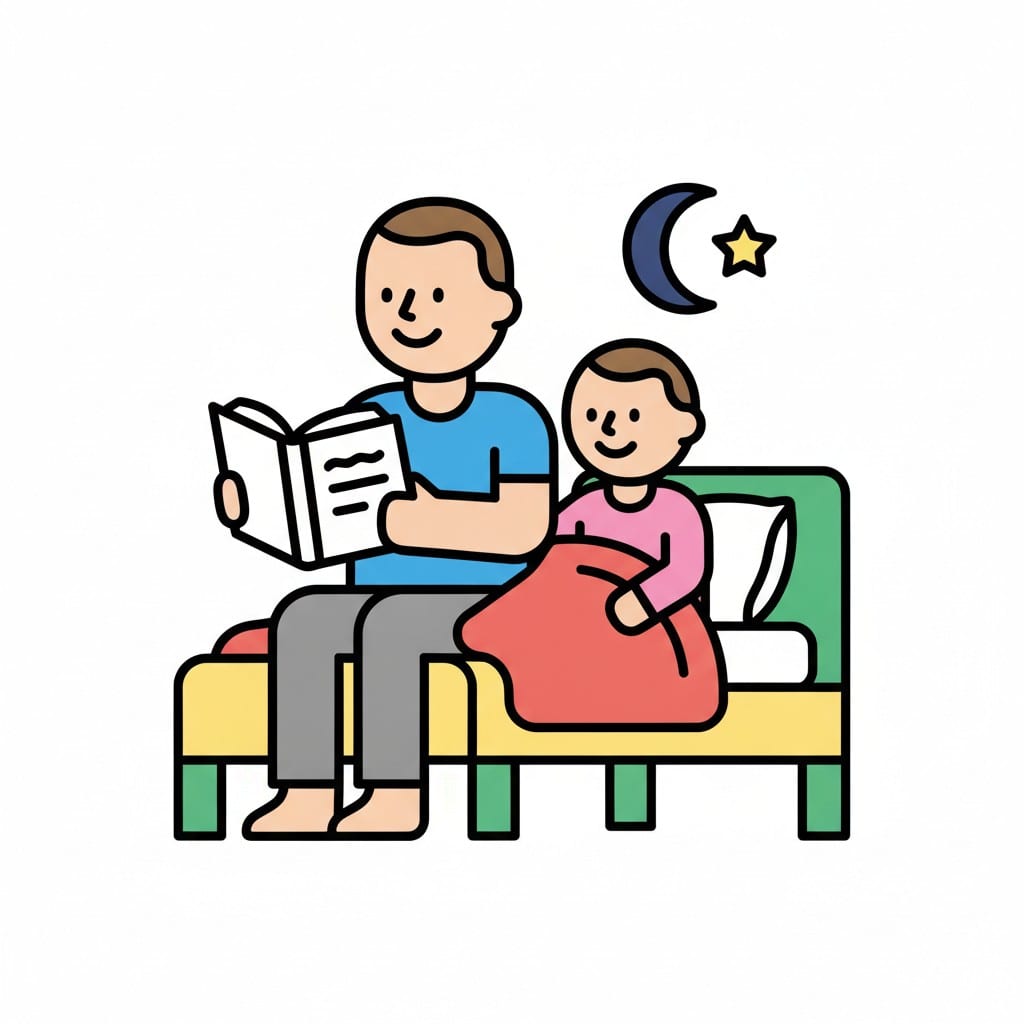 ♂
♂Reading a bedtime story
A man sits on the bed reading a book to a child under the blanket.
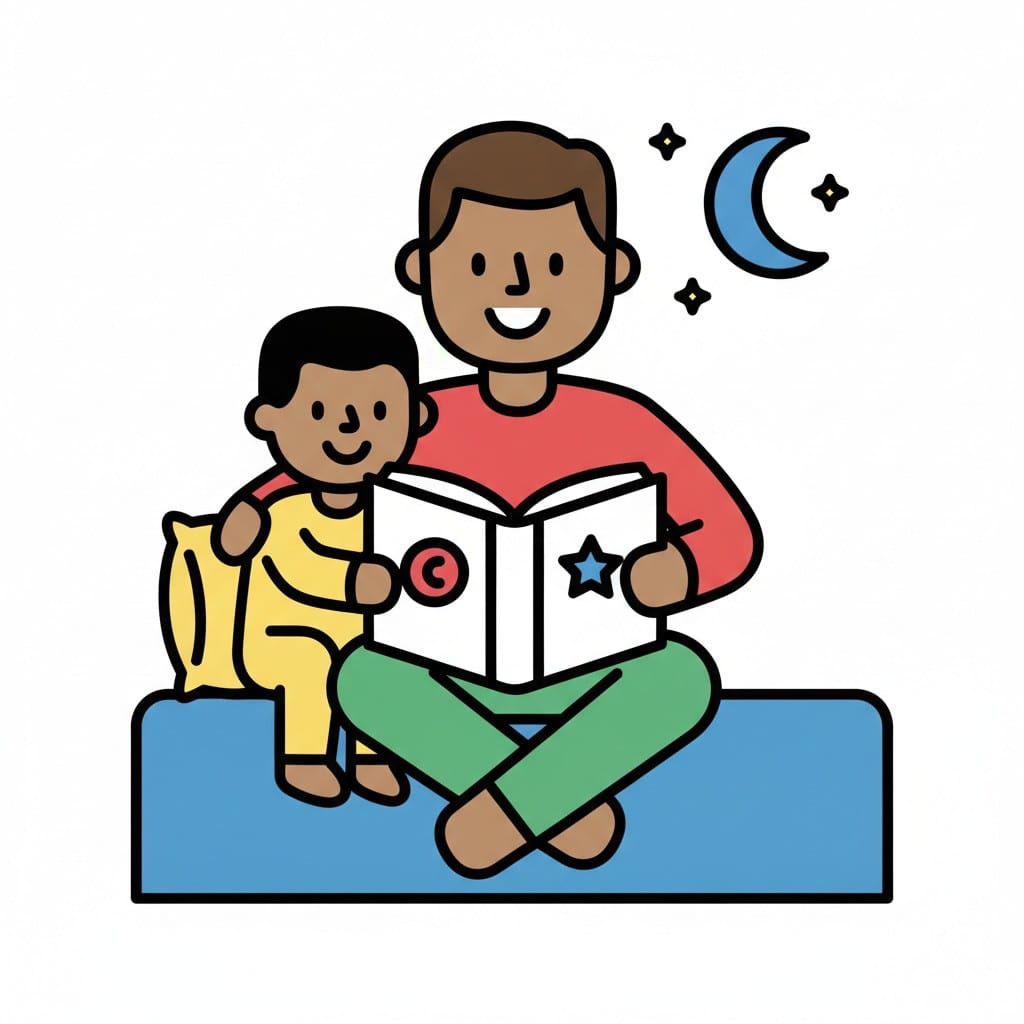 ♂
♂Reading a story together
A man and a child sit close together reading a book under the moon.
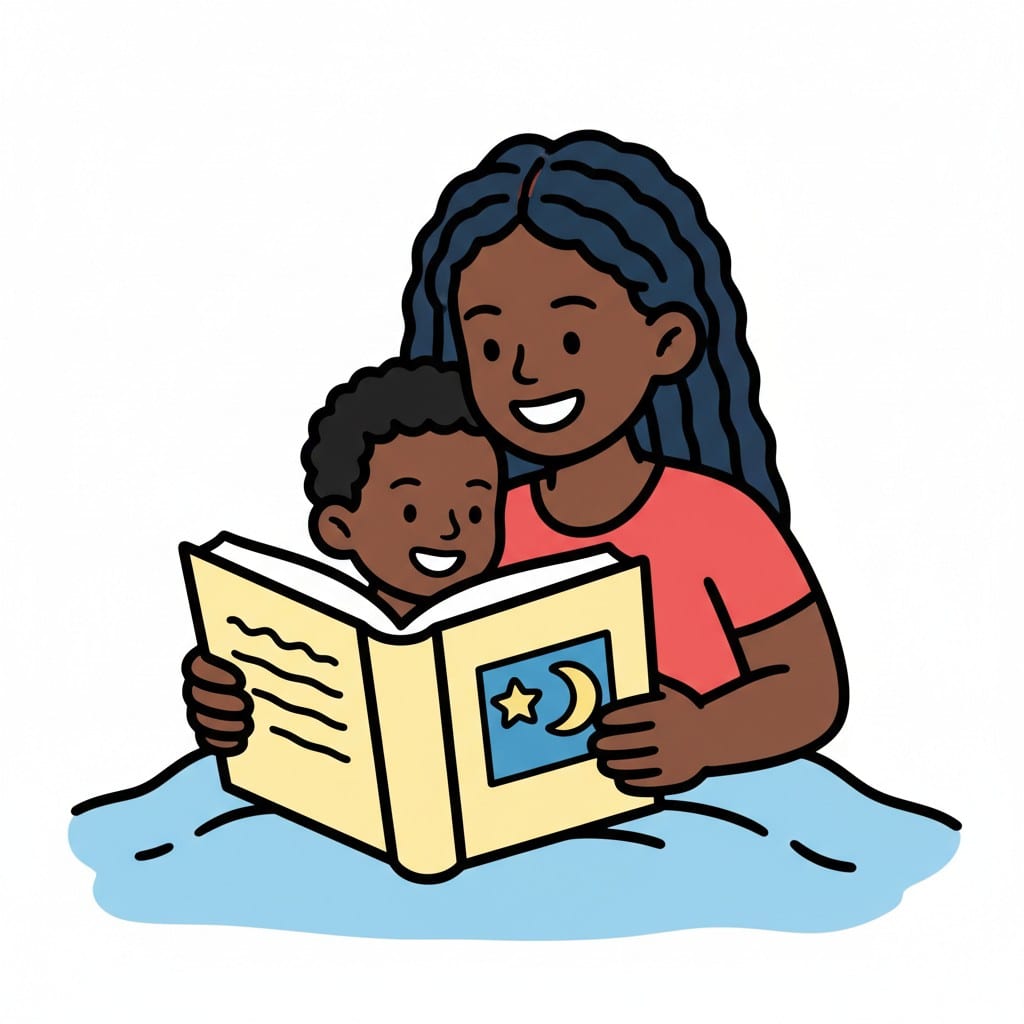 ♀
♀Parent and child read bedtime story
An adult and a child sit in a bed, reading a book together. The book has a moon and stars on the cover.
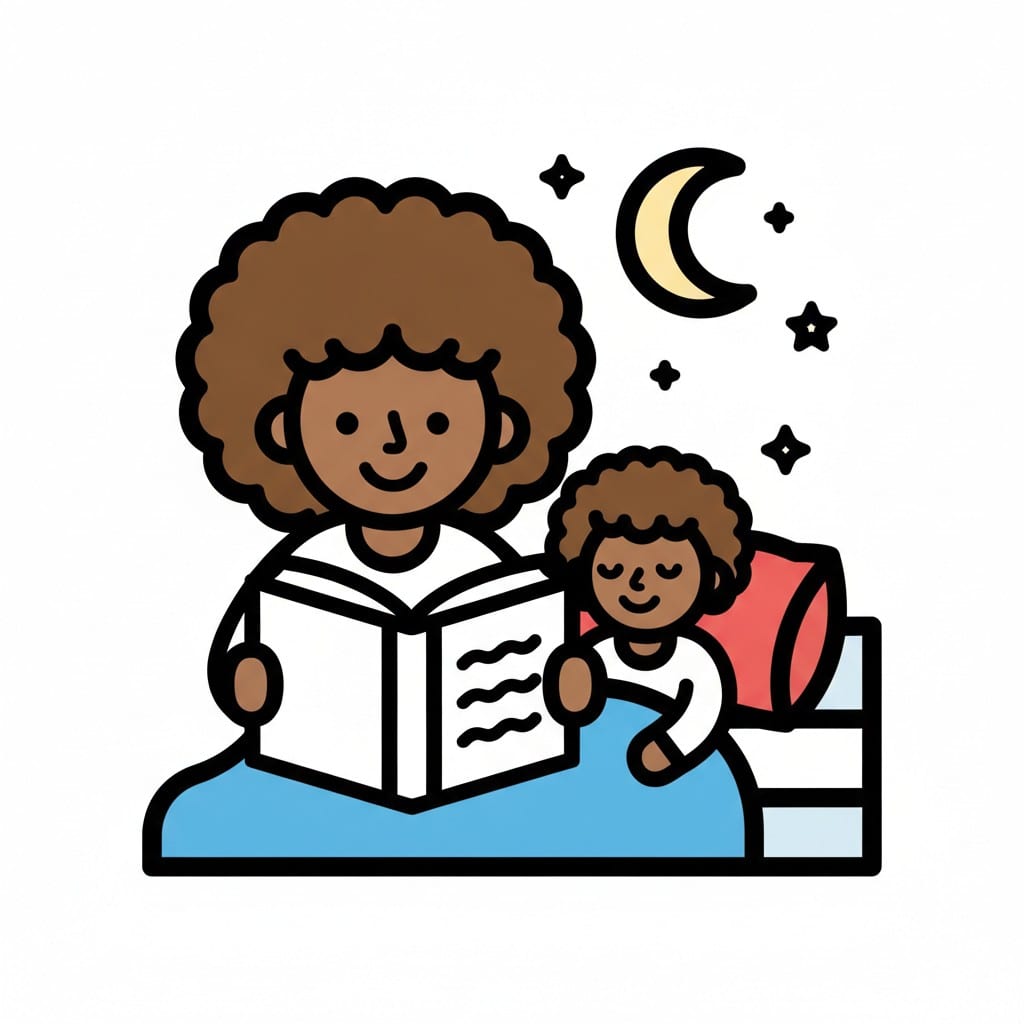 ♀
♀Bedtime story at the bedside
A woman sits by a bed reading from an open book while the child rests under a blue blanket, with a moon and stars in the background.
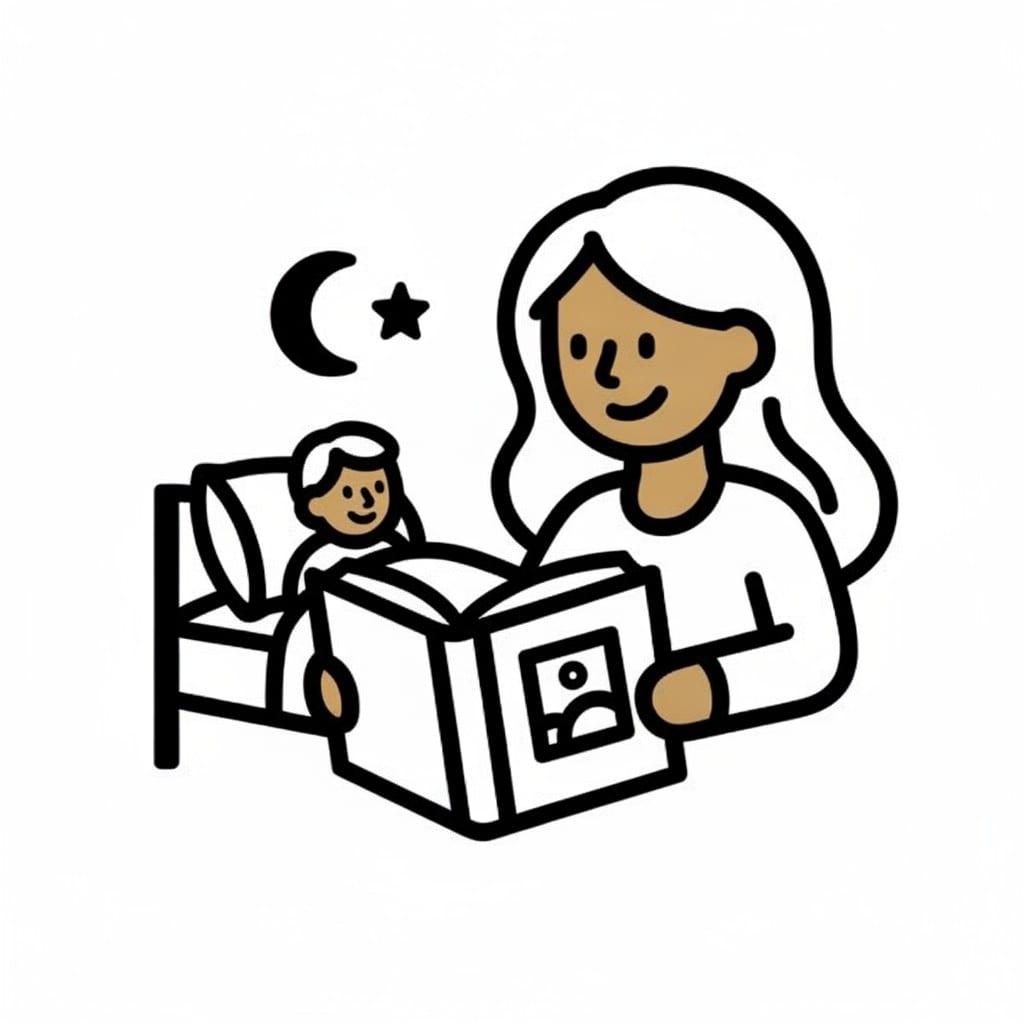 ♀
♀Mother reading a picture book at bedtime
A woman with long hair holds up a picture book in front of a child lying in a small bed, with a moon and a star drawn nearby.
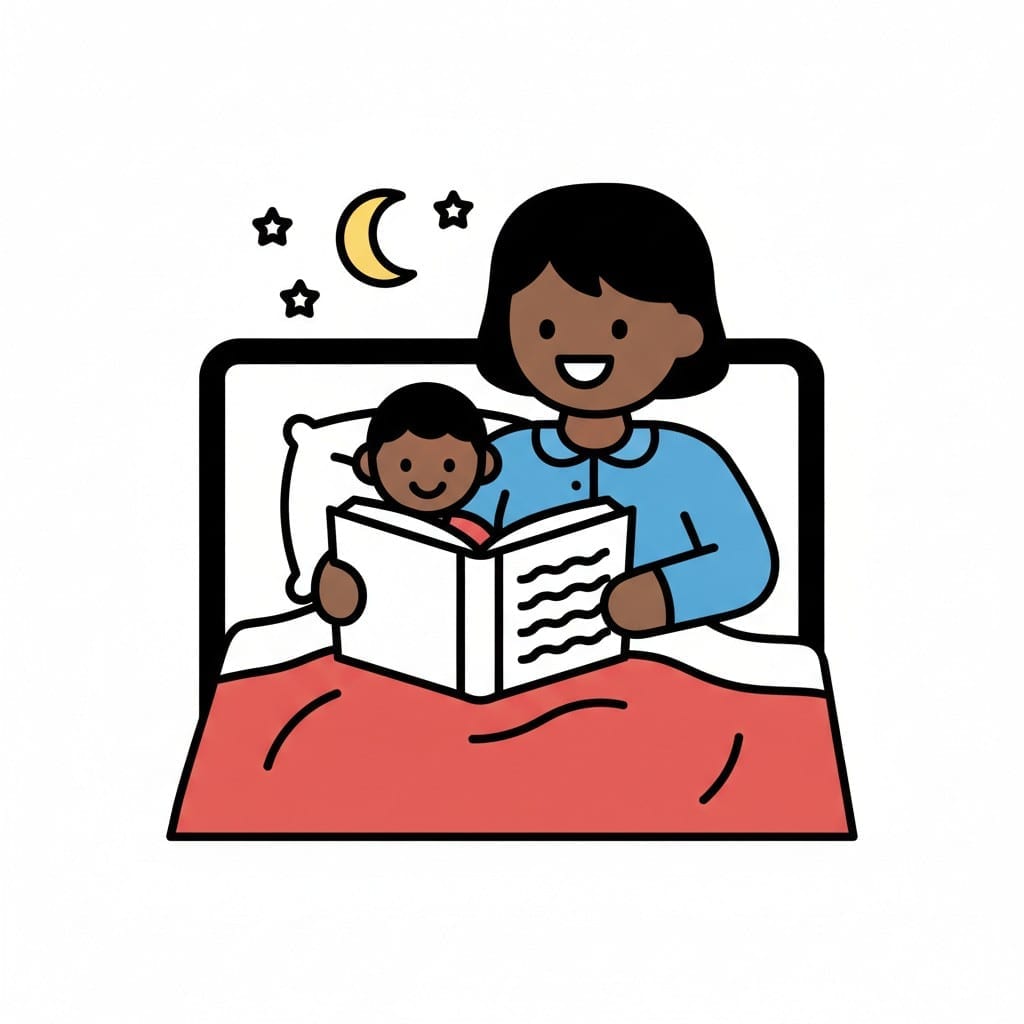 ♀
♀Bedtime story under a red duvet
A smiling woman in a blue shirt reads from a book together with a child lying under a red duvet, with a moon and stars above the bed.
About this visual support
A bedtime story is asked to do two things at once: carry the child over into sleep, and mark the day as over. The second part is the tricky one. For a child who does not want the day to end, every closing sentence becomes an opening for one more chapter, one more glass of water, one more question. The story risks becoming an extension instead of a finish line.
With visual support, the ending is laid out before the first page even turns. The child can see how many pages belong to tonight, what happens after the last sentence, and where the lamp goes off. The negotiation loses some of its grip when the next step is already on the table as a picture. It is not refusal, it is showing what comes next.
One tip that belongs specifically to the bedtime story: point to the ending picture before you start reading, not after. That way the child knows the whole way through where the finish sits, which makes it easier to sink into the story instead of guarding how long it lasts. To put the whole evening together with pictures and a soft timer, Routined is free to try for fourteen days.
This image is part of these ready-made schedules
Use this image in a schedule
Build your own visual schedule with this image and download it as a print-ready PDF. Completely free.
More similar visual supports
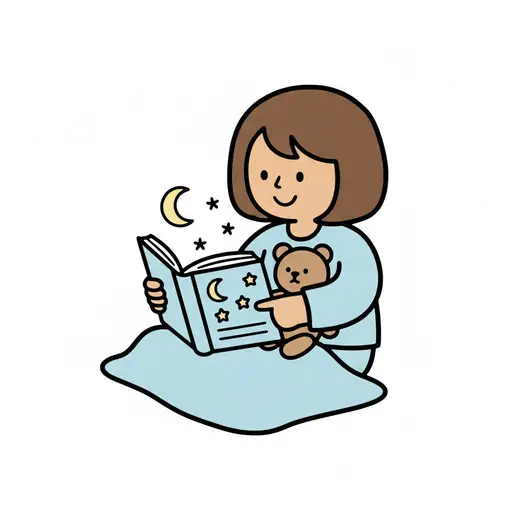
Read a Bedtime Story
A girl reads a bedtime book with a teddy bear under a blanket.
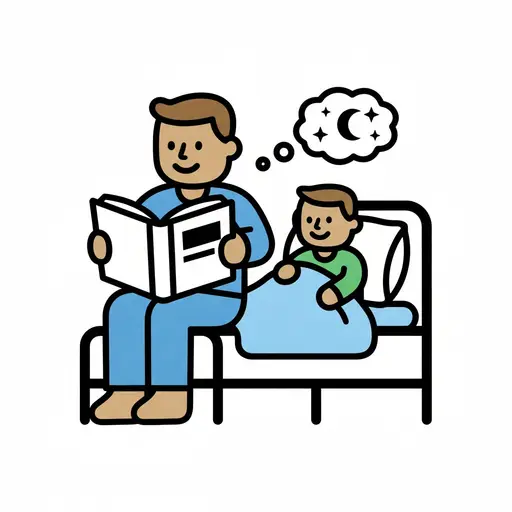
Bedtime stories
An adult reads a bedtime story to a child in bed.
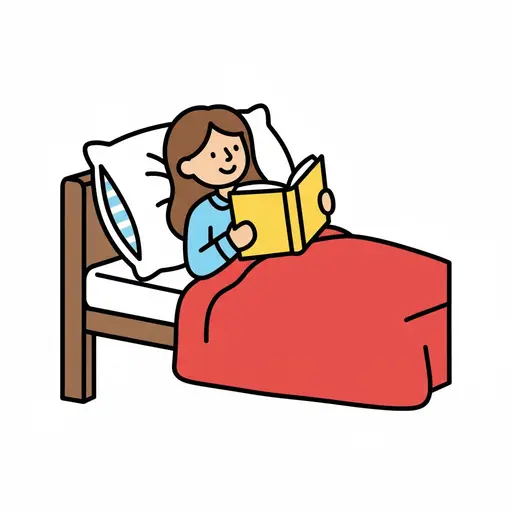
Goodnight Story
A girl sits up in bed reading a book while thinking of the moon and stars.
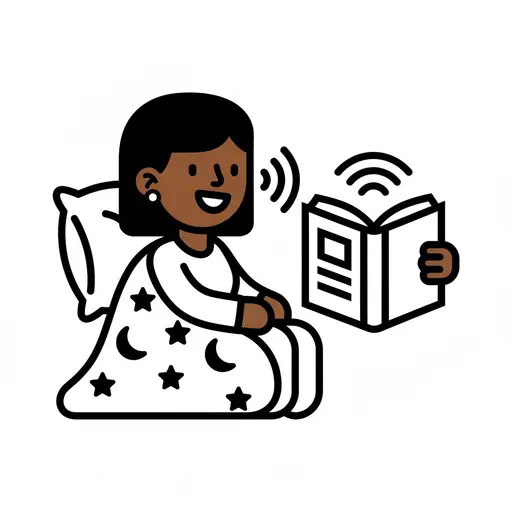
Listen to a bedtime story
A child lies in bed listening to a book with sound waves.
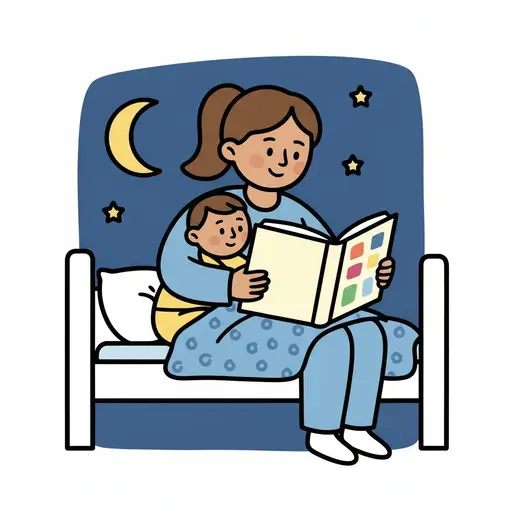
Bedtime Story
A woman with a ponytail sits on the edge of a bed reading a large book while a c...
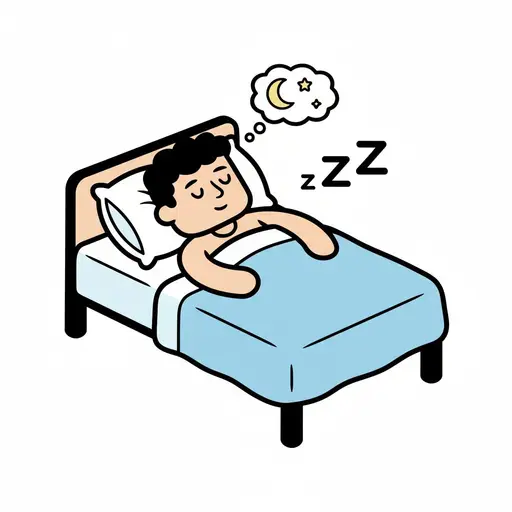
In Bed Quiet Time
A boy lies in a bed under a blue blanket with a thought bubble showing a moon an...
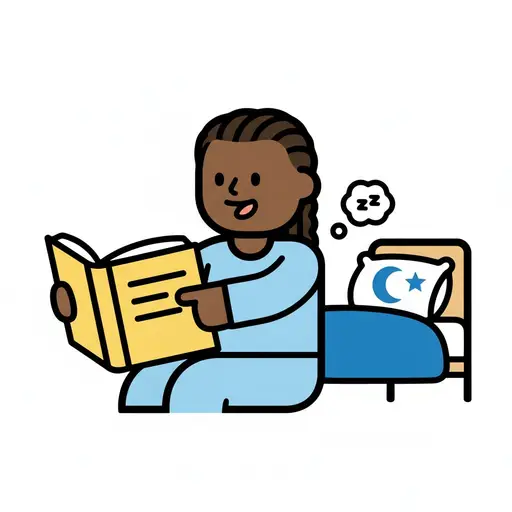
Read a story
A person in pajamas is sitting in bed, reading a book. A thought bubble with 'zz...
Evening calm
A picture of a dark blue night sky with a moon and stars above a house and some ...
This visual support in other languages
Take the visual supports with you
In Routined you build schedules from these pictures, add timers and voice instructions, and your child follows the day on their own.


* 14-day free trial, then $2.39 a month or $20.99 a year (US pricing). Cancel anytime.