Say goodnight
Two words, a hug, done – goodnight rarely works that way. A new question pops up, another glass of water, one last cuddle. The visual support below gives the evening a clear finish line.
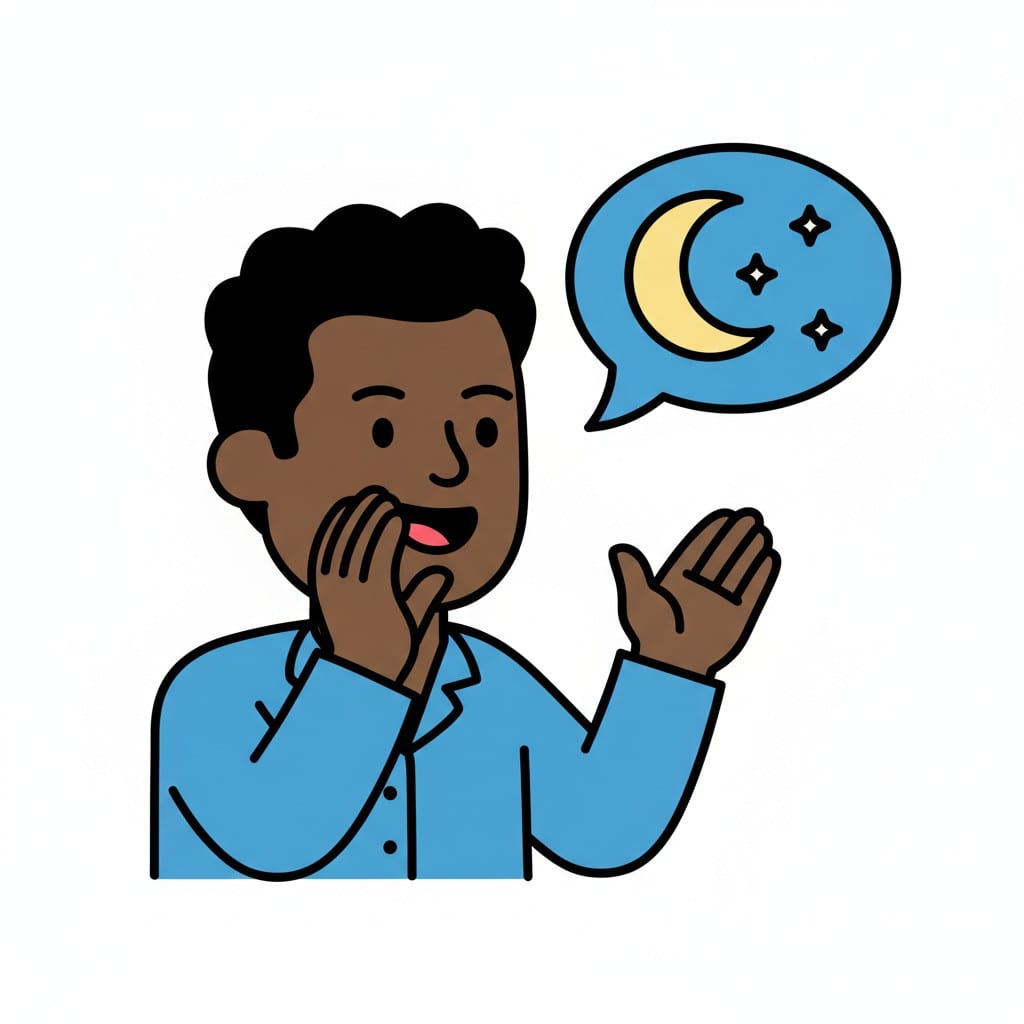 ♂
♂Say goodnight
A person in blue pajamas saying goodnight, with a speech bubble showing a moon and stars.
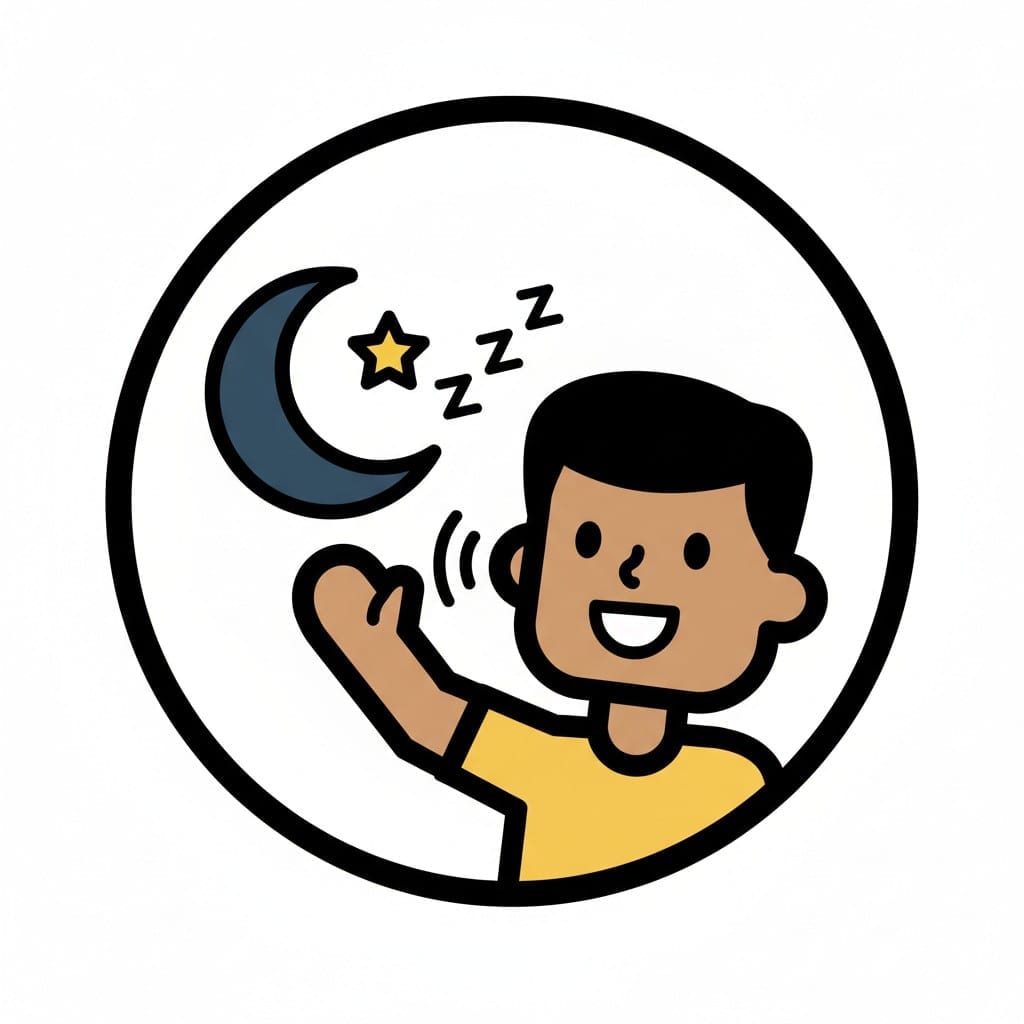 ♂
♂Goodnight
An icon of a person waving with a moon, star, and 'zzz' symbols, signifying goodnight.
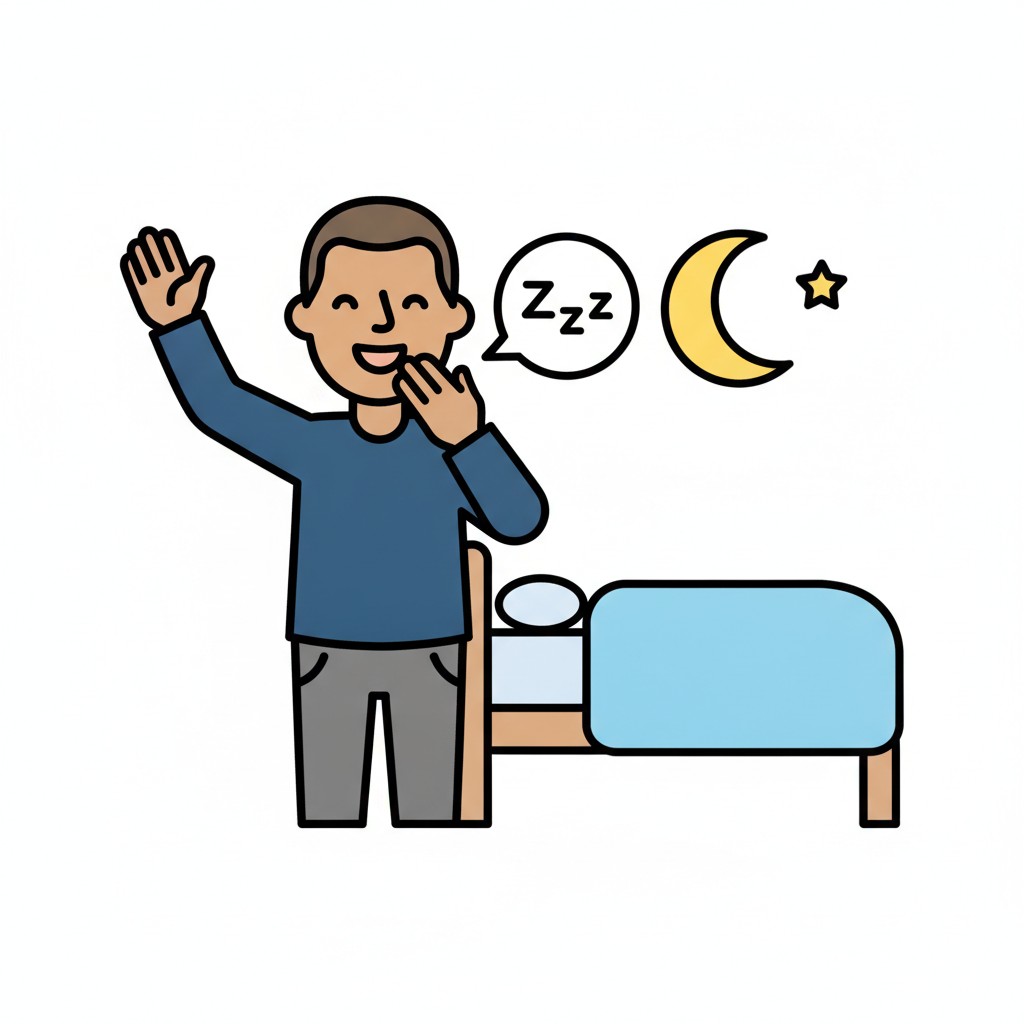 ♂
♂Wave goodnight
A person stands by a bed and waves goodnight, with a speech bubble showing sleep and a moon and a star.
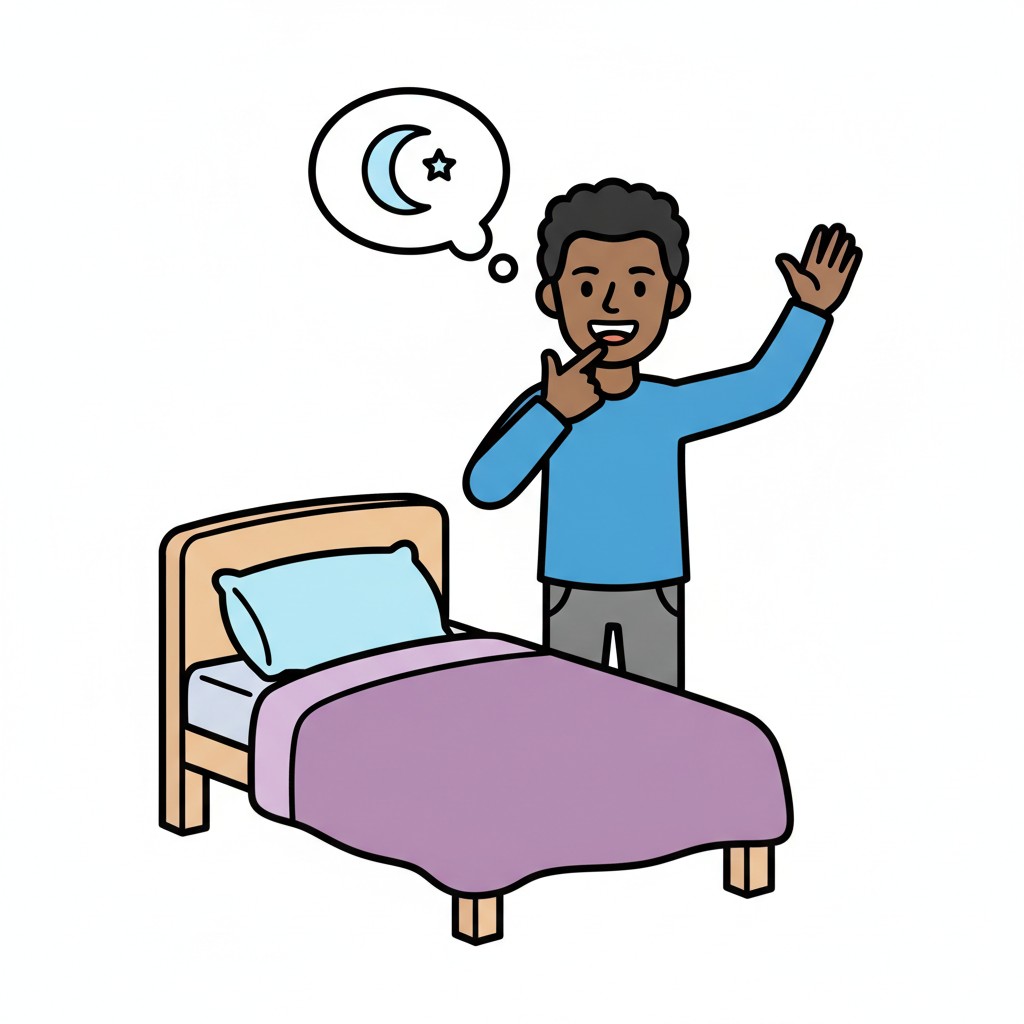 ♂
♂Saying goodnight
A man waves and blows a kiss beside a bed, with a moon in a thought bubble.
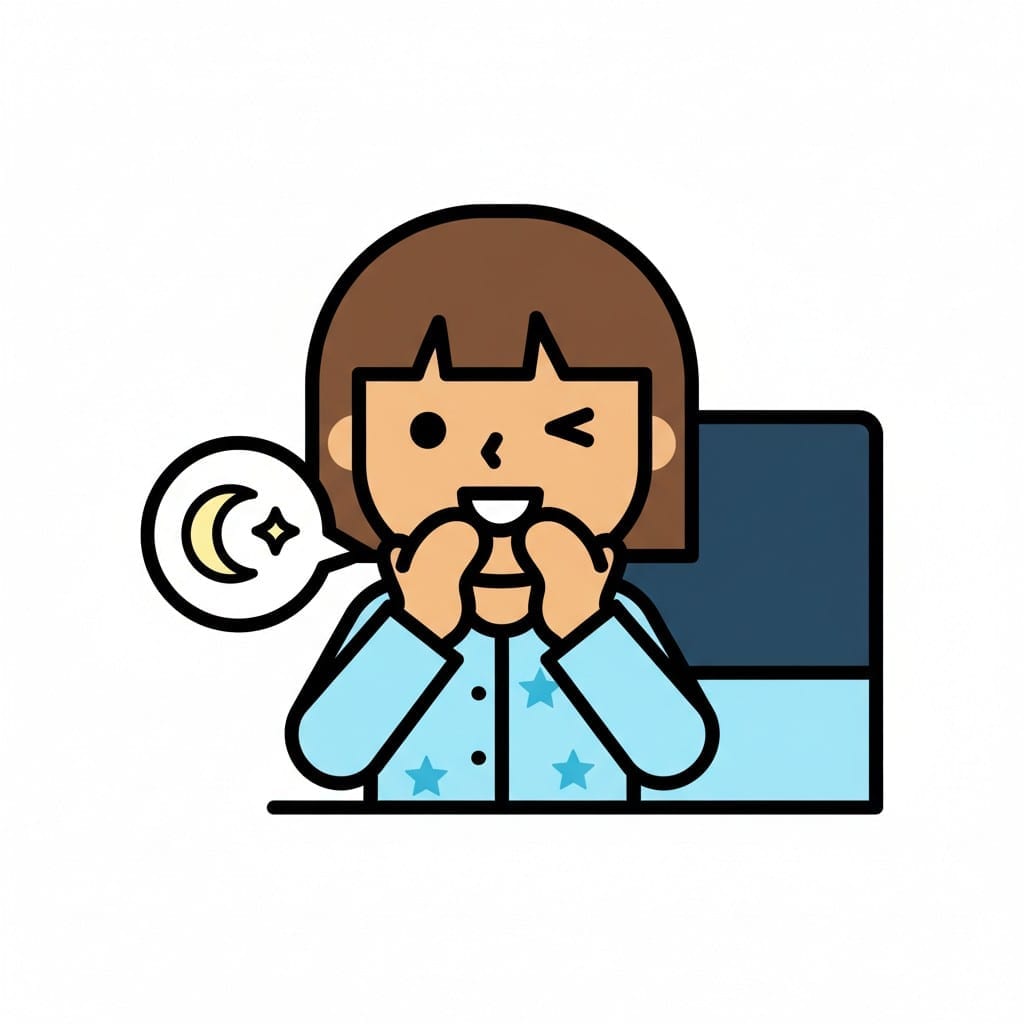 ♀
♀Say goodnight
A girl in blue star pajamas winks and smiles, with a speech bubble showing a moon and a star.
About this visual support
Saying goodnight is supposed to close the day, but it often turns into a queue of tiny negotiations at the bedside. One more thing to tell you, a question about tomorrow, a glass of water, a different teddy. The evening drifts and everyone ends up more tired than they needed to be.
A visual support resolves this by moving the ending from words into pictures. When the child sees the few steps – hug, kiss, light off, goodnight – there is no empty space where a fresh question can slip in. The image carries the message, so your voice does not have to repeat it. For children who find it hard to release the day, that visible boundary matters more than which words you choose.
A practical tip: put the cards on the bedroom wall and tap the last picture when you leave. The ending stays there even after you close the door. In the Routined app you can place the same sequence inside the evening routine alongside a timer and check-off, so the whole path from teeth brushing to lights out runs on the same track every night.
This image is part of these ready-made schedules
Use this image in a schedule
Build your own visual schedule with this image and download it as a print-ready PDF. Completely free.

More similar visual supports
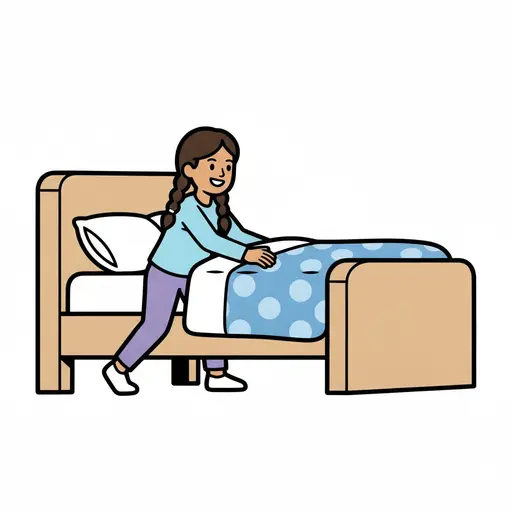
Get Into Bed
A girl gets into bed under a spotted duvet.
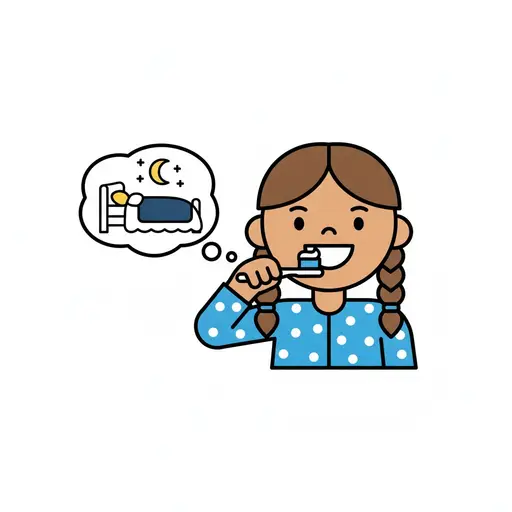
Get ready for bed
A girl in spotted pyjamas brushes her teeth while a thought bubble shows a bed u...
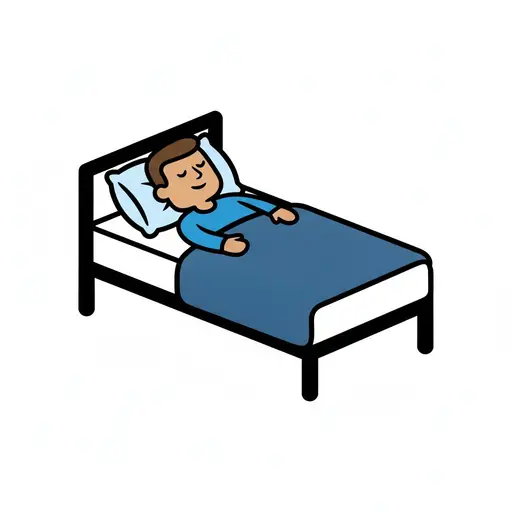
Lie in bed
A boy lies resting in bed under a blue blanket.
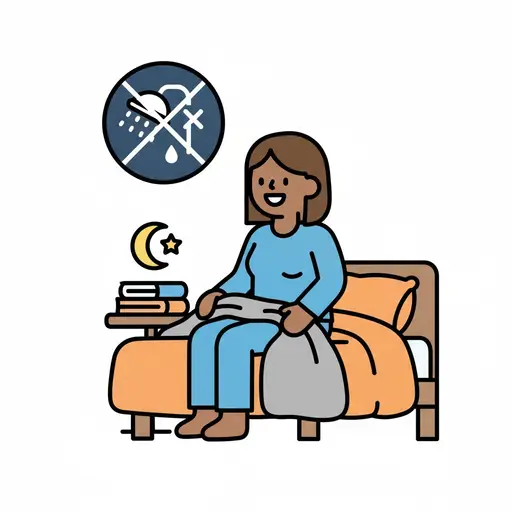
Bedtime routine
A person sits on the bed with books beside them, with a symbol showing the showe...
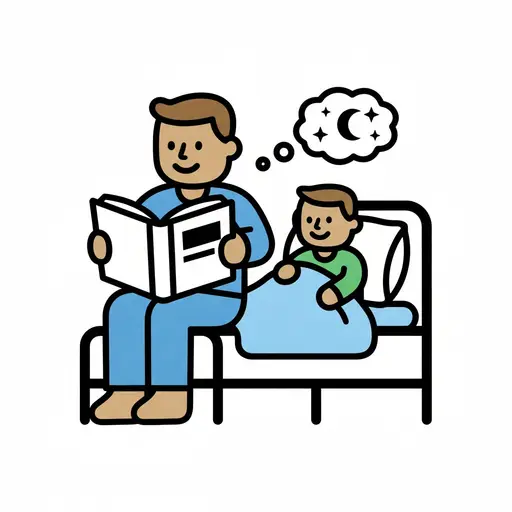
Bedtime stories
An adult reads a bedtime story to a child in bed.
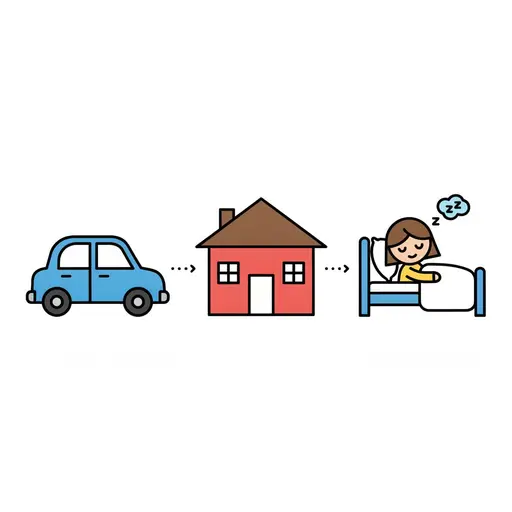
Car home and sleep
A sequence: a car, a house, and a child sleeping in bed.
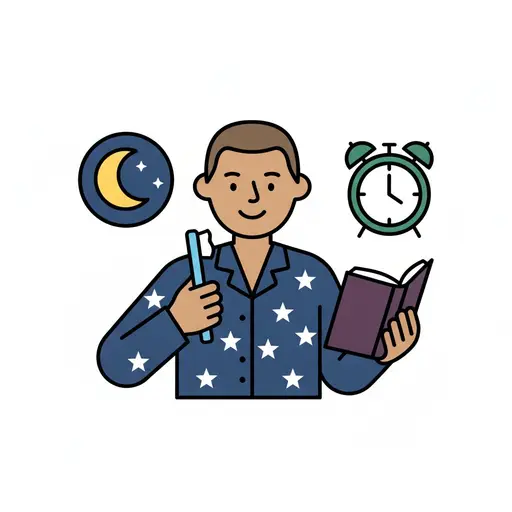
Evening Routine
A man in pajamas holds a toothbrush and a book, with a moon and an alarm clock.
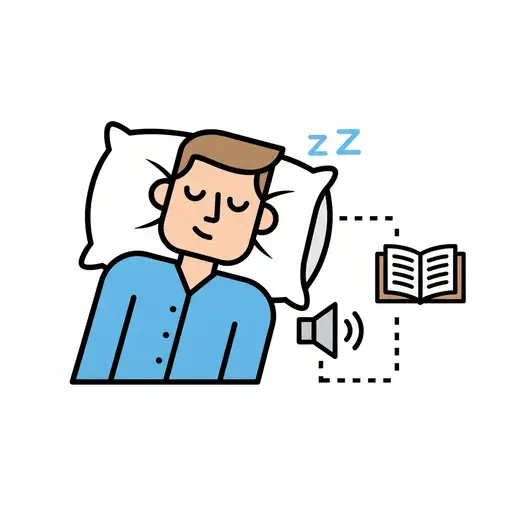
Fall asleep to an audiobook
A person lies on a pillow with closed eyes and listens to an audiobook.
Take the visual supports with you
In Routined you build schedules from these pictures, add timers and voice instructions, and your child follows the day on their own.


* 14-day free trial, then $2.39 a month or $20.99 a year (US pricing). Cancel anytime.