Shut down phone
A phone is not an object to the brain when it is on — it is a place. Switching it off then is not a click, it is leaving a room in the middle of something. The visual support below turns the exit into a step rather than a jolt.
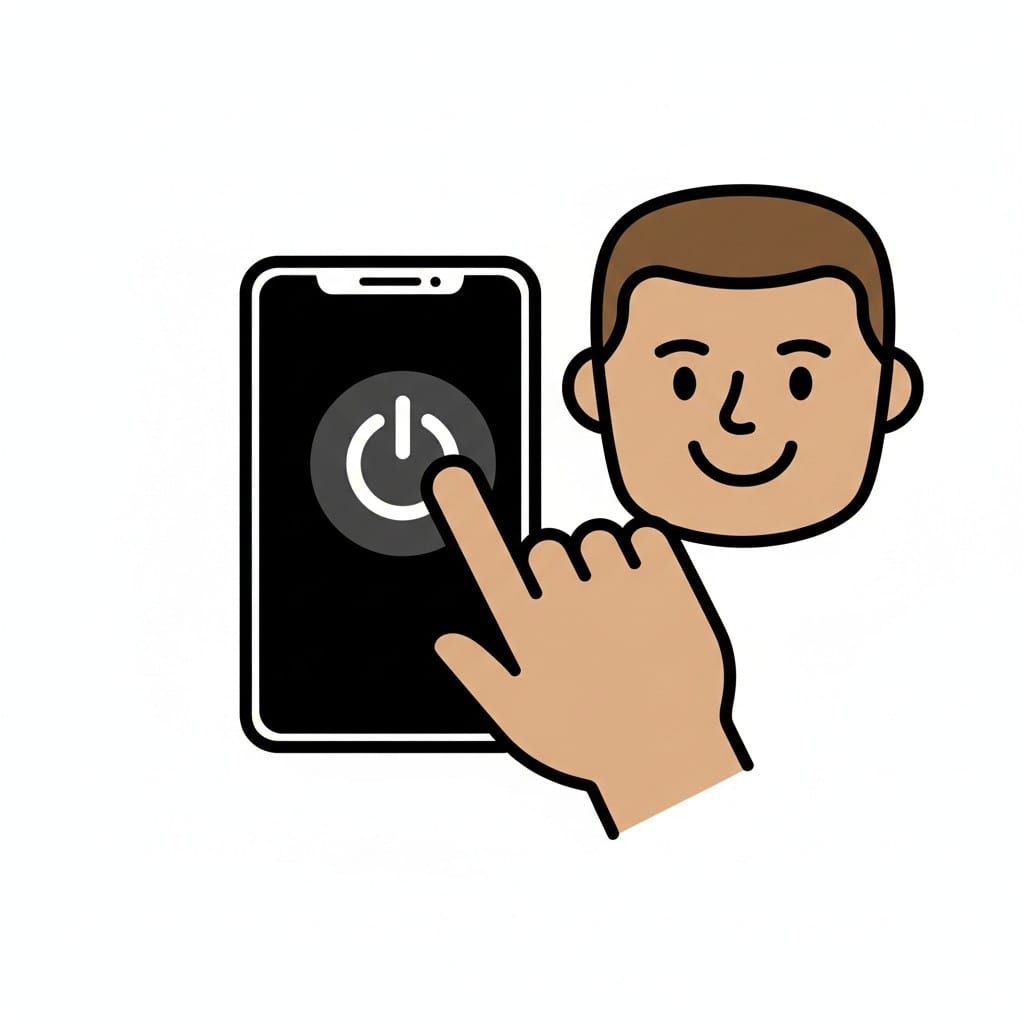 ♂
♂Shut down phone
A boy presses the power button to shut down a phone.
About this visual support
When an adult says it is time to put the phone away, the brain hears something different from what is actually said. It does not hear switch off a device. It hears stop being where you are. The content on the screen is still alive, friends keep typing without the child, a video they were half way through carries on. It is not strange that switching off meets resistance — it is leaving a place, not pressing a button.
Visual support makes the transition visible and predictable. When the child sees the sequence phone, switch off, next activity, the shut down stops being an ending and becomes a bridge. The next activity is already in the picture next to it: brush teeth, read, talk to someone in the room. It is easier to leave a place if you already know where you are going.
One concrete tip: tie the shutdown to a physical action in the same movement — the phone goes into a designated bowl, the charger goes in, the lights in the room change. The physical anchors the end of the digital place and makes immediate return harder. If you want to embed this in a longer evening routine, you can set the shutdown as an anchor point in Routined.
Use this image in a schedule
Build your own visual schedule with this image and download it as a print-ready PDF. Completely free.

More similar visual supports
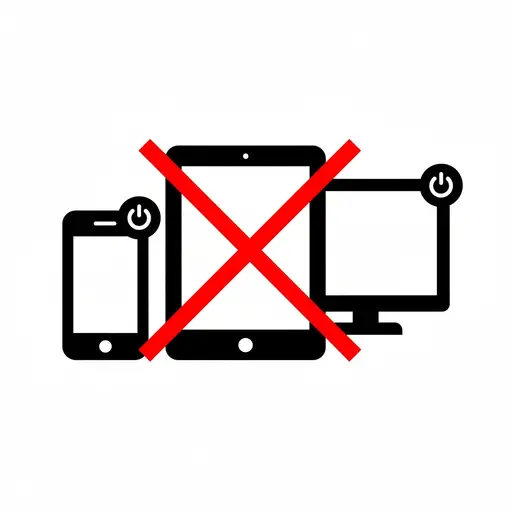
Turn off screens
A phone, a tablet and a monitor with a red cross over them, showing that the scr...
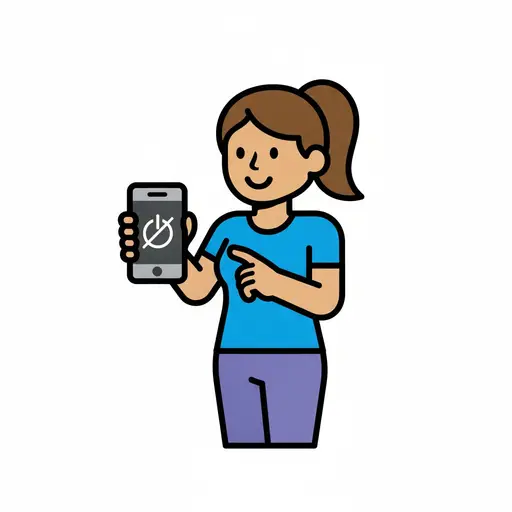
Turn off the phone
A girl holds up a phone with a power-off symbol and points at it.
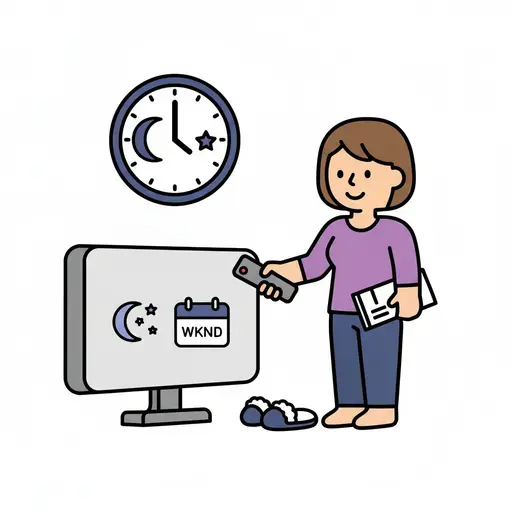
Weekend evening routine
A woman with a remote and a paper stands by a TV showing the weekend.

End Screen Time
A boy holds up his hand to stop and holds a tablet showing a red cross on the sc...
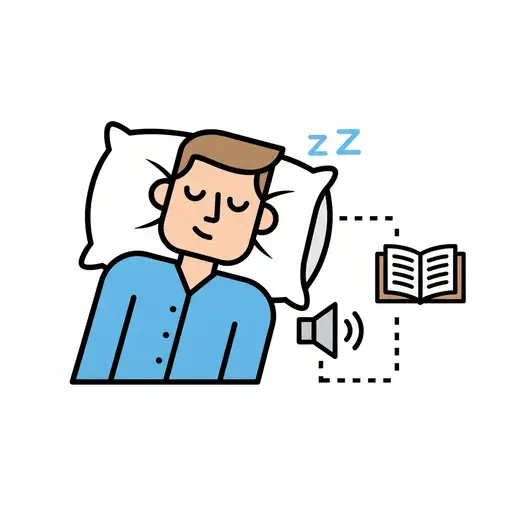
Fall asleep to an audiobook
A person lies on a pillow with closed eyes and listens to an audiobook.
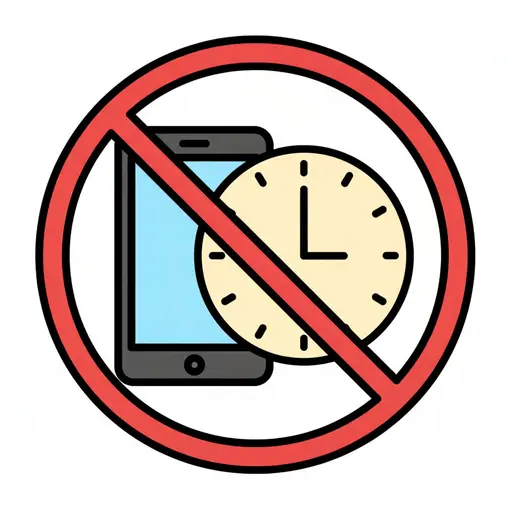
No Screens Until 10
A mobile phone and a clock with a red prohibition sign over them.

Phone in bed
A man is lying in bed looking at his phone.
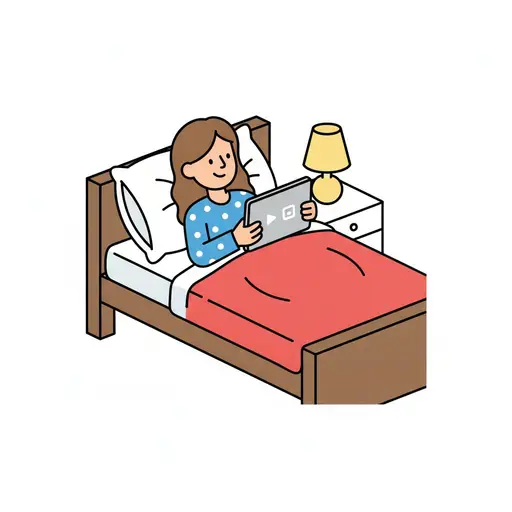
Screen time in bed
A smiling girl in polka dot pyjamas lies in a bed with a red duvet watching a ta...
Take the visual supports with you
In Routined you build schedules from these pictures, add timers and voice instructions, and your child follows the day on their own.


* 14-day free trial, then $2.39 a month or $20.99 a year (US pricing). Cancel anytime.