Sleep
The light goes off but the brain keeps working — the day's conversations, sounds and images keep rolling behind closed eyes. The visual schedule below lowers the steps toward sleep so the body has time to register that the day is done.
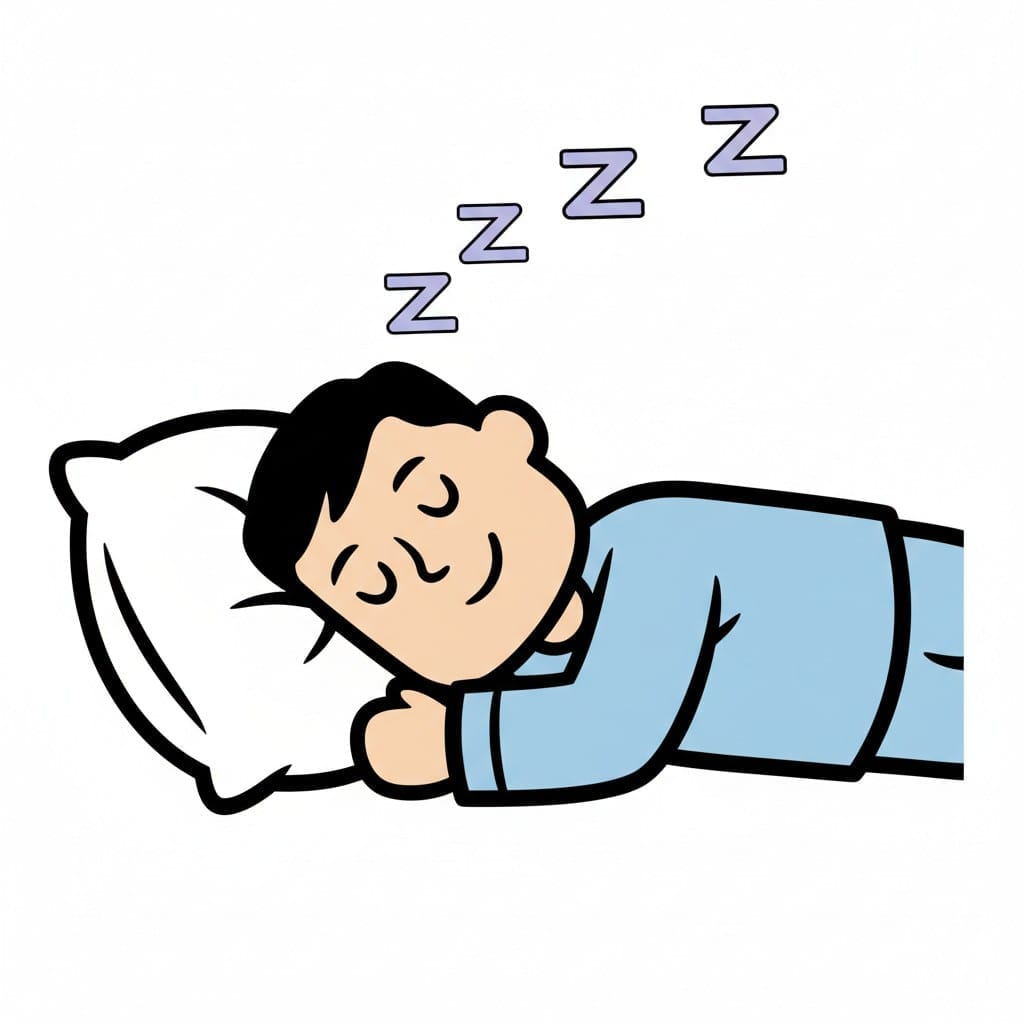 ♂
♂Sleep
A person is sleeping on a pillow, indicated by 'Z' symbols.
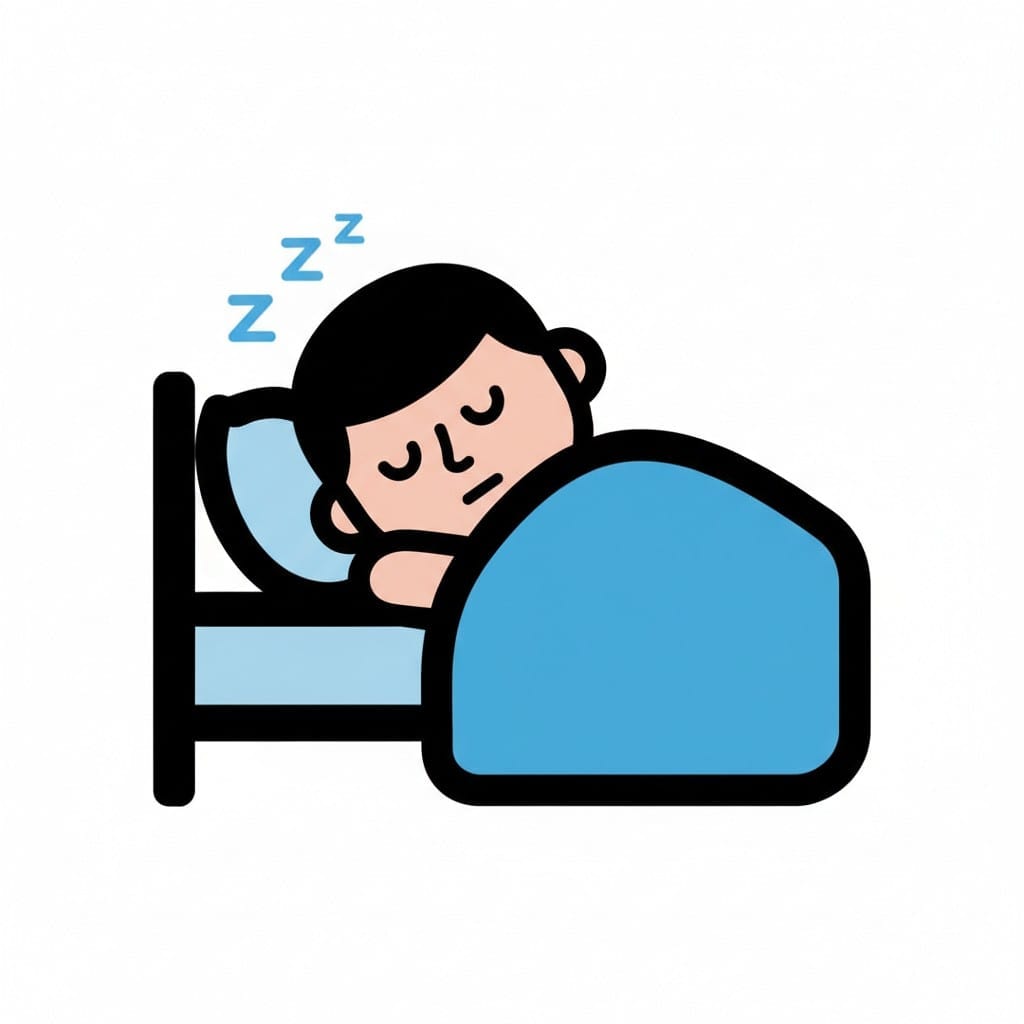 ♂
♂Sleeping in bed
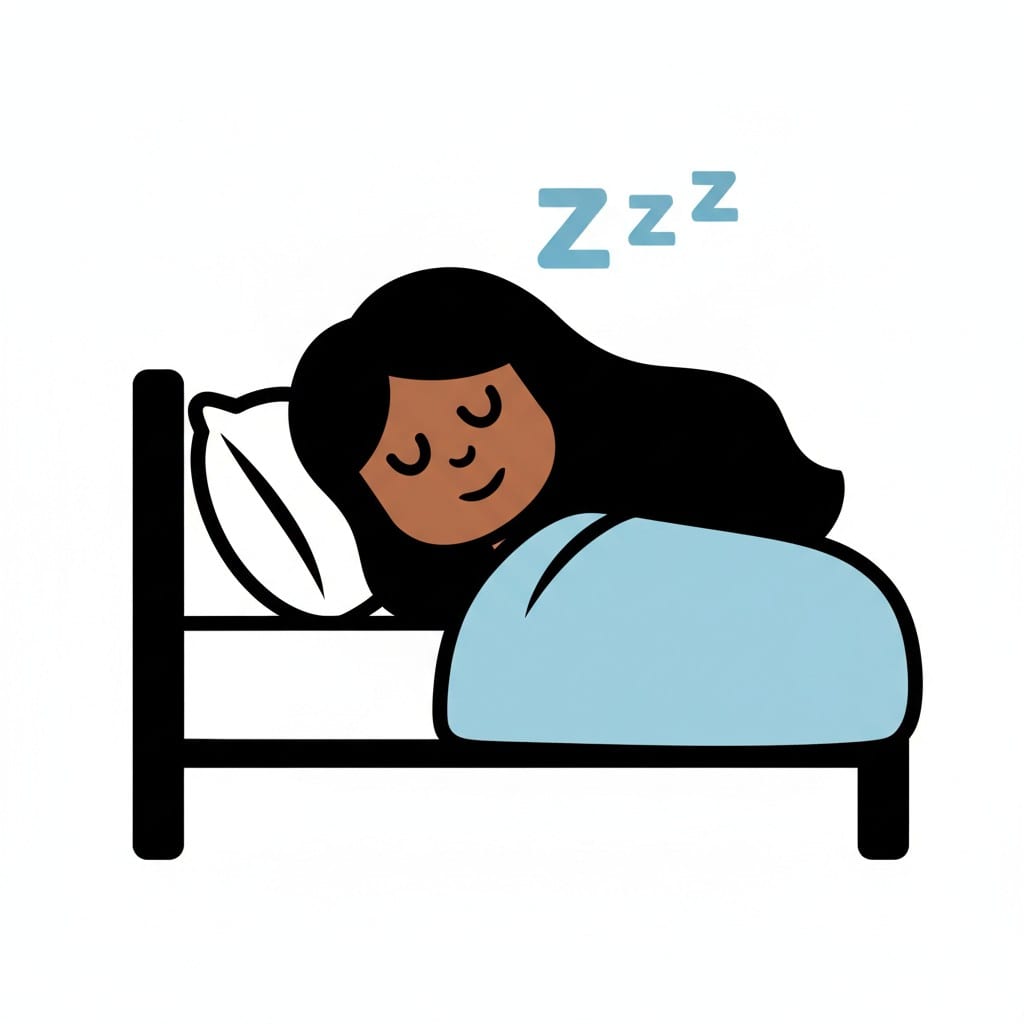
A person is sleeping in a bed, covered by a blue blanket, with 'Z' symbols indicating sleep.
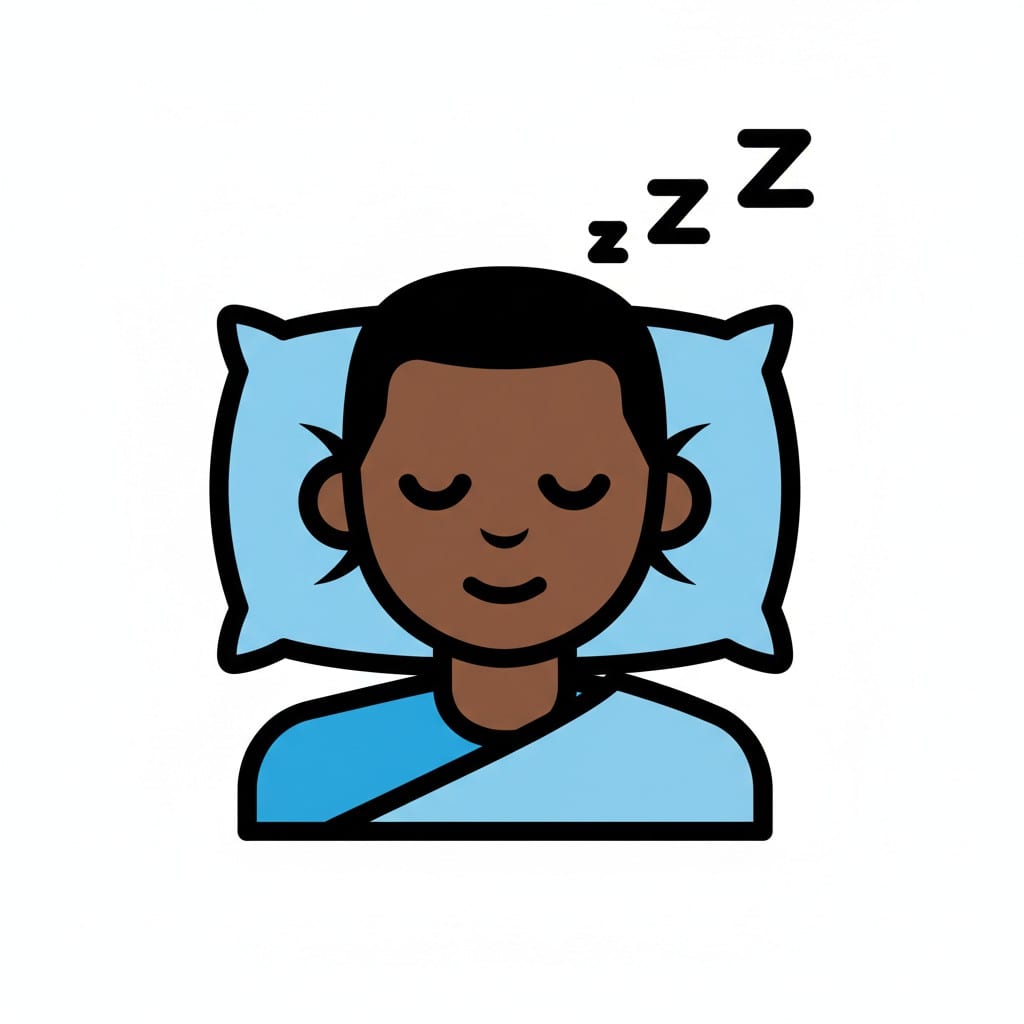 ♂
♂Sleep, head on pillow
A person is sleeping with their head on a pillow, with 'Z' symbols indicating sleep.
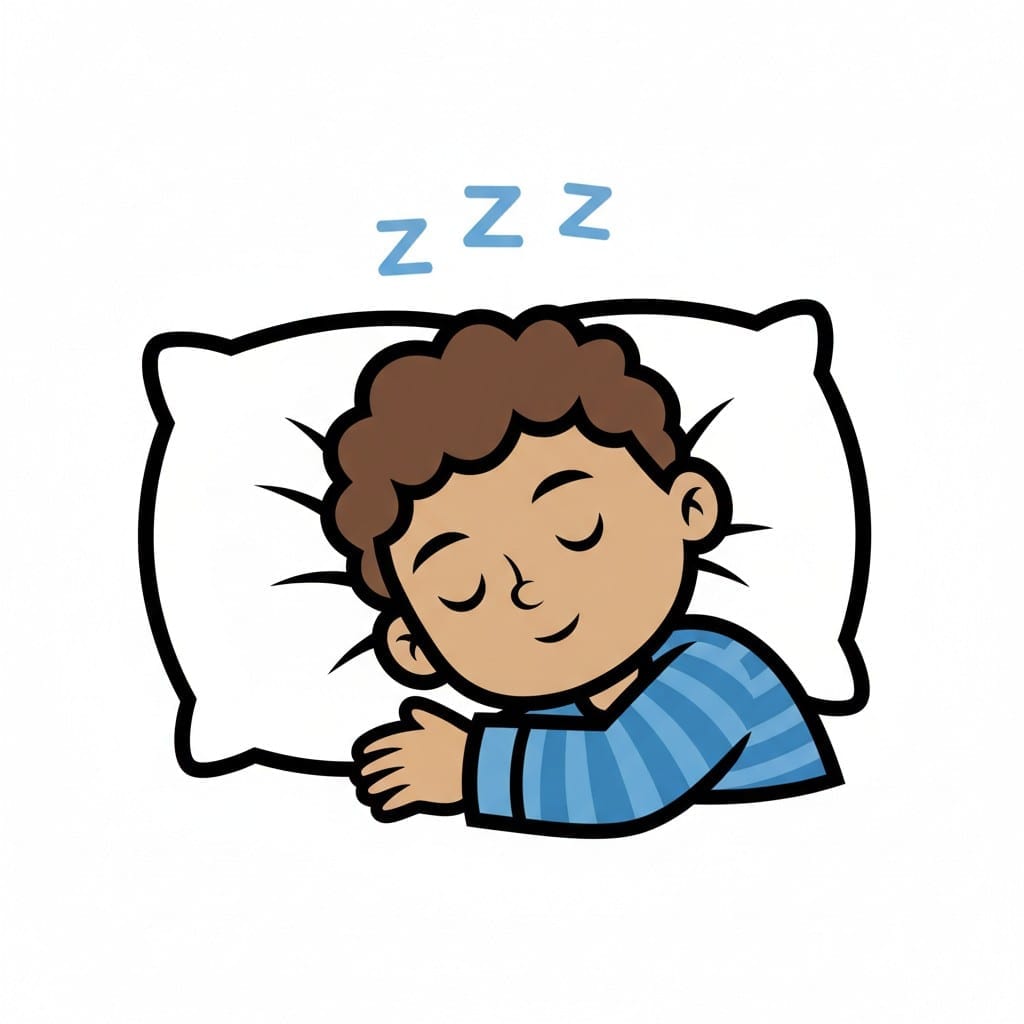 ♂
♂Sleep
An illustration of a boy sleeping on a white pillow, with zzz above his head.
 ♀
♀Sleep
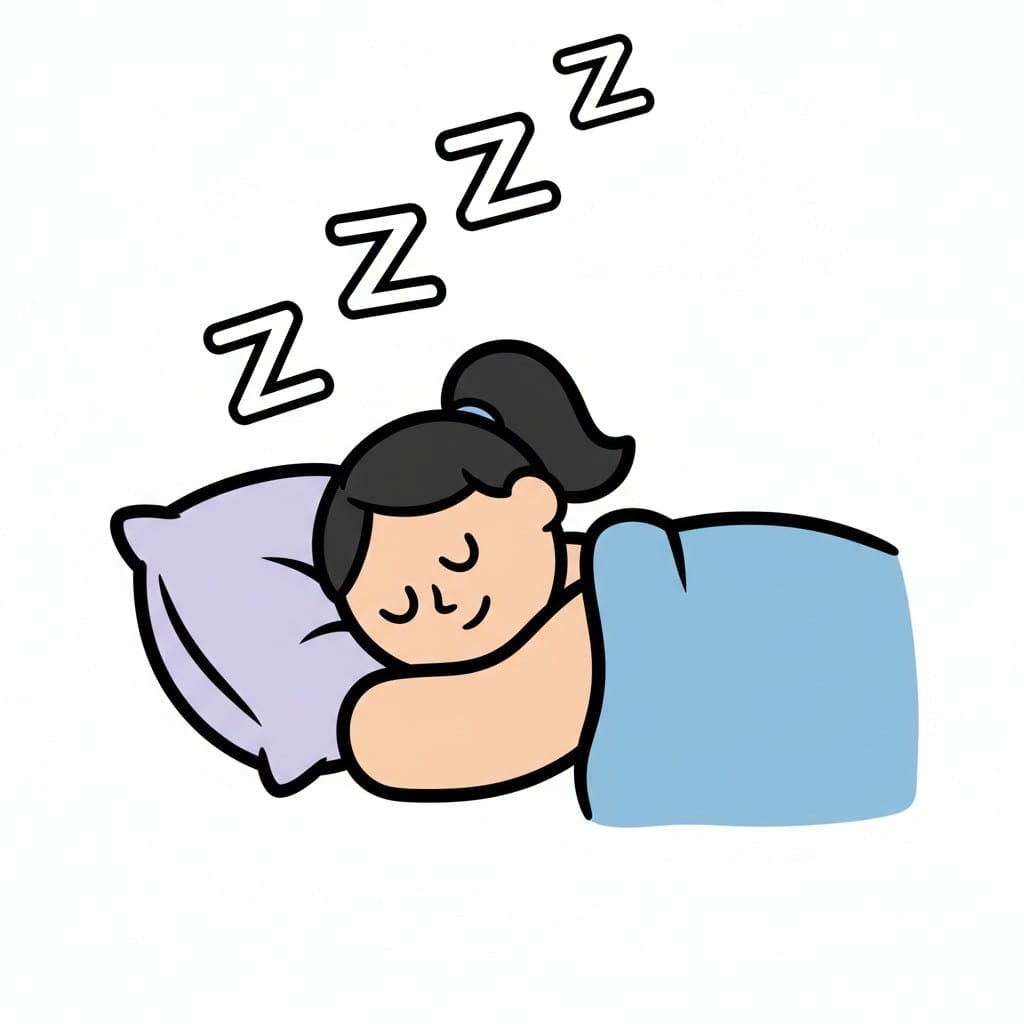
A person is sleeping in their bed under a blanket. Zzz is shown above their head.
 ♀
♀Sleep
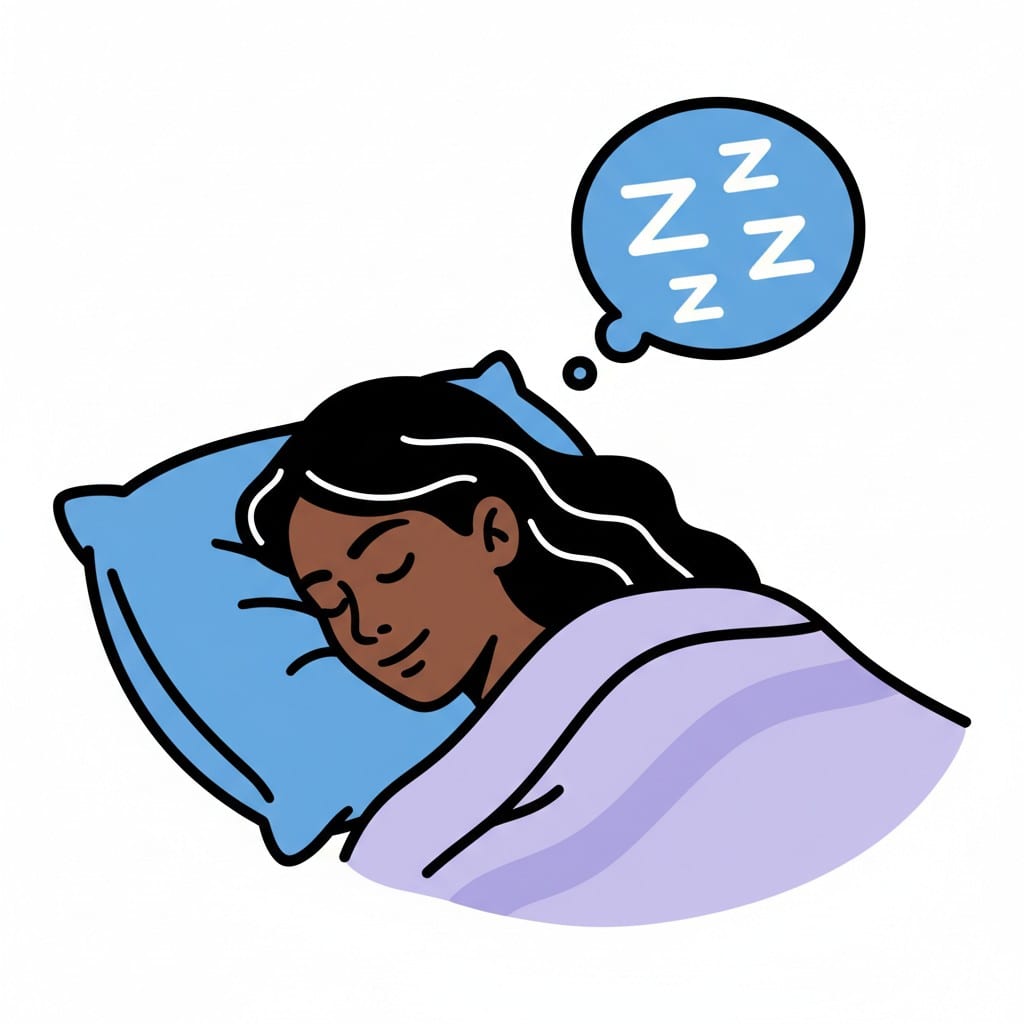
An illustration of a girl sleeping on a purple pillow under a blue blanket, with zzz above her head.
 ♀
♀Sleep
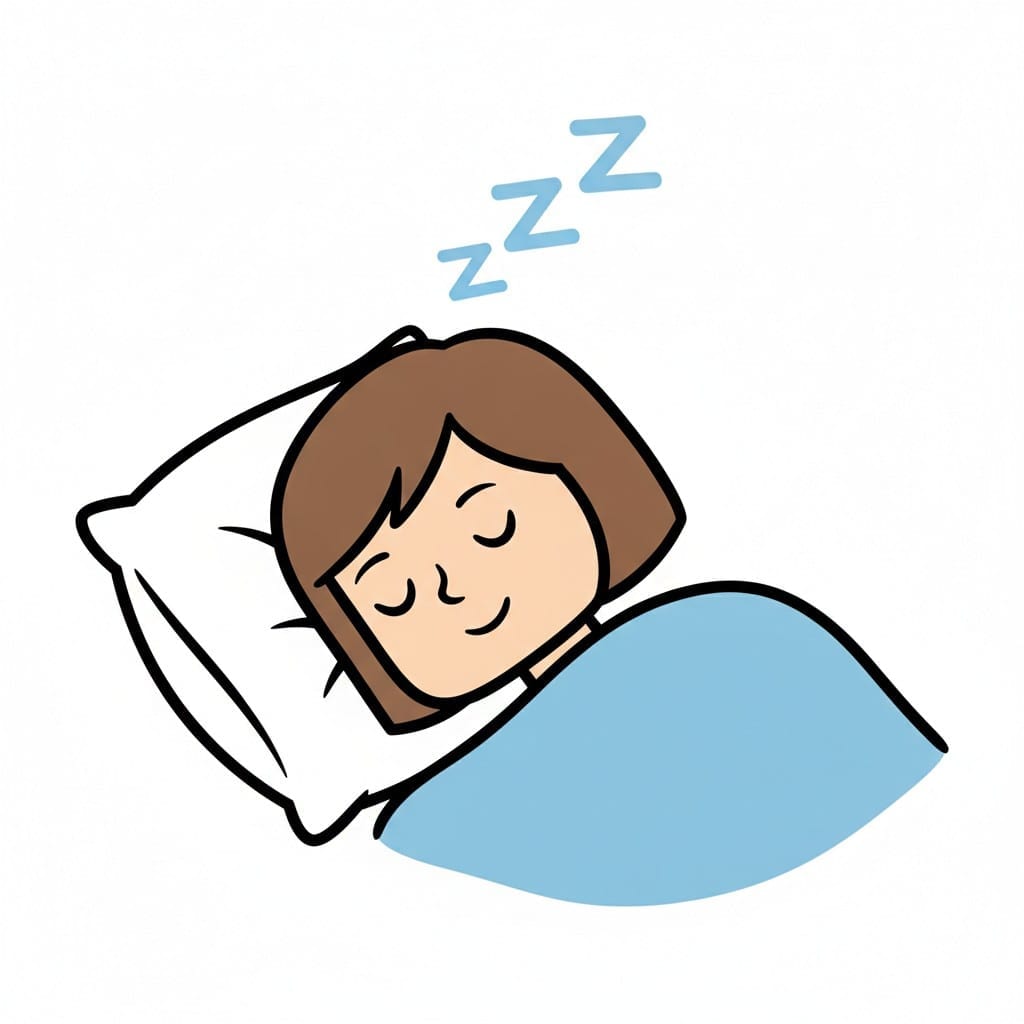
Illustration of a woman sleeping peacefully in her bed, with a 'ZzZz' thought bubble above her head.
 ♀
♀Asleep under the blanket
A woman sleeps with her head on a white pillow under a blue blanket, and the letters Zzz float above her.
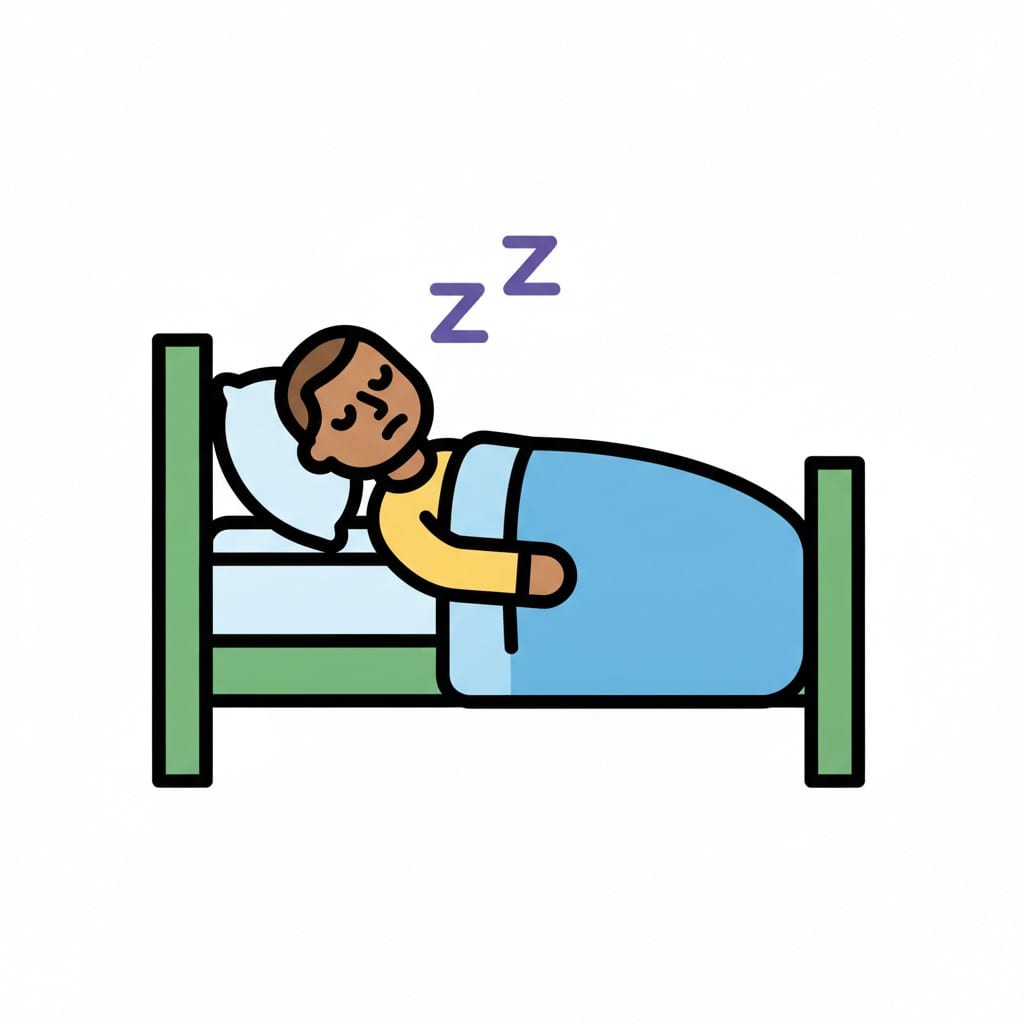 ⚲
⚲Sleeping
A child sleeps in bed under a blue blanket with zzz above.
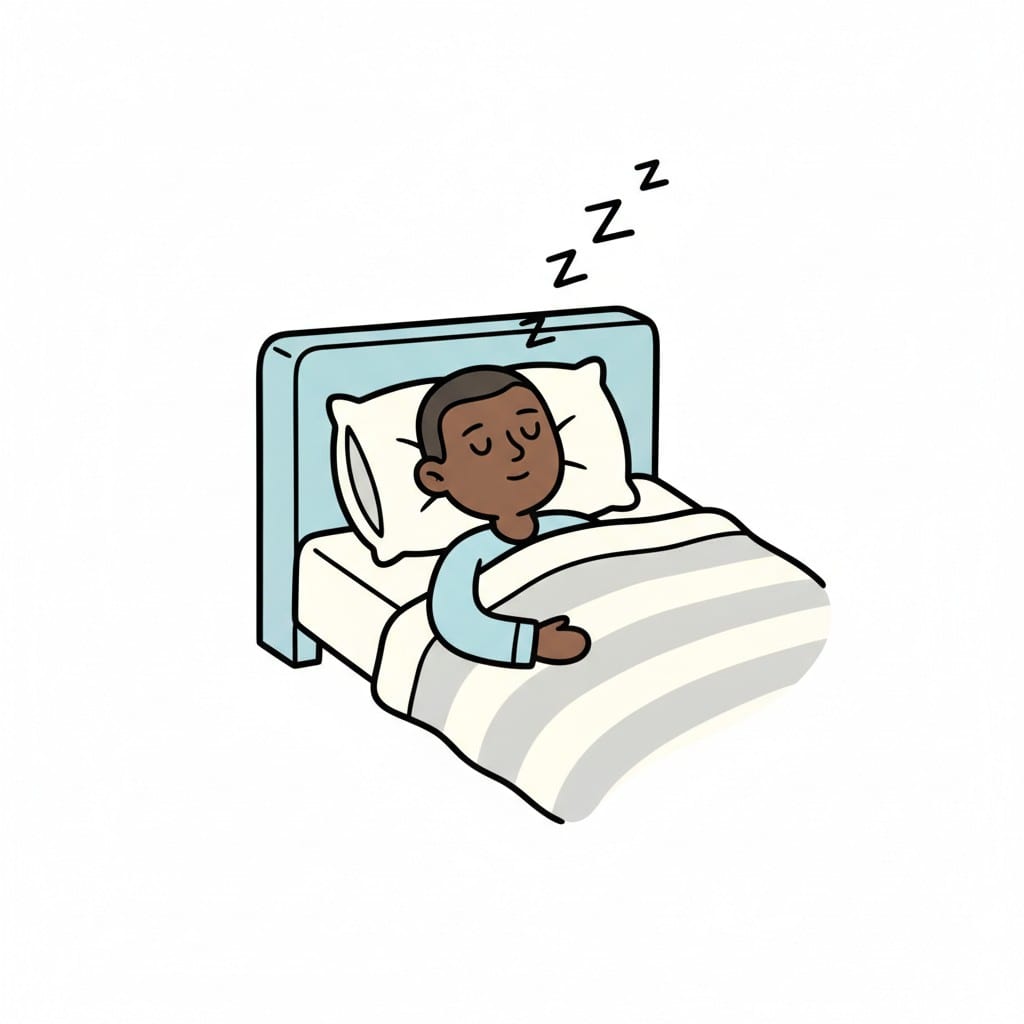 ⚲
⚲Sleeping soundly
A child sleeps soundly in bed under a striped blanket.
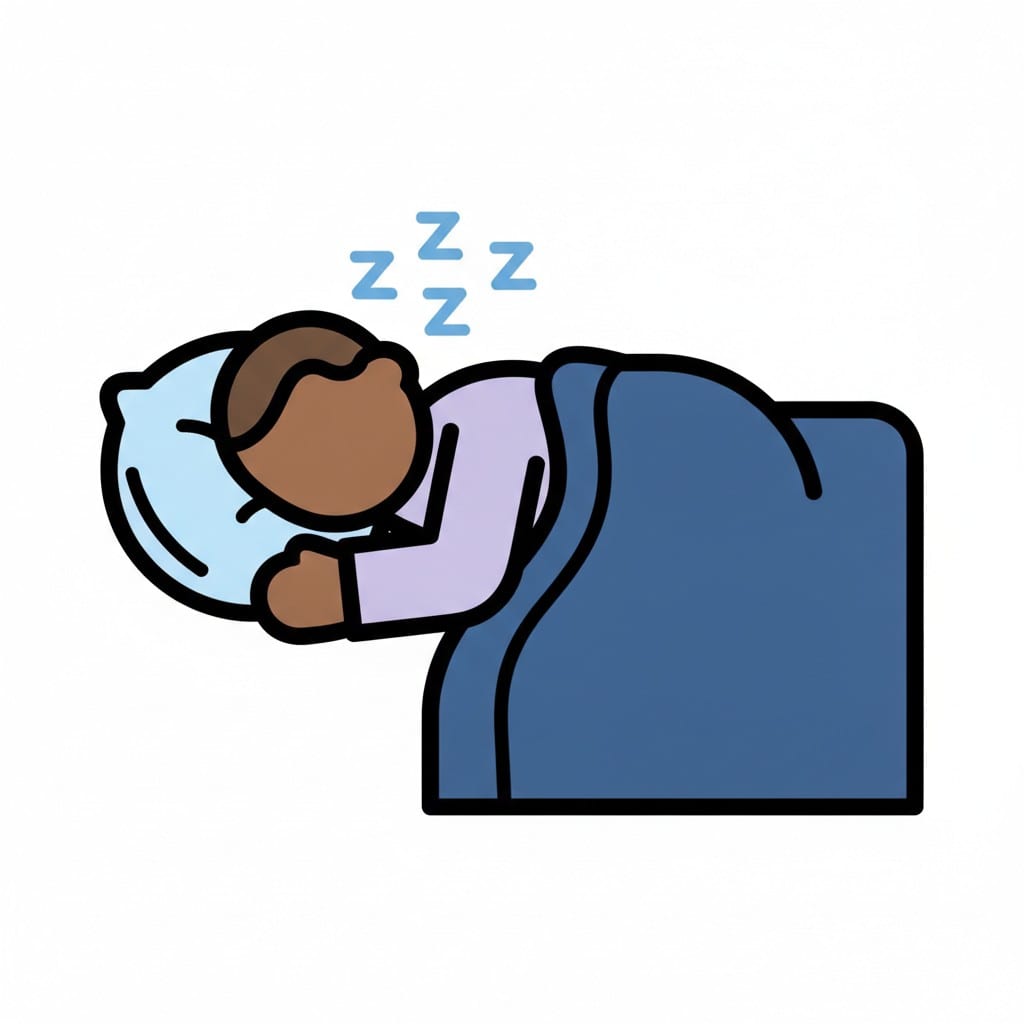 ⚲
⚲Sleeping
A child sleeps with their head on the pillow under a blue blanket, with Z letters above.
About this visual support
The hard part of sleep rarely lives in the moment of lying down — it lives in the distance between the day's loudest volume and the first deep breath at rest. That distance is something the body has to walk. For many children the problem isn't unwillingness to sleep, but the lack of a clear signal that evening has changed direction.
A picture sequence works as a soft taper. When the child sees four or five concrete steps — brushing teeth, changing clothes, switching off the ceiling light, curling up — the nervous system registers that the activity level is on the way down. The pictures say in stillness what words often say with tension: now it gets darker, now quieter, now smaller.
One activity-specific tip: make the final image a still position, not another activity. Many routines end with read a story, which is nice but not the actual ending. A photo or symbol of lying still with closed eyes gives the child an image of the destination, not just the path. The whole evening flow can be linked with a softer timer cue inside Routined.
Use this image in a schedule
Build your own visual schedule with this image and download it as a print-ready PDF. Completely free.
More similar visual supports
Bedtime
A girl with long wavy hair sleeps peacefully in her bed under a white duvet, wea...
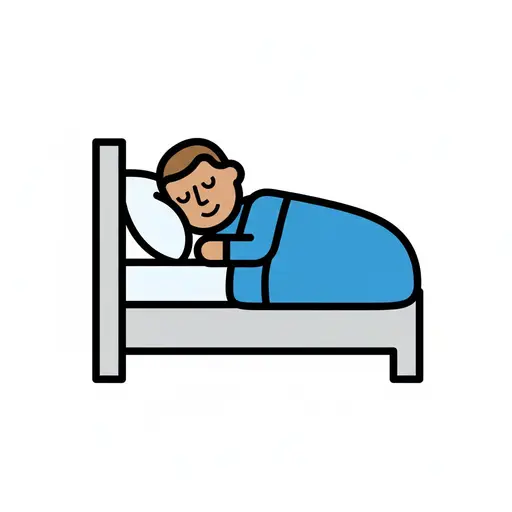
Sleep alone
A person is sleeping peacefully in a bed, covered with a blue blanket.
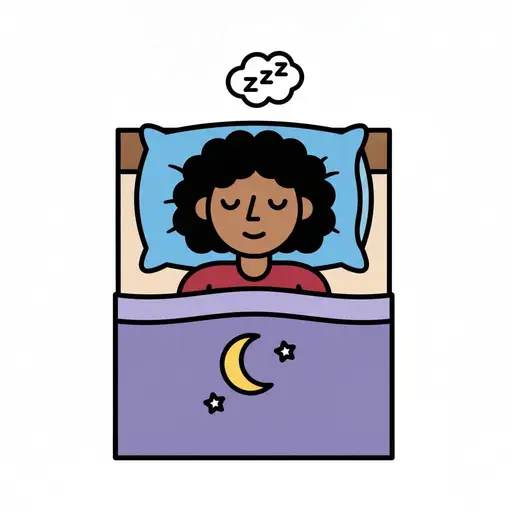
Go to sleep
A girl sleeps with her eyes closed under a purple blanket with a moon and stars,...
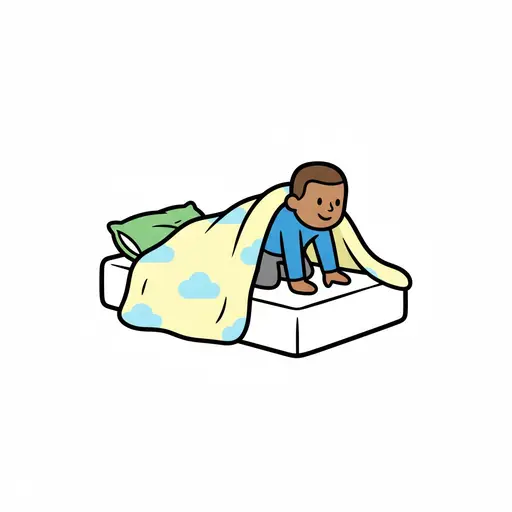
Crawl into bed
A child crawls under the duvet in bed.
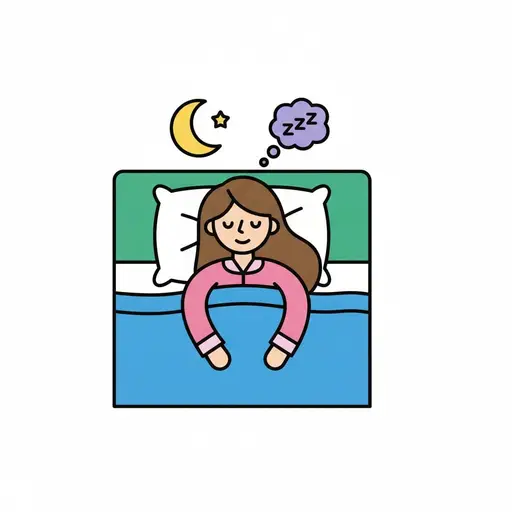
Lights out
A girl sleeps in her bed with a moon, a star and a zzz bubble above her.
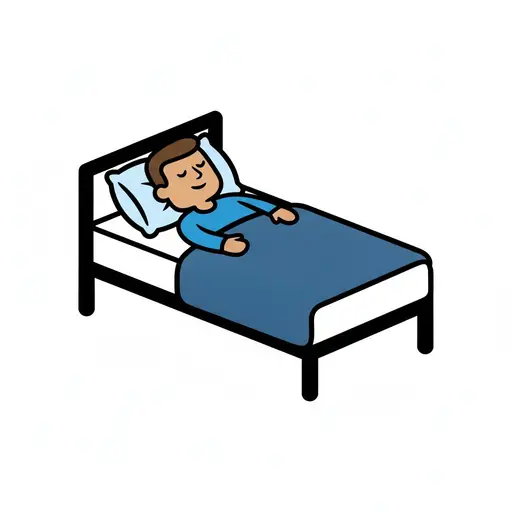
Lie in bed
A boy lies resting in bed under a blue blanket.
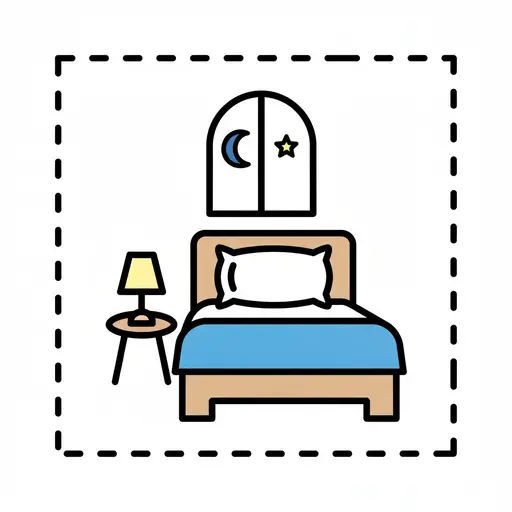
Bedroom
A bedroom scene with a made bed, a bedside table with a lamp, and a window showi...
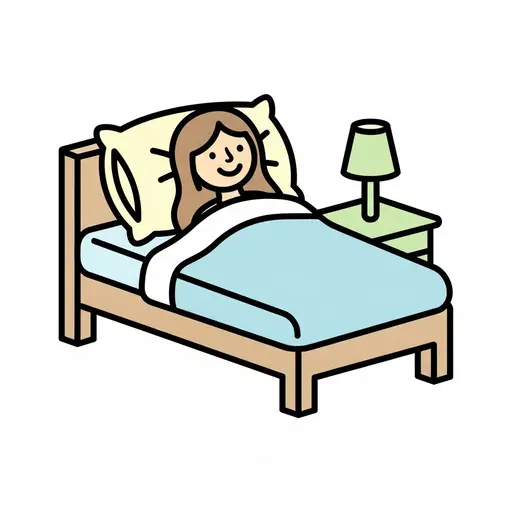
Stay In Bed
A girl lies contentedly in bed under the covers with a bedside lamp nearby.
This visual support in other languages
Take the visual supports with you
In Routined you build schedules from these pictures, add timers and voice instructions, and your child follows the day on their own.


* 14-day free trial, then $2.39 a month or $20.99 a year (US pricing). Cancel anytime.