Sleep alone
An empty room sounds bigger than it is in the dark. Noises gain faces, shadows gain motion, and the distance to the parents' door feels longer when nobody else is breathing in the bed. The visual support below helps the child see what's actually there.
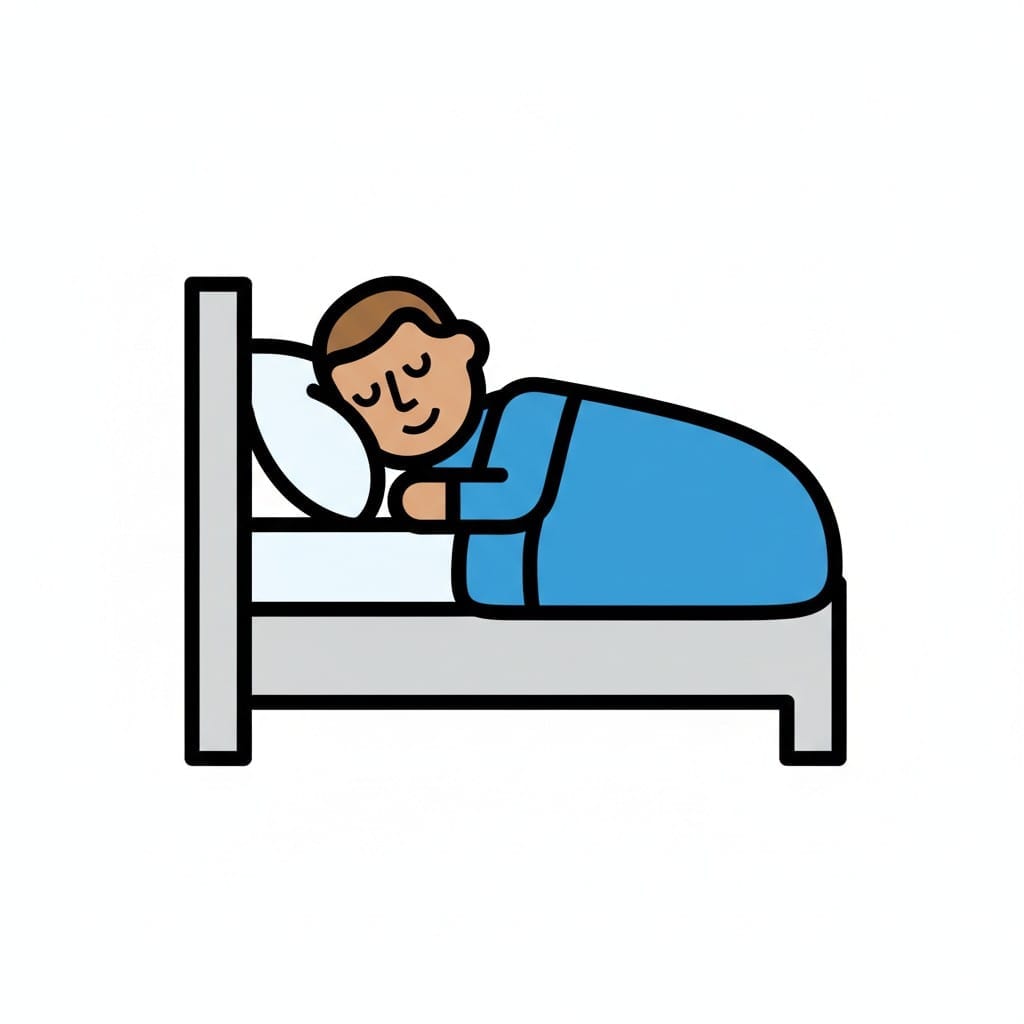 ♂
♂Sleep alone
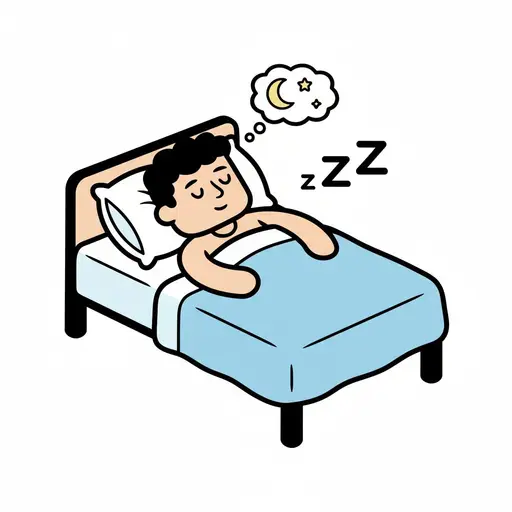
A person is sleeping peacefully in a bed, covered with a blue blanket.
About this visual support
Falling asleep alone is less about courage and more about information. When the brain has no data about the room, it fills in for itself — and it tends to fill in with sounds that become footsteps, shadows that become figures, and silence that becomes threat. A visual schedule gives the child a concrete map of what the room actually contains, leaving less blank space for imagination to work with.
A sequence can show the teddy on the pillow, the night lamp in the corner, the water glass on the table and the doorway to the hall. When a child can point to where each thing sits before the lights go off, they're already partly settled. The pictures become an orientation map that stays behind the eyelids.
A tip aimed at sleeping alone specifically: include an image of waking up and seeing mum or dad in the morning kitchen. A child who sees the end of the night already when it begins finds it easier to let go of control. To link a calm sound signal that marks when it's okay to get up, you can build that into Routined.
Use this image in a schedule
Build your own visual schedule with this image and download it as a print-ready PDF. Completely free.

More similar visual supports
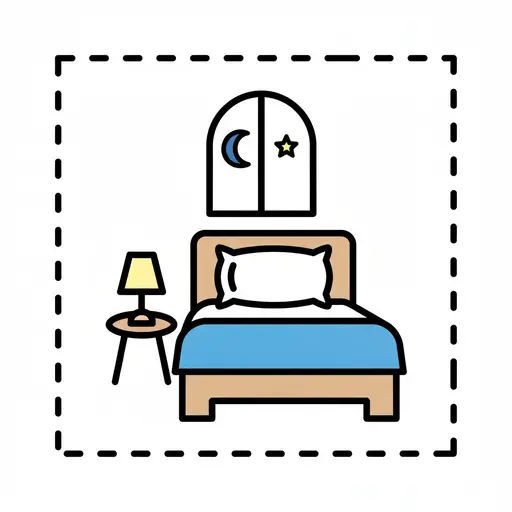
Bedroom
A bedroom scene with a made bed, a bedside table with a lamp, and a window showi...
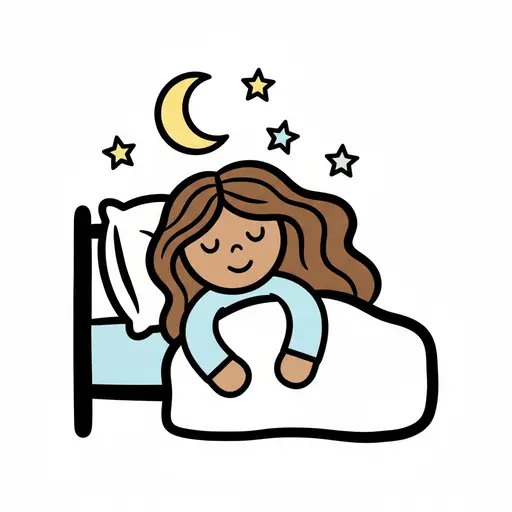
Bedtime
A girl with long wavy hair sleeps peacefully in her bed under a white duvet, wea...
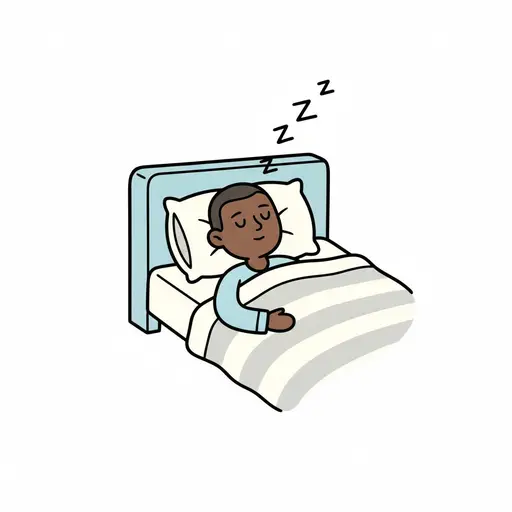
Sleep
A child sleeps soundly in bed under a striped blanket.
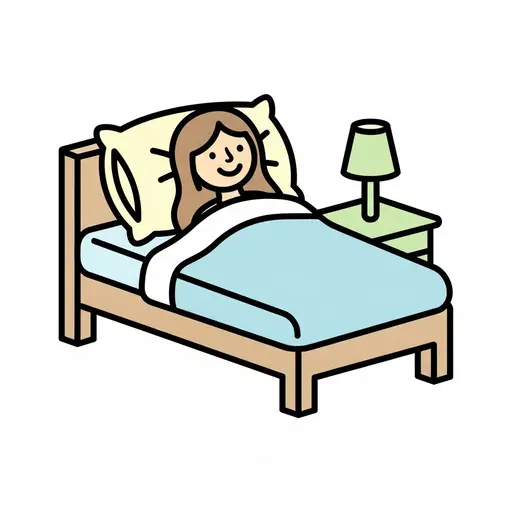
Stay In Bed
A girl lies contentedly in bed under the covers with a bedside lamp nearby.
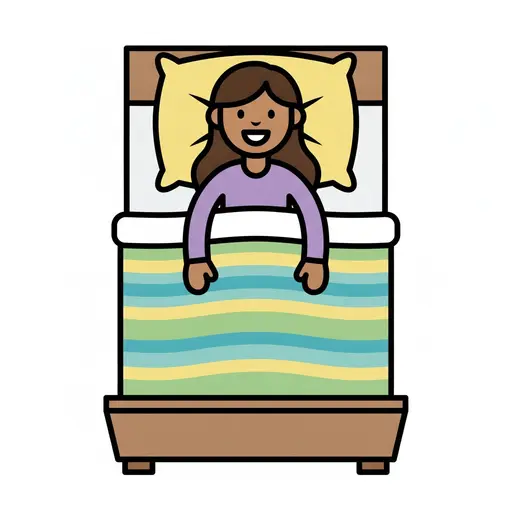
Bed
A smiling girl lies in a bed with a yellow pillow and a striped duvet in green, ...
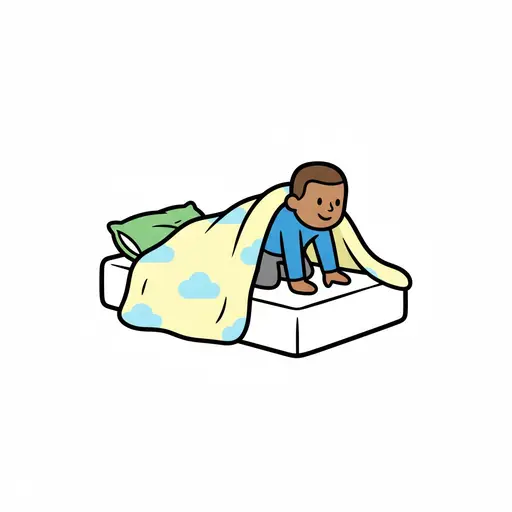
Crawl into bed
A child crawls under the duvet in bed.
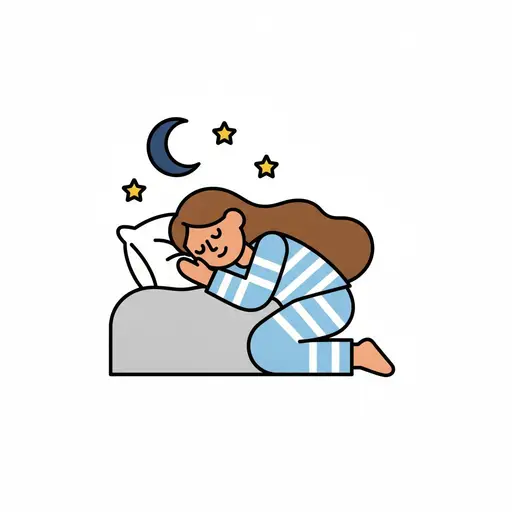
Go to sleep
A girl in blue striped pyjamas lies asleep on a pillow, with a moon and stars ab...
In Bed Quiet Time
A boy lies in a bed under a blue blanket with a thought bubble showing a moon an...
Take the visual supports with you
In Routined you build schedules from these pictures, add timers and voice instructions, and your child follows the day on their own.


* 14-day free trial, then $2.39 a month or $20.99 a year (US pricing). Cancel anytime.