Sleep diary
A sleep diary asks for memory of yesterday, honesty about evening habits and daily return — which is exactly what's hard when sleep itself is unsteady. The visual support below shortens the distance between experience and entry.
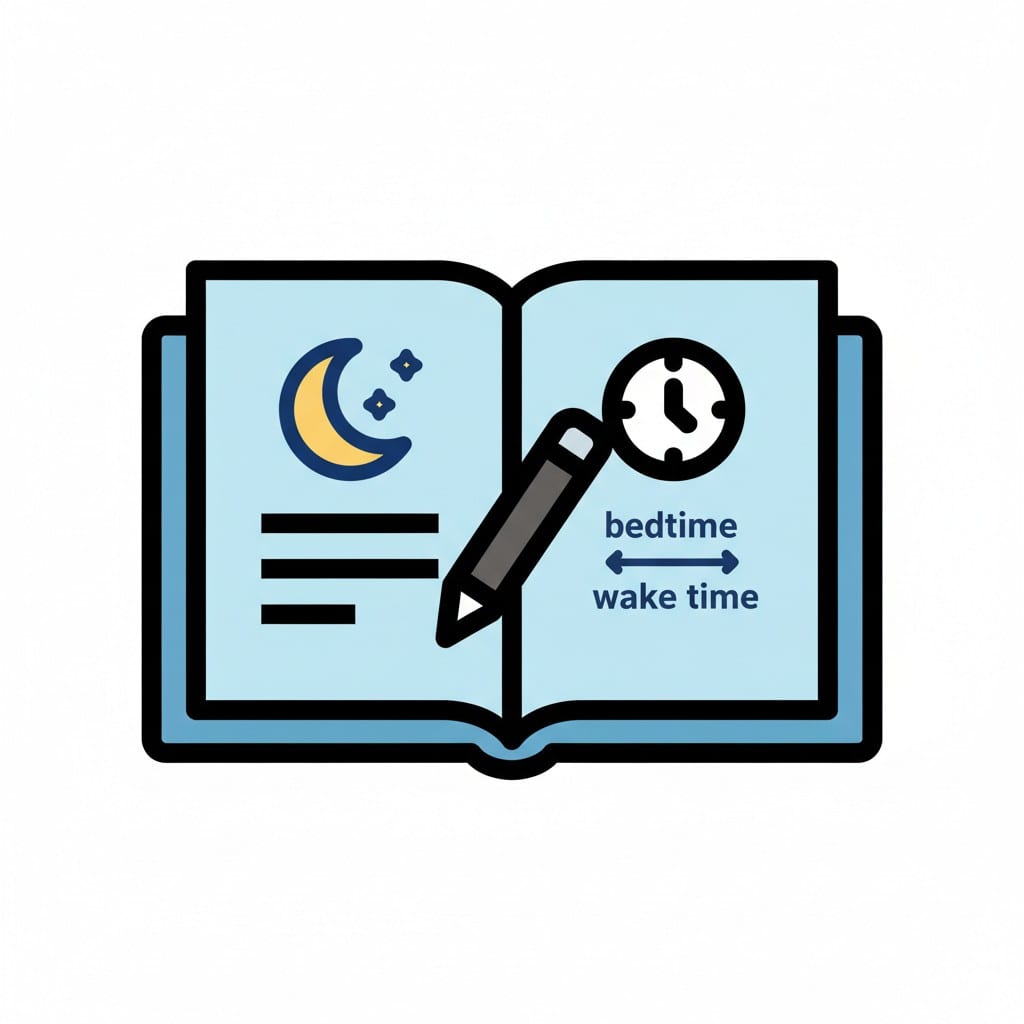
Sleep diary
An open light blue book representing a sleep diary. On the left page is a crescent moon with stars and three horizontal lines. On the right page is a clock, a pencil, and text that reads 'bedtime' and 'wake time' with a double-headed arrow in between.
About this visual support
The value of a sleep diary lives in the pattern, not in any single entry. But the pattern only shows up if notes are made at the same time every day and describe the same things. For child and adult alike, that's an executive exercise: recall yesterday, put words to a body that doesn't yet have vocabulary for tiredness, and keep doing it day after day without giving up.
A visual support turns the abstract demand to log into three or four concrete questions with tap-friendly answers. When did the light go off — show a clock. How did the evening feel — choose between faces. Did you wake up — yes or no. Was there enough sleep — pick between three levels. What used to be a blank line becomes a picture waiting for a finger.
A specific tip: ask the questions in the morning at breakfast, not in the evening. Memory of a night is sharper just after the day starts than several hours later. To make the sleep diary a recurring point in the morning routine, you can build it as one step among others in Routined.
Use this image in a schedule
Build your own visual schedule with this image and download it as a print-ready PDF. Completely free.

More similar visual supports
Bed
A smiling girl lies in a bed with a yellow pillow and a striped duvet in green, ...
Bedroom
A bedroom scene with a made bed, a bedside table with a lamp, and a window showi...
Bedtime
A girl with long wavy hair sleeps peacefully in her bed under a white duvet, wea...
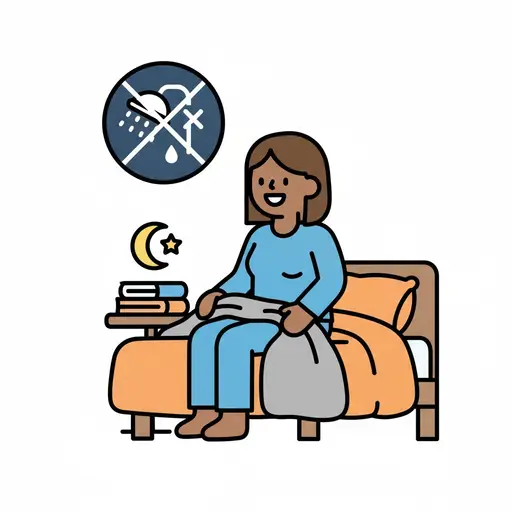
Bedtime routine
A person sits on the bed with books beside them, with a symbol showing the showe...
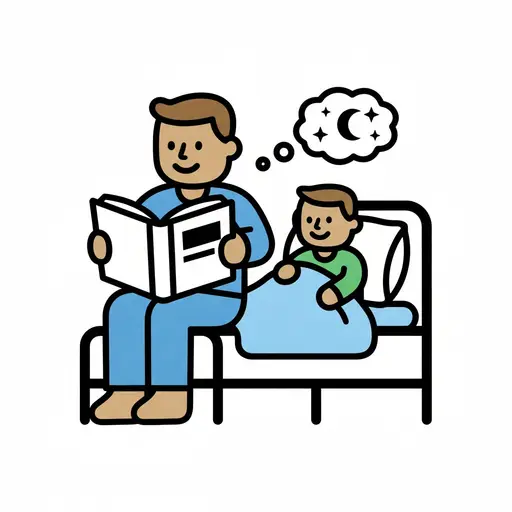
Bedtime stories
An adult reads a bedtime story to a child in bed.
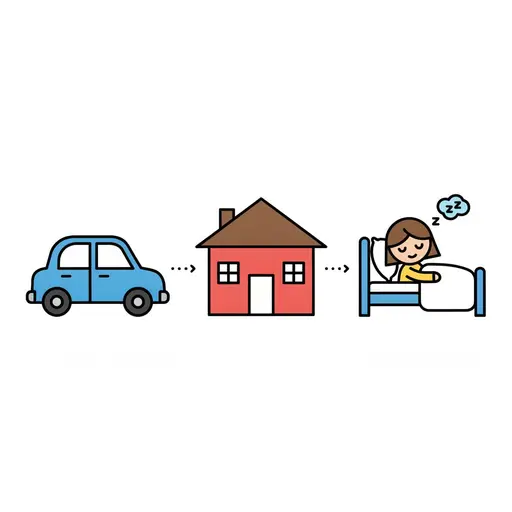
Car home and sleep
A sequence: a car, a house, and a child sleeping in bed.
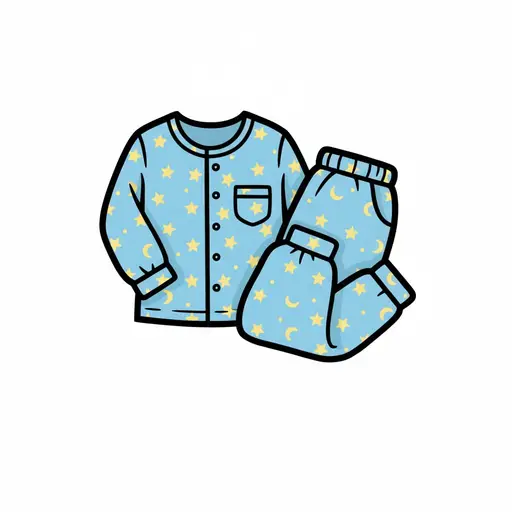
Change into night clothes
A folded light blue pajama set with yellow stars and crescent moons.
Change into pajamas
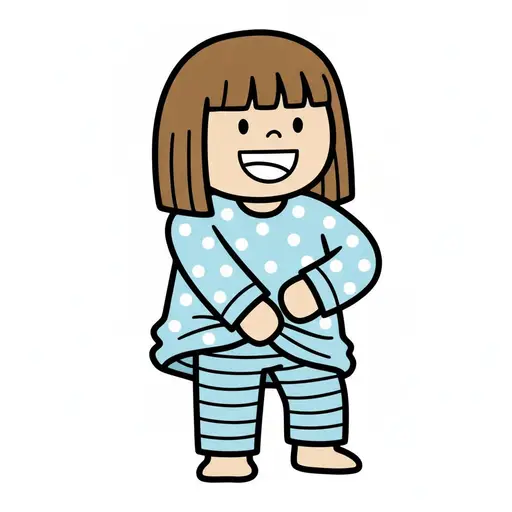
A laughing girl pulls a light blue polka dot pajama top down over her striped pa...
Take the visual supports with you
In Routined you build schedules from these pictures, add timers and voice instructions, and your child follows the day on their own.


* 14-day free trial, then $2.39 a month or $20.99 a year (US pricing). Cancel anytime.