Sleep with teddy
The teddy isn't a thing so much as a bridge — between waking and sleep, between control and letting go. When the child knows exactly where it lies, everything else gets easier to release. The visual support below helps the routine around the teddy hold.
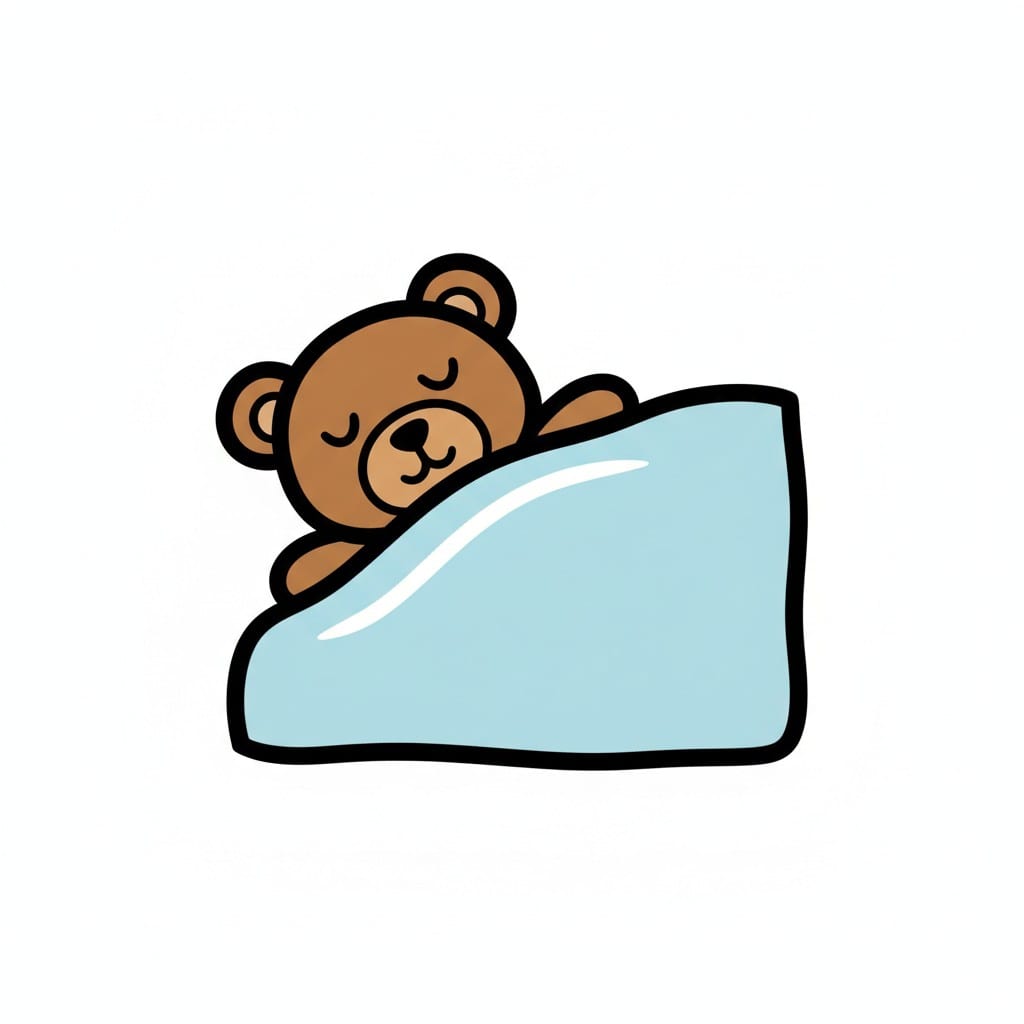
Sleeping teddy bear
A cartoon illustration of a brown teddy bear sleeping peacefully under a light blue blanket with its eyes closed.
About this visual support
For many children the teddy is the point where the day formally ends. Not the moment a book is read or teeth are brushed, but the moment the teddy's position is decided. The small act of placing it at exactly the right angle on exactly the right pillow is often what lets the rest of the body sink. If the teddy got left on the sofa or ended up on the floor, the entire evening mood can tip.
A picture sequence around the teddy doesn't need to be long — four or five frames will do. Fetch the teddy from the shelf, set it next to the pillow, give it a word or a pat, pull up the cover. What looks like repetition to an adult is for the child a connected gesture saying we are now handing over the day.
A tip specific to this activity: include an image showing where the teddy lives when it isn't in the bed. Many arguments at bedtime start because the teddy has gone missing — if it has a visible daytime spot, the child knows where the search begins. To tie the bedtime sequence to a quiet timer or time cue, you can build it in Routined.
Use this image in a schedule
Build your own visual schedule with this image and download it as a print-ready PDF. Completely free.

More similar visual supports
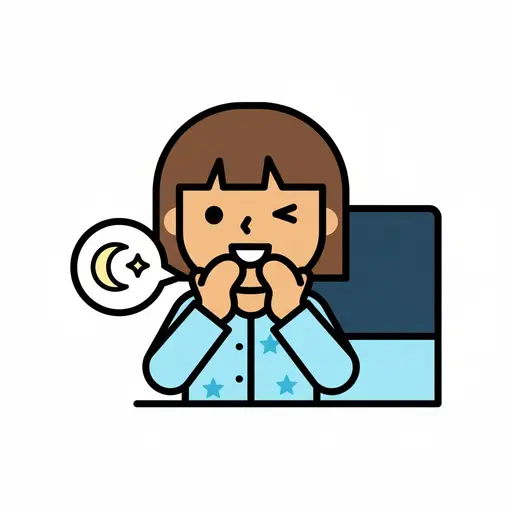
Say goodnight
A girl in blue star pajamas winks and smiles, with a speech bubble showing a moo...

Bedtime
A girl with long wavy hair sleeps peacefully in her bed under a white duvet, wea...

Bedtime routine
A person sits on the bed with books beside them, with a symbol showing the showe...

Change into night clothes
A folded light blue pajama set with yellow stars and crescent moons.
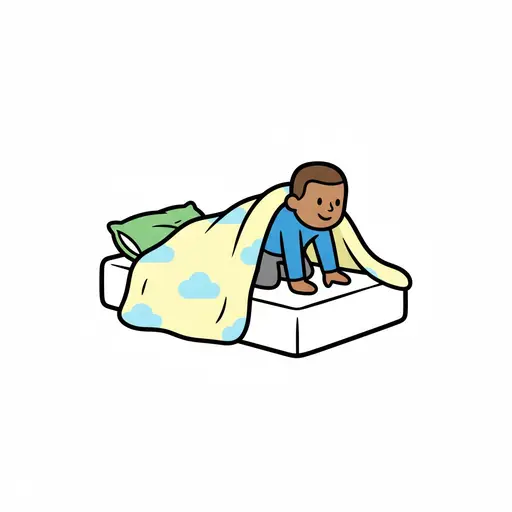
Crawl into bed
A child crawls under the duvet in bed.
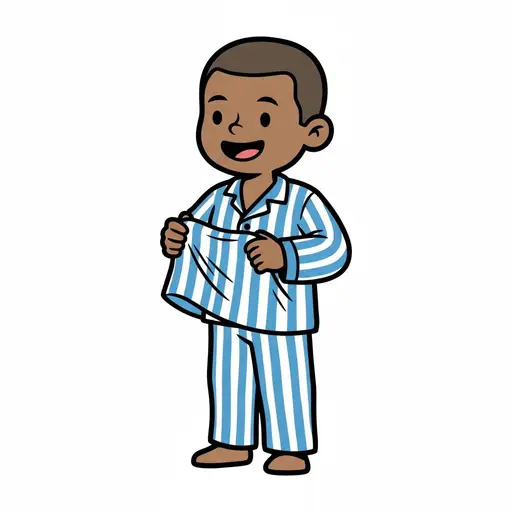
Dress for bed
A smiling boy holds up his blue and white striped pyjama top, ready to put it on...

Dress pajamas
A woman is putting on blue pajamas with stars and moons on them.
Get blankie
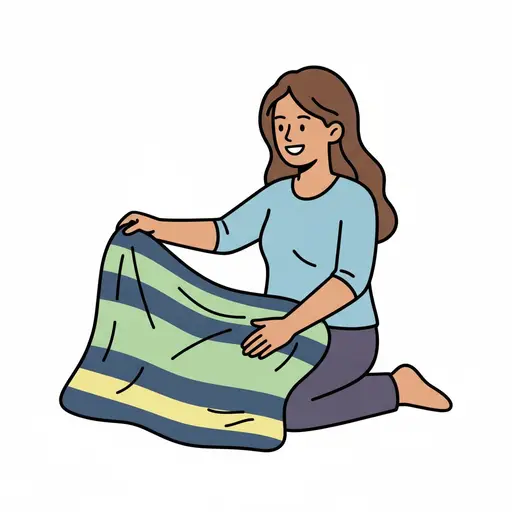
A woman kneels and spreads out a striped blanket.
Take the visual supports with you
In Routined you build schedules from these pictures, add timers and voice instructions, and your child follows the day on their own.


* 14-day free trial, then $2.39 a month or $20.99 a year (US pricing). Cancel anytime.