Wind-down time
A revved-up body rarely obeys the words calm down. The shift from full speed to stillness usually lacks a clear button to press. The steps below give winding down a visible beginning.
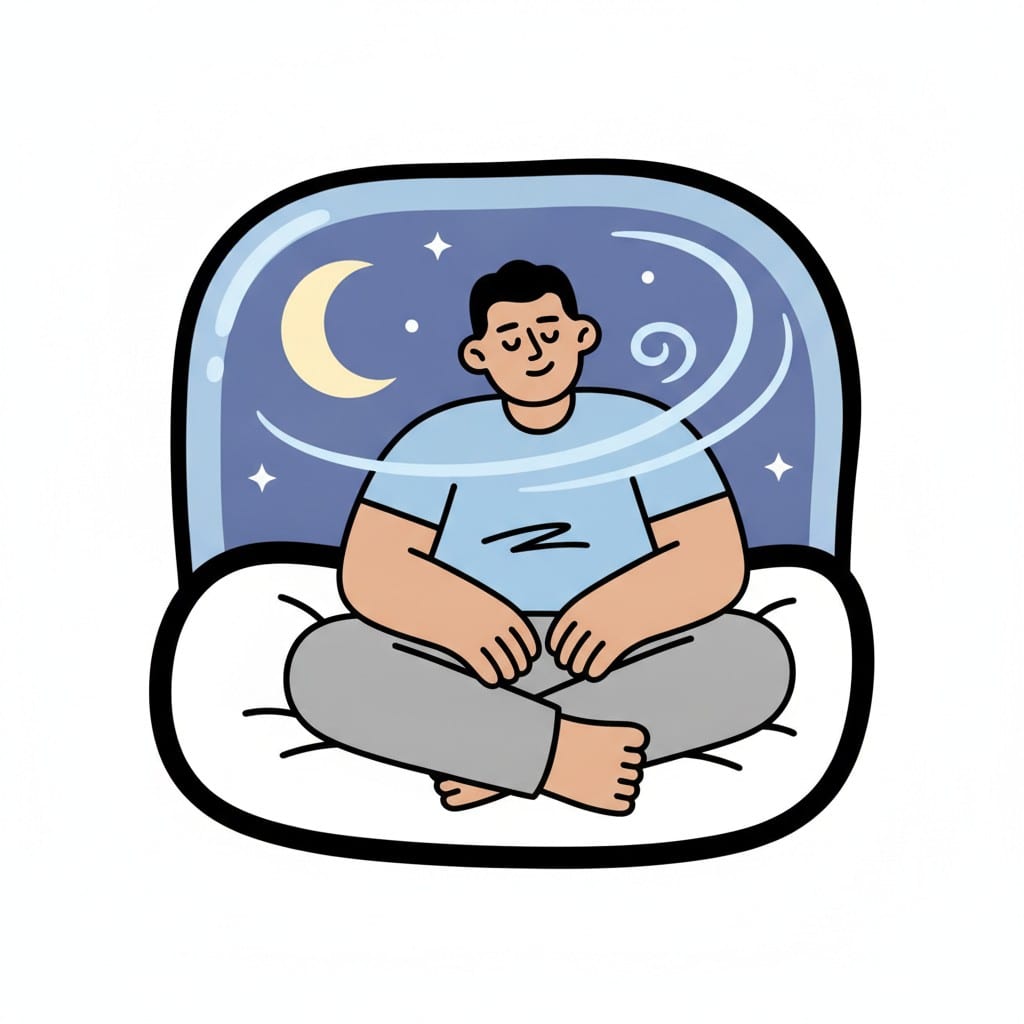 ♂
♂Man winding down under the night sky
A man sits cross-legged on a soft white mat with his eyes closed, resting against a night sky with a crescent moon, stars and gentle swirling lines.
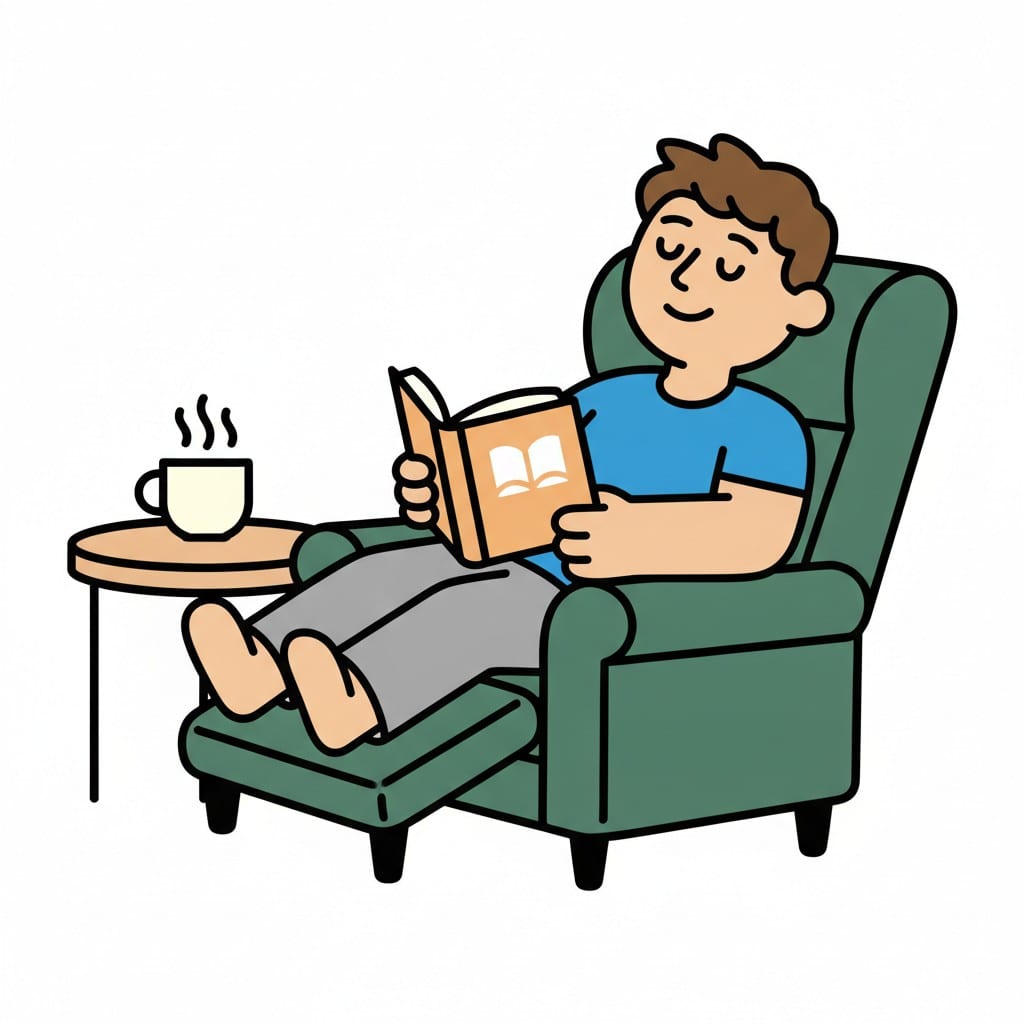 ♂
♂Unwinding
A man reads in an armchair with his feet up and a cup of tea nearby.
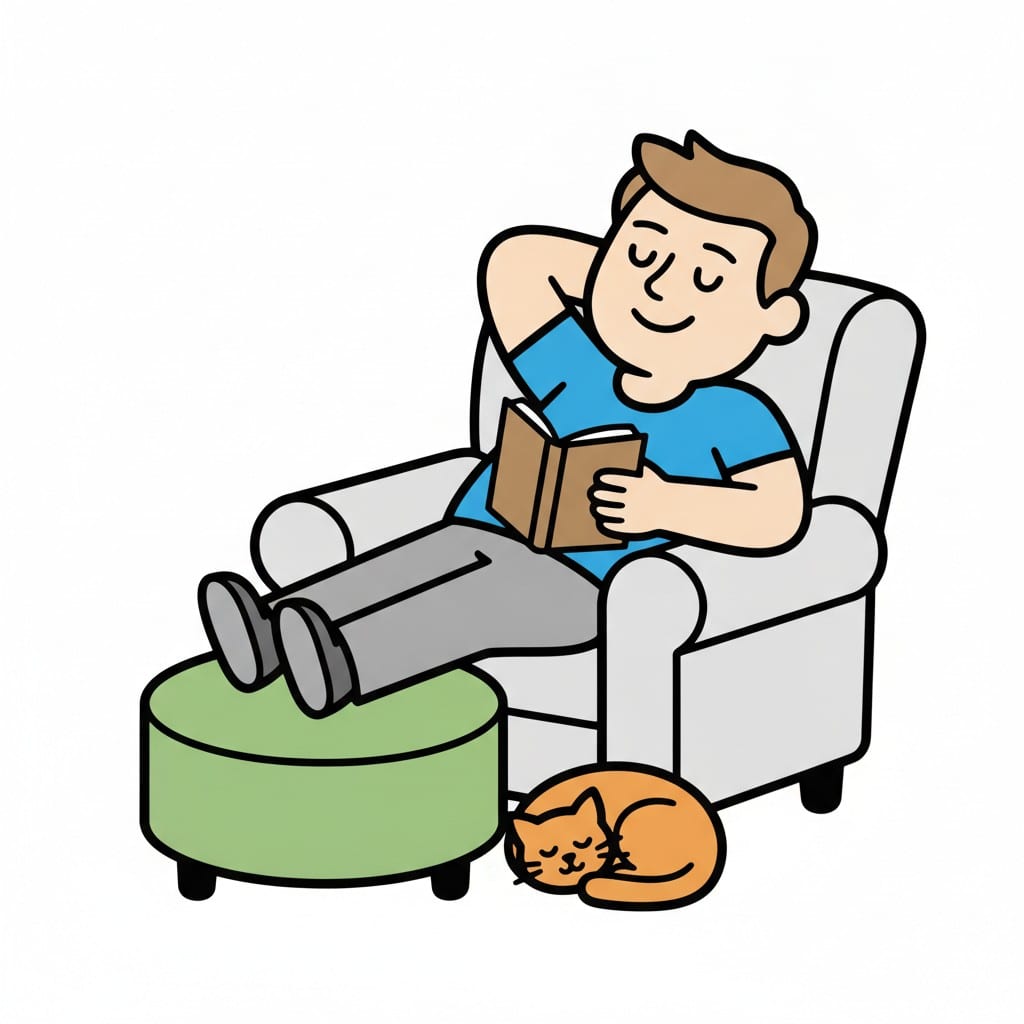 ♂
♂Resting with a book
A man rests with a book in an armchair with a cat on the floor.
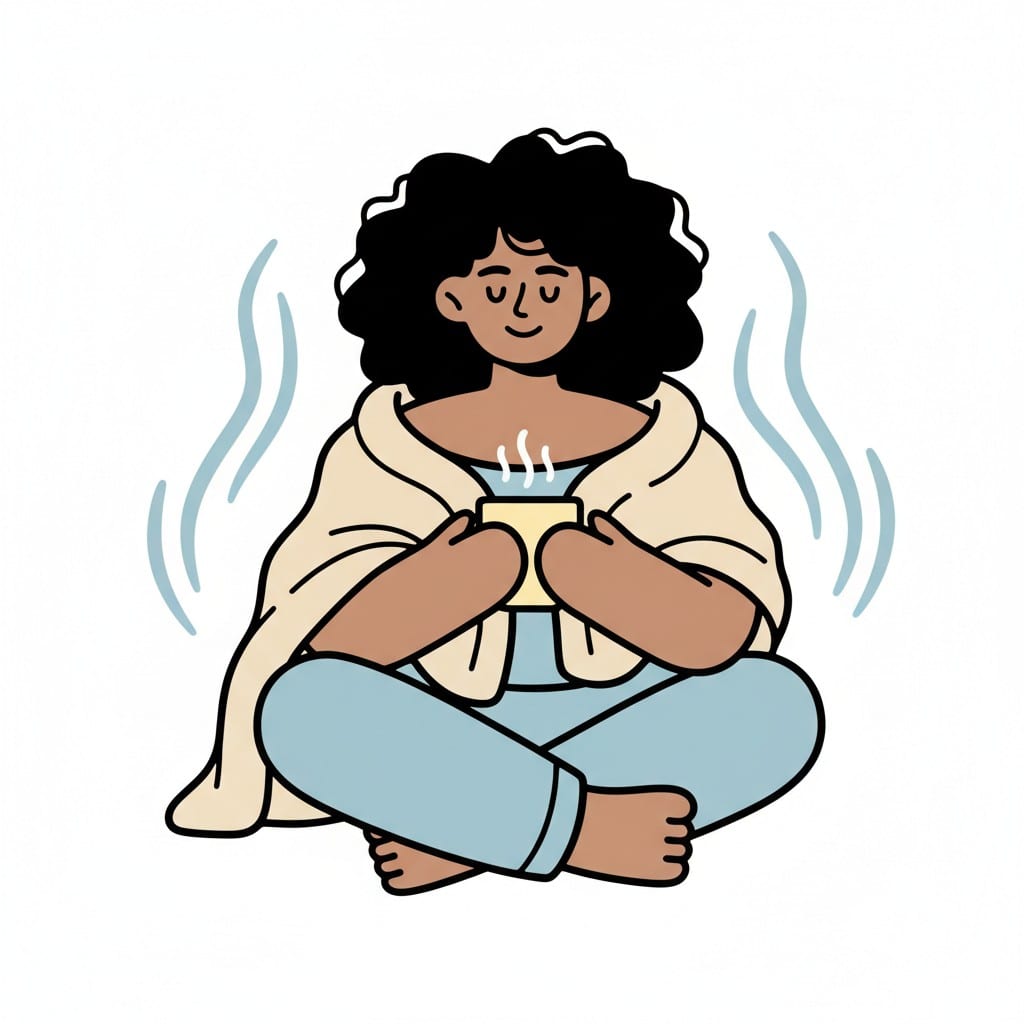 ♀
♀Winding down
A person sits calmly cross-legged wrapped in a blanket holding a steaming mug.
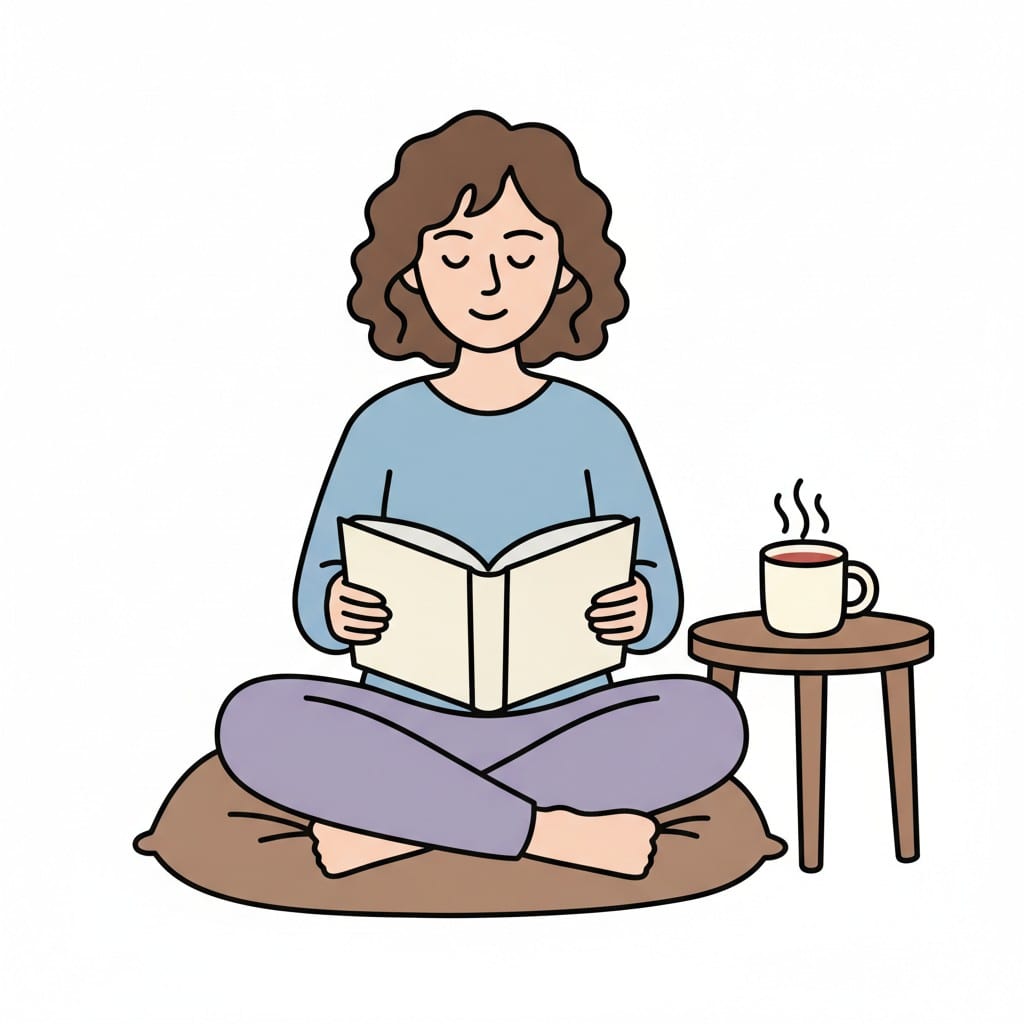 ♀
♀Winding down with a book
A woman sits on a floor cushion reading, with a cup of tea beside her.
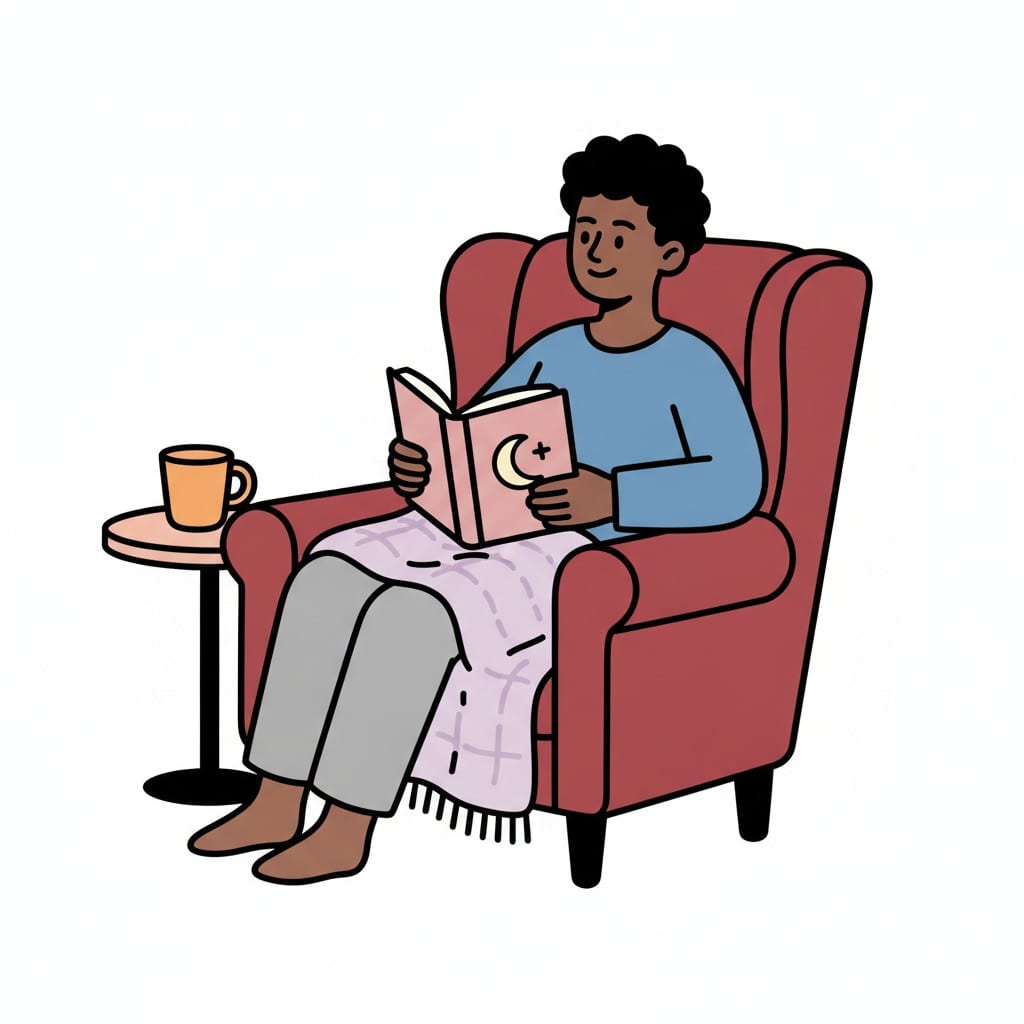 ⚲
⚲Winding down in the armchair
A child sits in an armchair with a blanket reading a book.
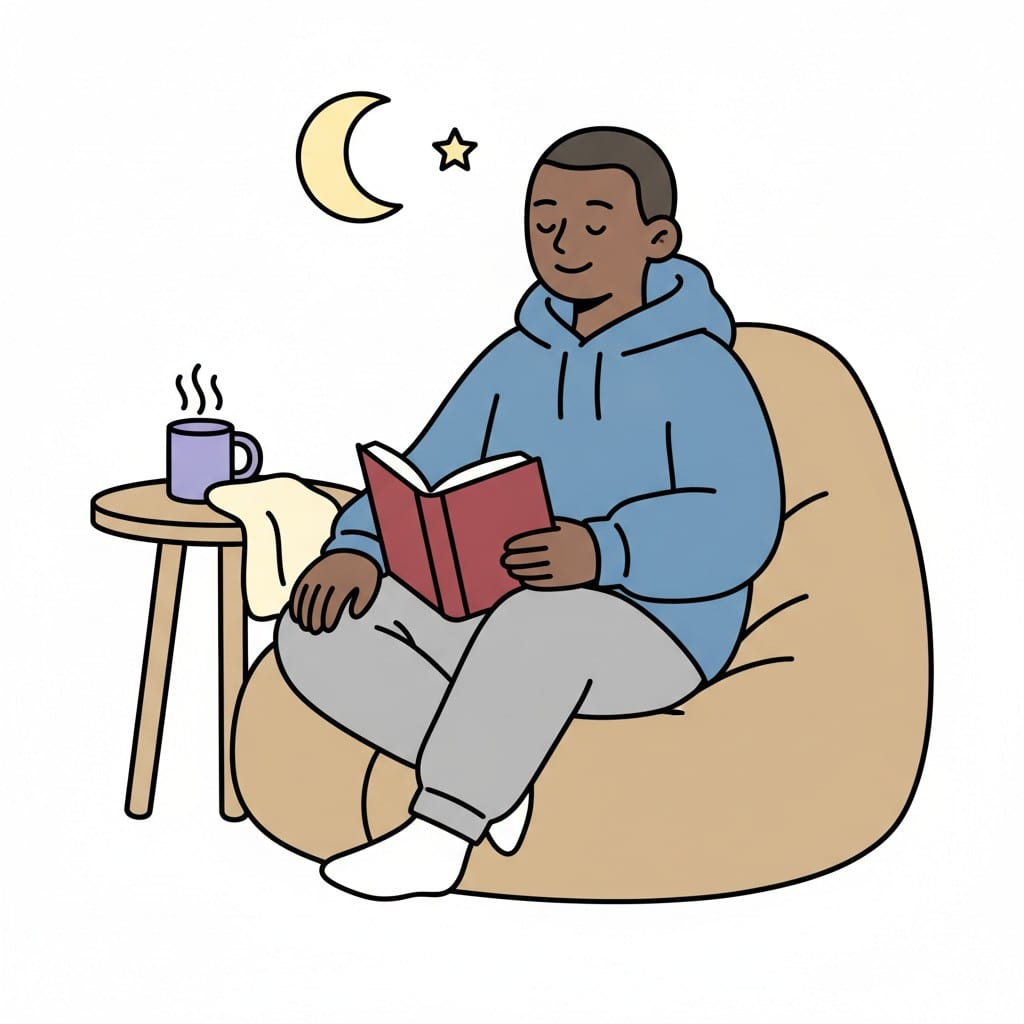 ⚲
⚲Reading in the evening
A person sits in a beanbag reading a book under the moon.
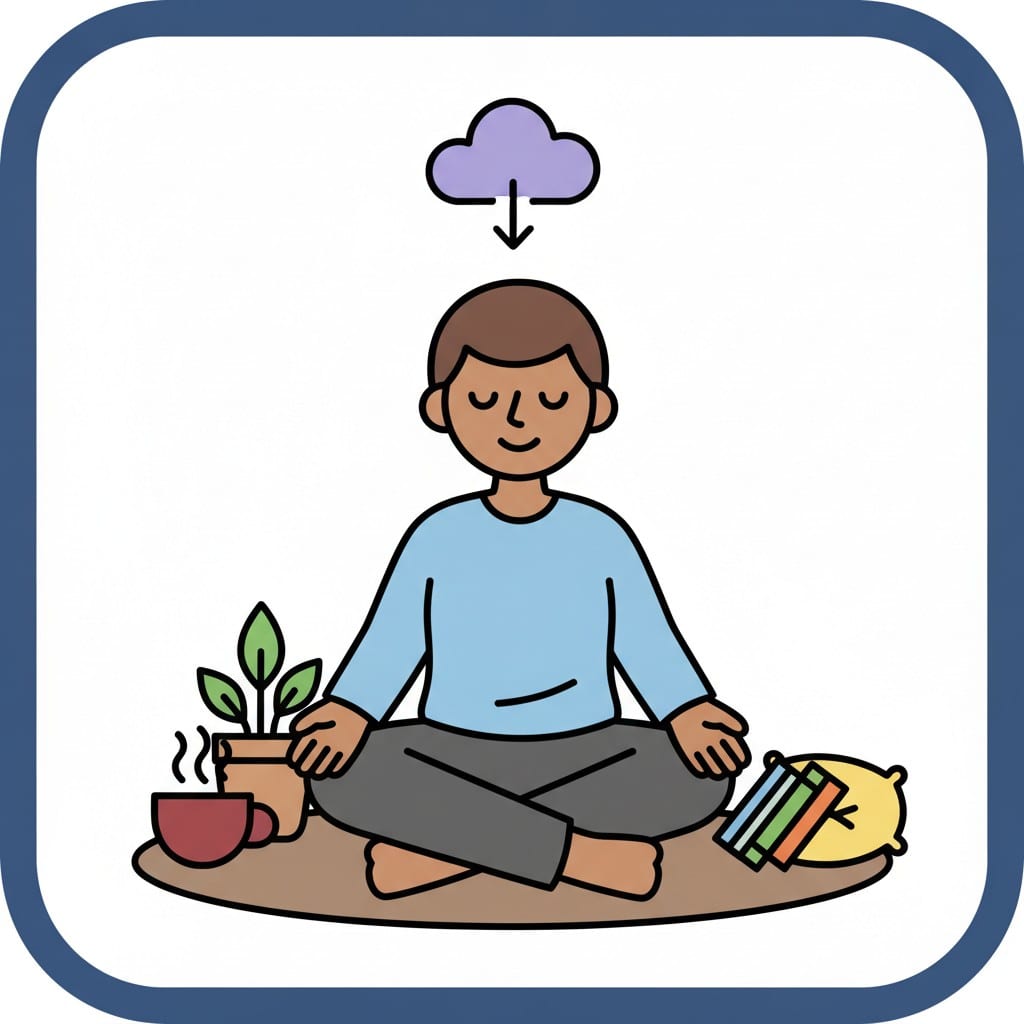 ⚲
⚲Calming down
A person sits cross-legged with eyes closed next to tea and a plant.
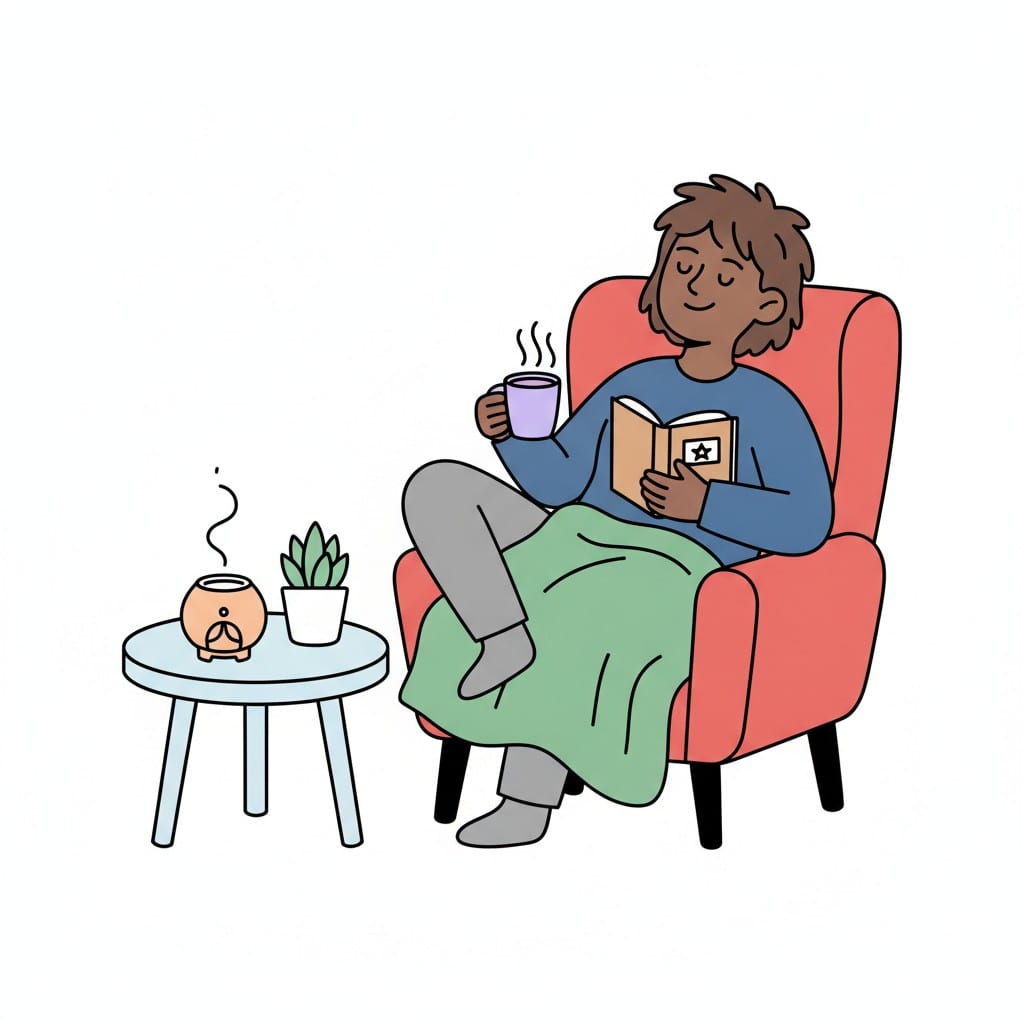 ⚲
⚲Winding down with tea
A person sits in an armchair under a blanket with tea and a book.
About this visual support
Winding down is harder than it sounds, because it goes against what the body is doing. When a child is wound up there is no natural brake, and the instruction to calm down lands in a body that still wants to move. The shift from active to still has no starting point, so it easily becomes a struggle instead of a soft glide.
Pictures help right here, because they give winding down a visible beginning and a direction. With the steps laid out, the child sees that it moves from lively to calmer in stages, not in one abrupt stop. Dimming the light, changing into soft clothes and crawling under the blanket become a staircase down that the body can follow, rather than an order to switch off.
One concrete tip: put a physical but quiet activity first in the wind-down, like tidying up or stretching, so the body burns off the last of its speed before the stillness. Many children with adhd need that bridge made especially clear. To keep the whole evening track together, you can build it in Routined and try the app free for fourteen days.
Use this image in a schedule
Build your own visual schedule with this image and download it as a print-ready PDF. Completely free.
More similar visual supports
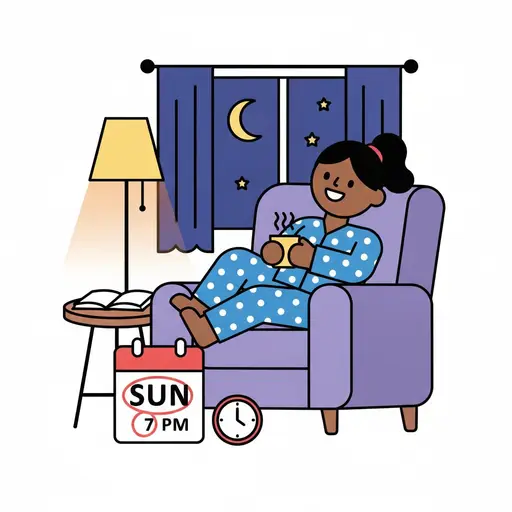
Sunday evening
A girl in pyjamas sits in an armchair with a warm mug while the moon shows throu...

Evening calm
A picture of a dark blue night sky with a moon and stars above a house and some ...
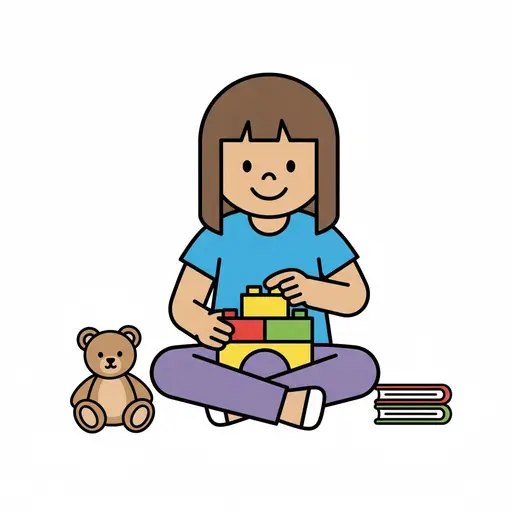
Calm Activity
A girl builds with blocks with a teddy and books beside her.
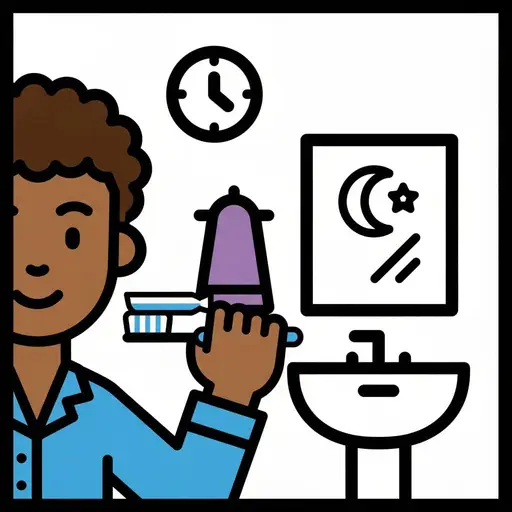
Evening Routine
A person with curly hair holds a toothbrush with toothpaste in the bathroom, wit...
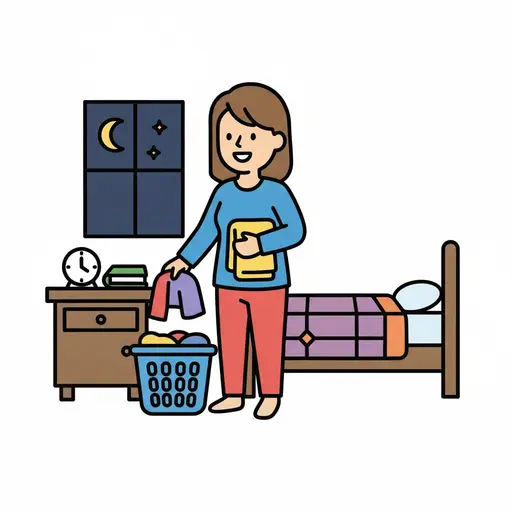
Weekday evening
A woman tidies the bedroom in the evening.
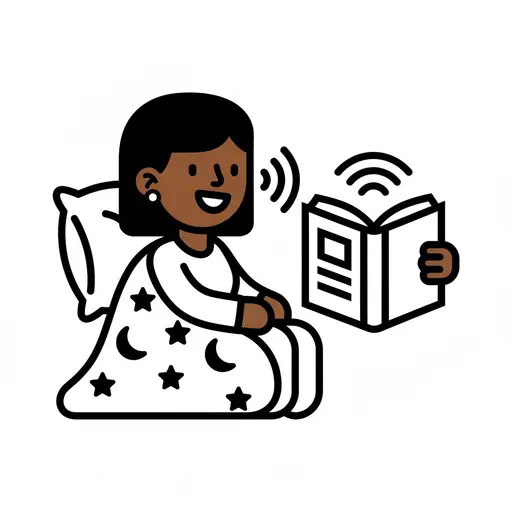
Listen to a bedtime story
A child lies in bed listening to a book with sound waves.
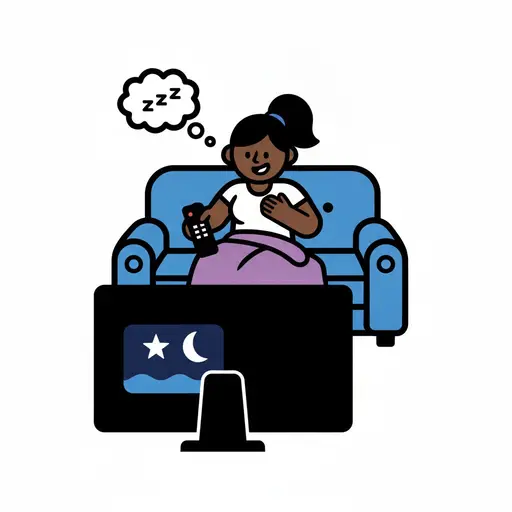
Watch a Movie and Relax
A girl sits relaxed on the couch holding a remote and watching a movie on the TV...
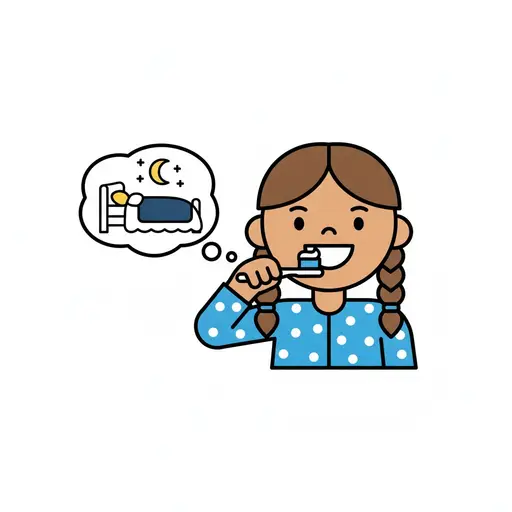
Get ready for bed
A girl in spotted pyjamas brushes her teeth while a thought bubble shows a bed u...
This visual support in other languages
Take the visual supports with you
In Routined you build schedules from these pictures, add timers and voice instructions, and your child follows the day on their own.


* 14-day free trial, then $2.39 a month or $20.99 a year (US pricing). Cancel anytime.