Candy
Candy is short, intense, and almost always followed by a crash: it tasted so good, why does it have to end? The pictures below help you map out both the moment itself and what actually comes next.
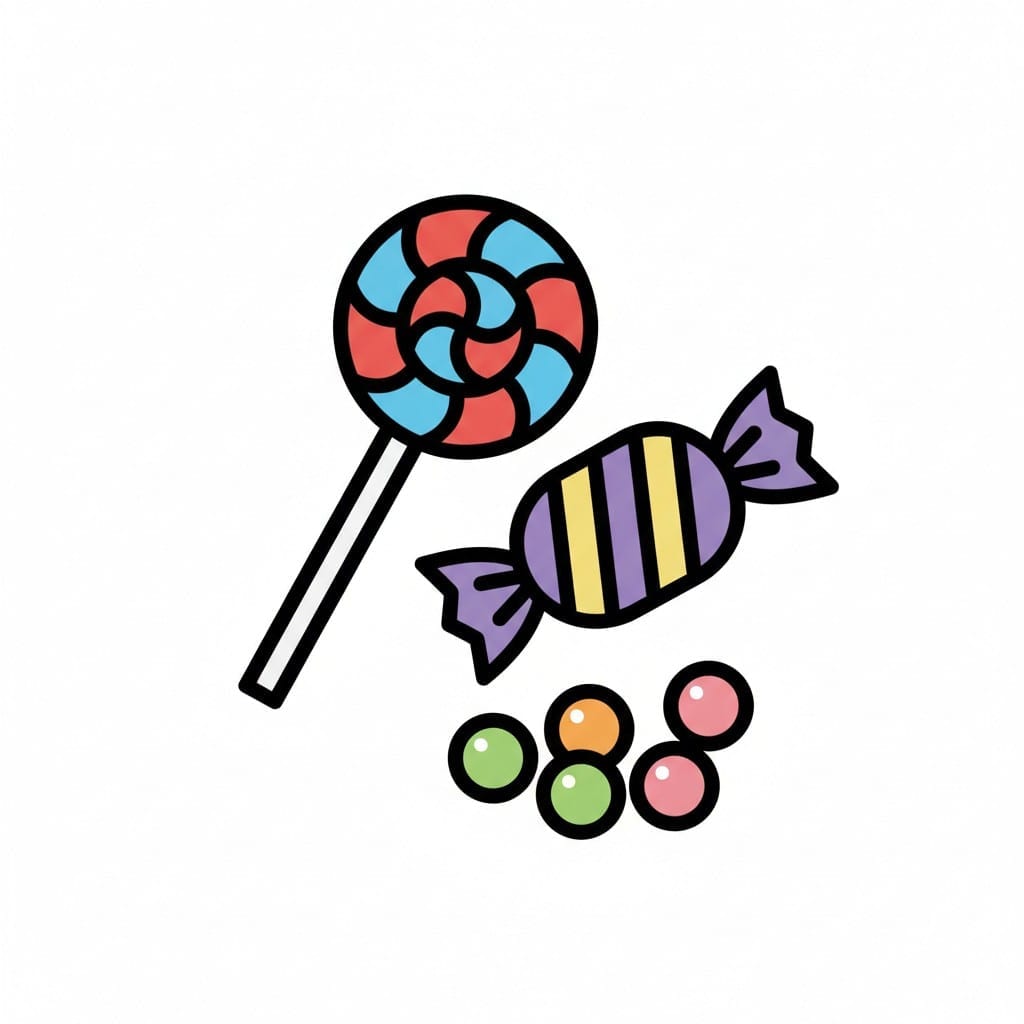
Candy
An illustration showing a colorful swirl lollipop, a wrapped striped candy, and a pile of small round candies in various colors.
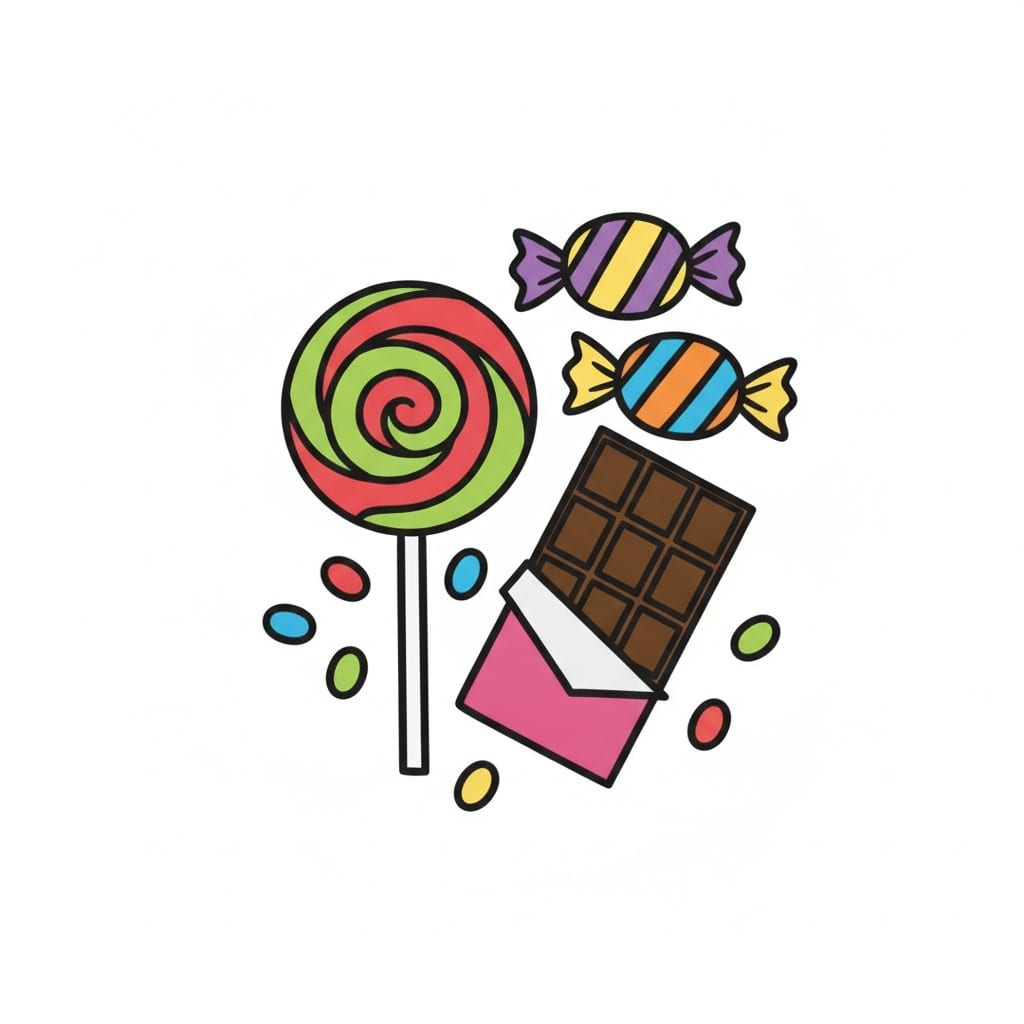
Lollipop, candies, and a chocolate bar
A red and green swirl lollipop lies beside two wrapped candies and a chocolate bar in a pink wrapper, with small candies scattered around.
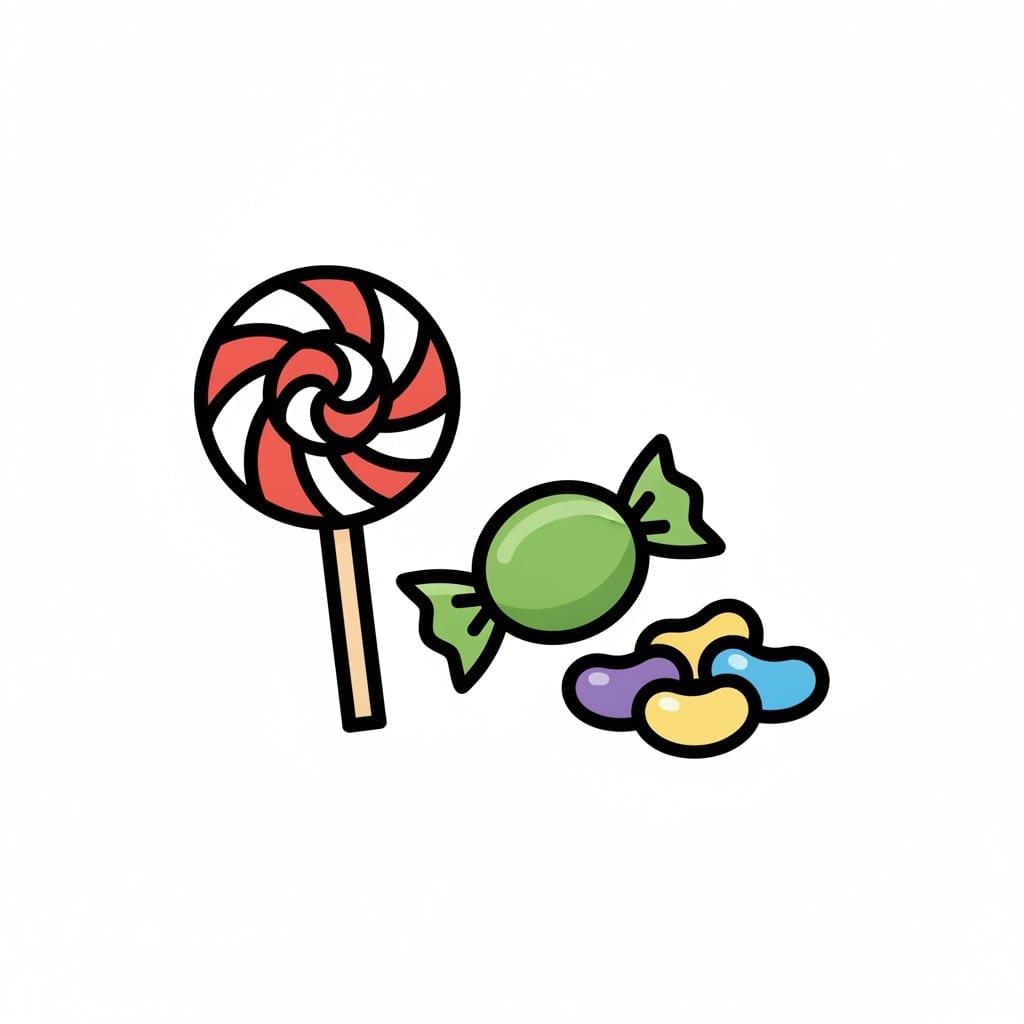
Red lollipop and jelly beans
A red and white swirl lollipop on a wooden stick sits next to a green wrapped candy and a few colourful jelly beans.
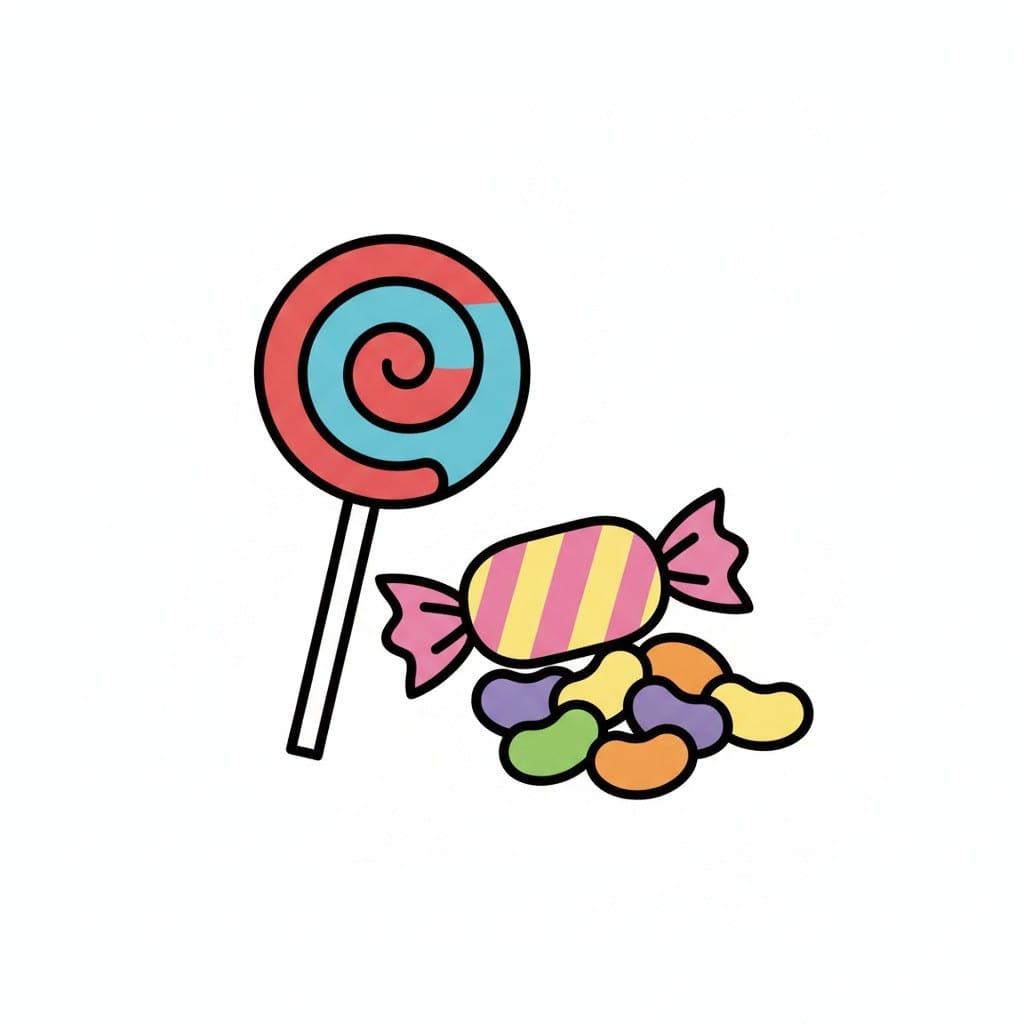
Blue lollipop and a pile of sweets
A lollipop with a red and blue spiral rests on its stick beside a striped pink and yellow sweet and a heap of jelly beans.
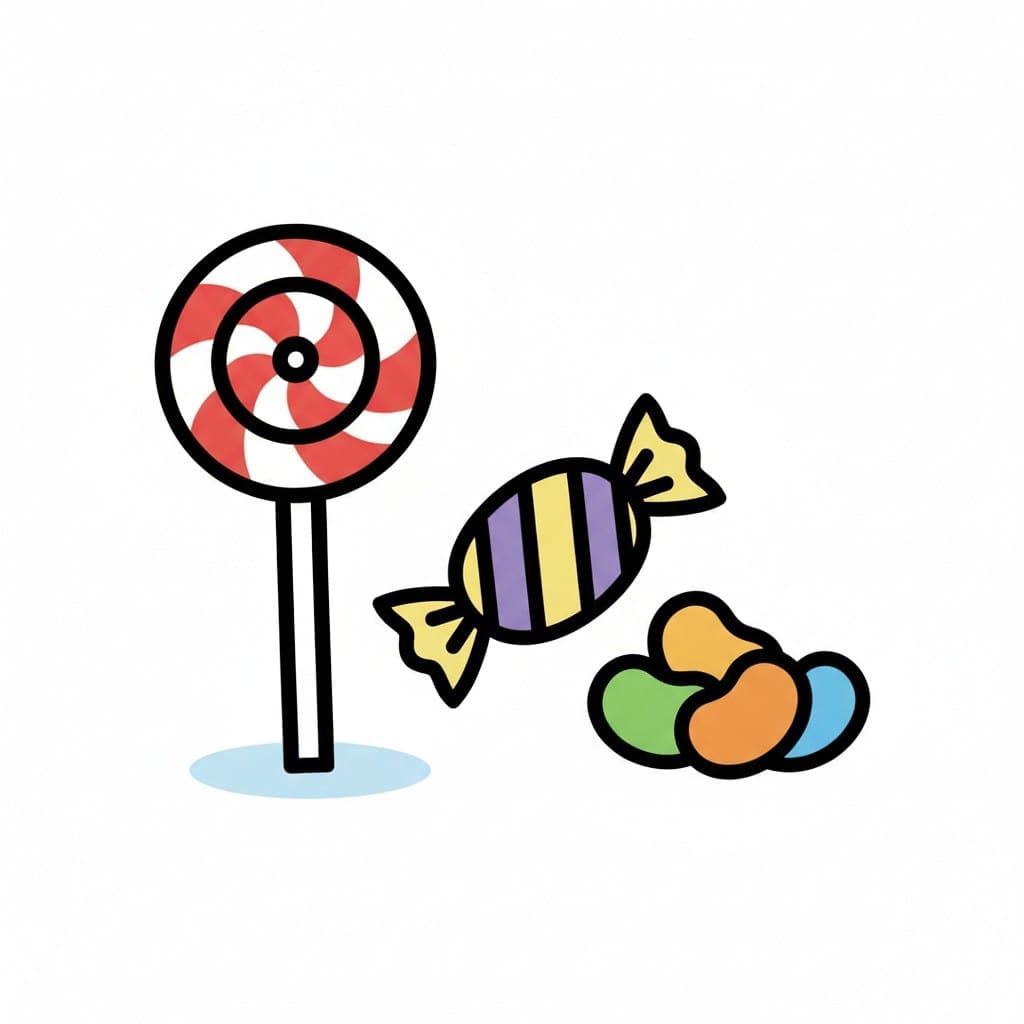
Lollipop and candies
A red and white swirl lollipop stands next to a wrapped sweet and a small pile of colorful jelly beans.
About this visual support
The hardest part of candy is rarely the candy itself – it is the second after the last piece is gone. The mood drops, the questions start, and whatever comes next meets a resistance that wasn't there before the bag appeared. Visual support shifts the focus from the ban (it is over now) to a sequence the child can see in advance.
Lay out three pictures: how much candy there will be, where you eat it, and what follows right after – brushing teeth, a glass of water, a book. The key is that the after-image is there from the start, not introduced once the crash has hit. The candy then becomes part of a sequence rather than an isolated peak you have to climb down from.
A concrete tip: count the pieces together before you start and place them on a plate next to the picture of the next activity. When the plate is empty, point to the next image instead of saying anything. In the Routined app you can build the candy moment as its own short routine, with a clear beginning and end.
Use this image in a schedule
Build your own visual schedule with this image and download it as a print-ready PDF. Completely free.
More similar visual supports
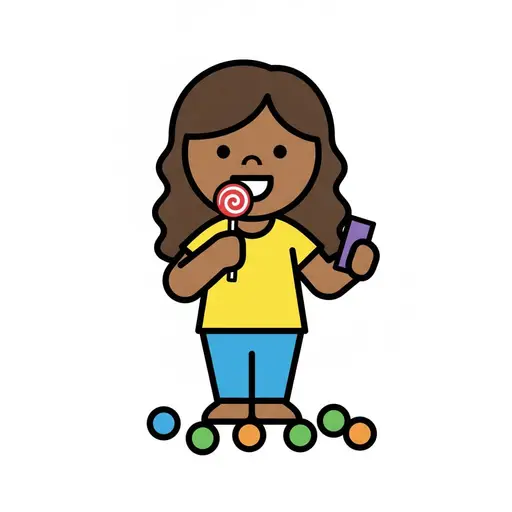
Eat candy
A girl licks a lollipop and holds a piece of candy, with colorful sweets at her ...
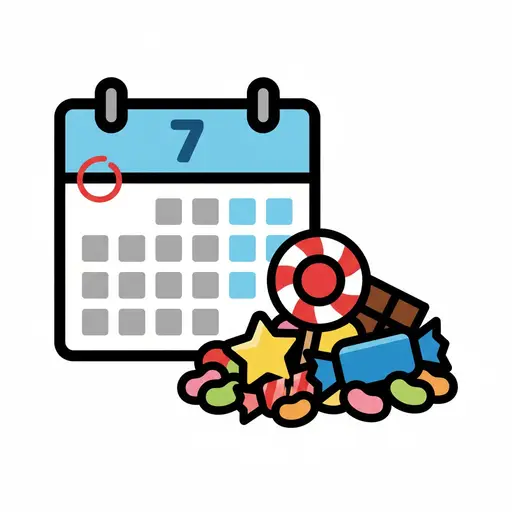
Saturday Candy
A calendar showing the seventh day marked with a red circle, next to a pile of c...
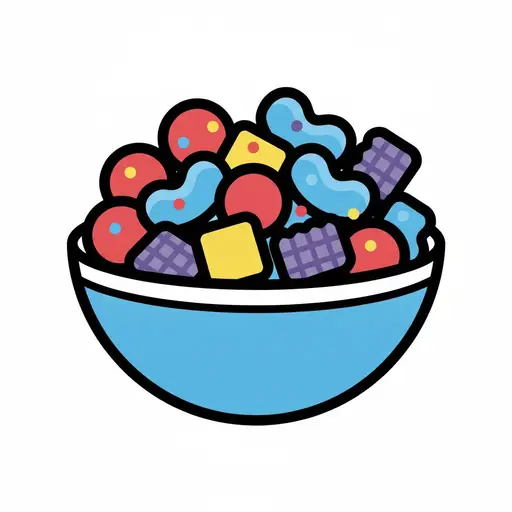
Candy and chips
A blue bowl filled with colorful candy and sweets.
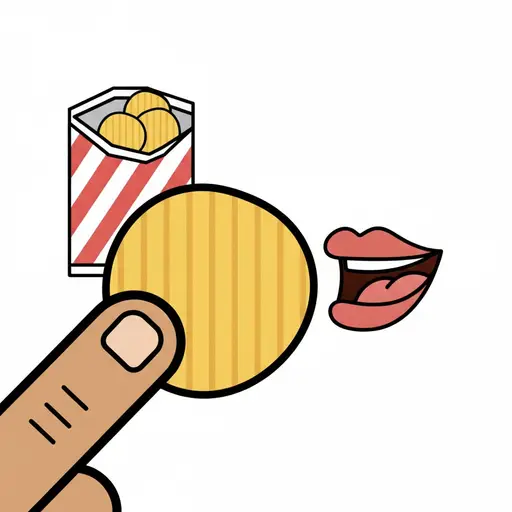
Chips
A hand holds a potato chip near an open bag and a mouth.
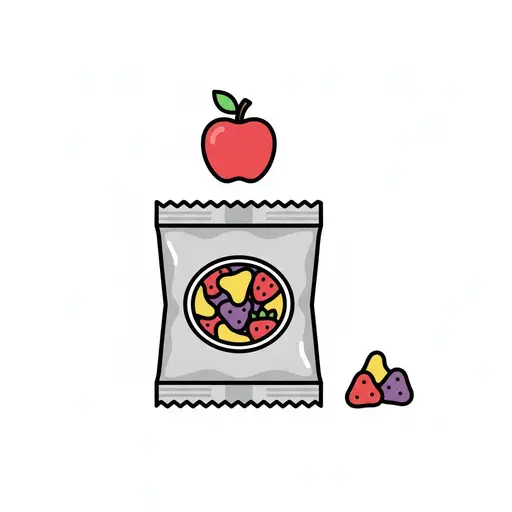
Eat a fruit snack
A bag of dried fruit with an apple above it.
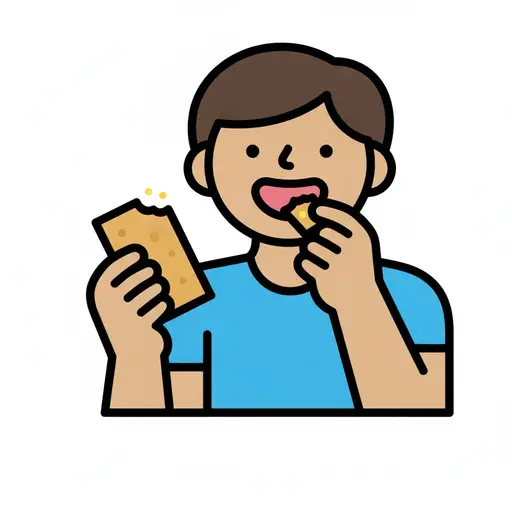
Eat snack
A child takes a bite of a snack bar.

Candy and ice cream
An ice cream cone with colorful scoops and sprinkles
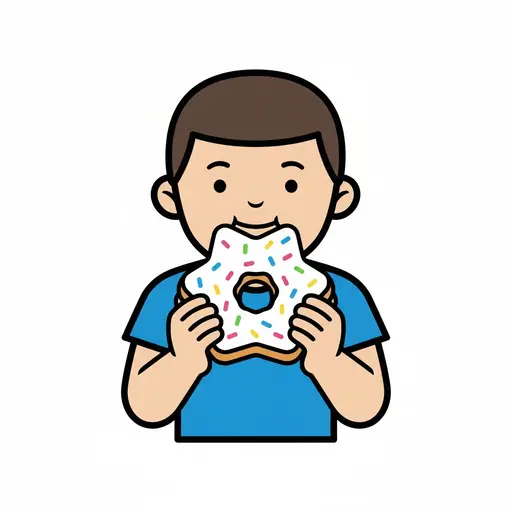
Eating donut
A person eating a donut with sprinkles.
This visual support in other languages
Take the visual supports with you
In Routined you build schedules from these pictures, add timers and voice instructions, and your child follows the day on their own.


* 14-day free trial, then $2.39 a month or $20.99 a year (US pricing). Cancel anytime.