Cards and dinner
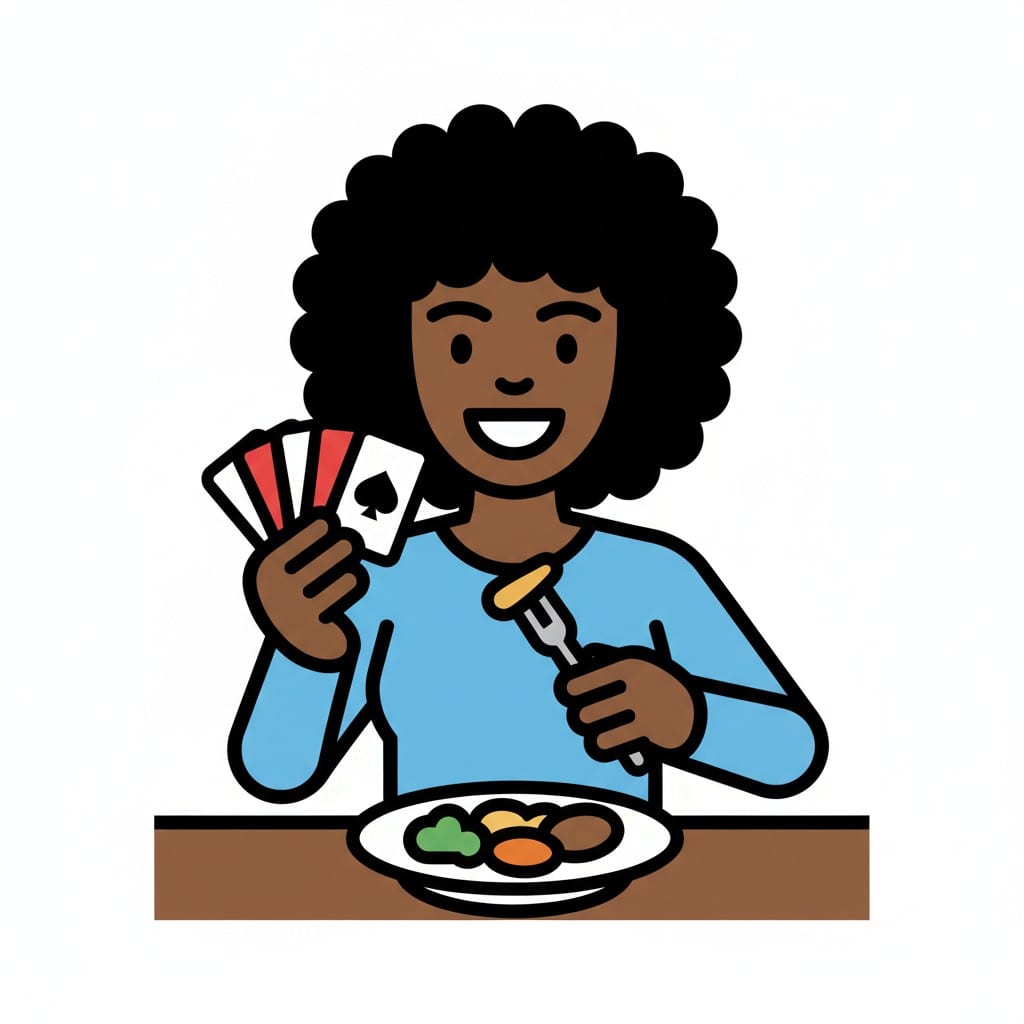
The plate is full but the chair is restless: without something extra to hold on to, dinner becomes a long wait to leave. Here the game works as a motor and the visual support below as a map of when to play and when to chew.
 ♀
♀Cards at dinner
A smiling girl with voluminous curly hair holding playing cards in one hand and a fork in the other, with a plate of vegetables and meatballs in front of her.
About this visual support
Many children cannot sit still simply because a plate is in front of them. The food often is not the interesting part, the company is scattered, siblings may already have left, and the chair quickly turns into somewhere to escape from. Telling them to stay seated does not work on its own – they need something to stay for. A card game between bites can be exactly that.
The visual support keeps the game and the meal from clashing. When the cards say: deal, eat a bit, wait for the opponent, eat a bit, swap turns, they help your child not abandon the plate just because the game feels more alive. Motivation comes from outside, but the frame holds it in place.
A concrete tip: pick a short game where one hand only lasts a couple of minutes, so the natural end lines up with an empty plate. If you want to set the whole evening routine with dinner and game in one sequence, you can build it in Routined and let your child tick off each part as it is done.
Use this image in a schedule
Build your own visual schedule with this image and download it as a print-ready PDF. Completely free.

More similar visual supports
Cards and pasta
A smiling woman with long brown hair and a red shirt holding a hand of playing c...
Dinner games
A table with a plate and small game pieces, with hands playing.
Picnic
A red and white checked picnic blanket on grass with a brown wicker basket, a si...
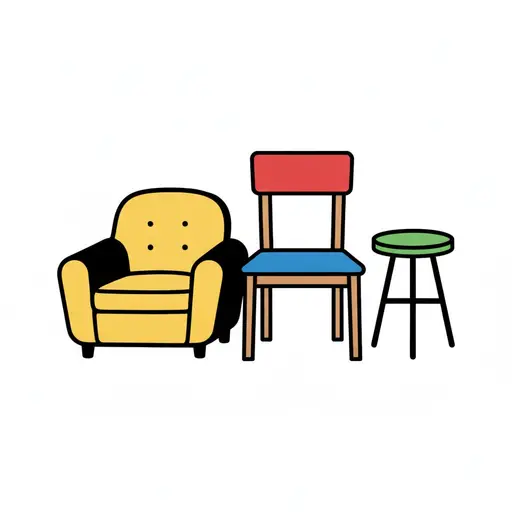
Settle into chair
An armchair, a chair and a stool.
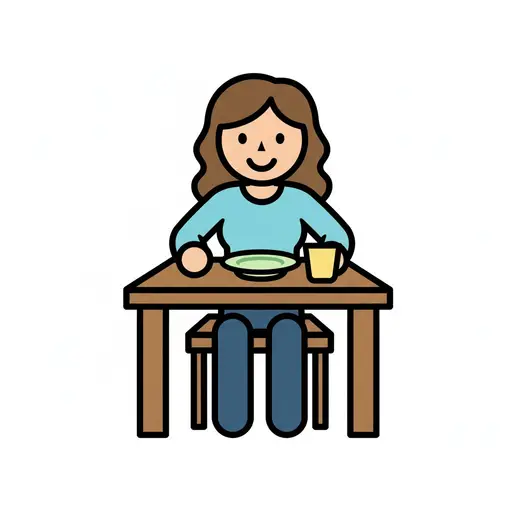
Sit at table
A woman sits at a table with a bowl and a cup.
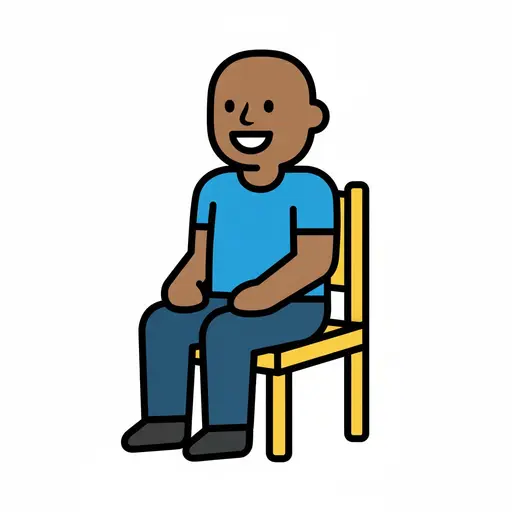
Sit on chair
A person sits on a yellow chair, smiling.
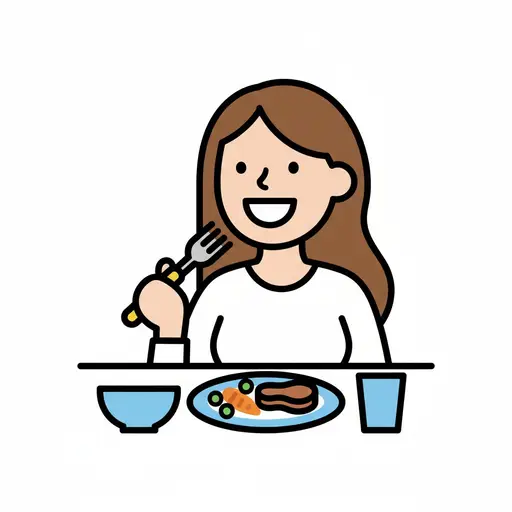
Dinner time
A girl sits at a table eating food from a plate with a fork.

Eat potato
Close view of a boy taking a bite of a potato.
Take the visual supports with you
In Routined you build schedules from these pictures, add timers and voice instructions, and your child follows the day on their own.


* 14-day free trial, then $2.39 a month or $20.99 a year (US pricing). Cancel anytime.