Eat
Texture, smell and how the food looks on the plate often decide more than how hungry the child is. The cards below break the meal into parts that are less overwhelming to face.
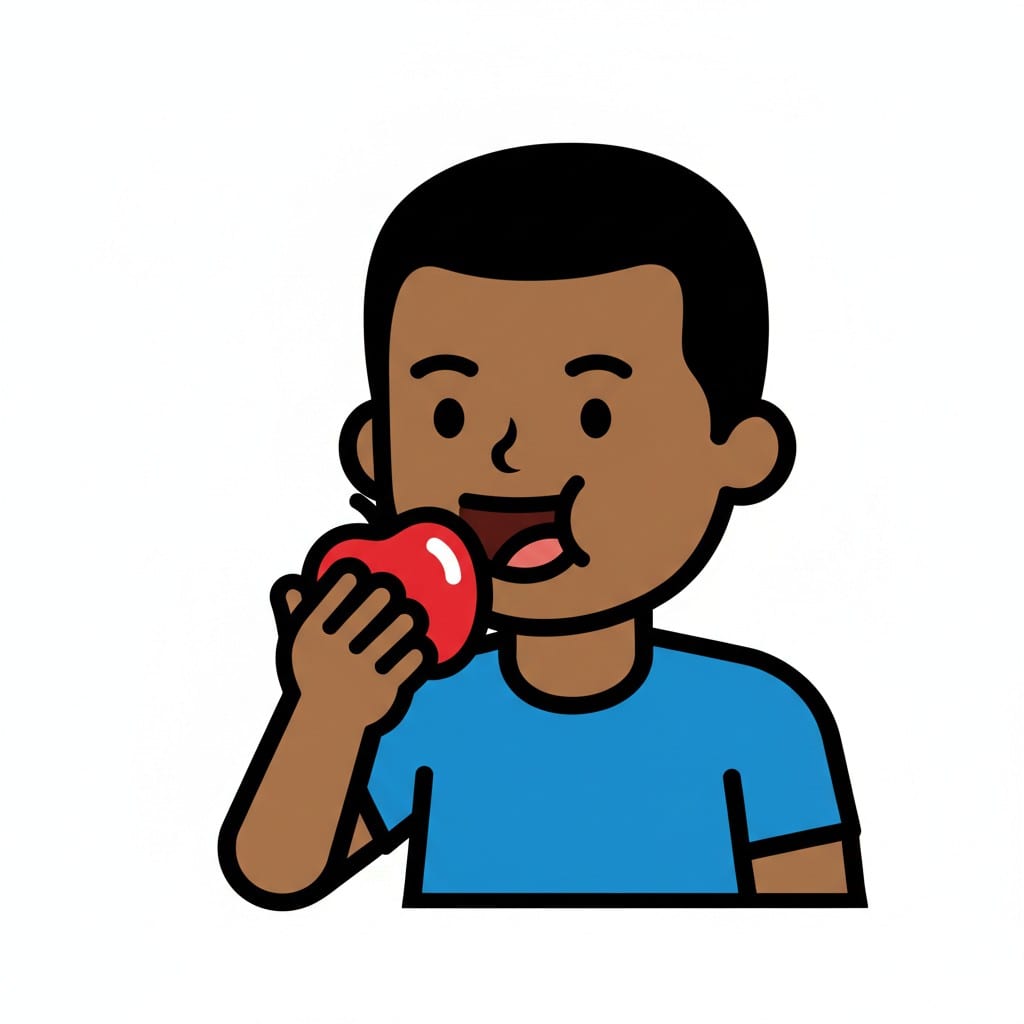 ♂
♂Eating apple
A person with an open mouth taking a bite out of a red apple.
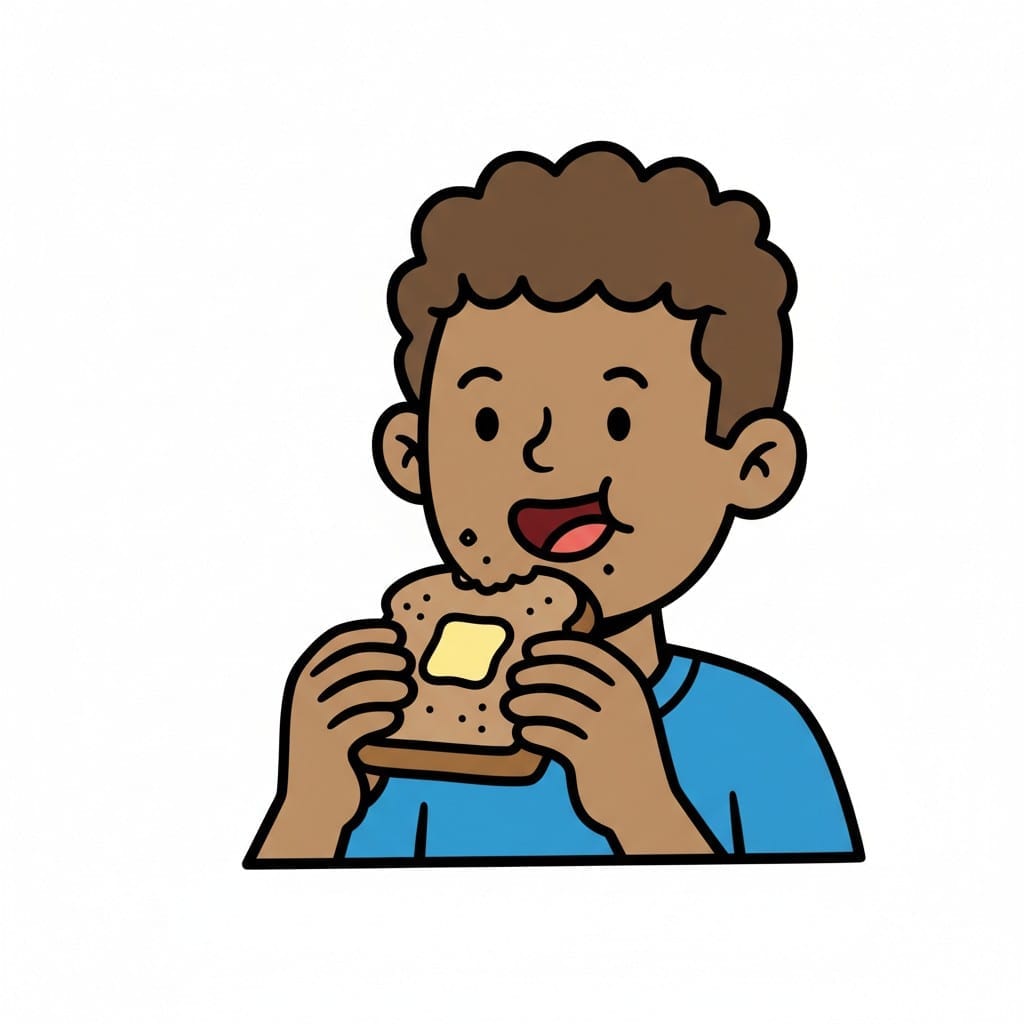 ♂
♂Eating toast
A person with crumbs around their mouth eating a piece of toast with butter.
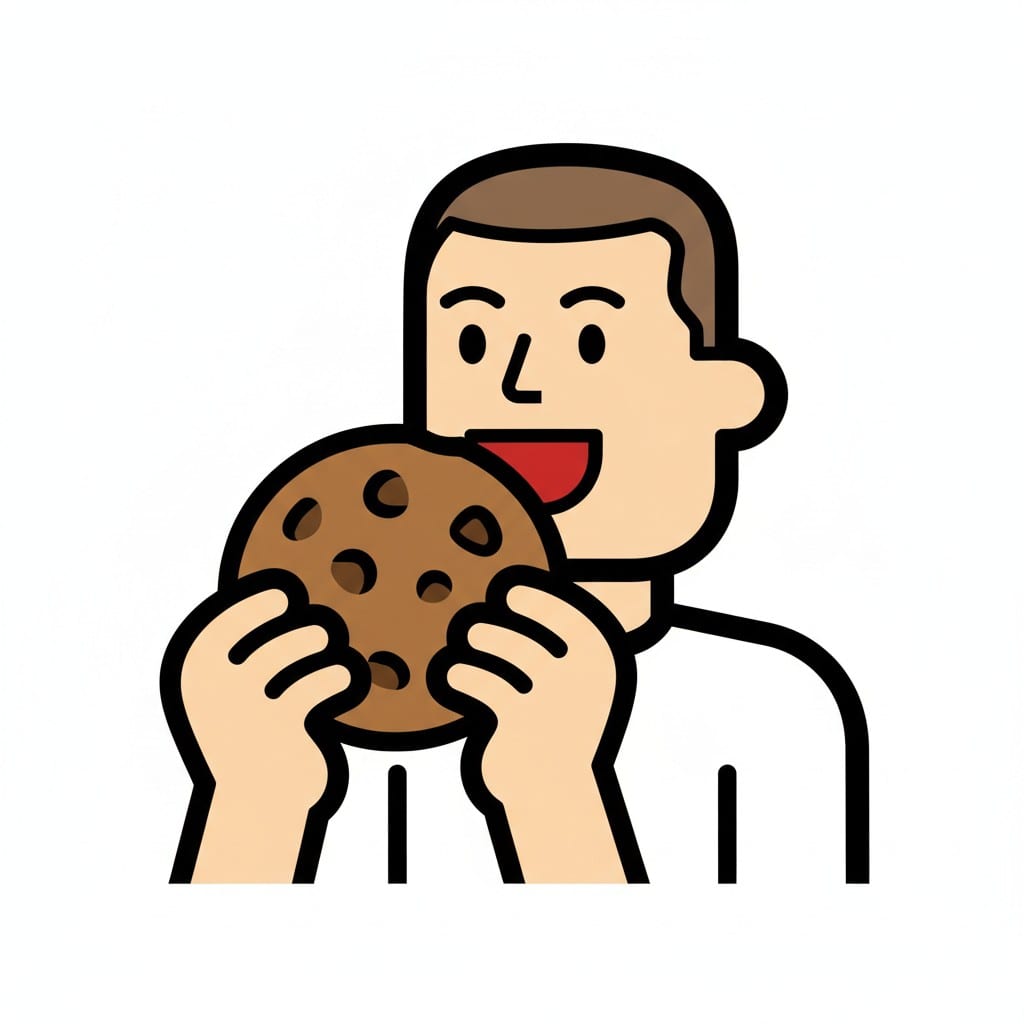 ♂
♂Eat
A man eating a cookie.
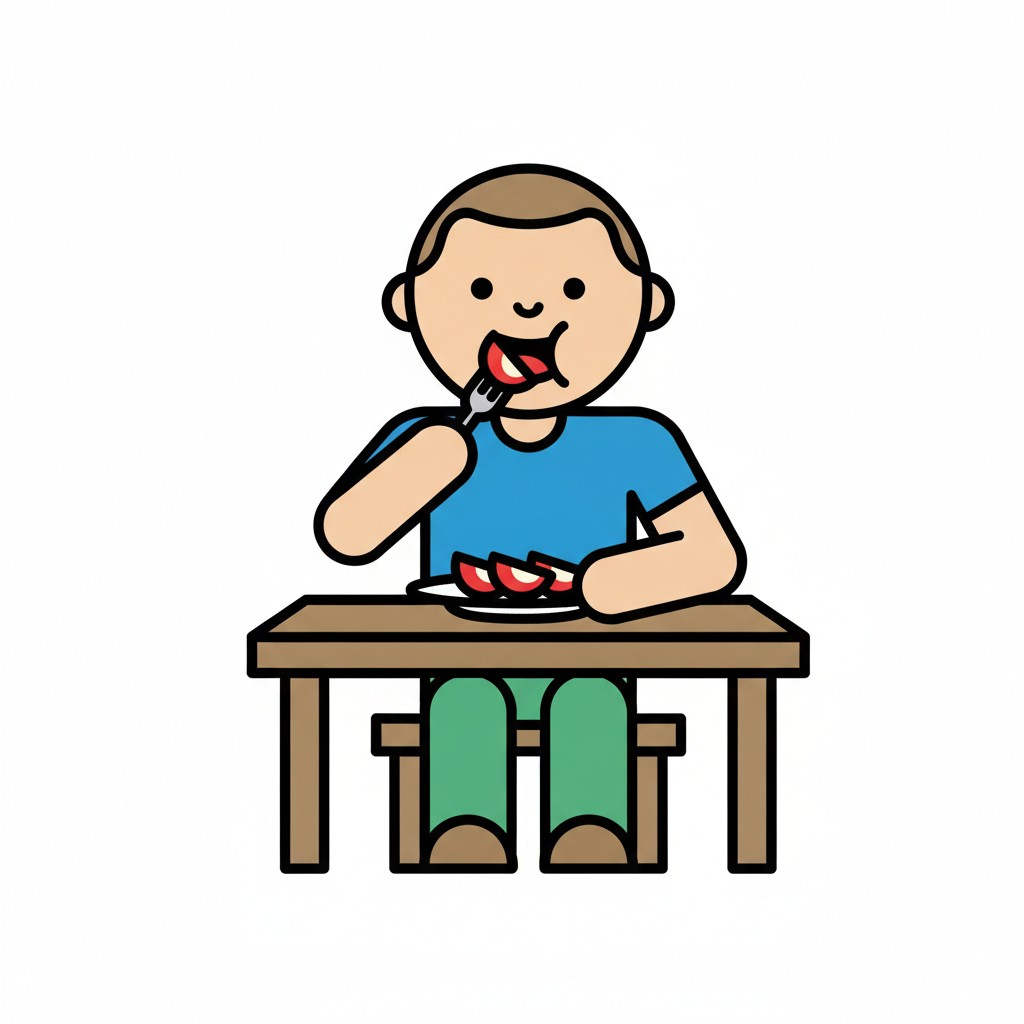 ♂
♂Boy eating
A boy sits at the table eating with a fork.
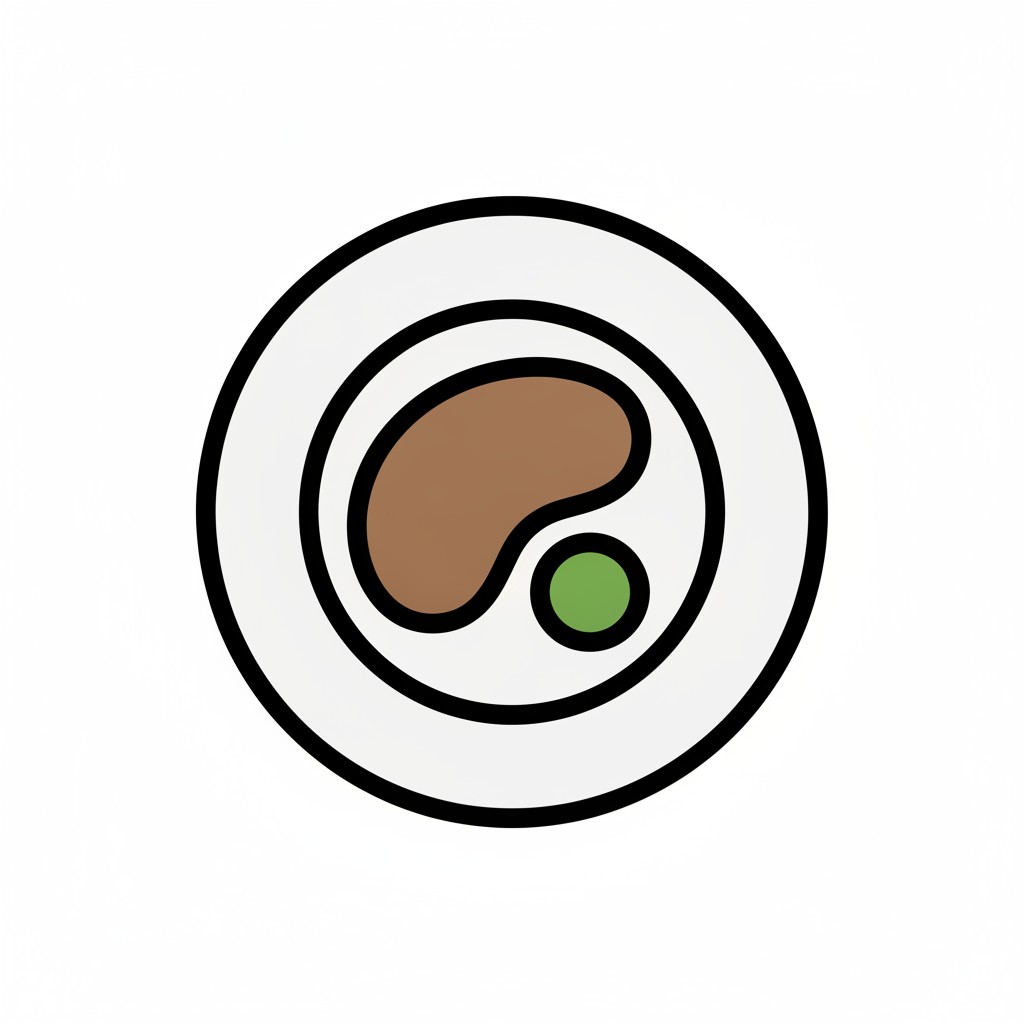
Plate of food
A plate with a piece of meat and a pea.
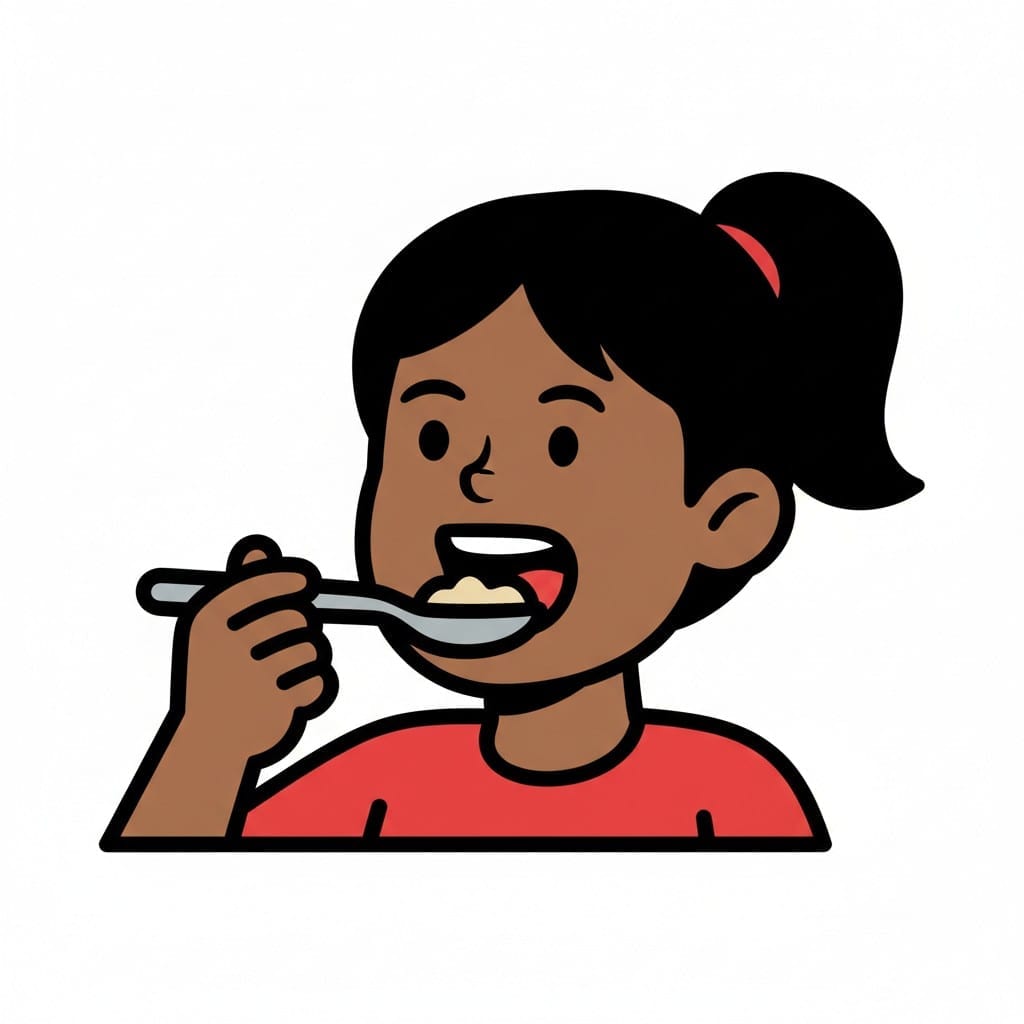 ♀
♀Eat
A girl eating with a spoon.
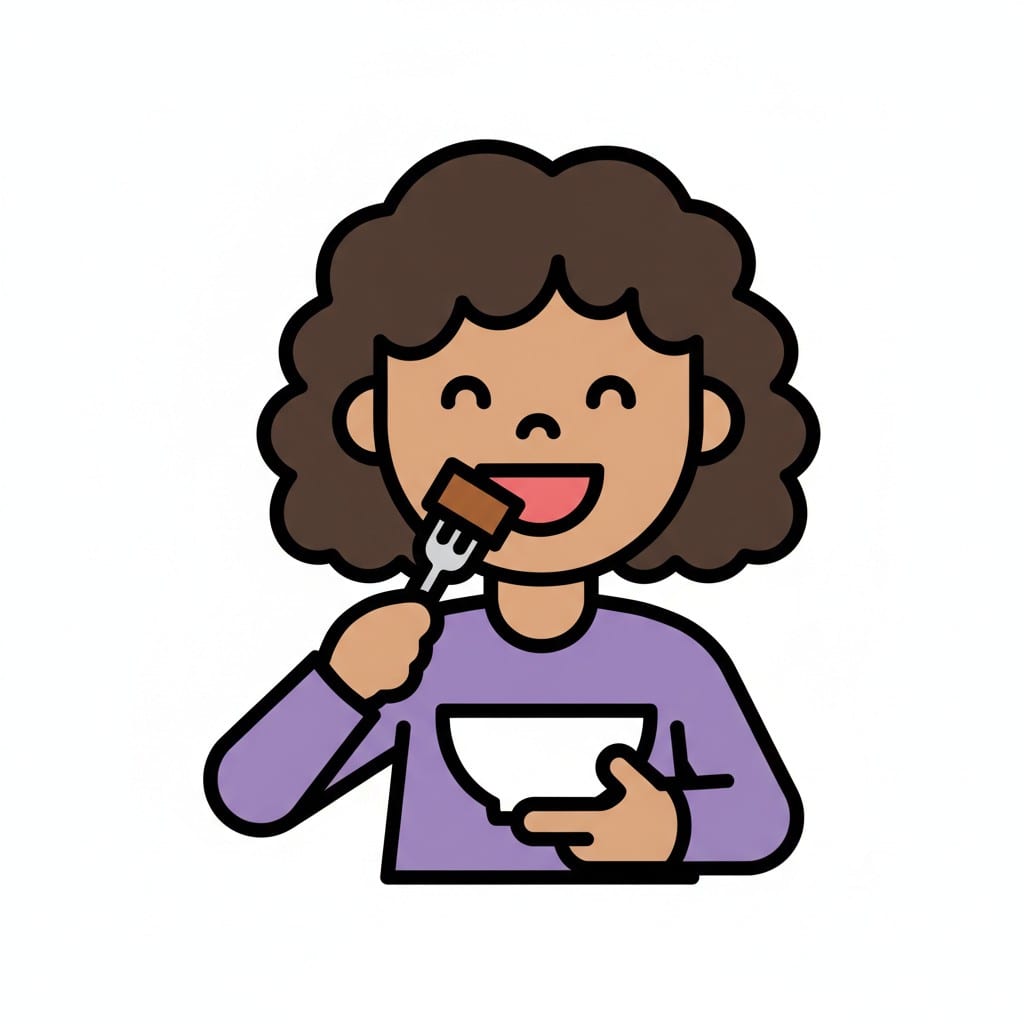 ♀
♀Eat
A girl eating from a bowl with a fork.
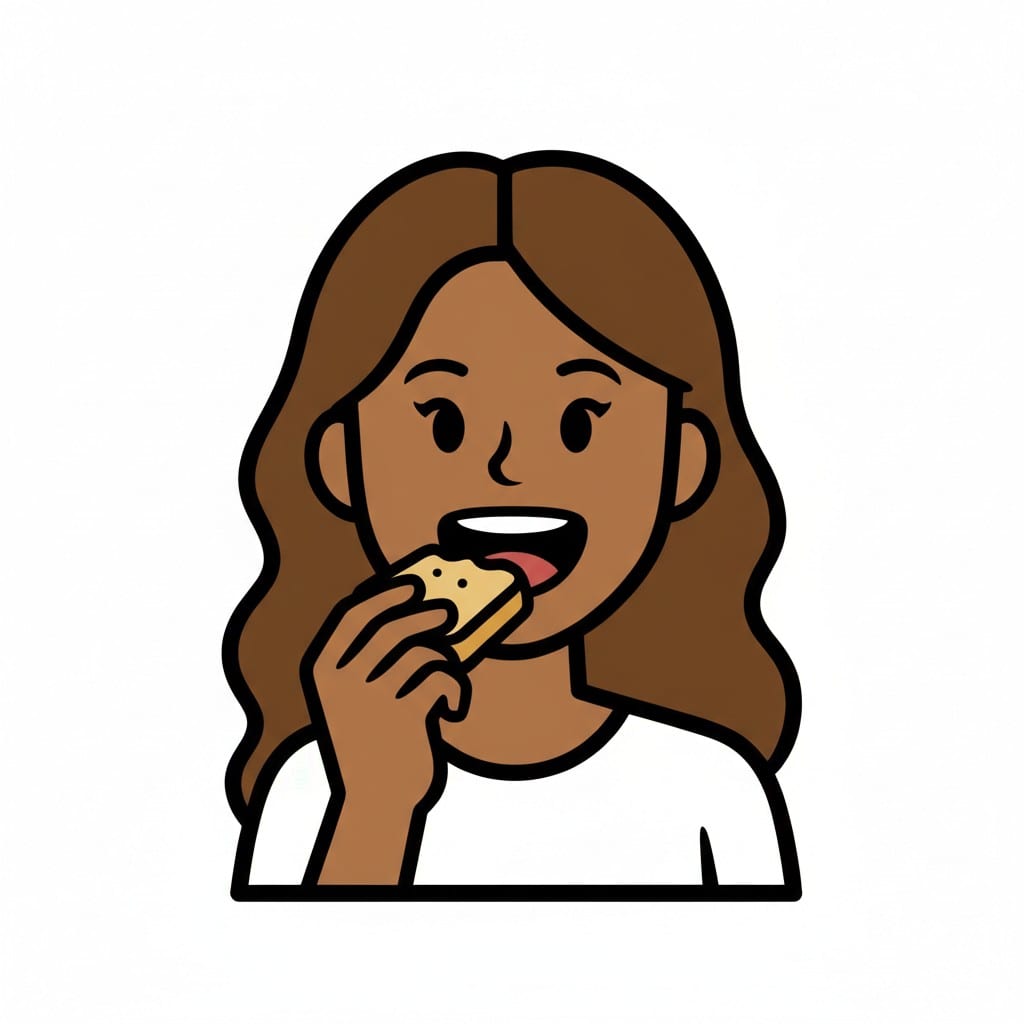 ♀
♀Eat
A person eating a piece of toast.
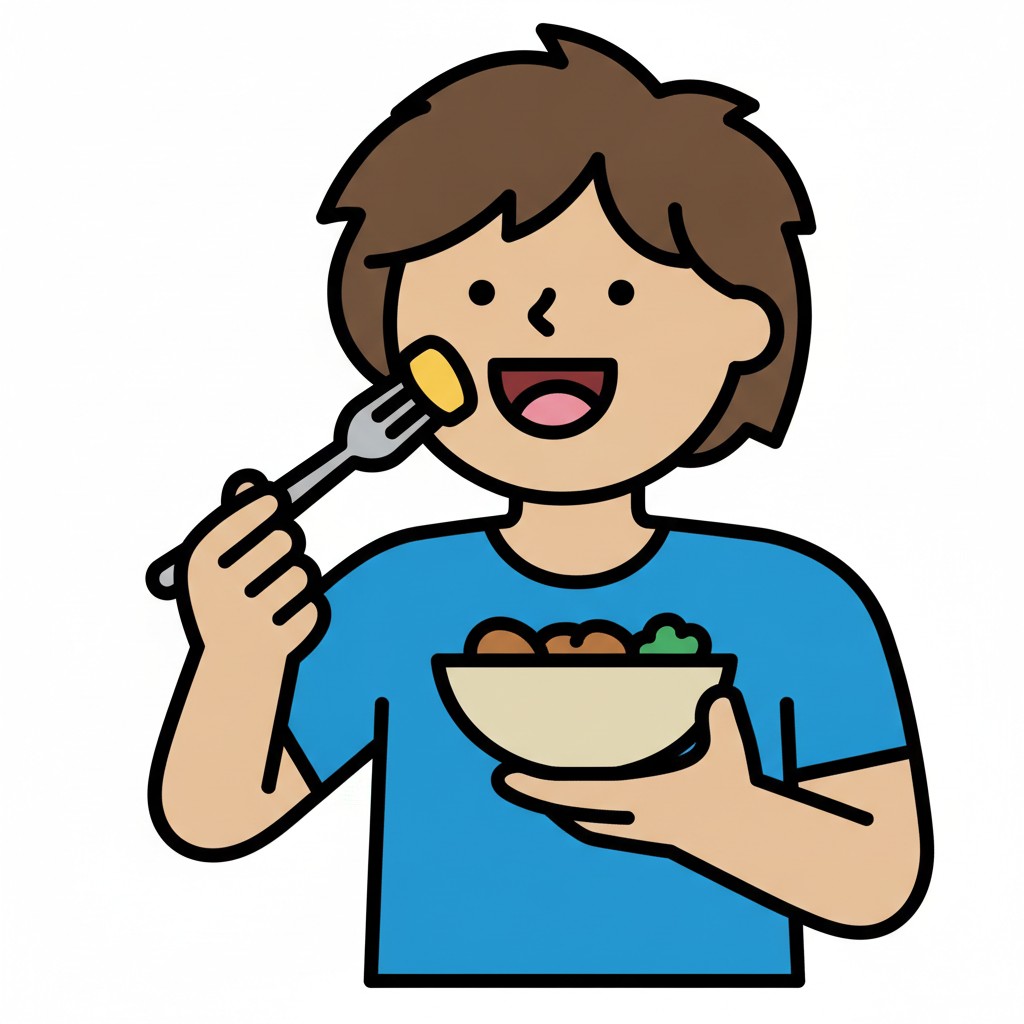 ⚲
⚲Child eating from bowl
A happy child eats from a bowl with a fork.
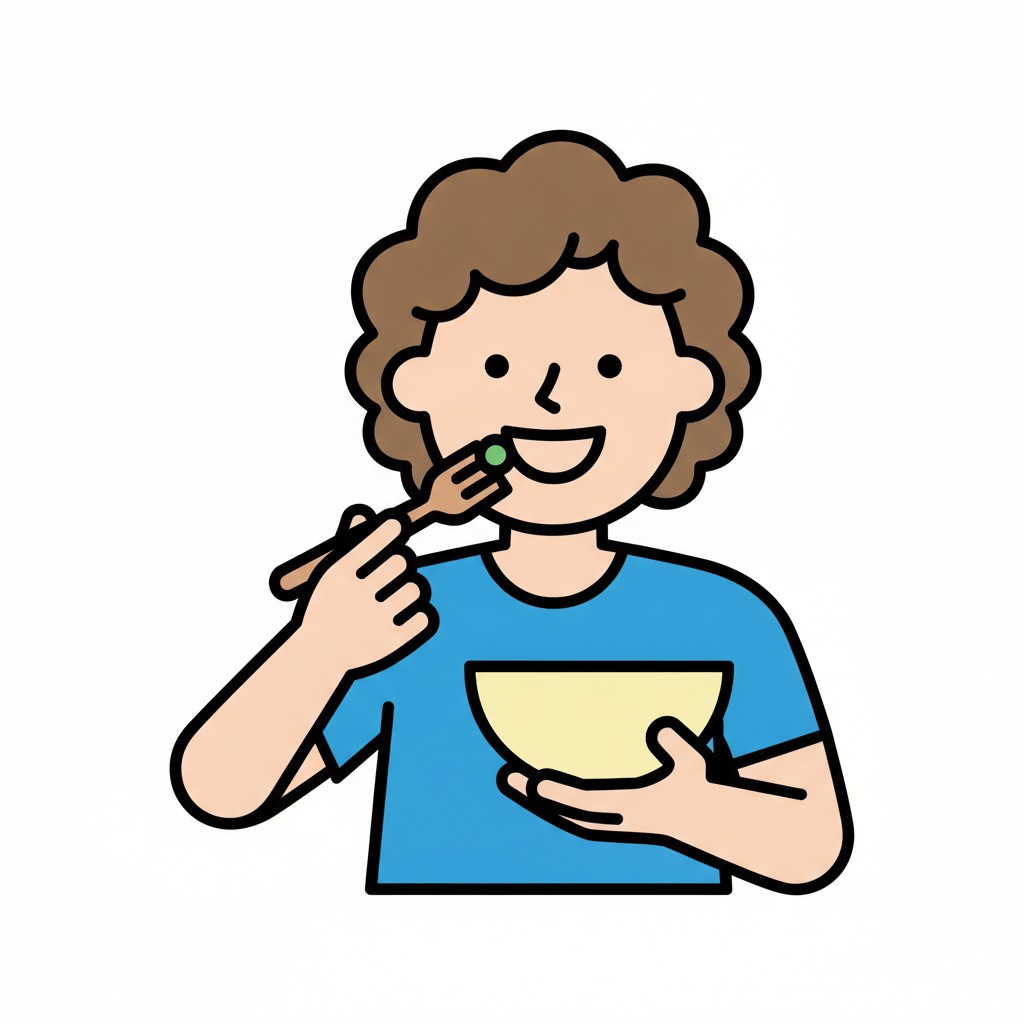 ⚲
⚲Child eating
A child eats with a fork while holding a yellow bowl.
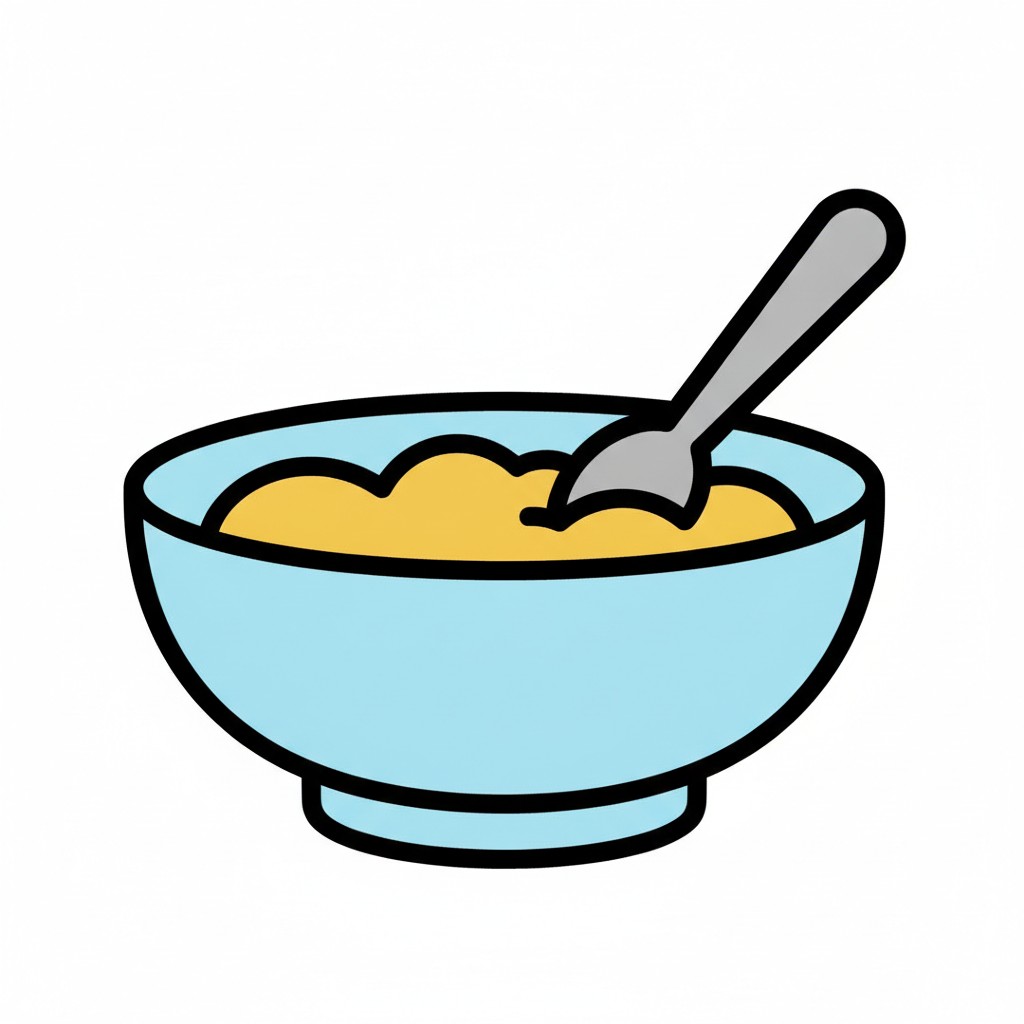
Bowl of food
A blue bowl of porridge with a spoon.
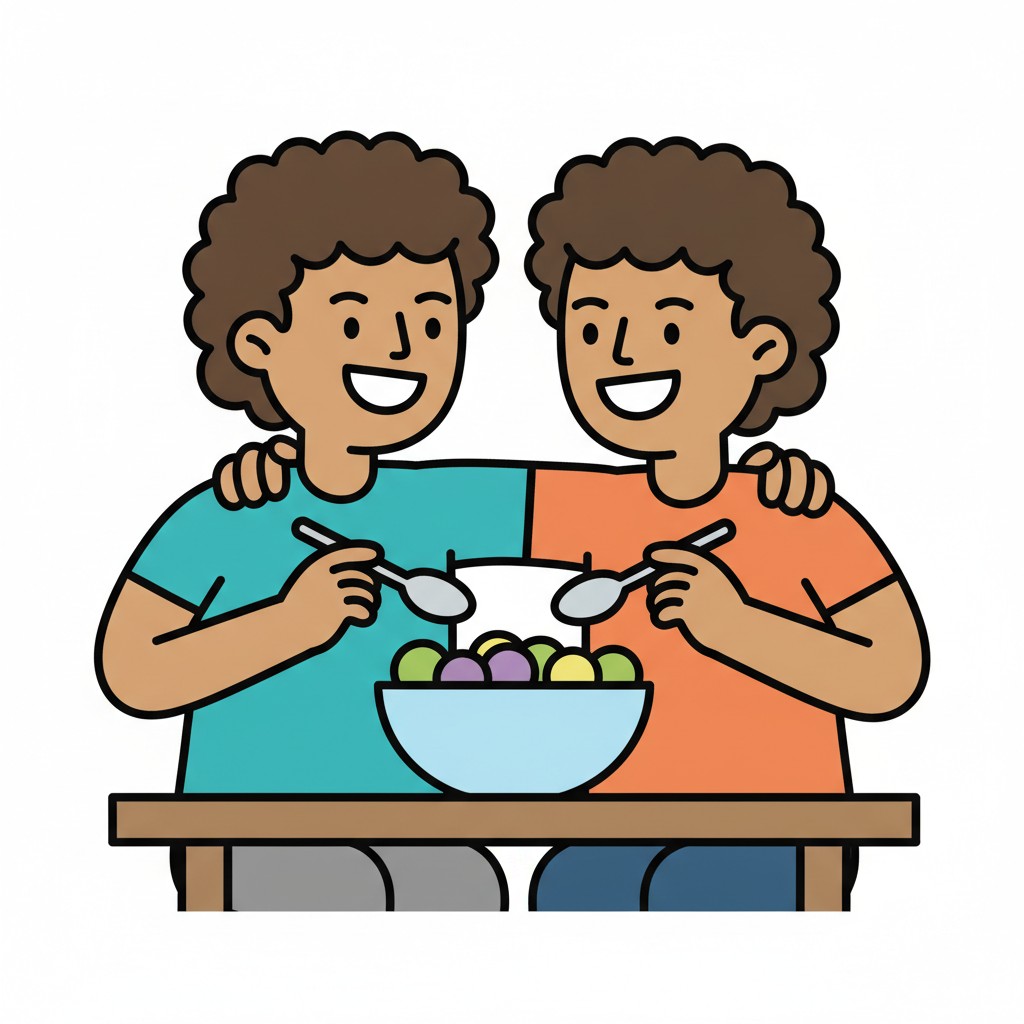 ⚲
⚲Eating with a friend
Two children share a bowl of fruit at the table.
About this visual support
The plate arrives and the child´s eyes lock on a single spot: that gravy creeping into the potatoes. For some kids it isn´t hunger that decides whether the fork lifts, but how things feel in the mouth, how they smell and whether they happen to touch each other. When too much hits at once, the whole meal stalls.
Visual support shifts the focus from the whole plate to one moment at a time – sit down, look, taste a bit, chew, sip something. That makes the meal predictable, and predictable is easier to handle even when the senses object. For toddlers who don´t yet have words for flavours, the cards also let them point to what works.
A concrete tip for eating: use a plate with clear compartments so different textures don´t slide together. If you want to build the whole mealtime routine with images and short pause moments, Routined offers a 14-day trial.
Use this image in a schedule
Build your own visual schedule with this image and download it as a print-ready PDF. Completely free.

More similar visual supports
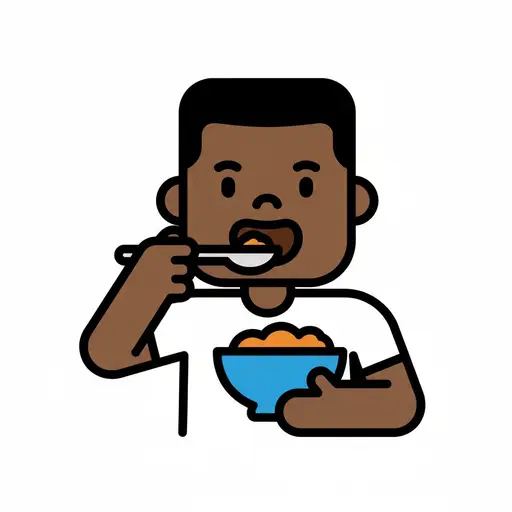
Eat something
A cartoon boy eating from a blue bowl with a spoon.
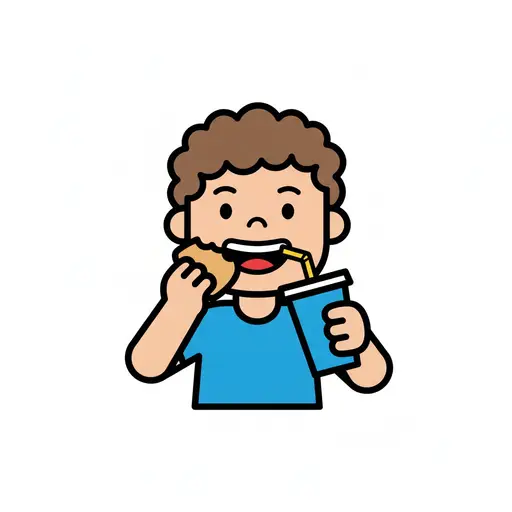
Eat and drink
A child takes a bite of a bun and drinks from a cup with a straw.
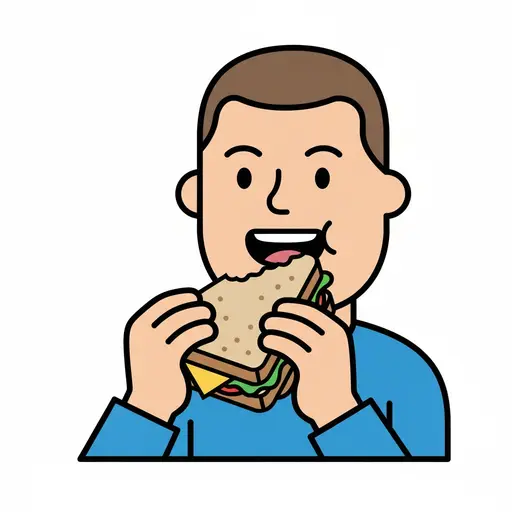
Eat sandwich
A person eating a sandwich with a bite taken out.
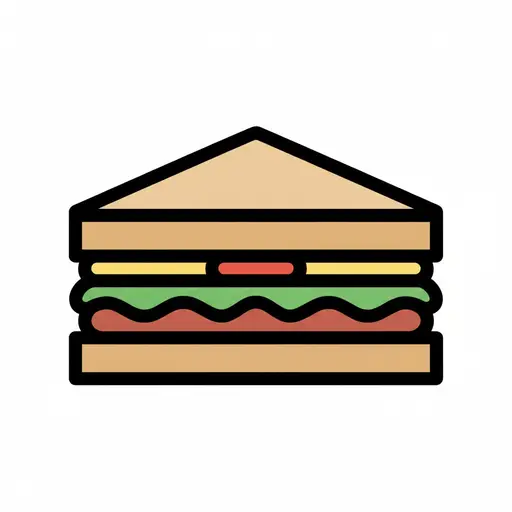
Sandwich
A sandwich cut diagonally into a triangle shape, showing layers of filling.
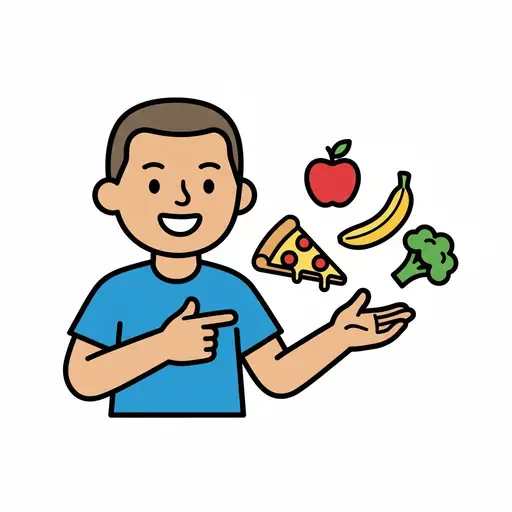
Choose food
A boy points with one hand while various food items like an apple, a banana, bro...
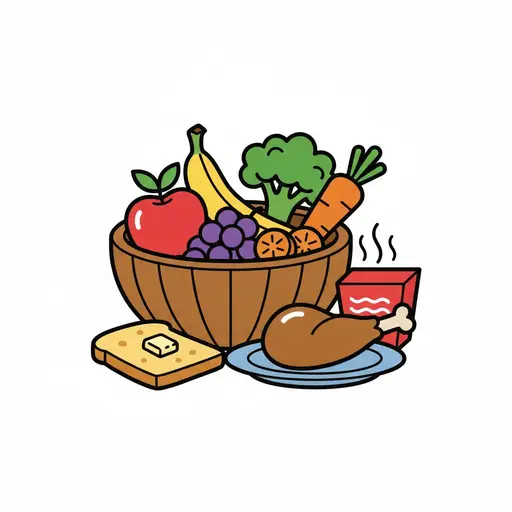
Food
A wooden bowl with an apple, a banana, grapes, orange, broccoli and a carrot, in...
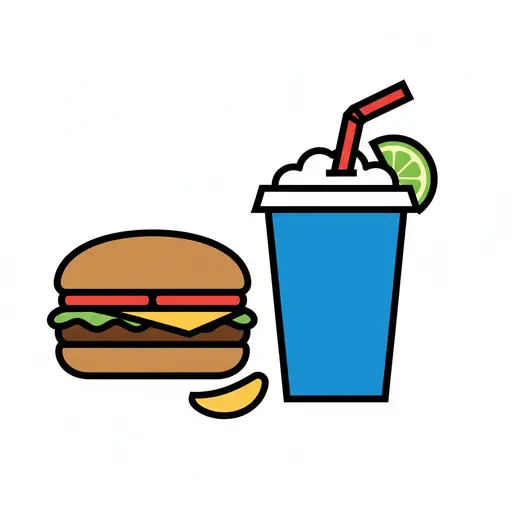
Food and drink
A burger next to a large drink with a straw and a slice of lime.
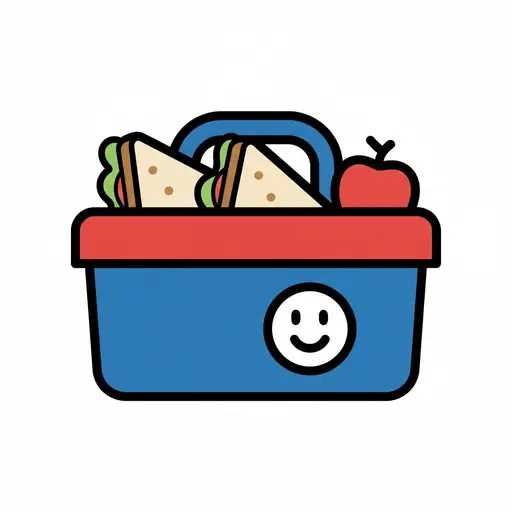
Lunchbox
A blue lunchbox with a red lid contains two sandwiches and a red apple. A smiley...
Take the visual supports with you
In Routined you build schedules from these pictures, add timers and voice instructions, and your child follows the day on their own.


* 14-day free trial, then $2.39 a month or $20.99 a year (US pricing). Cancel anytime.