Eat until full
The fullness signal isn't always polite: it can arrive long after the stomach is full, or barely register at all. The pictures below add an outer pause so the feeling can catch up.
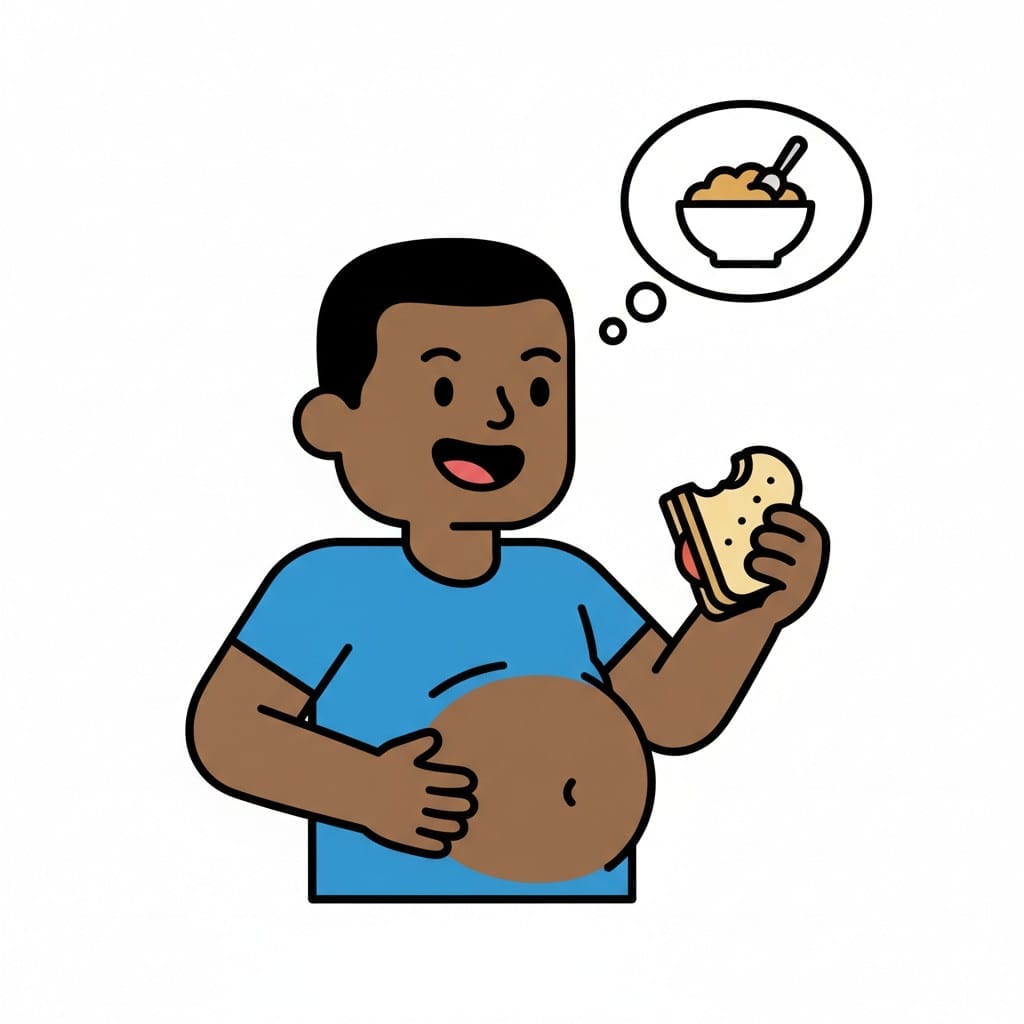 ♂
♂Eat until full
A happy boy eating a sandwich and holding his rounded stomach, with a thought bubble showing a bowl of food.
About this visual support
Knowing when the plate can be set aside isn't always obvious. The fullness signal — that small settling feeling in the stomach — can arrive late or barely show up at all, so the hand keeps reaching for the fork even when the body is actually done. For children with slow interoception, this often shows up later as stomach ache or as standing up from the table feeling oddly off.
Pictures can make the invisible visible. When one of the cards shows a pause — put down the cutlery, sip some water, wait — your child gets a concrete moment to check in, without anyone needing to ask whether they're full. The pause does the work, not the words.
A tip just for this situation: use a card called half plate in the middle of the sequence. When your child reaches that card, they look at the plate, close their eyes for a second, and choose: more or done. Both choices are fine, and both are visible on the card. In the Routined app you can place that pause card between the steps of the meal so it appears every time it's needed.
Use this image in a schedule
Build your own visual schedule with this image and download it as a print-ready PDF. Completely free.

More similar visual supports
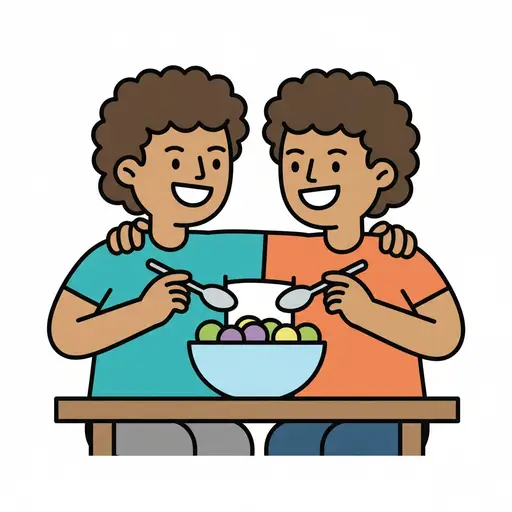
Eat
Two children share a bowl of fruit at the table.
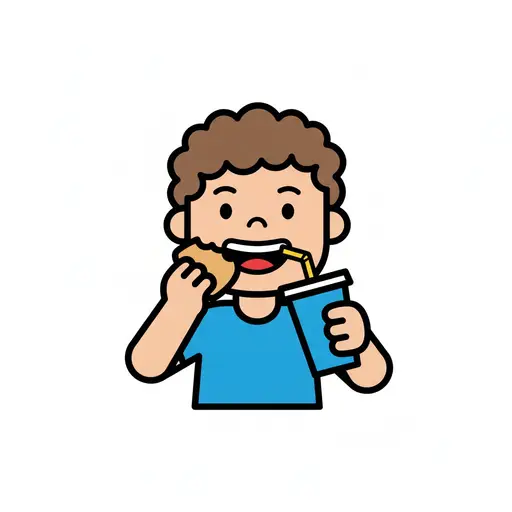
Eat and drink
A child takes a bite of a bun and drinks from a cup with a straw.
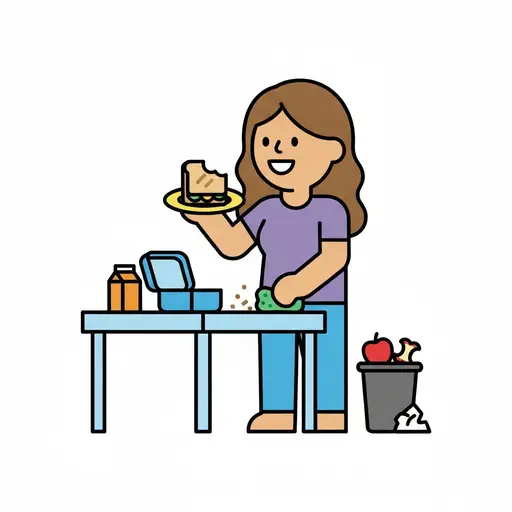
Eat lunch
A smiling person holds up a plate with a half-eaten sandwich and wipes the table...

Eat something
A cartoon boy eating from a blue bowl with a spoon.

Eat what is offered
A boy holds a plate and lifts a forkful of food to his mouth.
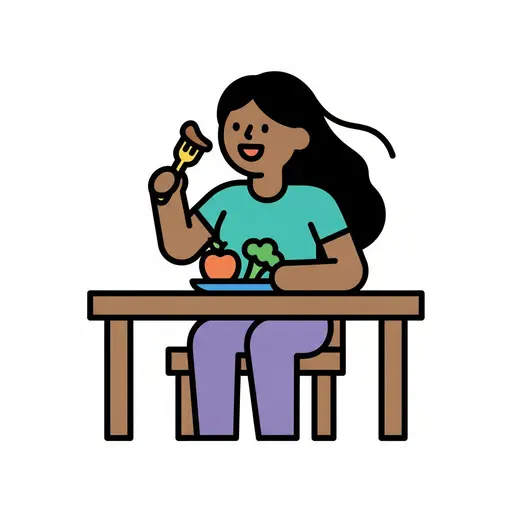
Have a meal
A smiling person sits at a table with a plate of tomato and broccoli and lifts a...
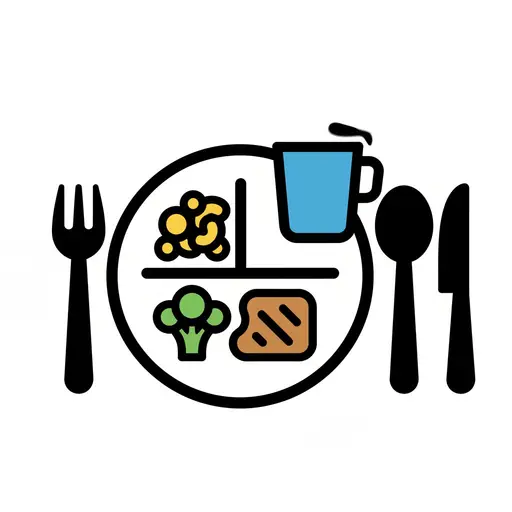
Meals
A plate of food divided into sections, a glass of drink, and a fork, spoon and k...

Taste food
An illustration of a child with closed eyes and a happy facial expression, tasti...
Take the visual supports with you
In Routined you build schedules from these pictures, add timers and voice instructions, and your child follows the day on their own.


* 14-day free trial, then $2.39 a month or $20.99 a year (US pricing). Cancel anytime.