Feed
Feeding someone else is more about waiting than giving. The visual support below helps a child match the pace of the person eating, instead of rushing to finish their own job.
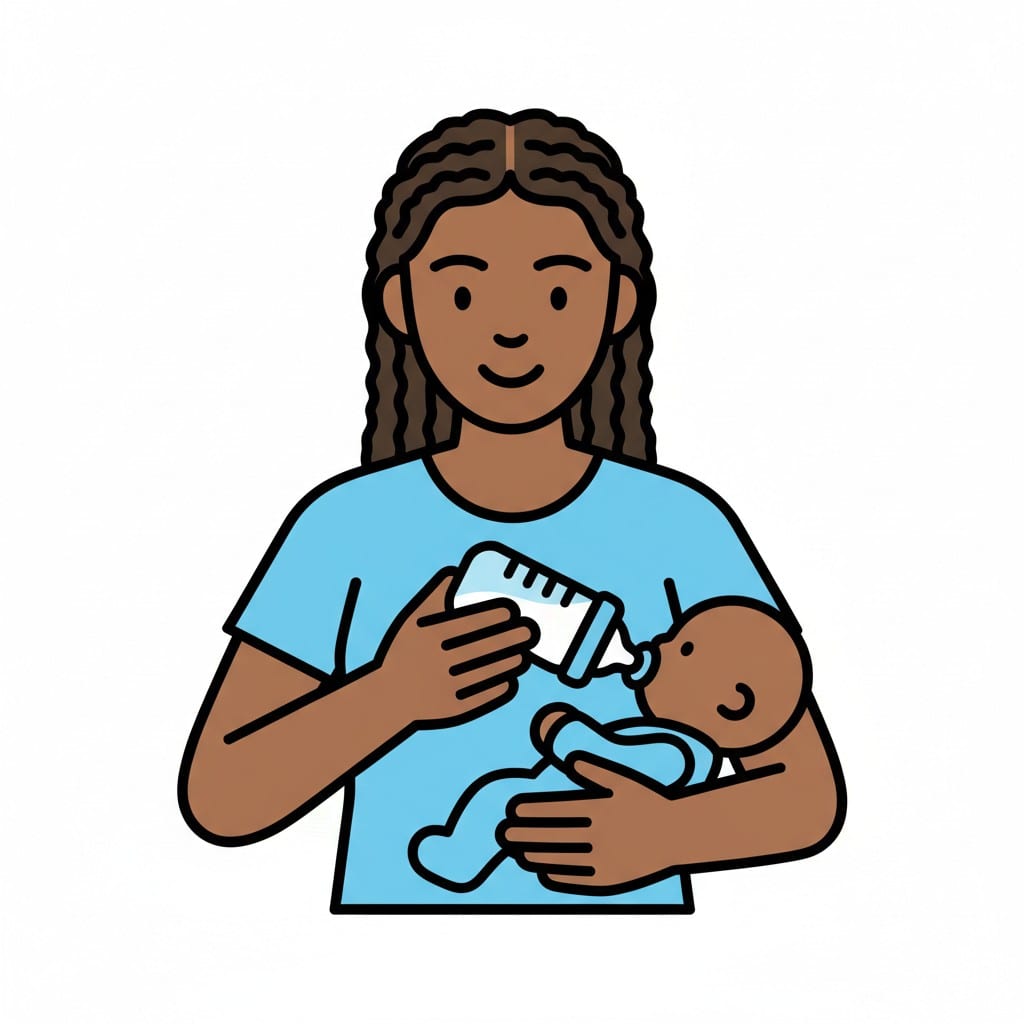 ♀
♀Feed baby
An adult is feeding a baby with a bottle.
About this visual support
Adults barely notice the tiny readings that go into a feed: the chest rises, the mouth opens, the eyes search, the head turns away. A child feeding a baby or younger sibling usually only sees the spoon or bottle in their own hand and the question of whether it is empty yet. The angle here is exactly the patience of letting someone else set the pace.
Visual support lays the feed out as a series of short decisions rather than one long task: look, offer, wait, listen, offer again. When each decision has its own picture, a pause is no longer a failure but part of the feed. The child learns that waiting is doing something, not standing still.
A practical tip: make a soft rule that the spoon or bottle has to be lowered all the way between bites and placed on the plate or table. That tiny movement forces a micro-pause in which the person being fed has time to swallow and to signal. To pair the feed with calm music and a quiet timer, Routined offers a 14-day trial.
Use this image in a schedule
Build your own visual schedule with this image and download it as a print-ready PDF. Completely free.
More similar visual supports

Baby cereal
A woman eats porridge from a bowl with a spoon.
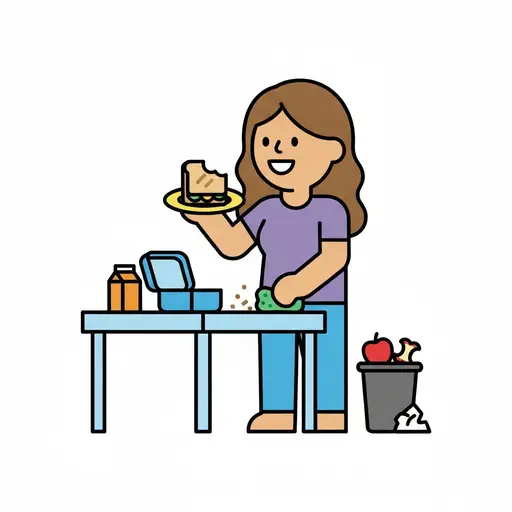
Eat lunch
A smiling person holds up a plate with a half-eaten sandwich and wipes the table...

Prepare Meal
A girl cuts vegetables on a counter with a pot and a whisk nearby.

Sandwich
A sandwich cut diagonally into a triangle shape, showing layers of filling.

Lunchbox
An open lunchbox with a red apple, a sandwich, a spoon and a fork.
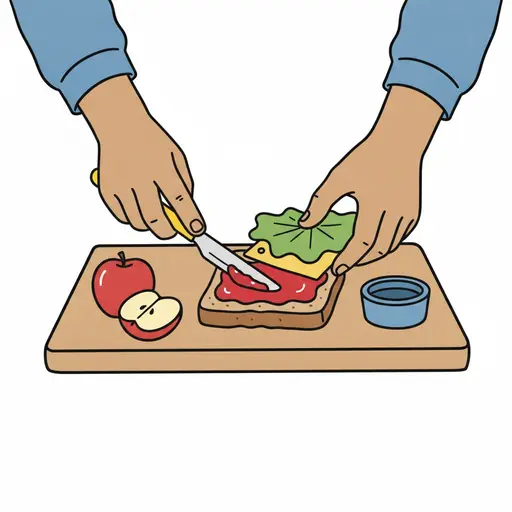
Make lunch
Hands make a sandwich on a cutting board with an apple nearby.

Eat dinner
Hands hold a fork and knife above a plate with a roast chicken.

Food
A wooden bowl with an apple, a banana, grapes, orange, broccoli and a carrot, in...
This visual support in other languages
Take the visual supports with you
In Routined you build schedules from these pictures, add timers and voice instructions, and your child follows the day on their own.


* 14-day free trial, then $2.39 a month or $20.99 a year (US pricing). Cancel anytime.